PoliticsAvailable in English
How to Not Change Your Mind
Editorial
Cross Lines editing
Source
Foreign Policy
Foreign Policy

Foreign Policy
Original Source
Stephen M. Walt argues that policymakers, pundits, and ordinary citizens should admit their mistakes and revise their beliefs when predictions fail, yet many refuse to do so, especially among those who championed war with Iran. The column examines the familiar rhetorical strategies people use to defend their views in the face of failure.
How to Avoid Changing Your Mind About the Iran War
By using this website, you agree to our use of cookies. This use includes personalization of content and ads, and traffic analytics. Review our Privacy Policy for more information.
!Foreign Policy
Foreign Policy Get analysis and alerts more quickly in the mobile app.
Install
Back to Foreign Policy Magazine home page
* Latest
* Regions
+ Asia & the Pacific
+ China
+ Middle East & Africa
+ Americas
+ Europe
* Newsletters
Editors’ Picks
Evening roundup with our editors’ favorite stories of the day
!World Brief Icon
World Brief
Your guide to the most important world stories of the day
!China Brief Icon
China Brief
The latest news, analysis, and data from the country each week
Situation Report
Weekly update on what’s driving U.S. national security policy
FP Weekend
A curation of our best book reviews, deep dives, and other reads
!Africa Brief Icon
Africa Brief
Essential analysis of the stories shaping geopolitics on the continent
!South Asia Brief Icon
South Asia Brief
Weekly update on developments in India and its neighbors
The Reading List
Curated guides on geopolitics and current affairs
FP Bookshelf
A monthly guide to FP’s book reviews, excerpts, and reading recommendations
!Latin America Brief Icon
Latin America Brief
One-stop digest of politics, economics, and culture
!Southeast Asia Brief Icon
Southeast Asia Brief
A weekly dispatch with news from the region’s 11 countries
The New Geopolitics
A five-part masterclass in IR theory with Harvard Professor Stephen M. Walt
View All Newsletters
* FP Live
* Latest
* Trending:
* Israel's election
* Lula wins in Brazil
* U.S. midterms
Search this website
* Preferences
* My FP Feed
* Saved Articles
* Newsletters
* Magazine Archive
* Subscription Settings
* FAQs
* Log Out
Sign In
Sign In
Team access Team access
Subscribe Subscribe Team access Team access
Argument: How to Not Change Your Mind
*
*
* Facebook
* Bluesky
* X
* LinkedIn
* WhatsApp
* Reddit
Save
1. Create an FP account to save articles to read later.
Sign Up
ALREADY AN FP SUBSCRIBER? LOGIN
PDF
1. **Downloadable PDFs** are a benefit of an FP subscription.
Subscribe Now
ALREADY AN FP SUBSCRIBER? LOGIN
Gift
*
*
* WhatsApp
1. Gifting articles is a subscriber benefit.
Subscribe Now
ALREADY AN FP SUBSCRIBER? LOGIN
2. This article is an Insider exclusive.
Contact us at [email protected] to learn about upgrade options, unlocking the ability to gift this article.
Argument
An expert’s point of view on a current event.
How to Not Change Your Mind
Even when you’re wrong about the Iran war (or anything else).
!Walt-Steve-foreign-policy-columnist20
*Walt-Steve-foreign-policy-columnist20*
*Stephen M. Walt*
By **Stephen M. Walt**, a columnist at *Foreign Policy* and the Robert and Renée Belfer professor of international relations at Harvard University.
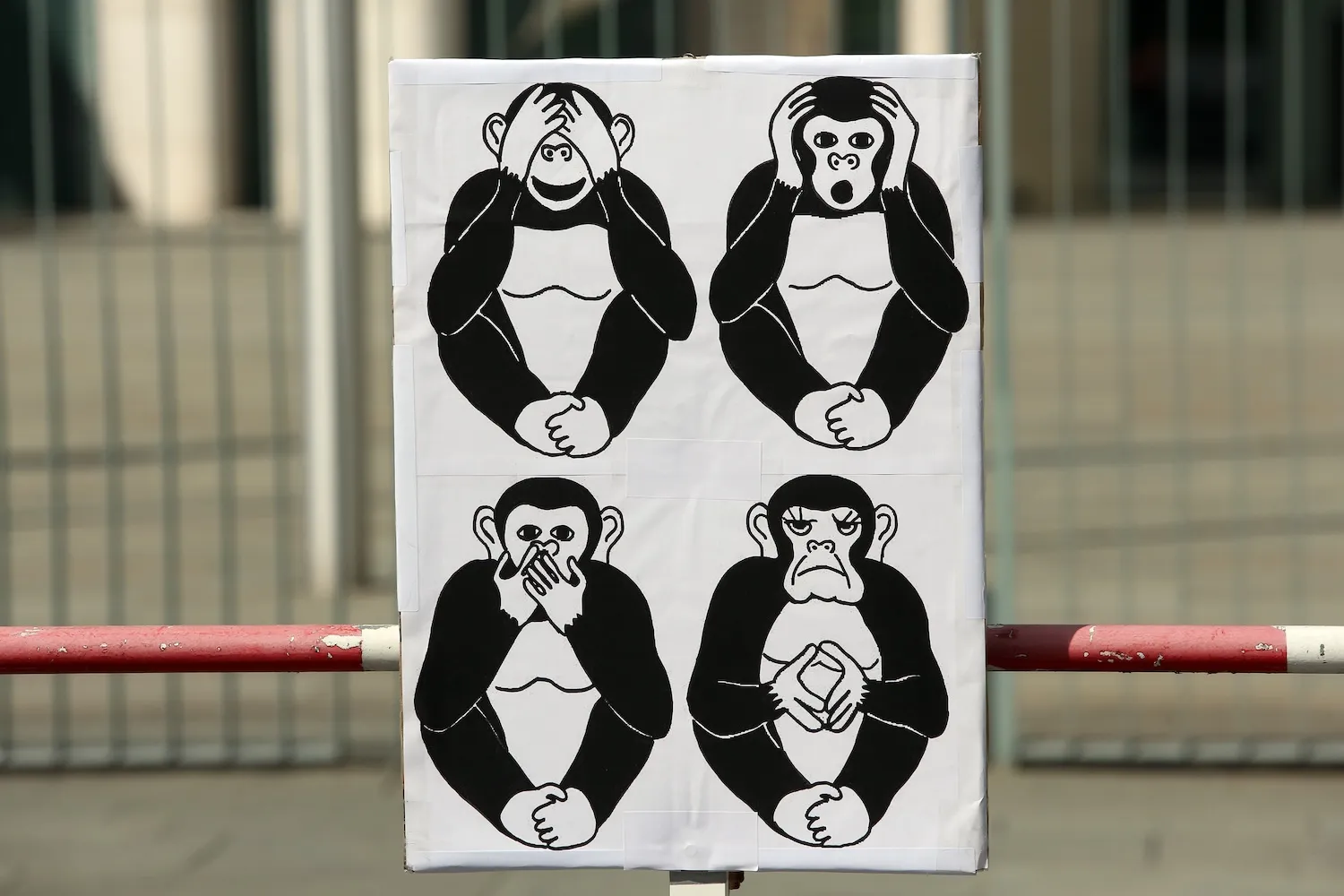
!A black-and-white illustration on a placard displayed outdoors, featuring four cartoon monkeys arranged in a two-by-two grid. Three cover their eyes, ears, and mouth, while the fourth sits with a stern expression and hands clasped.
*A black-and-white illustration on a placard displayed outdoors, featuring four cartoon monkeys arranged in a two-by-two grid. Three cover their eyes, ears, and mouth, while the fourth sits with a stern expression and hands clasped.*
Activists from the German Pirate Party hold a sign calling for governmental transparency and accountability in Berlin on May 7, 2015. Adam Berry/Getty Imagesa sensitive topic
My FP: Follow topics and authors to get straight to what you like. Exclusively for FP subscribers. Subscribe Now | Log In
*
*
October 28, 2026, 8:02 AM
We are all fallible and life is uncertain, so sometimes we believe things that turn out to be mistaken and we recommend policies that don’t work out as we expected. When this happens, we ought to admit we were wrong, try to figure out why, revise our beliefs accordingly, and then formulate new ideas about what to do in light of our enhanced understanding. In a perfect world, decision-makers, pundits, scholars, and ordinary citizens would be good Bayesians: we’d start with a set of prior beliefs, update them as new evidence accumulates, and adjust our behavior accordingly.
In the real world, of course, that happens less often than it should, which is one reason policies that are visibly failing can be hard to change and why past mistakes keep getting repeated. As historian Barbara Tuchman put it in her book *The March of Folly,* decisionmakers sometimes succumb to a kind of “mental standstill” that “fixes the principles and boundaries governing a political problem.” Both policymakers and pundits are often loathe to admit they made a mistake, even when it is abundantly clear that they were off-base. (For my own attempts to do better, see here and here). Just look at all those enthusiastic cheerleaders for war with Iran who confidently predicted that it would be quick, cheap, and yield nothing but positive results. How many of them have ‘fessed up and admitted that maybe, just maybe, they missed something? Instead of owning their mistakes, some of the loudest voices inside and outside the policy world keep insisting they were right all along.
There are several time-honored ways to avoid having to admit you were wrong, and to keep from having to rethink your core beliefs about how the world works. Here are some common ways to defend your views in the face of predictive or analytic failure.
---
No 1: “I was right, but my advice wasn’t followed as I recommended.”
The classic way to conceal a prescriptive blunder is to argue that those charged with implementing the plan failed to pursue it as you intended. For instance, if you were in favor of attacking Iran, you can now argue that we should have attacked the country sooner or harder; the problem was that your advice wasn’t followed *enough.* Or you can argue that the policy would have worked if we had just stayed the course—success was within our grasp but then those in charge got cold feet and pulled the plug too soon. Or just blame failure on inept commanders, feckless allies, or other circumstances beyond your control, and hope that n
By using this website, you agree to our use of cookies. This use includes personalization of content and ads, and traffic analytics. Review our Privacy Policy for more information.
!Foreign Policy
Foreign Policy Get analysis and alerts more quickly in the mobile app.
Install
Back to Foreign Policy Magazine home page
* Latest
* Regions
+ Asia & the Pacific
+ China
+ Middle East & Africa
+ Americas
+ Europe
* Newsletters
Editors’ Picks
Evening roundup with our editors’ favorite stories of the day
!World Brief Icon
World Brief
Your guide to the most important world stories of the day
!China Brief Icon
China Brief
The latest news, analysis, and data from the country each week
Situation Report
Weekly update on what’s driving U.S. national security policy
FP Weekend
A curation of our best book reviews, deep dives, and other reads
!Africa Brief Icon
Africa Brief
Essential analysis of the stories shaping geopolitics on the continent
!South Asia Brief Icon
South Asia Brief
Weekly update on developments in India and its neighbors
The Reading List
Curated guides on geopolitics and current affairs
FP Bookshelf
A monthly guide to FP’s book reviews, excerpts, and reading recommendations
!Latin America Brief Icon
Latin America Brief
One-stop digest of politics, economics, and culture
!Southeast Asia Brief Icon
Southeast Asia Brief
A weekly dispatch with news from the region’s 11 countries
The New Geopolitics
A five-part masterclass in IR theory with Harvard Professor Stephen M. Walt
View All Newsletters
* FP Live
* Latest
* Trending:
* Israel's election
* Lula wins in Brazil
* U.S. midterms
Search this website
* Preferences
* My FP Feed
* Saved Articles
* Newsletters
* Magazine Archive
* Subscription Settings
* FAQs
* Log Out
Sign In
Sign In
Team access Team access
Subscribe Subscribe Team access Team access
Argument: How to Not Change Your Mind
*
*
* Bluesky
* X
Save
1. Create an FP account to save articles to read later.
Sign Up
ALREADY AN FP SUBSCRIBER? LOGIN
1. **Downloadable PDFs** are a benefit of an FP subscription.
Subscribe Now
ALREADY AN FP SUBSCRIBER? LOGIN
Gift
*
*
1. Gifting articles is a subscriber benefit.
Subscribe Now
ALREADY AN FP SUBSCRIBER? LOGIN
2. This article is an Insider exclusive.
Contact us at [email protected] to learn about upgrade options, unlocking the ability to gift this article.
Argument
An expert’s point of view on a current event.
How to Not Change Your Mind
Even when you’re wrong about the Iran war (or anything else).
!Walt-Steve-foreign-policy-columnist20
*Walt-Steve-foreign-policy-columnist20*
*Stephen M. Walt*
By **Stephen M. Walt**, a columnist at *Foreign Policy* and the Robert and Renée Belfer professor of international relations at Harvard University.
!A black-and-white illustration on a placard displayed outdoors, featuring four cartoon monkeys arranged in a two-by-two grid. Three cover their eyes, ears, and mouth, while the fourth sits with a stern expression and hands clasped.
*A black-and-white illustration on a placard displayed outdoors, featuring four cartoon monkeys arranged in a two-by-two grid. Three cover their eyes, ears, and mouth, while the fourth sits with a stern expression and hands clasped.*
Activists from the German Pirate Party hold a sign calling for governmental transparency and accountability in Berlin on May 7, 2015. Adam Berry/Getty Imagesa sensitive topic
My FP: Follow topics and authors to get straight to what you like. Exclusively for FP subscribers. Subscribe Now | Log In
*
*
October 28, 2026, 8:02 AM
We are all fallible and life is uncertain, so sometimes we believe things that turn out to be mistaken and we recommend policies that don’t work out as we expected. When this happens, we ought to admit we were wrong, try to figure out why, revise our beliefs accordingly, and then formulate new ideas about what to do in light of our enhanced understanding. In a perfect world, decision-makers, pundits, scholars, and ordinary citizens would be good Bayesians: we’d start with a set of prior beliefs, update them as new evidence accumulates, and adjust our behavior accordingly.
In the real world, of course, that happens less often than it should, which is one reason policies that are visibly failing can be hard to change and why past mistakes keep getting repeated. As historian Barbara Tuchman put it in her book *The March of Folly,* decisionmakers sometimes succumb to a kind of “mental standstill” that “fixes the principles and boundaries governing a political problem.” Both policymakers and pundits are often loathe to admit they made a mistake, even when it is abundantly clear that they were off-base. (For my own attempts to do better, see here and here). Just look at all those enthusiastic cheerleaders for war with Iran who confidently predicted that it would be quick, cheap, and yield nothing but positive results. How many of them have ‘fessed up and admitted that maybe, just maybe, they missed something? Instead of owning their mistakes, some of the loudest voices inside and outside the policy world keep insisting they were right all along.
We are all fallible and life is uncertain, so sometimes we believe things that turn out to be mistaken and we recommend policies that don’t work out as we expected. When this happens, we ought to admit we were wrong, try to figure out why, revise our beliefs accordingly, and then formulate new ideas about what to do in light of our enhanced understanding. In a perfect world, decision-makers, pundits, scholars, and ordinary citizens would be good Bayesians: we’d start with a set of prior beliefs, update them as new evidence accumulates, and adjust our behavior accordingly.
In the real world, of course, that happens less often than it should, which is one reason policies that are visibly failing can be hard to change and why past mistakes keep getting repeated. As historian Barbara Tuchman put it in her book *The March of Folly,* decisionmakers sometimes succumb to a kind of “mental standstill” that “fixes the principles and boundaries governing a political problem.” Both policymakers and pundits are often loathe to admit they made a mistake, even when it is abundantly clear that they were off-base. (For my own attempts to do better, see here and here). Just look at all those enthusiastic cheerleaders for war with Iran who confidently predicted that it would be quick, cheap, and yield nothing but positive results. How many of them have ‘fessed up and admitted that maybe, just maybe, they missed something? Instead of owning their mistakes, some of the loudest voices inside and outside the policy world keep insisting they were right all along.
There are several time-honored ways to avoid having to admit you were wrong, and to keep from having to rethink your core beliefs about how the world works. Here are some common ways to defend your views in the face of predictive or analytic failure.
---
No 1: “I was right, but my advice wasn’t followed as I recommended.”
The classic way to conceal a prescriptive blunder is to argue that those charged with implementing the plan failed to pursue it as you intended. For instance, if you were in favor of attacking Iran, you can now argue that we should have attacked the country sooner or harder; the problem was that your advice wasn’t followed *enough.* Or you can argue that the policy would have worked if we had just stayed the course—success was within our grasp but then those in charge got cold feet and pulled the plug too soon. Or just blame failure on inept commanders, feckless allies, or other circumstances beyond your control, and hope that n
Share Article
Tags:#إيران#الحرب#السياسة الخارجية#صنع القرار#التحليل السياسي#الرأي
Source: Foreign Policy
For Context
Related reads from the same topic or latest developments