Pentagon Spokesperson Admits There’s a Secret Blacklist of Journalists
The Intercept
T
The Intercept
Original Source
A Pentagon official has admitted to the existence of a secret blacklist of journalists to be disregarded, threatening to add an Intercept reporter to it. The admission comes amid a failed Iran war and repeated refusals to address civilian casualties.
Pentagon Spokesperson Admits There’s a Secret Blacklist of Journalists
Support Us
Support Us
* Iran
* Midterms
* Justice
* War on Gaza
* Unmasking ICE
* Chilling Dissent
Support Us
* Special Investigations
* Voices
* Podcasts
* TomDispatch
* Press Freedom Defense Fund
* Join the Newsletter
* About
* Contact Us
* How to Donate
* Impact & Reports
* Jobs
* Become a Source
*
*
*
*
*
*
*
*
*
© THE INTERCEPT
ALL RIGHTS RESERVED
Terms of UsePrivacy
* Iran
* Midterms
* Justice
* War on Gaza
* Unmasking ICE
* Chilling Dissent
* About
* Support Us
Pentagon Spokesperson Admits There’s a Secret Blacklist of Journalists
When pressed about the Iran war, a CENTCOM press official threatened to put an Intercept reporter on a “list of people to disregard.”
Nick Turse
August 24 2026, 5:52 a.m. ET
*
* Share on Facebook
*
* Share on X
* Share on LinkedIn
* Share on WhatsApp
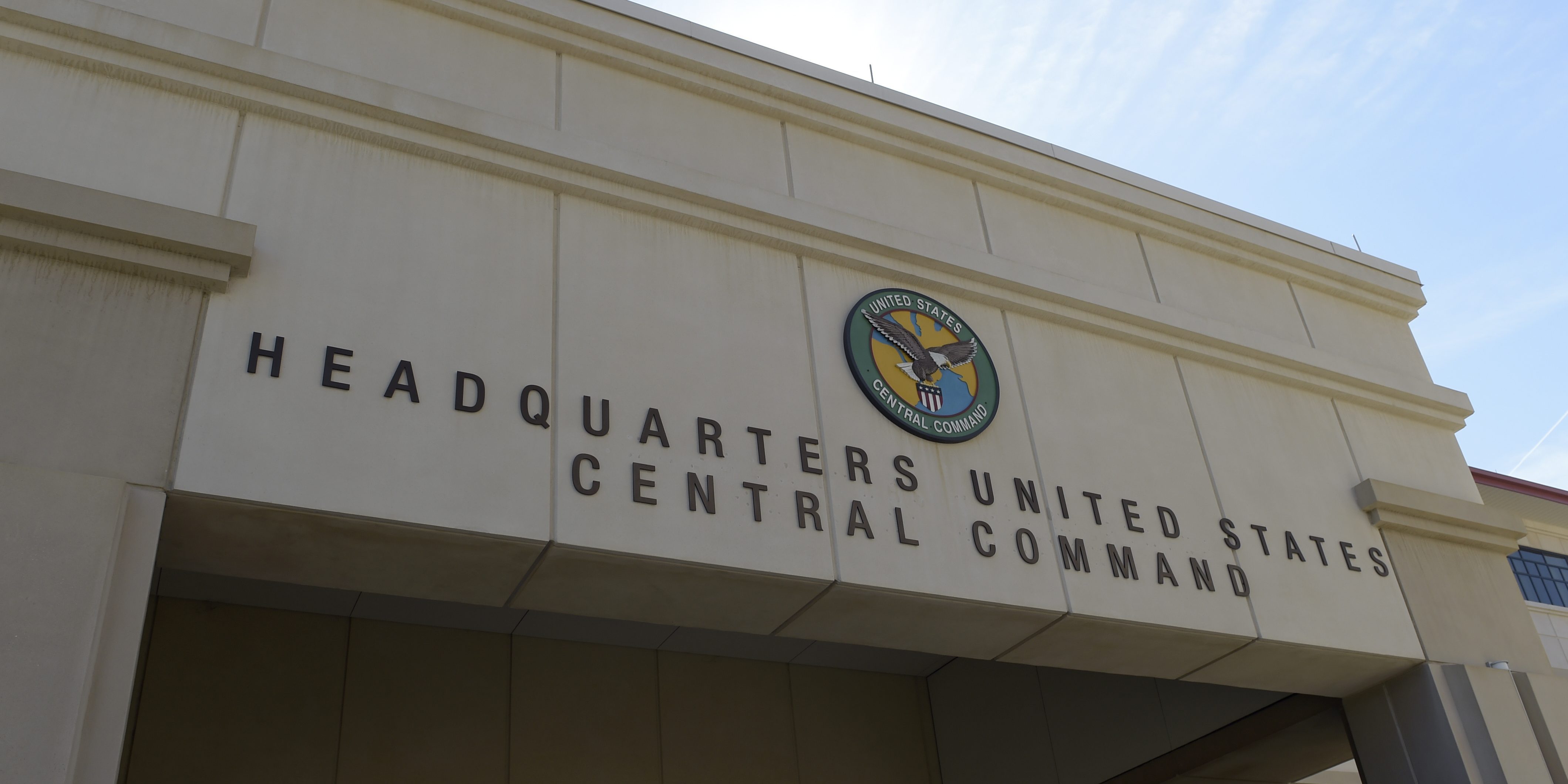
!This Feb. 6, 2017 file photo shows the U.S. Central Command at MacDill Air Force Base in Tampa, Fla.
The U.S. Central Command at MacDill Air Force Base in Tampa, Fla., on Feb. 6, 2017.
Photo: Susan Walsh/AP File
U.S. Central Command
maintains a secret directory of journalists who have been blacklisted by the press office, according to an official with CENTCOM public affairs. The disclosure comes amid a failed war in Iran, a “cover-up” of U.S. casualties from that conflict, and repeated refusals by CENTCOM to address questions about civilian deaths in Iran, including the killing of a family recently disclosed by The Intercept.
The CENTCOM official who revealed the existence of the list threatened that this reporter could be added to it for calling the command too often.
“You’ll be put on a list of people to disregard,” Richard Allee, an executive assistant with CENTCOM public affairs told this reporter. When asked for clarification — “You have a list of people to disregard?” — he confirmed it with an emphatic: “Yes.” When asked which reporters or outlets were currently on the list, he replied: “I’m not privy to give you that information.”
Under self-styled War Secretary Pete Hegseth, the U.S. military has mounted the most aggressive assault on press freedom in memory, from an effort to outlaw “unauthorized” questions from reporters to imposing unconstitutional restrictions on journalists’ access to the Pentagon. Hegseth has compared reporters to “Pharisees,” who in the Bible call Jesus’s teachings into question, while the secretary’s minions regularly hurl insults at reporters. This is part of a broader war on press freedoms by the Trump administration, that includes demonizing journalists; filing so-called strategic lawsuits against public participation, or SLAPPs, to intimidate and silence criticism through expensive legal proceedings; and employing grand jury subpoenas and search warrants to intimidate reporters.
“Threatening journalists with placement on a blacklist in retaliation for reporting the government doesn’t like is as unconstitutional as it gets,” said Seth Stern, the director of advocacy for Freedom of the Press Foundation. “This should put to rest the Pentagon’s prior claims that it’s anti-press policies — like its infamous requirement that reporters sign pledges to only print authorized information — are somehow content neutral.”
Allee revealed the existence of the blacklist after this reporter was left on hold for more than two hours and complained about a long-standing lack of transparency by the command. In calls earlier that morning, Maj. Emma Thompson, CENTCOM’s media operations chief, repeatedly refused to answer questions about Iranian attacks on U.S. bases across the Middle East, disparate U.S. casualty counts, and medical evacuation flights: “Nothing for you,” “Don’t have anything for you,” “No comment.” Thompson then hung up on this reporter mid-question.
The Intercept called back multiple times until Allee picked up the phone. “They’re not going to answer your call if you just keep calling and calling,” he told this reporter.
Allee chastised this reporter to be more respectful. He said a “less accusatory attitude towards the personnel here would go a lot further than badgering them when you don’t get something you want, when you want it.”
Allee then revealed the existence of the blacklist. He declined to provide additional details about the list but said, “It’s not a list that we publicize.” He also hung up on this reporter.
Most Read
The command’s press office responded in an email to additional questions about the journalists who have run afoul of the command. “CENTCOM does not have a ‘blacklist,’” the agency wrote.
A U.S. official who spoke on the condition of anonymity said that Hegseth’s office had a standing order not to engage with this reporter and would deny it if challenged.
“None of it has anything to do with security, all of it has everything to do with censorship and intimidation,” Stern told The Intercept. “CENTCOM needs to stop blacklisting journalists and tell the public who is on the blacklist and why they were placed there. Whoever was behind the blacklist should be blacklisted from government employment.”
> “None of it has anything to do with security, all of it has everything to do with censorship and intimidation.”
Under Hegseth, the Pentagon has mounted an unrelenting assault on press freedom despite the fact that the secretary began his tenure by sharing secret information on airstrikes in Yemen, hours before the actual attacks occurred, on a Signal group chat that inadvertently included Jeffrey Goldberg, the editor-in-chief of The Atlantic.
As part of his war on the press, Hegseth evictedthe New York Times, NPR, and other outlets from their long-held desks in the Pentagon and replaced them with sycophantic fellow-travelers like the One America News Network, the New York Post, and Breitbart.
In May 2025, Hegseth issued a memo barring credentialed reporters from most of the Pentagon without an escort. (Last month, a federal appeals court said that the Pentagon can continue doing so.) The Pentagon later introduced a policy requiring journalists to pledge not to even gather, at the risk of their credentials, unclassified information unless the government authorized its release. (This drove nearly the entire Pentagon press corps to surrender their badges.) After the Times sued and a federal judge struck the policy down in March 2026 as unconstitutional, Hegseth shuttered a decades-old Pentagon pressroom and began conducting polygraph tests to prevent leaks.
For his part, Trump has long cast reporters as the “ENEMY OF THE PEOPLE,” a riff on a phrase employed by both Nazi Germany’s Propaganda Minister Joseph Goebbels (to refer to Jews) and Soviet tyrant Joseph Stalin (in reference to dissenters). The administration defied a court order and blocked The Associated Press from presidential events over its refusal to use the Trumpian term “Gulf of America” instead of Gulf of Mexico; moved to strip NPR and PBS of more than $1 billion in federal funding; utilized Federal Communications Commission merger approvals and “news distortion” investigations against ABC, NBC, and CBS; subpoenaed the phone records of multiple New York Times reporters and their relatives; and launched an official media “hall of shame” to discredit disfavored outlets.
Trump also filed a $10 billion defamation lawsuit after the Wall Street Journal reported on a letter sent from him to convicted sex offender Jeffery Epstein; he also banned WSJ reporters from flying aboard Air Force One. This year, Trump also told journalists to give up a source “or go to jail,” threatened the press with “Charges for TREASON for the dissemination of false information,” and praised FCC chief Brendan Carr for threatening “the licenses of some of these Corrupt and Highly Unpatriotic ‘News’ Organizations.” (The Intercept is currently suing Trump for restricting First Amendment-protected information in a scheme to enrich himself.)
We’re independent of corporate i
Support Us
Support Us
* Iran
* Midterms
* Justice
* War on Gaza
* Unmasking ICE
* Chilling Dissent
Support Us
* Special Investigations
* Voices
* Podcasts
* TomDispatch
* Press Freedom Defense Fund
* Join the Newsletter
* About
* Contact Us
* How to Donate
* Impact & Reports
* Jobs
* Become a Source
*
*
*
*
*
*
*
*
*
© THE INTERCEPT
ALL RIGHTS RESERVED
Terms of UsePrivacy
* Iran
* Midterms
* Justice
* War on Gaza
* Unmasking ICE
* Chilling Dissent
* About
* Support Us
Pentagon Spokesperson Admits There’s a Secret Blacklist of Journalists
When pressed about the Iran war, a CENTCOM press official threatened to put an Intercept reporter on a “list of people to disregard.”
Nick Turse
August 24 2026, 5:52 a.m. ET
*
* Share on Facebook
*
* Share on X
* Share on LinkedIn
* Share on WhatsApp
!This Feb. 6, 2017 file photo shows the U.S. Central Command at MacDill Air Force Base in Tampa, Fla.
The U.S. Central Command at MacDill Air Force Base in Tampa, Fla., on Feb. 6, 2017.
Photo: Susan Walsh/AP File
U.S. Central Command
maintains a secret directory of journalists who have been blacklisted by the press office, according to an official with CENTCOM public affairs. The disclosure comes amid a failed war in Iran, a “cover-up” of U.S. casualties from that conflict, and repeated refusals by CENTCOM to address questions about civilian deaths in Iran, including the killing of a family recently disclosed by The Intercept.
The CENTCOM official who revealed the existence of the list threatened that this reporter could be added to it for calling the command too often.
“You’ll be put on a list of people to disregard,” Richard Allee, an executive assistant with CENTCOM public affairs told this reporter. When asked for clarification — “You have a list of people to disregard?” — he confirmed it with an emphatic: “Yes.” When asked which reporters or outlets were currently on the list, he replied: “I’m not privy to give you that information.”
Under self-styled War Secretary Pete Hegseth, the U.S. military has mounted the most aggressive assault on press freedom in memory, from an effort to outlaw “unauthorized” questions from reporters to imposing unconstitutional restrictions on journalists’ access to the Pentagon. Hegseth has compared reporters to “Pharisees,” who in the Bible call Jesus’s teachings into question, while the secretary’s minions regularly hurl insults at reporters. This is part of a broader war on press freedoms by the Trump administration, that includes demonizing journalists; filing so-called strategic lawsuits against public participation, or SLAPPs, to intimidate and silence criticism through expensive legal proceedings; and employing grand jury subpoenas and search warrants to intimidate reporters.
“Threatening journalists with placement on a blacklist in retaliation for reporting the government doesn’t like is as unconstitutional as it gets,” said Seth Stern, the director of advocacy for Freedom of the Press Foundation. “This should put to rest the Pentagon’s prior claims that it’s anti-press policies — like its infamous requirement that reporters sign pledges to only print authorized information — are somehow content neutral.”
Allee revealed the existence of the blacklist after this reporter was left on hold for more than two hours and complained about a long-standing lack of transparency by the command. In calls earlier that morning, Maj. Emma Thompson, CENTCOM’s media operations chief, repeatedly refused to answer questions about Iranian attacks on U.S. bases across the Middle East, disparate U.S. casualty counts, and medical evacuation flights: “Nothing for you,” “Don’t have anything for you,” “No comment.” Thompson then hung up on this reporter mid-question.
The Intercept called back multiple times until Allee picked up the phone. “They’re not going to answer your call if you just keep calling and calling,” he told this reporter.
Allee chastised this reporter to be more respectful. He said a “less accusatory attitude towards the personnel here would go a lot further than badgering them when you don’t get something you want, when you want it.”
Allee then revealed the existence of the blacklist. He declined to provide additional details about the list but said, “It’s not a list that we publicize.” He also hung up on this reporter.
Most Read
The command’s press office responded in an email to additional questions about the journalists who have run afoul of the command. “CENTCOM does not have a ‘blacklist,’” the agency wrote.
A U.S. official who spoke on the condition of anonymity said that Hegseth’s office had a standing order not to engage with this reporter and would deny it if challenged.
“None of it has anything to do with security, all of it has everything to do with censorship and intimidation,” Stern told The Intercept. “CENTCOM needs to stop blacklisting journalists and tell the public who is on the blacklist and why they were placed there. Whoever was behind the blacklist should be blacklisted from government employment.”
> “None of it has anything to do with security, all of it has everything to do with censorship and intimidation.”
Under Hegseth, the Pentagon has mounted an unrelenting assault on press freedom despite the fact that the secretary began his tenure by sharing secret information on airstrikes in Yemen, hours before the actual attacks occurred, on a Signal group chat that inadvertently included Jeffrey Goldberg, the editor-in-chief of The Atlantic.
As part of his war on the press, Hegseth evictedthe New York Times, NPR, and other outlets from their long-held desks in the Pentagon and replaced them with sycophantic fellow-travelers like the One America News Network, the New York Post, and Breitbart.
In May 2025, Hegseth issued a memo barring credentialed reporters from most of the Pentagon without an escort. (Last month, a federal appeals court said that the Pentagon can continue doing so.) The Pentagon later introduced a policy requiring journalists to pledge not to even gather, at the risk of their credentials, unclassified information unless the government authorized its release. (This drove nearly the entire Pentagon press corps to surrender their badges.) After the Times sued and a federal judge struck the policy down in March 2026 as unconstitutional, Hegseth shuttered a decades-old Pentagon pressroom and began conducting polygraph tests to prevent leaks.
For his part, Trump has long cast reporters as the “ENEMY OF THE PEOPLE,” a riff on a phrase employed by both Nazi Germany’s Propaganda Minister Joseph Goebbels (to refer to Jews) and Soviet tyrant Joseph Stalin (in reference to dissenters). The administration defied a court order and blocked The Associated Press from presidential events over its refusal to use the Trumpian term “Gulf of America” instead of Gulf of Mexico; moved to strip NPR and PBS of more than $1 billion in federal funding; utilized Federal Communications Commission merger approvals and “news distortion” investigations against ABC, NBC, and CBS; subpoenaed the phone records of multiple New York Times reporters and their relatives; and launched an official media “hall of shame” to discredit disfavored outlets.
Trump also filed a $10 billion defamation lawsuit after the Wall Street Journal reported on a letter sent from him to convicted sex offender Jeffery Epstein; he also banned WSJ reporters from flying aboard Air Force One. This year, Trump also told journalists to give up a source “or go to jail,” threatened the press with “Charges for TREASON for the dissemination of false information,” and praised FCC chief Brendan Carr for threatening “the licenses of some of these Corrupt and Highly Unpatriotic ‘News’ Organizations.” (The Intercept is currently suing Trump for restricting First Amendment-protected information in a scheme to enrich himself.)
We’re independent of corporate i
🔗 Share Article
Tags:#البنتاغون#حرية الصحافة#الولايات المتحدة#الرقابة الحكومية#هيجسيث#وسائل الإعلام
Source: The Intercept
For Context
Related reads from the same topic or latest developments


