Nigeria's jet fuel conundrum: Scarcity at home, abundance abroad
DW World
D
DW World
Original Source
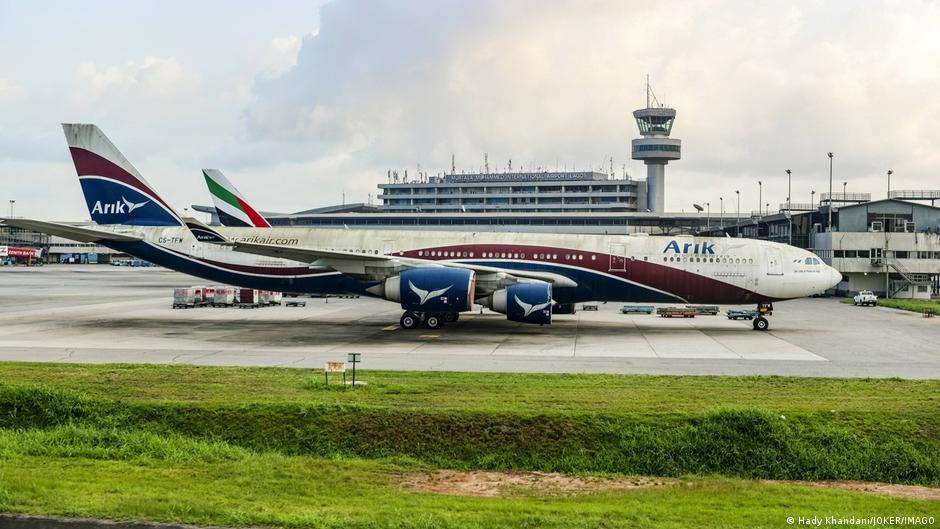
Nigeria has become Europe's largest supplier of jet fuel in the past two months, while domestic airlines face severe shortages and soaring prices. This paradox reveals deeper issues related to market deregulation and the absence of government protection for local carriers.
For the past two months. Nigeria has emerged as Europe's largest supplier of jet fuel, overtaking the United States.
The 650,000 barrel-per-day (bpd) mega refinery owned by Africa's richest man, Aliko Dangote, outside Lagos has evolved into an increasingly important source of fuel for the continent following supply disruptions caused by the Iran war.
During last year's peak summer months, the majority of these supplies still originated from the Middle East.
But since the closure of the Strait of Hormuz earlier this year, Europe has been relying on imports of roughly 700,000 bpd in total to meet the present demands of the aviation industry, according to the private, global trade intelligence business Kpler.
Dry fuel tanks in Europe
In fact, back in April, the head of the International Energy Agency Fatih Birol expressed concern that at the time Europe only had "maybe six weeks or so" of jet fuel supplies remaining.
Less than two months later, four airports in northern Italy — Bologna, Venice, Treviso and Milan's Linate — even introduced temporary restrictions on jet fuel use, imposing a ceiling of 2,000 liters per aircraft for short-haul journeys, according to local media, while giving priority to medical and long-haul flights.
Europe has, in the meantime, been able to absorb the shock of the closure of the Strait of Hormuz by diversifying its resources and boosting supplies from countries like Nigeria — but at what cost?
Paradox of surplus production
Nigeria continues to produce a record amount of jet fuel through the Dangote refinery, equivalent to about 24 million liters each day, with much of this now being shipped to Europe.
But domestic airlines in the West African country meanwhile appear to struggle to keep up with their daily estimated needs because of the surge in prices and the demands of the free market.
Ikemesit Effiong, a partner at the Africa-focused SBM intelligence consultancy, explained that "Nigeria operates a fully deregulated downstream market where Dangote prices its products with reference to international parity, not preferential domestic rates."
"Fuel flows to wherever pays the most," he told DW, adding that "currently, that is Europe, not Lagos."
"The key lesson Nigerian players are learning is that production capacity alone does not guarantee affordability at home."
While the Dangote refinery has significantly improved fuel availability in the country, which has long been plagued by chronic fuel scarcity and long queues at petrol stations, domestic prices are still among the highest on the continent.
Local airlines struggle to keep up
In the fully deregulated Nigerian market, regional airlines also have to compete with international buyers, who typically place orders for greater purchasing volumes, often without any middlemen involved between them at the refineries; according to Effiong, this alone leave global players with significant negotiating advantages compared to smaller local companies.
"The result is that [while] domestic airlines might be physically closer to the refinery, they're economically less competitive in accessing its products. They might as well be halfway across the world," he added.
Since the beginning of the crisis, local aviation operators have reportedly accrued over 60bn Naira ($45 million; €38 million) in debt to local banks to be able to sustain operations and keep afloat during this surge in prices.
Many operators have even been forced to cut key routes and hike up ticket prices, resulting in frustration and discontent among passengers; furthermore, ongoing flight cancellations and delays only keep adding to the overall sense of dissatisfaction among travelers.
At one point, jet fuel prices jumped up over threefold soon after the start of the Iran war; they have since fallen to a minimum about 1,600 Naira per liter — which compares to roughly 900 Naira prior to the war.
Hidden costs and mark-ups
The current situation is further exacerbated by the abolition of government subsidies for oil products, as well as by Nigeria's state oil company's crude-backed loans.
This means that part of the country's future crude production to is allocated to repaying debts, leaving the Dangote Refinery to have to import its crude to refine — rather than making use of Nigeria's own reserves.
But the problem isn't solely focused on the source of the jet fuel itself. Charles Victor, an energy analyst based in Lagos, explained that "[t]he journey from the refinery gate to the airport is expensive with extra layers of additional cost. [These issues include] storage, coastal shipping, moving fuel between tanks, with several traders in between — and each one takes a cut."
Victor went as far as saying that "the problem was never a supply issue. It's what happens to the price on the way to the aircraft."
No solutions without government intervention?
For Victor, the solution is to reserve a certain metric ton amount of fuel for Nigerian airlines each month, and selling this directly and equitably to all stakeholders as a group.
Buying "directly from the refinery gate, if possible, will cut out most of the middlemen adding cost along the way," he told DW, saying that wholesale price could thus at least stabilize around 1,200 Naira pet liter this way.
This plan would also require improved airport storage and distribution infrastructures to "reduce logistics costs that add significantly to the final prices," Ikemesit added. "Finally, the government should institute policies that encourage sustainable commercial relationships between Dangote and domestic carriers."
But would Dangote play along with that? The Dangote Refinery, operating at its maximum capacity of 650,000 bpd, was originally built with the intention of transforming the continent's biggest oil producer into a net exporter of refined products, and thus to end its dependence on fuel imports.
However, with a global crisis situation firmly putting Dangote on the map as a worldwide supplier, that plan might remain a pipe dream.
Edited by: Sertan Sanderson
The 650,000 barrel-per-day (bpd) mega refinery owned by Africa's richest man, Aliko Dangote, outside Lagos has evolved into an increasingly important source of fuel for the continent following supply disruptions caused by the Iran war.
During last year's peak summer months, the majority of these supplies still originated from the Middle East.
But since the closure of the Strait of Hormuz earlier this year, Europe has been relying on imports of roughly 700,000 bpd in total to meet the present demands of the aviation industry, according to the private, global trade intelligence business Kpler.
Dry fuel tanks in Europe
In fact, back in April, the head of the International Energy Agency Fatih Birol expressed concern that at the time Europe only had "maybe six weeks or so" of jet fuel supplies remaining.
Less than two months later, four airports in northern Italy — Bologna, Venice, Treviso and Milan's Linate — even introduced temporary restrictions on jet fuel use, imposing a ceiling of 2,000 liters per aircraft for short-haul journeys, according to local media, while giving priority to medical and long-haul flights.
Europe has, in the meantime, been able to absorb the shock of the closure of the Strait of Hormuz by diversifying its resources and boosting supplies from countries like Nigeria — but at what cost?
Paradox of surplus production
Nigeria continues to produce a record amount of jet fuel through the Dangote refinery, equivalent to about 24 million liters each day, with much of this now being shipped to Europe.
But domestic airlines in the West African country meanwhile appear to struggle to keep up with their daily estimated needs because of the surge in prices and the demands of the free market.
Ikemesit Effiong, a partner at the Africa-focused SBM intelligence consultancy, explained that "Nigeria operates a fully deregulated downstream market where Dangote prices its products with reference to international parity, not preferential domestic rates."
"Fuel flows to wherever pays the most," he told DW, adding that "currently, that is Europe, not Lagos."
"The key lesson Nigerian players are learning is that production capacity alone does not guarantee affordability at home."
While the Dangote refinery has significantly improved fuel availability in the country, which has long been plagued by chronic fuel scarcity and long queues at petrol stations, domestic prices are still among the highest on the continent.
Local airlines struggle to keep up
In the fully deregulated Nigerian market, regional airlines also have to compete with international buyers, who typically place orders for greater purchasing volumes, often without any middlemen involved between them at the refineries; according to Effiong, this alone leave global players with significant negotiating advantages compared to smaller local companies.
"The result is that [while] domestic airlines might be physically closer to the refinery, they're economically less competitive in accessing its products. They might as well be halfway across the world," he added.
Since the beginning of the crisis, local aviation operators have reportedly accrued over 60bn Naira ($45 million; €38 million) in debt to local banks to be able to sustain operations and keep afloat during this surge in prices.
Many operators have even been forced to cut key routes and hike up ticket prices, resulting in frustration and discontent among passengers; furthermore, ongoing flight cancellations and delays only keep adding to the overall sense of dissatisfaction among travelers.
At one point, jet fuel prices jumped up over threefold soon after the start of the Iran war; they have since fallen to a minimum about 1,600 Naira per liter — which compares to roughly 900 Naira prior to the war.
Hidden costs and mark-ups
The current situation is further exacerbated by the abolition of government subsidies for oil products, as well as by Nigeria's state oil company's crude-backed loans.
This means that part of the country's future crude production to is allocated to repaying debts, leaving the Dangote Refinery to have to import its crude to refine — rather than making use of Nigeria's own reserves.
But the problem isn't solely focused on the source of the jet fuel itself. Charles Victor, an energy analyst based in Lagos, explained that "[t]he journey from the refinery gate to the airport is expensive with extra layers of additional cost. [These issues include] storage, coastal shipping, moving fuel between tanks, with several traders in between — and each one takes a cut."
Victor went as far as saying that "the problem was never a supply issue. It's what happens to the price on the way to the aircraft."
No solutions without government intervention?
For Victor, the solution is to reserve a certain metric ton amount of fuel for Nigerian airlines each month, and selling this directly and equitably to all stakeholders as a group.
Buying "directly from the refinery gate, if possible, will cut out most of the middlemen adding cost along the way," he told DW, saying that wholesale price could thus at least stabilize around 1,200 Naira pet liter this way.
This plan would also require improved airport storage and distribution infrastructures to "reduce logistics costs that add significantly to the final prices," Ikemesit added. "Finally, the government should institute policies that encourage sustainable commercial relationships between Dangote and domestic carriers."
But would Dangote play along with that? The Dangote Refinery, operating at its maximum capacity of 650,000 bpd, was originally built with the intention of transforming the continent's biggest oil producer into a net exporter of refined products, and thus to end its dependence on fuel imports.
However, with a global crisis situation firmly putting Dangote on the map as a worldwide supplier, that plan might remain a pipe dream.
Edited by: Sertan Sanderson
🔗 Share Article
Tags:#نيجيريا#وقود الطائرات#الطاقة#الأزمات#التجارة الدولية#الطيران
Source: DW World
For Context
Related reads from the same topic or latest developments