Here’s What Middle Powers Can Actually Do
Foreign Policy

Foreign Policy
Original Source
Canadian Prime Minister Mark Carney's vision of middle powers uniting to reshape the international order has faltered due to conflicting priorities and limited leverage. Yet these nations can still lay groundwork for global stability by focusing on national resilience.
Middle Powers Can't Build a New Global Order, But They Can Support One
By using this website, you agree to our use of cookies. This use includes personalization of content and ads, and traffic analytics. Review our Privacy Policy for more information.
!Foreign Policy
Foreign Policy
Get analysis and alerts more quickly in the mobile app.
Install
Back to Foreign Policy Magazine home page
* Latest
* Regions
+ Asia & the Pacific
+ China
+ Middle East & Africa
+ Americas
+ Europe
* Newsletters
Editors’ Picks
Evening roundup with our editors’ favorite stories of the day
!World Brief Icon
World Brief
Your guide to the most important world stories of the day
!China Brief Icon
China Brief
The latest news, analysis, and data from the country each week
Situation Report
Weekly update on what’s driving U.S. national security policy
FP Weekend
A curation of our best book reviews, deep dives, and other reads
!Africa Brief Icon
Africa Brief
Essential analysis of the stories shaping geopolitics on the continent
!South Asia Brief Icon
South Asia Brief
Weekly update on developments in India and its neighbors
The Reading List
Curated guides on geopolitics and current affairs
FP Bookshelf
A monthly guide to FP’s book reviews, excerpts, and reading recommendations
!Latin America Brief Icon
Latin America Brief
One-stop digest of politics, economics, and culture
!Southeast Asia Brief Icon
Southeast Asia Brief
A weekly dispatch with news from the region’s 11 countries
The New Geopolitics
A five-part masterclass in IR theory with Harvard Professor Stephen M. Walt
View All Newsletters
* FP Live
Search this website
* Preferences
* My FP Feed
* Saved Articles
* Newsletters
* Magazine Archive
* Subscription Settings
* FAQs
* Log Out
Sign In
Sign In
Campus & Team Access Campus & Team Access
Subscribe SubscribeCampus and team access Campus and team access
Argument:
Here’s What Middle Powers Can Actually Do
*
*
* Facebook
* Bluesky
* X
* LinkedIn
* WhatsApp
* Reddit
Save
1. Create an FP account to save articles to read later.
Sign Up
ALREADY AN FP SUBSCRIBER? LOGIN
PDF
1. **Downloadable PDFs** are a benefit of an FP subscription.
Subscribe Now
ALREADY AN FP SUBSCRIBER? LOGIN
Gift
*
*
* WhatsApp
1. Gifting articles is a subscriber benefit.
Subscribe Now
ALREADY AN FP SUBSCRIBER? LOGIN
2. This article is an Insider exclusive.
Contact us at [email protected] to learn about upgrade options, unlocking the ability to gift this article.
Argument
An expert’s point of view on a current event.
Here’s What Middle Powers Can Actually Do
Mark Carney’s vision has gone unrealized, but that doesn’t mean states should give up.
!An illustrated headshot of Suzanne Nossel
*An illustrated headshot of Suzanne Nossel*
*Suzanne Nossel*
By **Suzanne Nossel**, a columnist at *Foreign Policy* and the Lester Crown senior fellow for U.S. foreign policy and international order at the Chicago Council on Global Affairs.
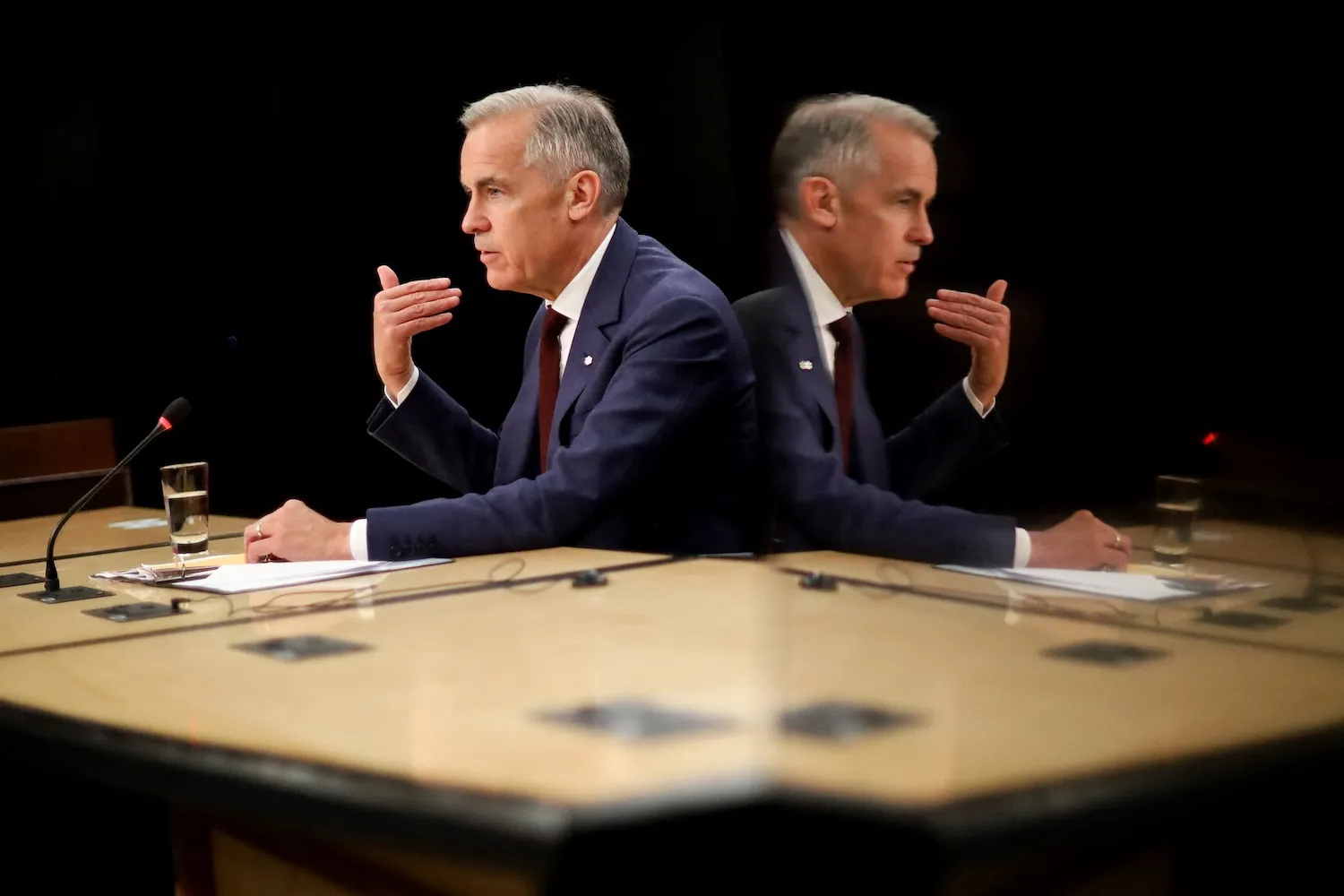
!Carney is shown from the side as he speaks into a microphone; his mirror image/reflection is also visible.
*Carney is shown from the side as he speaks into a microphone; his mirror image/reflection is also visible.*
Canadian Prime Minister Mark Carney speaks during a news conference at the National Press Theatre in Ottawa, Canada, on June 25. Dave Chan/AFP via Getty Images
August 11, 2026, 1:20 PM
In his landmark speech at the World Economic Forum in January, Canadian Prime Minister Mark Carney called on “middle powers” to jointly invigorate the international system. Such nations, he ventured, “have the capacity to build a new order that encompasses our values, such as respect for human rights, sustainable development, solidarity, sovereignty, and territorial integrity of the various states.” Champions of international order cheered his vision of a unified bloc able to offset great-power competition and counter the bellicose, norm-wrecking U.S. President Donald Trump.
In the ensuing eight months, Carney’s vision for middle powers—countries with notable economic and military strengths that are smaller than the world’s hegemons—has gone unrealized. Due to a confluence of factors, including divergent priorities and limited leverage, these countries have confronted hard truths about their ability to call the shots.
In his landmark speech at the World Economic Forum in January, Canadian Prime Minister Mark Carney called on “middle powers” to jointly invigorate the international system. Such nations, he ventured, “have the capacity to build a new order that encompasses our values, such as respect for human rights, sustainable development, solidarity, sovereignty, and territorial integrity of the various states.” Champions of international order cheered his vision of a unified bloc able to offset great-power competition and counter the bellicose, norm-wrecking U.S. President Donald Trump.
In the ensuing eight months, Carney’s vision for middle powers—countries with notable economic and military strengths that are smaller than the world’s hegemons—has gone unrealized. Due to a confluence of factors, including divergent priorities and limited leverage, these countries have confronted hard truths about their ability to call the shots.
While Carney was right that the U.S. turnabout made cooperation among middle powers more necessary, it has also forced each of them to concentrate, above all, on their own exposure to political upheaval and economic shocks. Efforts to create a new order have been sidelined by the imperative of surviving the old one’s demise.
Trump’s undersecretary of defense for policy, Elbridge Colby, brought this issue back into the spotlight last month on X, when he dismissed the “hubbub about a collective ‘middle powers’ strategy.” He claimed that Washington sees no sign that allies are diversifying away from technological or military reliance on the United States, adding that middle powers lack the coherence to align. While Colby is in denial about the scale of global hedging taking place, he is not wrong that middle powers lack the common ground for sustained collective action.
Broad visions of a new system birthed by middle powers are, at least for now, farfetched. But even as they navigate an unstable world, these countries can still lay the groundwork for the international system to survive long enough to be reinvented. Middle powers and those who vest hopes in them should take a hard look at how the current imperatives of national self-preservation can contribute to, rather than detract from, the prospect of an orderly global future.
---
That Carney
has not made good on his conception of a new world order is unsurprising. At various points, Trump has threatened tariffs of up to 100 percent on Canadian goods. Faced with a suddenly hostile neighbor that accounted for 76 percent of his nation’s merchandise exports, 96 percent of its crude oil exports, and virtually all of its natural gas exports, Carney was in no position to go big on international architecture. Instead, it became a national emergency to lessen Washington’s leverage over Canadian jobs, revenues, energy, and security—never mind rallying the national spirit against a turncoat neighbor threatening to render Canada as the 51st U.S. state.
Carney has tried to do this by concentrating Canada’s resources on strategic autonomy: rearmament, strengthening domestic industry, and cultivating international partnerships in search of new avenues for minerals, energy, defense, and trade. Canada’s recent moves to deepen relations with China, Qatar, and Saudi Arabia are motivated by the drive to diversify dependence, not by shared values. The closest thing to order that Ottawa has forged is a handful of new arrangements focused on specific sectors, including a tech partnership with Australia and India and a nine-nation Defense, Security, and Resilience Bank to finance national armaments.
Carney’s inward turn forms part of a broader pattern of U.S. alli
By using this website, you agree to our use of cookies. This use includes personalization of content and ads, and traffic analytics. Review our Privacy Policy for more information.
!Foreign Policy
Foreign Policy
Get analysis and alerts more quickly in the mobile app.
Install
Back to Foreign Policy Magazine home page
* Latest
* Regions
+ Asia & the Pacific
+ China
+ Middle East & Africa
+ Americas
+ Europe
* Newsletters
Editors’ Picks
Evening roundup with our editors’ favorite stories of the day
!World Brief Icon
World Brief
Your guide to the most important world stories of the day
!China Brief Icon
China Brief
The latest news, analysis, and data from the country each week
Situation Report
Weekly update on what’s driving U.S. national security policy
FP Weekend
A curation of our best book reviews, deep dives, and other reads
!Africa Brief Icon
Africa Brief
Essential analysis of the stories shaping geopolitics on the continent
!South Asia Brief Icon
South Asia Brief
Weekly update on developments in India and its neighbors
The Reading List
Curated guides on geopolitics and current affairs
FP Bookshelf
A monthly guide to FP’s book reviews, excerpts, and reading recommendations
!Latin America Brief Icon
Latin America Brief
One-stop digest of politics, economics, and culture
!Southeast Asia Brief Icon
Southeast Asia Brief
A weekly dispatch with news from the region’s 11 countries
The New Geopolitics
A five-part masterclass in IR theory with Harvard Professor Stephen M. Walt
View All Newsletters
* FP Live
Search this website
* Preferences
* My FP Feed
* Saved Articles
* Newsletters
* Magazine Archive
* Subscription Settings
* FAQs
* Log Out
Sign In
Sign In
Campus & Team Access Campus & Team Access
Subscribe SubscribeCampus and team access Campus and team access
Argument:
Here’s What Middle Powers Can Actually Do
*
*
* Bluesky
* X
Save
1. Create an FP account to save articles to read later.
Sign Up
ALREADY AN FP SUBSCRIBER? LOGIN
1. **Downloadable PDFs** are a benefit of an FP subscription.
Subscribe Now
ALREADY AN FP SUBSCRIBER? LOGIN
Gift
*
*
1. Gifting articles is a subscriber benefit.
Subscribe Now
ALREADY AN FP SUBSCRIBER? LOGIN
2. This article is an Insider exclusive.
Contact us at [email protected] to learn about upgrade options, unlocking the ability to gift this article.
Argument
An expert’s point of view on a current event.
Here’s What Middle Powers Can Actually Do
Mark Carney’s vision has gone unrealized, but that doesn’t mean states should give up.
!An illustrated headshot of Suzanne Nossel
*An illustrated headshot of Suzanne Nossel*
*Suzanne Nossel*
By **Suzanne Nossel**, a columnist at *Foreign Policy* and the Lester Crown senior fellow for U.S. foreign policy and international order at the Chicago Council on Global Affairs.
!Carney is shown from the side as he speaks into a microphone; his mirror image/reflection is also visible.
*Carney is shown from the side as he speaks into a microphone; his mirror image/reflection is also visible.*
Canadian Prime Minister Mark Carney speaks during a news conference at the National Press Theatre in Ottawa, Canada, on June 25. Dave Chan/AFP via Getty Images
August 11, 2026, 1:20 PM
In his landmark speech at the World Economic Forum in January, Canadian Prime Minister Mark Carney called on “middle powers” to jointly invigorate the international system. Such nations, he ventured, “have the capacity to build a new order that encompasses our values, such as respect for human rights, sustainable development, solidarity, sovereignty, and territorial integrity of the various states.” Champions of international order cheered his vision of a unified bloc able to offset great-power competition and counter the bellicose, norm-wrecking U.S. President Donald Trump.
In the ensuing eight months, Carney’s vision for middle powers—countries with notable economic and military strengths that are smaller than the world’s hegemons—has gone unrealized. Due to a confluence of factors, including divergent priorities and limited leverage, these countries have confronted hard truths about their ability to call the shots.
In his landmark speech at the World Economic Forum in January, Canadian Prime Minister Mark Carney called on “middle powers” to jointly invigorate the international system. Such nations, he ventured, “have the capacity to build a new order that encompasses our values, such as respect for human rights, sustainable development, solidarity, sovereignty, and territorial integrity of the various states.” Champions of international order cheered his vision of a unified bloc able to offset great-power competition and counter the bellicose, norm-wrecking U.S. President Donald Trump.
In the ensuing eight months, Carney’s vision for middle powers—countries with notable economic and military strengths that are smaller than the world’s hegemons—has gone unrealized. Due to a confluence of factors, including divergent priorities and limited leverage, these countries have confronted hard truths about their ability to call the shots.
While Carney was right that the U.S. turnabout made cooperation among middle powers more necessary, it has also forced each of them to concentrate, above all, on their own exposure to political upheaval and economic shocks. Efforts to create a new order have been sidelined by the imperative of surviving the old one’s demise.
Trump’s undersecretary of defense for policy, Elbridge Colby, brought this issue back into the spotlight last month on X, when he dismissed the “hubbub about a collective ‘middle powers’ strategy.” He claimed that Washington sees no sign that allies are diversifying away from technological or military reliance on the United States, adding that middle powers lack the coherence to align. While Colby is in denial about the scale of global hedging taking place, he is not wrong that middle powers lack the common ground for sustained collective action.
Broad visions of a new system birthed by middle powers are, at least for now, farfetched. But even as they navigate an unstable world, these countries can still lay the groundwork for the international system to survive long enough to be reinvented. Middle powers and those who vest hopes in them should take a hard look at how the current imperatives of national self-preservation can contribute to, rather than detract from, the prospect of an orderly global future.
---
That Carney
has not made good on his conception of a new world order is unsurprising. At various points, Trump has threatened tariffs of up to 100 percent on Canadian goods. Faced with a suddenly hostile neighbor that accounted for 76 percent of his nation’s merchandise exports, 96 percent of its crude oil exports, and virtually all of its natural gas exports, Carney was in no position to go big on international architecture. Instead, it became a national emergency to lessen Washington’s leverage over Canadian jobs, revenues, energy, and security—never mind rallying the national spirit against a turncoat neighbor threatening to render Canada as the 51st U.S. state.
Carney has tried to do this by concentrating Canada’s resources on strategic autonomy: rearmament, strengthening domestic industry, and cultivating international partnerships in search of new avenues for minerals, energy, defense, and trade. Canada’s recent moves to deepen relations with China, Qatar, and Saudi Arabia are motivated by the drive to diversify dependence, not by shared values. The closest thing to order that Ottawa has forged is a handful of new arrangements focused on specific sectors, including a tech partnership with Australia and India and a nine-nation Defense, Security, and Resilience Bank to finance national armaments.
Carney’s inward turn forms part of a broader pattern of U.S. alli
🔗 Share Article
Tags:#القوى الوسيطة#النظام الدولي#السياسة الخارجية#التعاون الدولي#كندا
Source: Foreign Policy
For Context
Related reads from the same topic or latest developments


