He Confessed to an Afghanistan War Murder. The U.S. Military Promptly Closed the Case.
The Intercept
T
The Intercept
Original Source
A former Army specialist from the 82nd Airborne Division confessed in 2023 to killing an unarmed Afghan civilian and wounding a woman during a 2010 operation, explicitly admitting to committing a war crime. Yet the U.S. military closed the investigation without charges, exemplifying the systematic impunity that has characterized American conduct throughout the post-9/11 wars.
In the spring of 2023, on a partly sunny day where the temperature flirted with 70 degrees, an Army veteran of the Afghanistan War walked into the unique Prairie-style police headquarters in Banning, California. In a private room in the detective bureau, the former specialist, who served with the storied 82nd Airborne Division, sat down with a special agent from the Army’s Criminal Investigation Division — better known as CID — to make a confession.
The veteran had served with roughly 20 mortarmen and scouts from a platoon in the 2nd Battalion, 508th Parachute Infantry Regiment assigned to Combat Outpost Ware in Afghanistan’s Arghandab River Valley in 2010. A lush land of grape groves and pomegranate orchards, towering sunflowers and marijuana plants, the Arghandab was crisscrossed by canals and was a flashpoint in Kandahar Province, the spiritual homeland of Afghanistan’s once and future rulers, the Taliban.
The soldiers from the 82nd Airborne played a cat-and-mouse game with the Taliban. America’s official policy was counterinsurgency, or COIN: a re-tread of a failed strategy of the Vietnam War that promised a kinder, gentler brand of warfare aimed at winning Afghan hearts and minds. But in the Arghandab Valley, the COIN of the realm was kinetic.
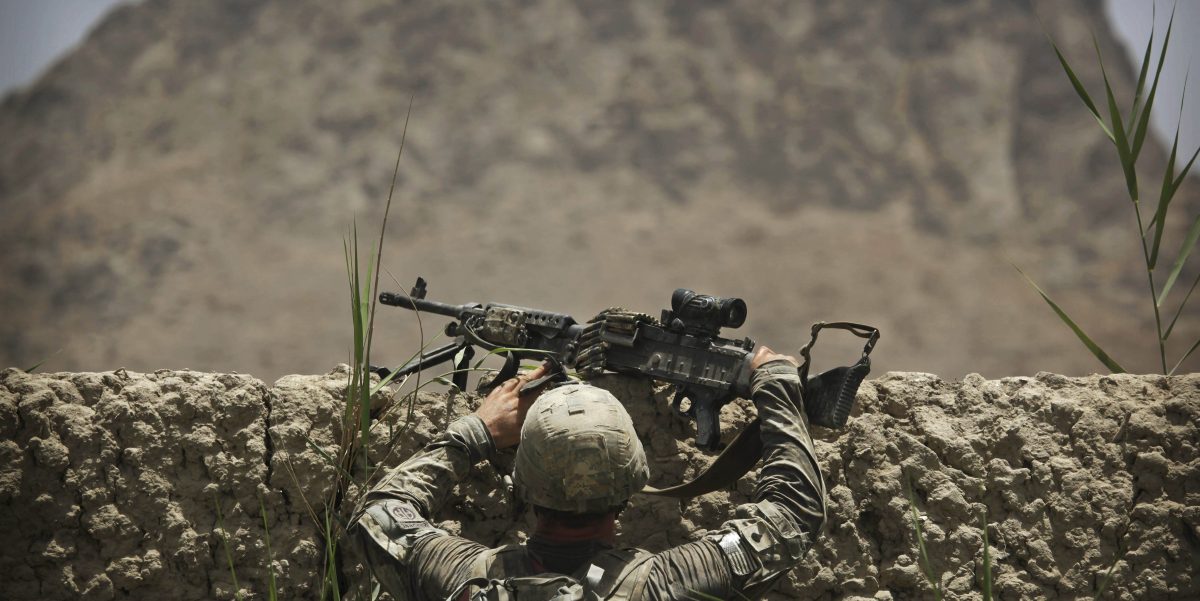
The Taliban seeded the orchards with improvised explosive devices set off by a foot on a pressure plate, a boot on a tripwire, or Taliban hands gripping a remote control. The Americans countered with overwhelming firepower: attack helicopters, armored gun trucks, and infantrymen toting M4 carbines. It was a “rough time for the unit,” another veteran of the platoon remembered. They saw a great deal of “contact,” engaging the Taliban more times than another unit member could recall.
But the former mortarman in Banning had come to talk about one particular incident that, more than a decade later, he could not forget.
The CID agent gave the veteran a “cleansing waiver of rights” to read and sign. It advised the veteran that he had the right to remain silent, that any statement he made could be used against him at trial, and that he was providing testimony “freely and voluntarily.” The veteran waived his rights and signed the document on March 28, 2023 at 1:31 p.m. He acknowledged, according to exclusive criminal investigation documents obtained by The Intercept, that he killed an unarmed man and wounded a woman. More than that, he said that he “needed to be held accountable for his actions.” He told CID that he had “committed a war crime.”
Twenty-five years ago, in the wake of the 9/11 attacks, an angry America went to war in Afghanistan. The conflict would become, by some counts, the longest in U.S. history, stretching across four presidential administrations. It ended where it started, with the Taliban in control of the country after a crushing 2021 defeat for the U.S. and the Afghan allies it propped up for two decades.
The U.S. lost around 2,400 troops in Afghanistan at a staggering cost of around $2.3 trillion. Afghans suffered far worse. In October 2001, President George W. Bush announced that “the oppressed people of Afghanistan will know the generosity of America.” But from almost the opening American salvo, they began dying at U.S. hands.
During just the first five months of the conflict, there were no fewer than 136 media reports of U.S. attacks that killed between 1,200 and 3,155 civilians. Year after year, U.S. and coalition airstrikes killed Afghans – sometimes scores of civilians, sometimes hundreds. The deaths continued to the war’s final moments when an August 2021 drone strike targeting a suspected terrorist in the country’s capital, Kabul, instead killed 10 civilians, seven of them children. More than 70,000 Afghan and Pakistani civilians are estimated to have died as a direct result of the war, according to Brown University’s Costs of War project.
While the carnage of the American air war garnered the biggest headlines, Afghans were also gunned down, again and again, by U.S. ground troops. Following a 2007 ambush, Marines killed 19 civilians and wounded 50. An initial investigation found the Marines used excessive force when they killed civilians after a suicide bombing. Later, the Americans were recast as victims. In 2010, a “kill team” from the Army’s 5th Stryker Brigade slew at least three civilians over four months and mutilated the dead for war trophies. Eleven of the 12 soldiers charged were convicted of crimes, but most were released from prison by the mid-2010s. Staff Sgt. Robert Bales massacred 16 Afghan civilians in 2012. A Special Forces A-Team was accused of killing close to 20 civilians in 2012 and 2013. The remains of 10 victims were later found buried outside their base. A U.S. investigation exonerated the Americans of any wrongdoing. Only one man was punished: Zikria Kandahari, the unit’s Afghan interpreter.
Pete Hegseth, now the self-styled Secretary of War, served with the Army National Guard in Afghanistan during that era. In Trump’s first term, when he was a Fox News personality, Hegseth lobbied on behalf of three men who were convicted or facing charges related to war crimes committed in Iraq and Afghanistan. Trump intervened in all three cases, granting two pardons and reversing a demotion.
During his confirmation hearing last year, Hegseth complained that “restrictive” rules of engagement had “difficult to actually do your job on the battlefield,” repeatedly recalling his own service. “I was the senior counter-insurgency instructor in Afghanistan. My job was to understand how the Taliban and Al Qaeda operated,” he explained. “They knew our rules of engagement, and when they were more restrictive, they took advantage of them.” He continued: “We don’t need burdensome rules of engagement that make it impossible for us to win these wars.”
But what the veteran in Banning described to CID agents was anything but burdensome.
In April or May — he couldn’t recall which — of 2010, that veteran said he was carrying an M4 carbine as his unit moved about 3 kilometers into the Arghandab and occupied an abandoned building at the edge of a village. When the Americans were attacked, they returned fire, killing a couple Taliban members.
The unit readied themselves, expecting the Taliban to regroup and mount another assault. The Americans intercepted a radio transmission. A translator told them that a single male militant on a motorcycle, transporting rocket-propelled grenades, was headed toward them, according to the documents. The unit’s chain of command authorized the use of force.
When a motorcycle rider came into view, a sniper took aim and fired off one round. He missed.
The respite for the motorcycle man was short-lived, however. About 500 feet away, close to 20 Americans raised their rifles.
An M4 carbine — a magazine-fed, gas-operated, air-cooled, shoulder-fired weapon — shoots lightweight bullets at extremely high speeds. In the spring of 2010, M855 5.56-mm bullets were de rigueur for U.S. forces. Fast with low mass, the rounds produce a tremendous amount of kinetic energy. When they slam into a human body, that energy is transmitted to the soft tissue of the victim creating a “wound channel” that causes massive blood loss.
The Banning mortarman fired off one round. Others from the unit opened up, too.
The motorcycle man never reached his destination. If someone was waiting for him to arrive on that spring day in 2010, they still are.
The Banning veteran and others walked up to the Afghan man and “witnessed a military aged male deceased with multiple gunshot wounds to the face and other areas of his body,” wrote the CID special agent, transcribing the mortarman’s testimony. “No RPG’s were present.”
Nobody knew how many rounds hit him, but the damage to the Afghan man’s body was so extensive that he was “unidentifiable,” according to another witness. The mutilation was so devastating that the Americans were unable to even collect his “biometrics”: fingerpr
The veteran had served with roughly 20 mortarmen and scouts from a platoon in the 2nd Battalion, 508th Parachute Infantry Regiment assigned to Combat Outpost Ware in Afghanistan’s Arghandab River Valley in 2010. A lush land of grape groves and pomegranate orchards, towering sunflowers and marijuana plants, the Arghandab was crisscrossed by canals and was a flashpoint in Kandahar Province, the spiritual homeland of Afghanistan’s once and future rulers, the Taliban.
The soldiers from the 82nd Airborne played a cat-and-mouse game with the Taliban. America’s official policy was counterinsurgency, or COIN: a re-tread of a failed strategy of the Vietnam War that promised a kinder, gentler brand of warfare aimed at winning Afghan hearts and minds. But in the Arghandab Valley, the COIN of the realm was kinetic.
The Taliban seeded the orchards with improvised explosive devices set off by a foot on a pressure plate, a boot on a tripwire, or Taliban hands gripping a remote control. The Americans countered with overwhelming firepower: attack helicopters, armored gun trucks, and infantrymen toting M4 carbines. It was a “rough time for the unit,” another veteran of the platoon remembered. They saw a great deal of “contact,” engaging the Taliban more times than another unit member could recall.
But the former mortarman in Banning had come to talk about one particular incident that, more than a decade later, he could not forget.
The CID agent gave the veteran a “cleansing waiver of rights” to read and sign. It advised the veteran that he had the right to remain silent, that any statement he made could be used against him at trial, and that he was providing testimony “freely and voluntarily.” The veteran waived his rights and signed the document on March 28, 2023 at 1:31 p.m. He acknowledged, according to exclusive criminal investigation documents obtained by The Intercept, that he killed an unarmed man and wounded a woman. More than that, he said that he “needed to be held accountable for his actions.” He told CID that he had “committed a war crime.”
Twenty-five years ago, in the wake of the 9/11 attacks, an angry America went to war in Afghanistan. The conflict would become, by some counts, the longest in U.S. history, stretching across four presidential administrations. It ended where it started, with the Taliban in control of the country after a crushing 2021 defeat for the U.S. and the Afghan allies it propped up for two decades.
The U.S. lost around 2,400 troops in Afghanistan at a staggering cost of around $2.3 trillion. Afghans suffered far worse. In October 2001, President George W. Bush announced that “the oppressed people of Afghanistan will know the generosity of America.” But from almost the opening American salvo, they began dying at U.S. hands.
During just the first five months of the conflict, there were no fewer than 136 media reports of U.S. attacks that killed between 1,200 and 3,155 civilians. Year after year, U.S. and coalition airstrikes killed Afghans – sometimes scores of civilians, sometimes hundreds. The deaths continued to the war’s final moments when an August 2021 drone strike targeting a suspected terrorist in the country’s capital, Kabul, instead killed 10 civilians, seven of them children. More than 70,000 Afghan and Pakistani civilians are estimated to have died as a direct result of the war, according to Brown University’s Costs of War project.
While the carnage of the American air war garnered the biggest headlines, Afghans were also gunned down, again and again, by U.S. ground troops. Following a 2007 ambush, Marines killed 19 civilians and wounded 50. An initial investigation found the Marines used excessive force when they killed civilians after a suicide bombing. Later, the Americans were recast as victims. In 2010, a “kill team” from the Army’s 5th Stryker Brigade slew at least three civilians over four months and mutilated the dead for war trophies. Eleven of the 12 soldiers charged were convicted of crimes, but most were released from prison by the mid-2010s. Staff Sgt. Robert Bales massacred 16 Afghan civilians in 2012. A Special Forces A-Team was accused of killing close to 20 civilians in 2012 and 2013. The remains of 10 victims were later found buried outside their base. A U.S. investigation exonerated the Americans of any wrongdoing. Only one man was punished: Zikria Kandahari, the unit’s Afghan interpreter.
Pete Hegseth, now the self-styled Secretary of War, served with the Army National Guard in Afghanistan during that era. In Trump’s first term, when he was a Fox News personality, Hegseth lobbied on behalf of three men who were convicted or facing charges related to war crimes committed in Iraq and Afghanistan. Trump intervened in all three cases, granting two pardons and reversing a demotion.
During his confirmation hearing last year, Hegseth complained that “restrictive” rules of engagement had “difficult to actually do your job on the battlefield,” repeatedly recalling his own service. “I was the senior counter-insurgency instructor in Afghanistan. My job was to understand how the Taliban and Al Qaeda operated,” he explained. “They knew our rules of engagement, and when they were more restrictive, they took advantage of them.” He continued: “We don’t need burdensome rules of engagement that make it impossible for us to win these wars.”
But what the veteran in Banning described to CID agents was anything but burdensome.
In April or May — he couldn’t recall which — of 2010, that veteran said he was carrying an M4 carbine as his unit moved about 3 kilometers into the Arghandab and occupied an abandoned building at the edge of a village. When the Americans were attacked, they returned fire, killing a couple Taliban members.
The unit readied themselves, expecting the Taliban to regroup and mount another assault. The Americans intercepted a radio transmission. A translator told them that a single male militant on a motorcycle, transporting rocket-propelled grenades, was headed toward them, according to the documents. The unit’s chain of command authorized the use of force.
When a motorcycle rider came into view, a sniper took aim and fired off one round. He missed.
The respite for the motorcycle man was short-lived, however. About 500 feet away, close to 20 Americans raised their rifles.
An M4 carbine — a magazine-fed, gas-operated, air-cooled, shoulder-fired weapon — shoots lightweight bullets at extremely high speeds. In the spring of 2010, M855 5.56-mm bullets were de rigueur for U.S. forces. Fast with low mass, the rounds produce a tremendous amount of kinetic energy. When they slam into a human body, that energy is transmitted to the soft tissue of the victim creating a “wound channel” that causes massive blood loss.
The Banning mortarman fired off one round. Others from the unit opened up, too.
The motorcycle man never reached his destination. If someone was waiting for him to arrive on that spring day in 2010, they still are.
The Banning veteran and others walked up to the Afghan man and “witnessed a military aged male deceased with multiple gunshot wounds to the face and other areas of his body,” wrote the CID special agent, transcribing the mortarman’s testimony. “No RPG’s were present.”
Nobody knew how many rounds hit him, but the damage to the Afghan man’s body was so extensive that he was “unidentifiable,” according to another witness. The mutilation was so devastating that the Americans were unable to even collect his “biometrics”: fingerpr
🔗 Share Article
Tags:#جرائم حرب#أفغانستان#الجيش الأمريكي#الإفلات من العقاب#التحقيقات الجنائية
Source: The Intercept
For Context
Related reads from the same topic or latest developments