Trump Has His Own Communist Manifesto
Foreign Policy

Foreign Policy
Original Source
As President Trump and Republicans warn against the threat of communism, the Trump administration has seized stakes in roughly 30 companies across major industries, marking a dramatic shift toward state capitalism. This sweeping economic intervention contradicts traditional Republican free-market ideology and unfolds without a coherent long-term strategy.
Trump Takes State Capitalism to New Levels
By using this website, you agree to our use of cookies. This use includes personalization of content and ads, and traffic analytics. Review our Privacy Policy for more information.
!Foreign Policy
Foreign Policy
Get analysis and alerts more quickly in the mobile app.
Install
Back to Foreign Policy Magazine home page
* Latest
* Regions
+ Asia & the Pacific
+ China
+ Middle East & Africa
+ Americas
+ Europe
* Newsletters
Editors’ Picks
Evening roundup with our editors’ favorite stories of the day
!World Brief Icon
World Brief
Your guide to the most important world stories of the day
!China Brief Icon
China Brief
The latest news, analysis, and data from the country each week
Situation Report
Weekly update on what’s driving U.S. national security policy
FP Weekend
A curation of our best book reviews, deep dives, and other reads
!Africa Brief Icon
Africa Brief
Essential analysis of the stories shaping geopolitics on the continent
!South Asia Brief Icon
South Asia Brief
Weekly update on developments in India and its neighbors
The Reading List
Curated guides on geopolitics and current affairs
FP Bookshelf
A monthly guide to FP’s book reviews, excerpts, and reading recommendations
!Latin America Brief Icon
Latin America Brief
One-stop digest of politics, economics, and culture
!Southeast Asia Brief Icon
Southeast Asia Brief
A weekly dispatch with news from the region’s 11 countries
The New Geopolitics
A five-part masterclass in IR theory with Harvard Professor Stephen M. Walt
View All Newsletters
* FP Live
* Latest
* Trending:
* Europe's record heatwave
* Gaza plan
* Ceuta's future
* Colombia's new president
Search this website
* Preferences
* My FP Feed
* Saved Articles
* Newsletters
* Magazine Archive
* Subscription Settings
* FAQs
* Log Out
Sign In
Sign In
Campus & Team Access Campus & Team Access
Subscribe SubscribeCampus and team access Campus and team access
Analysis:
Trump Has His Own Communist Manifesto
*
*
* Facebook
* Bluesky
* X
* LinkedIn
* WhatsApp
* Reddit
Save
1. Create an FP account to save articles to read later.
Sign Up
ALREADY AN FP SUBSCRIBER? LOGIN
PDF
1. **Downloadable PDFs** are a benefit of an FP subscription.
Subscribe Now
ALREADY AN FP SUBSCRIBER? LOGIN
Gift
*
*
* WhatsApp
1. Gifting articles is a subscriber benefit.
Subscribe Now
ALREADY AN FP SUBSCRIBER? LOGIN
2. This article is an Insider exclusive.
Contact us at [email protected] to learn about upgrade options, unlocking the ability to gift this article.
Analysis
Trump Has His Own Communist Manifesto
Seldom before has the U.S. government intervened so actively in the economy.
By **Keith Johnson**, a staff writer at *Foreign Policy* covering geoeconomics and energy.
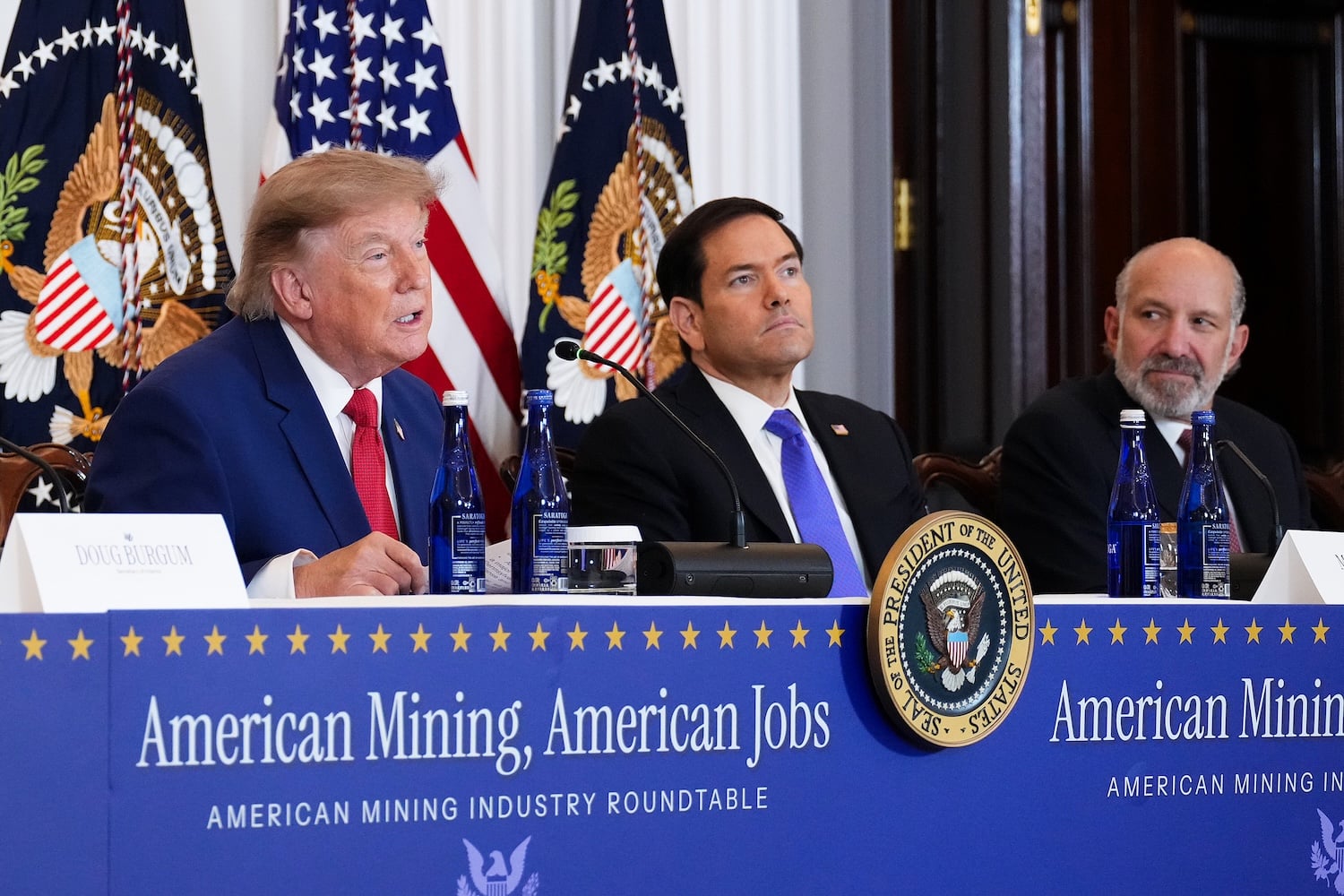
!Donald Trump, Marco Rubio, and Howard Lutnick sit at a table that has a banner that reads "American Mining, American Jobs." Behind them are multiple flags, one of them being the American flag.
*Donald Trump, Marco Rubio, and Howard Lutnick sit at a table that has a banner that reads "American Mining, American Jobs." Behind them are multiple flags, one of them being the American flag.*
U.S. President Donald Trump speaks as U.S. Secretary of State Marco Rubio and U.S. Commerce Secretary Howard Lutnick listen during a roundtable on the American mining industry in Washington on Aug. 7. Eric Lee/Getty Images
1. Get audio access with any FP subscription.
Subscribe Now
ALREADY AN FP SUBSCRIBER? LOGIN
August 11, 2026, 11:33 AM
At a time when U.S. President Donald Trump and the Republican Party are warning about the threat of “communism,” the Trump administration itself has taken over much of the means of production.
If Trump’s foray into state capitalism last year seemed alarming—and it did—it has only gotten worse.
At a time when U.S. President Donald Trump and the
Republican Partyare
warningabout the threat of “
communism,” the Trump administration itself has taken over much of the means of production.
If Trump’s foray into state capitalism last year
seemed alarming—and it did—it has only gotten worse.
The U.S. government
now holdsequity stakes in as many as 30 companies across a gamut of industries. What started with a “
golden share” in U.S. Steel has morphed into a government takeover of vast swathes of the economy. Trump recently
browbeatoil companies such as ExxonMobil and Chevron over their refining margins, as the Iran war’s economic toll has led to higher gasoline prices. His own pick for the Federal Reserve is
floundering,even as Trump
spam calls himrepeatedly. All the while, Trump continues to
arrogatecongressional powers of taxation to raise
import dutieson U.S. consumers.
“There are some novel economic changes going on, and nobody is talking about it,” said Tad DeHaven, an analyst at the Cato Institute who is setting up a program to research state capitalism. “Since it is driven by one man’s personal desires, there is no plan and no strategy. It changes by the day.”
Read More
*
*With his back turned to the camera, Trump stands points at a crowd of people wearing hard hats and reflective safety vests. Behind Trump and the crowd is a massive American flag that seems to cover an entire wall.*
Trump Embraces State Capitalism
The level of U.S. government economic intervention under Trump 2.0 is off the charts.
Analysis
|
Keith Johnson,
Christina Lu
*
*A worker mans a furnace during the nickel-smelting process in Indonesia’s South Sulawesi province.*
Trump’s Chaotic Agenda Has a Critical Through Line
What do Greenland, Canada, and Ukraine have in common? Critical minerals.
Analysis
|
Christina Lu
*
*An photo collage illustration shows Donald Trump pointing toward buildings with case falling around them. Semiconductor chips also make up the scene. Red bars overlay the cream-colored background behind the photos.*
Trump’s State Capitalism, by the Numbers
The companies and sectors where the U.S. president has taken a government stake.
Analysis
|
FP Staff
Trump’s
blitzkriegon industry has focused on rare earths, mining, metals, and semiconductors, among other sectors. It is a jarring move for a nominally Republican president, from a party that has long espoused free-market values.
There is a case to be made for state intervention in certain industries that need government injections of money, know-how, or support otherwise. Shipbuilding is a good case in point and was, at one point in Trump’s second administration, a priority—
until it wasn’t.Semiconductors are another critical sector that requires government support in most cases; Taiwan’s world-beating chip industry grew off government
largesse, as did,
for a spell, the U.S. chip sector. There are
scadsof academic research about the spread of state capitalism worldwide.
The difference between what Trump is doing and what other countries are doing is significant. While other countries grapple with the sudden vulnerability of supply chains or a needy infant industry, the Trump administration has turned state capitalism into a
revenue stream. The number of
exemptionsand
exclusionsfor tariffs, and
special treatmentfor
certain firms, has grown.
“The spin is always, ‘It’s just the critical industries.’ There is not some sophisticated plan here. This is someone who wants to exercise control over the economy,” DeHaven said.
*
*
**Keith Johnson** is a staff writer at *Foreign Policy*covering geoeconomics and energy. Bluesky:@kfj-fp.bsky.social X:@KFJ\_FP
Read More On
Donald Trump|
Economics|
United States
Join the Conversation
Commenting is a benefit of a *Foreign Policy* subscription.
Subscribe Subscribe
Already a subscriber? **Log In**.
View 1 Comments
Join the Conversation
Join the conversation on this and other recent *Foreign Policy* articles when you subscribe now.
Subscribe Subscribe
Not your account? **Log out**
View 1 Comments
Join the Conversation
Please follow our comment guidelin
By using this website, you agree to our use of cookies. This use includes personalization of content and ads, and traffic analytics. Review our Privacy Policy for more information.
!Foreign Policy
Foreign Policy
Get analysis and alerts more quickly in the mobile app.
Install
Back to Foreign Policy Magazine home page
* Latest
* Regions
+ Asia & the Pacific
+ China
+ Middle East & Africa
+ Americas
+ Europe
* Newsletters
Editors’ Picks
Evening roundup with our editors’ favorite stories of the day
!World Brief Icon
World Brief
Your guide to the most important world stories of the day
!China Brief Icon
China Brief
The latest news, analysis, and data from the country each week
Situation Report
Weekly update on what’s driving U.S. national security policy
FP Weekend
A curation of our best book reviews, deep dives, and other reads
!Africa Brief Icon
Africa Brief
Essential analysis of the stories shaping geopolitics on the continent
!South Asia Brief Icon
South Asia Brief
Weekly update on developments in India and its neighbors
The Reading List
Curated guides on geopolitics and current affairs
FP Bookshelf
A monthly guide to FP’s book reviews, excerpts, and reading recommendations
!Latin America Brief Icon
Latin America Brief
One-stop digest of politics, economics, and culture
!Southeast Asia Brief Icon
Southeast Asia Brief
A weekly dispatch with news from the region’s 11 countries
The New Geopolitics
A five-part masterclass in IR theory with Harvard Professor Stephen M. Walt
View All Newsletters
* FP Live
* Latest
* Trending:
* Europe's record heatwave
* Gaza plan
* Ceuta's future
* Colombia's new president
Search this website
* Preferences
* My FP Feed
* Saved Articles
* Newsletters
* Magazine Archive
* Subscription Settings
* FAQs
* Log Out
Sign In
Sign In
Campus & Team Access Campus & Team Access
Subscribe SubscribeCampus and team access Campus and team access
Analysis:
Trump Has His Own Communist Manifesto
*
*
* Bluesky
* X
Save
1. Create an FP account to save articles to read later.
Sign Up
ALREADY AN FP SUBSCRIBER? LOGIN
1. **Downloadable PDFs** are a benefit of an FP subscription.
Subscribe Now
ALREADY AN FP SUBSCRIBER? LOGIN
Gift
*
*
1. Gifting articles is a subscriber benefit.
Subscribe Now
ALREADY AN FP SUBSCRIBER? LOGIN
2. This article is an Insider exclusive.
Contact us at [email protected] to learn about upgrade options, unlocking the ability to gift this article.
Analysis
Trump Has His Own Communist Manifesto
Seldom before has the U.S. government intervened so actively in the economy.
By **Keith Johnson**, a staff writer at *Foreign Policy* covering geoeconomics and energy.
!Donald Trump, Marco Rubio, and Howard Lutnick sit at a table that has a banner that reads "American Mining, American Jobs." Behind them are multiple flags, one of them being the American flag.
*Donald Trump, Marco Rubio, and Howard Lutnick sit at a table that has a banner that reads "American Mining, American Jobs." Behind them are multiple flags, one of them being the American flag.*
U.S. President Donald Trump speaks as U.S. Secretary of State Marco Rubio and U.S. Commerce Secretary Howard Lutnick listen during a roundtable on the American mining industry in Washington on Aug. 7. Eric Lee/Getty Images
1. Get audio access with any FP subscription.
Subscribe Now
ALREADY AN FP SUBSCRIBER? LOGIN
August 11, 2026, 11:33 AM
At a time when U.S. President Donald Trump and the Republican Party are warning about the threat of “communism,” the Trump administration itself has taken over much of the means of production.
If Trump’s foray into state capitalism last year seemed alarming—and it did—it has only gotten worse.
At a time when U.S. President Donald Trump and the
Republican Partyare
warningabout the threat of “
communism,” the Trump administration itself has taken over much of the means of production.
If Trump’s foray into state capitalism last year
seemed alarming—and it did—it has only gotten worse.
The U.S. government
now holdsequity stakes in as many as 30 companies across a gamut of industries. What started with a “
golden share” in U.S. Steel has morphed into a government takeover of vast swathes of the economy. Trump recently
browbeatoil companies such as ExxonMobil and Chevron over their refining margins, as the Iran war’s economic toll has led to higher gasoline prices. His own pick for the Federal Reserve is
floundering,even as Trump
spam calls himrepeatedly. All the while, Trump continues to
arrogatecongressional powers of taxation to raise
import dutieson U.S. consumers.
“There are some novel economic changes going on, and nobody is talking about it,” said Tad DeHaven, an analyst at the Cato Institute who is setting up a program to research state capitalism. “Since it is driven by one man’s personal desires, there is no plan and no strategy. It changes by the day.”
Read More
*
*With his back turned to the camera, Trump stands points at a crowd of people wearing hard hats and reflective safety vests. Behind Trump and the crowd is a massive American flag that seems to cover an entire wall.*
Trump Embraces State Capitalism
The level of U.S. government economic intervention under Trump 2.0 is off the charts.
Analysis
|
Keith Johnson,
Christina Lu
*
*A worker mans a furnace during the nickel-smelting process in Indonesia’s South Sulawesi province.*
Trump’s Chaotic Agenda Has a Critical Through Line
What do Greenland, Canada, and Ukraine have in common? Critical minerals.
Analysis
|
Christina Lu
*
*An photo collage illustration shows Donald Trump pointing toward buildings with case falling around them. Semiconductor chips also make up the scene. Red bars overlay the cream-colored background behind the photos.*
Trump’s State Capitalism, by the Numbers
The companies and sectors where the U.S. president has taken a government stake.
Analysis
|
FP Staff
Trump’s
blitzkriegon industry has focused on rare earths, mining, metals, and semiconductors, among other sectors. It is a jarring move for a nominally Republican president, from a party that has long espoused free-market values.
There is a case to be made for state intervention in certain industries that need government injections of money, know-how, or support otherwise. Shipbuilding is a good case in point and was, at one point in Trump’s second administration, a priority—
until it wasn’t.Semiconductors are another critical sector that requires government support in most cases; Taiwan’s world-beating chip industry grew off government
largesse, as did,
for a spell, the U.S. chip sector. There are
scadsof academic research about the spread of state capitalism worldwide.
The difference between what Trump is doing and what other countries are doing is significant. While other countries grapple with the sudden vulnerability of supply chains or a needy infant industry, the Trump administration has turned state capitalism into a
revenue stream. The number of
exemptionsand
exclusionsfor tariffs, and
special treatmentfor
certain firms, has grown.
“The spin is always, ‘It’s just the critical industries.’ There is not some sophisticated plan here. This is someone who wants to exercise control over the economy,” DeHaven said.
*
*
**Keith Johnson** is a staff writer at *Foreign Policy*covering geoeconomics and energy. Bluesky:@kfj-fp.bsky.social X:@KFJ\_FP
Read More On
Donald Trump|
Economics|
United States
Join the Conversation
Commenting is a benefit of a *Foreign Policy* subscription.
Subscribe Subscribe
Already a subscriber? **Log In**.
View 1 Comments
Join the Conversation
Join the conversation on this and other recent *Foreign Policy* articles when you subscribe now.
Subscribe Subscribe
Not your account? **Log out**
View 1 Comments
Join the Conversation
Please follow our comment guidelin
🔗 Share Article
Tags:#ترامب#الرأسمالية الدولتية#الاقتصاد الأمريكي#السياسة الاقتصادية#التعرفات الجمركية
Source: Foreign Policy
For Context
Related reads from the same topic or latest developments


