What the BRICS Summit Meant for Brazil
Foreign Policy

Foreign Policy
Original Source
One year after hosting the BRICS summit, Brazil finds itself struggling to shape the bloc's direction amid expansion and rising hardline voices. The timing is critical as Brazil's presidential elections approach, potentially shifting the country's geopolitical course.
What the BRICS Summit Meant for Brazil
By using this website, you agree to our use of cookies. This use includes personalization of content and ads, and traffic analytics. Review our Privacy Policy for more information.
!Foreign Policy
Foreign Policy
Get analysis and alerts more quickly in the mobile app.
Install
Back to Foreign Policy Magazine home page
* Latest
* Regions
+ Asia & the Pacific
+ China
+ Middle East & Africa
+ Americas
+ Europe
* Newsletters
Editors’ Picks
Evening roundup with our editors’ favorite stories of the day
!World Brief Icon
World Brief
Your guide to the most important world stories of the day
!China Brief Icon
China Brief
The latest news, analysis, and data from the country each week
Situation Report
Weekly update on what’s driving U.S. national security policy
FP Weekend
A curation of our best book reviews, deep dives, and other reads
!Africa Brief Icon
Africa Brief
Essential analysis of the stories shaping geopolitics on the continent
!South Asia Brief Icon
South Asia Brief
Weekly update on developments in India and its neighbors
The Reading List
Curated guides on geopolitics and current affairs
FP Bookshelf
A monthly guide to FP’s book reviews, excerpts, and reading recommendations
!Latin America Brief Icon
Latin America Brief
One-stop digest of politics, economics, and culture
!Southeast Asia Brief Icon
Southeast Asia Brief
A weekly dispatch with news from the region’s 11 countries
The New Geopolitics
A five-part masterclass in IR theory with Harvard Professor Stephen M. Walt
View All Newsletters
* FP Live
* Latest
* Trending:
* AI risk backlash
* Trump-Xi meeting
* Iran war
Search this website
* Preferences
* My FP Feed
* Saved Articles
* Newsletters
* Magazine Archive
* Subscription Settings
* FAQs
* Log Out
Sign In
Sign In
Partner with FP at UNGA81 Partner with FP at UNGA81
Subscribe SubscribePartner with FP at UNGA81 Partner with FP at UNGA81
Latin America Brief:
What the BRICS Summit Meant for Brazil
*
*
* Facebook
* Bluesky
* X
* LinkedIn
* WhatsApp
* Reddit
Save
Save
1. Create an FP account to save articles to read later.
Sign Up
ALREADY AN FP SUBSCRIBER? LOGIN
PDF
PDF
1. **Downloadable PDFs** are a benefit of an FP subscription.
Subscribe Now
ALREADY AN FP SUBSCRIBER? LOGIN
Gift
Gift
*
*
* WhatsApp
1. Gifting articles is a subscriber benefit.
Subscribe Now
ALREADY AN FP SUBSCRIBER? LOGIN
2. This article is an Insider exclusive.
Contact us at [email protected] to learn about upgrade options, unlocking the ability to gift this article.
Latin America Brief
A one-stop weekly digest of politics, economics, technology, and culture in Latin America. Delivered Friday.
What the BRICS Summit Meant for Brazil
One year after hosting the event, is the country still shaping the bloc?
!Osborn-Catherine-foreign-policy-columnist15
*Osborn-Catherine-foreign-policy-columnist15*
*Catherine Osborn*
By **Catherine Osborn**, the writer of *Foreign Policy*’s weekly Latin America Brief.
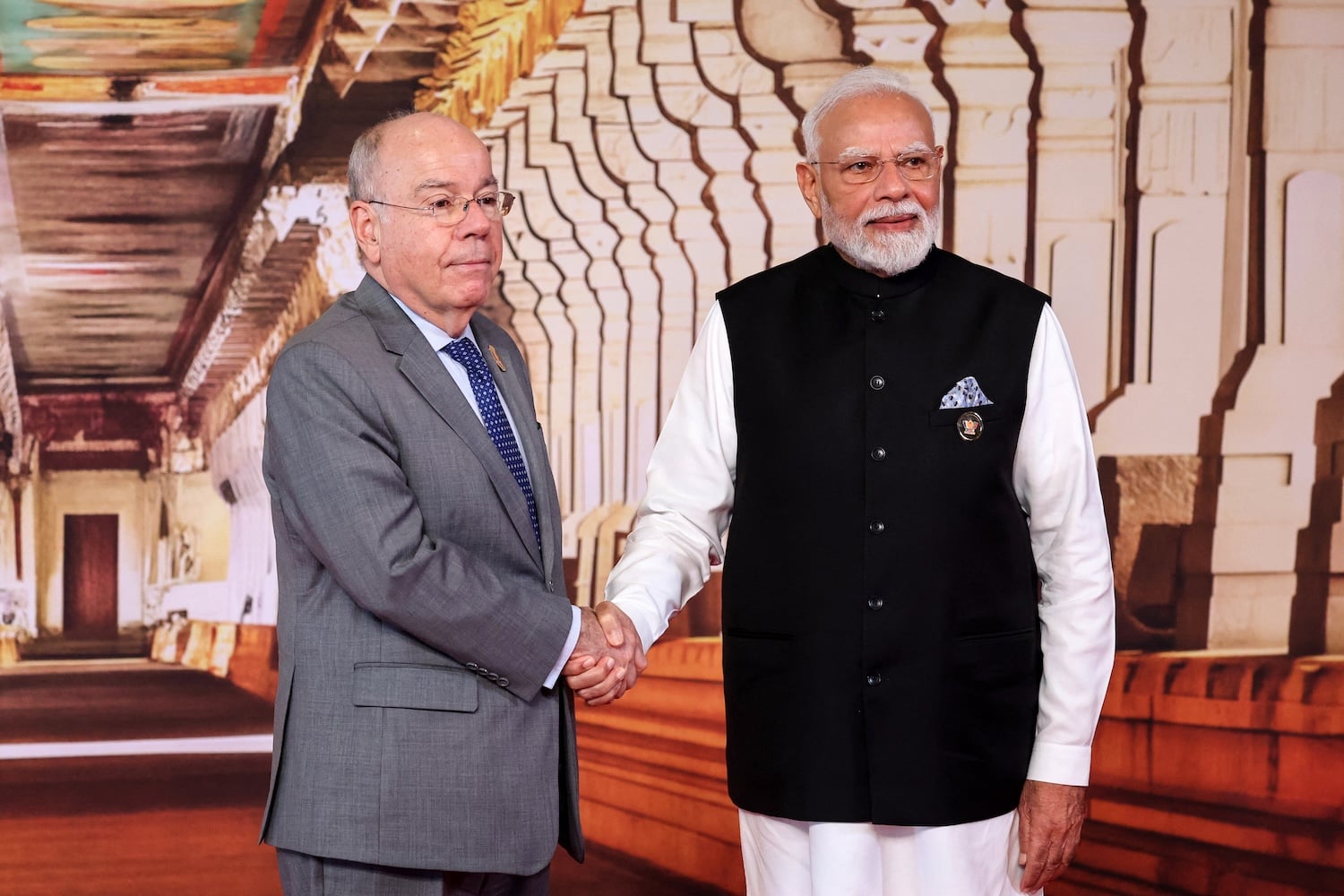
!Indian Prime Minister Narendra Modi (R) shakes hands with Brazilian Foreign Minister Mauro Vieira.
*Indian Prime Minister Narendra Modi (R) shakes hands with Brazilian Foreign Minister Mauro Vieira.*
Indian Prime Minister Narendra Modi (right) shakes hands with Brazilian Foreign Minister Mauro Vieira during a welcome ceremony for the BRICS leaders' summit in New Delhi on Sept. 12. Alexander Kazakov/AFP via Getty Images
My FP:
Follow topics and authors to get straight to what you like. Exclusively for FP subscribers. Subscribe Now | Log In
*
*
September 18, 2026, 8:00 AM
Welcome back to *Foreign Policy*’s Latin America Brief.
The highlights this week: Brazil sends its foreign minister to a **BRICS summit** in New Delhi, Guatemalans protest **fuel price hikes**, and Chile remembers a **renowned documentarian**.
Welcome back to *Foreign Policy*’s Latin America Brief.
The highlights this week: Brazil sends its foreign minister to a **BRICS summit** in New Delhi, Guatemalans protest **fuel price hikes**, and Chile remembers a **renowned documentarian**.
Sign up to receive Latin America Brief in your inbox every Friday.
---
Brazil’s Balancing Acts at BRICS
The BRICS leaders’ summit in New Delhi last weekend underscored how as the global order unravels, cooperation among the grouping deepens. Many long-standing BRICS demands, such as expanding the United Nations Security Council, haven’t materialized. But the bloc has steadily increased economic ties, including by launching its own development bank.
BRICS members have long sought to reform the Western-dominated order, making their joint positions particularly relevant today. This year, the warring parties of Iran and the United Arab Emirates both sent their presidents—marking the furthest international trip for Iranian President Masoud Pezeshkian since the Iran war began in February.
Brazil, a founding member of BRICS and the host of last year’s summit, has had a more difficult time steering the grouping’s priorities since it expanded from five to nine members in 2024. (Indonesia, the newest member, joined in 2025.) Brazil opposed the expansion, fearing a loss of cohesion with the addition of avowedly anti-West Iran. Like India, Brazil wants BRICS to be reformist, not revolutionary.
Brazilian Foreign Minister Mauro Vieira attended in place of Brazilian President Luiz Inácio Lula da Silva, who is in the midst of a reelection campaign. Last week, Vieira said Brazil believes “a multipolar world that promises peace and prosperity must not be confused with a world of spheres of influence.” In other words, Brazil wants a system of rules—not rule by the strongest.
Brazil managed to keep some of its priorities alive in this year’s summit declaration. Notably, in the joint statement BRICS reaffirmed its support for the U.N. system and the Paris climate agreement—going further than the G-7, whose most recent declarations did not mention the climate pact.
The summit’s endorsements are words, not actions, and some of the group’s members—most notably Russia—have flagrantly violated the U.N. Charter in recent years. But words still matter when both the U.N. system and climate action are under attack—and when the leadership of the U.N. itself is up for grabs.
Russia may have only begrudgingly endorsed U.N. principles, but the fact that it agreed to acknowledge the legitimacy of the U.N. system at the BRICS summit bodes better for the world body’s future functioning than if Russia had blocked any mention of it.
Brazil’s window to continue shaping BRICS in this direction may be closing as its general elections approach on Oct. 4. Far-right Brazilian presidential candidate Flávio Bolsonaro—whose political camp has a record of U.N.-bashing and climate change denialism—has as strong a chance of winning as Lula, polls say.
---
Upcoming Events
**Saturday, Sept. 19:** Chile marks its Independence Day with a military parade.
**Sunday, Oct. 4:** Brazil holds presidential and legislative elections.
---
What We’re Following
**Support for democracy on the rise.** In its latest polling, AmericasBarometer at Vanderbilt University has found increased public support for democracy in Latin America. The share of respondents across the region who agreed that “democracy may have problems, but it is better than any other form of government” rose to 65 percent, up from 59 percent in 2023.
The report attributed this rebound in part to “positive changes in individuals’ lived experiences with crime, corruption, and economic well-being.” Support for democracy was higher among respondents who said their household income had risen in the last two years, who had not run out of food recently, and who had not been victims of crime.
The survey also touched on geopolitics, echoing a recent Pew Research Center survey in finding that views of China in the region are improving relative to the United States. Washington has historically cast itself as Latin
By using this website, you agree to our use of cookies. This use includes personalization of content and ads, and traffic analytics. Review our Privacy Policy for more information.
!Foreign Policy
Foreign Policy
Get analysis and alerts more quickly in the mobile app.
Install
Back to Foreign Policy Magazine home page
* Latest
* Regions
+ Asia & the Pacific
+ China
+ Middle East & Africa
+ Americas
+ Europe
* Newsletters
Editors’ Picks
Evening roundup with our editors’ favorite stories of the day
!World Brief Icon
World Brief
Your guide to the most important world stories of the day
!China Brief Icon
China Brief
The latest news, analysis, and data from the country each week
Situation Report
Weekly update on what’s driving U.S. national security policy
FP Weekend
A curation of our best book reviews, deep dives, and other reads
!Africa Brief Icon
Africa Brief
Essential analysis of the stories shaping geopolitics on the continent
!South Asia Brief Icon
South Asia Brief
Weekly update on developments in India and its neighbors
The Reading List
Curated guides on geopolitics and current affairs
FP Bookshelf
A monthly guide to FP’s book reviews, excerpts, and reading recommendations
!Latin America Brief Icon
Latin America Brief
One-stop digest of politics, economics, and culture
!Southeast Asia Brief Icon
Southeast Asia Brief
A weekly dispatch with news from the region’s 11 countries
The New Geopolitics
A five-part masterclass in IR theory with Harvard Professor Stephen M. Walt
View All Newsletters
* FP Live
* Latest
* Trending:
* AI risk backlash
* Trump-Xi meeting
* Iran war
Search this website
* Preferences
* My FP Feed
* Saved Articles
* Newsletters
* Magazine Archive
* Subscription Settings
* FAQs
* Log Out
Sign In
Sign In
Partner with FP at UNGA81 Partner with FP at UNGA81
Subscribe SubscribePartner with FP at UNGA81 Partner with FP at UNGA81
Latin America Brief:
What the BRICS Summit Meant for Brazil
*
*
* Bluesky
* X
Save
Save
1. Create an FP account to save articles to read later.
Sign Up
ALREADY AN FP SUBSCRIBER? LOGIN
1. **Downloadable PDFs** are a benefit of an FP subscription.
Subscribe Now
ALREADY AN FP SUBSCRIBER? LOGIN
Gift
Gift
*
*
1. Gifting articles is a subscriber benefit.
Subscribe Now
ALREADY AN FP SUBSCRIBER? LOGIN
2. This article is an Insider exclusive.
Contact us at [email protected] to learn about upgrade options, unlocking the ability to gift this article.
Latin America Brief
A one-stop weekly digest of politics, economics, technology, and culture in Latin America. Delivered Friday.
What the BRICS Summit Meant for Brazil
One year after hosting the event, is the country still shaping the bloc?
!Osborn-Catherine-foreign-policy-columnist15
*Osborn-Catherine-foreign-policy-columnist15*
*Catherine Osborn*
By **Catherine Osborn**, the writer of *Foreign Policy*’s weekly Latin America Brief.
!Indian Prime Minister Narendra Modi (R) shakes hands with Brazilian Foreign Minister Mauro Vieira.
*Indian Prime Minister Narendra Modi (R) shakes hands with Brazilian Foreign Minister Mauro Vieira.*
Indian Prime Minister Narendra Modi (right) shakes hands with Brazilian Foreign Minister Mauro Vieira during a welcome ceremony for the BRICS leaders' summit in New Delhi on Sept. 12. Alexander Kazakov/AFP via Getty Images
My FP:
Follow topics and authors to get straight to what you like. Exclusively for FP subscribers. Subscribe Now | Log In
*
*
September 18, 2026, 8:00 AM
Welcome back to *Foreign Policy*’s Latin America Brief.
The highlights this week: Brazil sends its foreign minister to a **BRICS summit** in New Delhi, Guatemalans protest **fuel price hikes**, and Chile remembers a **renowned documentarian**.
Welcome back to *Foreign Policy*’s Latin America Brief.
The highlights this week: Brazil sends its foreign minister to a **BRICS summit** in New Delhi, Guatemalans protest **fuel price hikes**, and Chile remembers a **renowned documentarian**.
Sign up to receive Latin America Brief in your inbox every Friday.
---
Brazil’s Balancing Acts at BRICS
The BRICS leaders’ summit in New Delhi last weekend underscored how as the global order unravels, cooperation among the grouping deepens. Many long-standing BRICS demands, such as expanding the United Nations Security Council, haven’t materialized. But the bloc has steadily increased economic ties, including by launching its own development bank.
BRICS members have long sought to reform the Western-dominated order, making their joint positions particularly relevant today. This year, the warring parties of Iran and the United Arab Emirates both sent their presidents—marking the furthest international trip for Iranian President Masoud Pezeshkian since the Iran war began in February.
Brazil, a founding member of BRICS and the host of last year’s summit, has had a more difficult time steering the grouping’s priorities since it expanded from five to nine members in 2024. (Indonesia, the newest member, joined in 2025.) Brazil opposed the expansion, fearing a loss of cohesion with the addition of avowedly anti-West Iran. Like India, Brazil wants BRICS to be reformist, not revolutionary.
Brazilian Foreign Minister Mauro Vieira attended in place of Brazilian President Luiz Inácio Lula da Silva, who is in the midst of a reelection campaign. Last week, Vieira said Brazil believes “a multipolar world that promises peace and prosperity must not be confused with a world of spheres of influence.” In other words, Brazil wants a system of rules—not rule by the strongest.
Brazil managed to keep some of its priorities alive in this year’s summit declaration. Notably, in the joint statement BRICS reaffirmed its support for the U.N. system and the Paris climate agreement—going further than the G-7, whose most recent declarations did not mention the climate pact.
The summit’s endorsements are words, not actions, and some of the group’s members—most notably Russia—have flagrantly violated the U.N. Charter in recent years. But words still matter when both the U.N. system and climate action are under attack—and when the leadership of the U.N. itself is up for grabs.
Russia may have only begrudgingly endorsed U.N. principles, but the fact that it agreed to acknowledge the legitimacy of the U.N. system at the BRICS summit bodes better for the world body’s future functioning than if Russia had blocked any mention of it.
Brazil’s window to continue shaping BRICS in this direction may be closing as its general elections approach on Oct. 4. Far-right Brazilian presidential candidate Flávio Bolsonaro—whose political camp has a record of U.N.-bashing and climate change denialism—has as strong a chance of winning as Lula, polls say.
---
Upcoming Events
**Saturday, Sept. 19:** Chile marks its Independence Day with a military parade.
**Sunday, Oct. 4:** Brazil holds presidential and legislative elections.
---
What We’re Following
**Support for democracy on the rise.** In its latest polling, AmericasBarometer at Vanderbilt University has found increased public support for democracy in Latin America. The share of respondents across the region who agreed that “democracy may have problems, but it is better than any other form of government” rose to 65 percent, up from 59 percent in 2023.
The report attributed this rebound in part to “positive changes in individuals’ lived experiences with crime, corruption, and economic well-being.” Support for democracy was higher among respondents who said their household income had risen in the last two years, who had not run out of food recently, and who had not been victims of crime.
The survey also touched on geopolitics, echoing a recent Pew Research Center survey in finding that views of China in the region are improving relative to the United States. Washington has historically cast itself as Latin
🔗 Share Article
Tags:#بريكس#البرازيل#السياسة الدولية#الدبلوماسية#الانتخابات البرازيلية#النظام العالمي
Source: Foreign Policy
For Context
Related reads from the same topic or latest developments

Same context
To protect democracy, Democrats should talk about corruption – not authoritarianism | Jared Abbott and Joan C Williams
Follow-up
Private jets pollute up to 14 times as much as commercial planes and are undertaxed in US, report says
Follow-up