SportsAvailable in English
Why wildcards abound for Venus Williams
Editorial
Cross Lines editing
Source
BBC Sport
BBC Sport

BBC Sport
Original Source
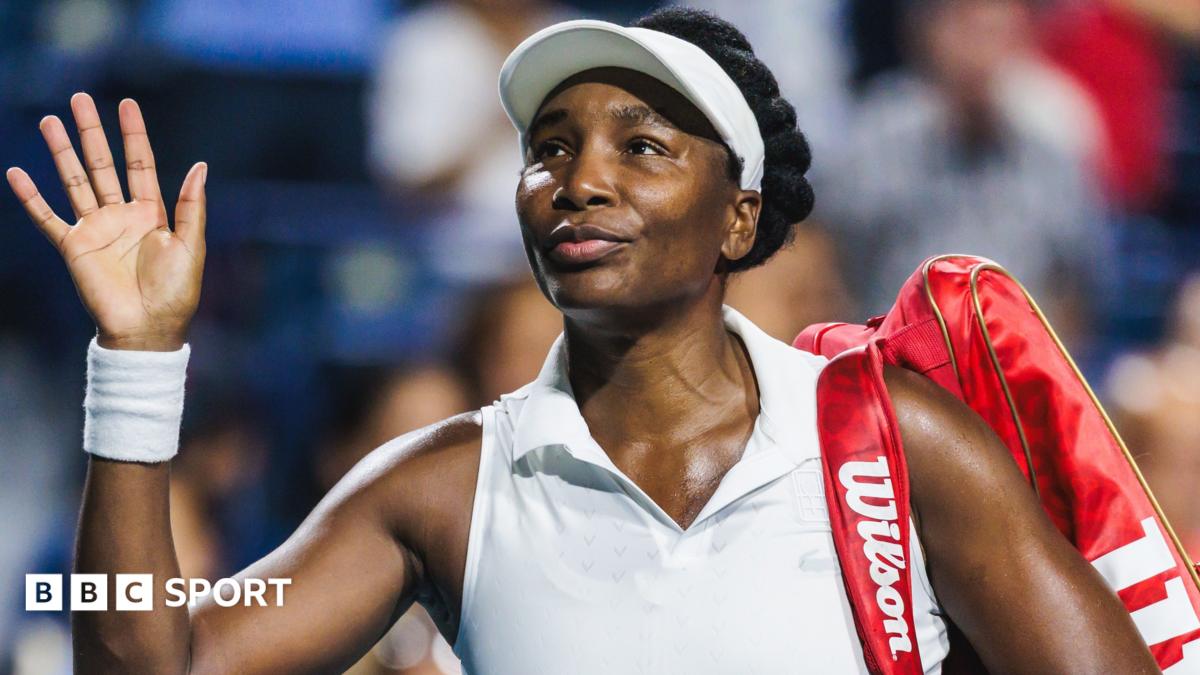
Venus Williams continues to receive multiple wildcards to compete in tournaments despite losing her last 14 singles matches and holding a ranking of 611, as tournament directors value her legendary status and commercial appeal. Tournament organizers argue that iconic players deserve the opportunity to continue competing as long as they remain competitive in individual sets.
Venus Williams has broken many acres of new ground as a tennis player, with five Wimbledon singles titles among her multiple achievements.
The 46-year-old has been playing professionally for nearly 30 years, but her last 14 singles matches have all ended in defeat.
With a world ranking of 611, Williams is reliant on wildcards to compete.
She has had 11 already this season - and the United States Tennis Association (USTA) has offered her a 12th so she can play at the US Open, where she will face fellow Grand Slam champion Sofia Kenin in the first round.
There is a school of thought that argues that, without any wins, it is simply too many, irrespective of her previous achievements.
But there is no limit to the number of wildcards a Grand Slam champion can receive and, for many tournaments, having a Williams sister on site still makes commercial sense.
"I think it's good for tennis to have these generational icons," said Karl Hale, the tournament director who offered Williams a wildcard for this month's WTA 1000 event in Toronto.
"That they are still allocating wildcards for them says something to their intrinsic value to the tournaments."
Two-time US Open singles champion Williams has not qualified for a Grand Slam by ranking since Wimbledon 2021, which is also where she recorded her most recent singles win at a major.
She has been competitive in her past two Slam singles matches, pushing 11th seed Karolina Muchova to three sets in New York last year, and narrowly losing in three sets to Olga Danilovic at January's Australian Open.
Williams was also a doubles quarter-finalist at last year's US Open, but the defeat by qualifier Emiliana Arango in Cincinnati this month was her 18th loss in 19 singles matches. The only bright spot has been a win over Peyton Stearns in Washington last July.
And yet this year alone tournament directors in New Zealand, Australia, Spain, Germany and Canada - as well as the United States - have wanted Williams at their events.
Eight of the 128 spots in a Grand Slam singles draw are assigned to wildcards, and usually between four and eight at WTA and ATP events depending on the size of the field.
"The way we looked at Venus is that her legacy is phenomenal," Hale told BBC Sport.
"She's done so much for the sport and is really popular here in Toronto and our markets specifically - so we thought it was really good to announce it early that we have a Williams sister coming."
Hale says the media interest was significant, which he believes in turn drives ticket sales.
"The wildcards always play first-round matches, and with the bigger draw [size] now, it adds more notable names and stars for the beginning of the tournament," he said.
"Venus played opening day. She kicked off our tournament, so it added a lot of value."
Most tournaments will prioritise their own national players for wildcards, but they are also given to names who are likely to add commercial value to the event.
There are also what Hale calls 'trades' with other national federations or agencies like IMG, which manages players and until recently also owned the Miami and Madrid Opens.
The most obvious example of a 'trade' is the reciprocal wildcard agreement between the USTA, Tennis Australia and the French Tennis Federation. Each of these Grand Slam nations offers a men's and a women's wildcard to the others, knowing two of their players will benefit when it is their counterparts' turn to host.
One sporting event which has reduced the opportunity for past champions to return is the Open Golf Championship.
Twenty years ago, any champions under 65 could play whenever they wished. Now, winners only get the chance to return until they are 55, which could open up the odd place in the field to younger, more highly ranked professionals.
Golfers can be competitive for much longer, but there are no limits in tennis. Martina Navratilova was given a wildcard for both the 2004 French Open and Wimbledon - and won a round on the grass - when she made a comeback aged 47.
"You never want to put a player out there that you are unsure about," said Hale, who believes Williams is still capable of winning matches.
"Venus lost 6-4 6-1 to Kamilla Rakhimova, and the first set was really competitive. She's still competitive, but just not winning these matches."
So should there be a limit; a moment when a tournament director offers the spot to a more highly ranked player trying to advance their career?
"When the time comes that Venus is not competitive in sets, then I think she will make that call," Hale responded.
"Venus and Serena have done so much for women's tennis and the sport that they should be able to play as long as they want.
"I'm very happy they are continuing and they make their decision when they are ready, or each tournament makes their decision when they are ready."
British number one Katie Boulter put it a similar way after she partnered the "absolute icon" in the Madrid doubles in April.
"Venus has given so much to our sport that she deserves to get what she needs back," she said then.
"We have to be grateful that she is still out there, doing the best she can."
The 46-year-old has been playing professionally for nearly 30 years, but her last 14 singles matches have all ended in defeat.
With a world ranking of 611, Williams is reliant on wildcards to compete.
She has had 11 already this season - and the United States Tennis Association (USTA) has offered her a 12th so she can play at the US Open, where she will face fellow Grand Slam champion Sofia Kenin in the first round.
There is a school of thought that argues that, without any wins, it is simply too many, irrespective of her previous achievements.
But there is no limit to the number of wildcards a Grand Slam champion can receive and, for many tournaments, having a Williams sister on site still makes commercial sense.
"I think it's good for tennis to have these generational icons," said Karl Hale, the tournament director who offered Williams a wildcard for this month's WTA 1000 event in Toronto.
"That they are still allocating wildcards for them says something to their intrinsic value to the tournaments."
Two-time US Open singles champion Williams has not qualified for a Grand Slam by ranking since Wimbledon 2021, which is also where she recorded her most recent singles win at a major.
She has been competitive in her past two Slam singles matches, pushing 11th seed Karolina Muchova to three sets in New York last year, and narrowly losing in three sets to Olga Danilovic at January's Australian Open.
Williams was also a doubles quarter-finalist at last year's US Open, but the defeat by qualifier Emiliana Arango in Cincinnati this month was her 18th loss in 19 singles matches. The only bright spot has been a win over Peyton Stearns in Washington last July.
And yet this year alone tournament directors in New Zealand, Australia, Spain, Germany and Canada - as well as the United States - have wanted Williams at their events.
Eight of the 128 spots in a Grand Slam singles draw are assigned to wildcards, and usually between four and eight at WTA and ATP events depending on the size of the field.
"The way we looked at Venus is that her legacy is phenomenal," Hale told BBC Sport.
"She's done so much for the sport and is really popular here in Toronto and our markets specifically - so we thought it was really good to announce it early that we have a Williams sister coming."
Hale says the media interest was significant, which he believes in turn drives ticket sales.
"The wildcards always play first-round matches, and with the bigger draw [size] now, it adds more notable names and stars for the beginning of the tournament," he said.
"Venus played opening day. She kicked off our tournament, so it added a lot of value."
Most tournaments will prioritise their own national players for wildcards, but they are also given to names who are likely to add commercial value to the event.
There are also what Hale calls 'trades' with other national federations or agencies like IMG, which manages players and until recently also owned the Miami and Madrid Opens.
The most obvious example of a 'trade' is the reciprocal wildcard agreement between the USTA, Tennis Australia and the French Tennis Federation. Each of these Grand Slam nations offers a men's and a women's wildcard to the others, knowing two of their players will benefit when it is their counterparts' turn to host.
One sporting event which has reduced the opportunity for past champions to return is the Open Golf Championship.
Twenty years ago, any champions under 65 could play whenever they wished. Now, winners only get the chance to return until they are 55, which could open up the odd place in the field to younger, more highly ranked professionals.
Golfers can be competitive for much longer, but there are no limits in tennis. Martina Navratilova was given a wildcard for both the 2004 French Open and Wimbledon - and won a round on the grass - when she made a comeback aged 47.
"You never want to put a player out there that you are unsure about," said Hale, who believes Williams is still capable of winning matches.
"Venus lost 6-4 6-1 to Kamilla Rakhimova, and the first set was really competitive. She's still competitive, but just not winning these matches."
So should there be a limit; a moment when a tournament director offers the spot to a more highly ranked player trying to advance their career?
"When the time comes that Venus is not competitive in sets, then I think she will make that call," Hale responded.
"Venus and Serena have done so much for women's tennis and the sport that they should be able to play as long as they want.
"I'm very happy they are continuing and they make their decision when they are ready, or each tournament makes their decision when they are ready."
British number one Katie Boulter put it a similar way after she partnered the "absolute icon" in the Madrid doubles in April.
"Venus has given so much to our sport that she deserves to get what she needs back," she said then.
"We have to be grateful that she is still out there, doing the best she can."
Share Article
Tags:#التنس#فينوس ويليامز#بطولة غراند سلام#بطاقات دخول مجاني#بطولة الولايات المتحدة المفتوحة
Source: BBC Sport
For Context
Related reads from the same topic or latest developments