Why Australia’s Getting Tough on China Again
Foreign Policy

Foreign Policy
Original Source
After years of attempting to normalize relations with Beijing, Australia's Albanese government is adopting a tougher stance toward Chinese regional ambitions. The shift reveals a new Australian strategic bet on American power amid intensifying great-power competition.
Australia’s Getting Tough on China Again
!Foreign Policy
Foreign Policy
Get analysis and alerts more quickly in the mobile app.
Install
Back to Foreign Policy Magazine home page
* Latest
* Regions
+ Asia & the Pacific
+ China
+ Middle East & Africa
+ Americas
+ Europe
* Newsletters
Editors’ Picks
Evening roundup with our editors’ favorite stories of the day
!World Brief Icon
World Brief
Your guide to the most important world stories of the day
!China Brief Icon
China Brief
The latest news, analysis, and data from the country each week
Situation Report
Weekly update on what’s driving U.S. national security policy
FP Weekend
A curation of our best book reviews, deep dives, and other reads
!Africa Brief Icon
Africa Brief
Essential analysis of the stories shaping geopolitics on the continent
!South Asia Brief Icon
South Asia Brief
Weekly update on developments in India and its neighbors
The Reading List
Curated guides on geopolitics and current affairs
FP Bookshelf
A monthly guide to FP’s book reviews, excerpts, and reading recommendations
!Latin America Brief Icon
Latin America Brief
One-stop digest of politics, economics, and culture
!Southeast Asia Brief Icon
Southeast Asia Brief
A weekly dispatch with news from the region’s 11 countries
The New Geopolitics
A five-part masterclass in IR theory with Harvard Professor Stephen M. Walt
View All Newsletters
* FP Live
* Latest
* Trending:
* Iran war
* Colombia's earthquake recovery
Search this website
* Preferences
* My FP Feed
* Saved Articles
* Newsletters
* Magazine Archive
* Subscription Settings
* FAQs
* Log Out
Sign In
Sign In
Partner with FP at UNGA81 Partner with FP at UNGA81
Subscribe SubscribePartner with FP at UNGA81 Partner with FP at UNGA81
Analysis:
Why Australia’s Getting Tough on China Again
*
*
* Facebook
* Bluesky
* X
* LinkedIn
* WhatsApp
* Reddit
Save
1. Create an FP account to save articles to read later.
Sign Up
ALREADY AN FP SUBSCRIBER? LOGIN
PDF
1. **Downloadable PDFs** are a benefit of an FP subscription.
Subscribe Now
ALREADY AN FP SUBSCRIBER? LOGIN
Gift
*
*
* WhatsApp
1. Gifting articles is a subscriber benefit.
Subscribe Now
ALREADY AN FP SUBSCRIBER? LOGIN
2. This article is an Insider exclusive.
Contact us at [email protected] to learn about upgrade options, unlocking the ability to gift this article.
Analysis
Why Australia’s Getting Tough on China Again
Unlike other U.S. allies, Canberra is betting its entire strategic house on Pax Americana.
By **James Curran**, a professor of modern history at the University of Sydney and a foreign affairs columnist at the *Australian Financial Review*.
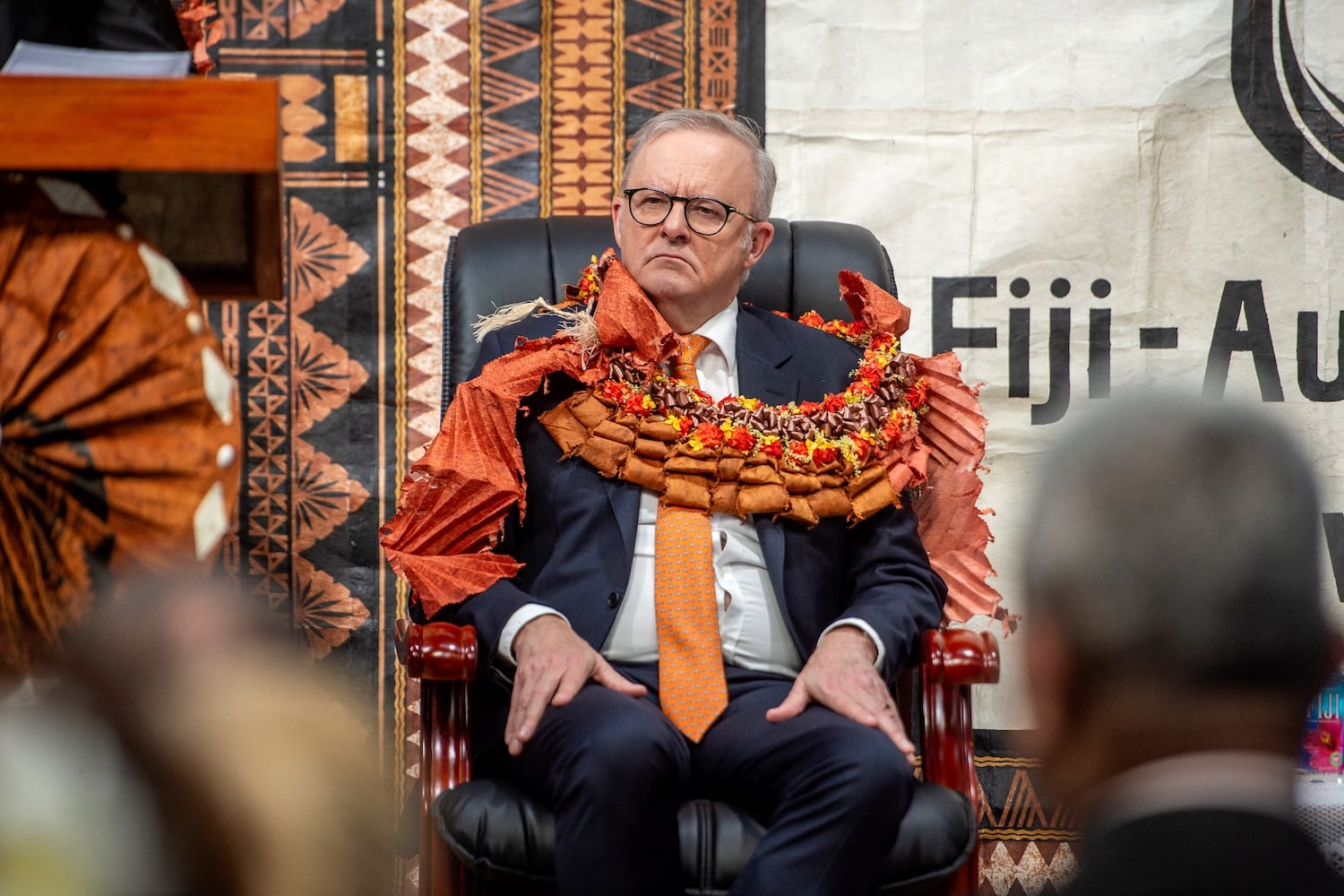
!Australian Prime Minister Anthony Albanese listens to speeches at the opening of the Vuvale Skills hub in Suva, Fiji, on July 6.
*Australian Prime Minister Anthony Albanese listens to speeches at the opening of the Vuvale Skills hub in Suva, Fiji, on July 6.*
Australian Prime Minister Anthony Albanese listens to speeches at the opening of the Vuvale Skills hub in Suva, Fiji, on July 6. Leon Lord/AFP via Getty Images
*
*
August 17, 2026, 12:01 AM
Since coming to office in 2022, the Australian Labor Party government of Prime Minister Anthony Albanese has championed the virtues of a “stabilized” relationship with President Xi Jinping’s China. The fruits of this approach—which dropped a mantra of “pushing back” against Beijing and instead deployed the careful rhetoric of “constructive” engagement—have been obvious. Under the previous, conservative government of Scott Morrison, China’s unreasonable economic coercion of Australia had resulted in punitive sanctions on Australian exports to China of wine, barley, lobster, and coal, among other products. In December 2024, this came to an end when China lifted its final Australian embargo, on lobsters.
Yet through this period of high diplomatic tension, the two countries’ economic complementarity continued, especially in the resources sector. Australia’s iron ore trade with China has largely underwritten its national prosperity for the past three decades, and neither Beijing nor Canberra’s hawks dared use it as leverage.
Since coming to office in 2022, the Australian Labor Party government of Prime Minister Anthony Albanese has championed the virtues of a “stabilized” relationship with President Xi Jinping’s China. The fruits of this approach—which dropped a mantra of “pushing back” against Beijing and instead deployed the careful rhetoric of “constructive” engagement—have been obvious. Under the previous, conservative government of Scott Morrison, China’s unreasonable economic coercion of Australia had resulted in punitive sanctions on Australian exports to China of wine, barley, lobster, and coal, among other products. In December 2024, this came to an end when China lifted its final Australian embargo, on lobsters.
Yet through this period of high diplomatic tension, the two countries’ economic complementarity continued, especially in the resources sector. Australia’s iron ore trade with China has largely underwritten its national prosperity for the past three decades, and neither Beijing nor Canberra’s hawks dared use it as leverage.
Indeed, despite the many targeted sanctions on Australia’s goods over that period, Canberra’s overall exports to China nearly doubled, from $116 billion in 2017 to $218 billion in 2023. With business booming, Labor took the off-ramp after its first election win in 12 years, and dialogue with Beijing was restored. So, too, were annual reciprocal leaders’ visits, which had been suspended since 2017.
Now well into its second term in office, the Albanese government had until recently remained extraordinarily disciplined in sticking to the stabilization mantra. Neither the circumnavigation of the country by a small fleet of Chinese naval vessels last year nor the decision by the Chinese to practice live-fire exercises without warning in the Tasman Sea between Australia and New Zealand could dislodge it.
“Stability” had understandable appeal in a world convulsed anew by great-power rivalry: Even Xi and U.S. President Donald Trump invoked the notion to describe the U.S.-China dynamic after their summit in Beijing in May this year.
Lately, though, there have been signs of trouble. Albanese’s tone toward Beijing is hardening. The prime minister has become more forthright in speaking about Beijing’s ambitions in the region, declaring in a recent interview with the *New York Times* that the Chinese are “interested in increasing their influence at a minimum, and hegemony in the longer term.” This was the first time that Albanese had spoken of China’s strategic ambitions in this way.
Shortly after that interview, Beijing tested a nuclear-capable missile in the Pacific and forced Albanese’s hand. The test coincided with Canberra’s signing of a new defense alliance with Fiji, following other similar agreements that the Australian government struck with Papua New Guinea and Vanuatu along with policing arrangements reached with the Solomon Islands and Tuvalu.
Albanese labeled the Chinese test a “provocative” act and bemoaned the mere hours of warning that Beijing had given. That statement contrasted sharply with earlier caution; last year, when a Chinese research vessel appeared off the Australian coast, the prime minister offered the mild remark that he would “prefer” it not to be there.
A July editorial in China’s state-run *Global Times* noted recently that the prime minister’s comments “inevitably recall the unpleasant period in China-Australia relations a few years ago.” Is this really where things are headed, though? And what explains the U-turn from Australia toward its biggest trading partner?
---
Albanese’s rhetoric about
China isn’t yet at the level reached by his predecessors Morrison and Malcolm Turnbull, who both publicly confronted Beijing. But the change is nevertheless significant.
First, because this harder line coincides with Trump’
!Foreign Policy
Foreign Policy
Get analysis and alerts more quickly in the mobile app.
Install
Back to Foreign Policy Magazine home page
* Latest
* Regions
+ Asia & the Pacific
+ China
+ Middle East & Africa
+ Americas
+ Europe
* Newsletters
Editors’ Picks
Evening roundup with our editors’ favorite stories of the day
!World Brief Icon
World Brief
Your guide to the most important world stories of the day
!China Brief Icon
China Brief
The latest news, analysis, and data from the country each week
Situation Report
Weekly update on what’s driving U.S. national security policy
FP Weekend
A curation of our best book reviews, deep dives, and other reads
!Africa Brief Icon
Africa Brief
Essential analysis of the stories shaping geopolitics on the continent
!South Asia Brief Icon
South Asia Brief
Weekly update on developments in India and its neighbors
The Reading List
Curated guides on geopolitics and current affairs
FP Bookshelf
A monthly guide to FP’s book reviews, excerpts, and reading recommendations
!Latin America Brief Icon
Latin America Brief
One-stop digest of politics, economics, and culture
!Southeast Asia Brief Icon
Southeast Asia Brief
A weekly dispatch with news from the region’s 11 countries
The New Geopolitics
A five-part masterclass in IR theory with Harvard Professor Stephen M. Walt
View All Newsletters
* FP Live
* Latest
* Trending:
* Iran war
* Colombia's earthquake recovery
Search this website
* Preferences
* My FP Feed
* Saved Articles
* Newsletters
* Magazine Archive
* Subscription Settings
* FAQs
* Log Out
Sign In
Sign In
Partner with FP at UNGA81 Partner with FP at UNGA81
Subscribe SubscribePartner with FP at UNGA81 Partner with FP at UNGA81
Analysis:
Why Australia’s Getting Tough on China Again
*
*
* Bluesky
* X
Save
1. Create an FP account to save articles to read later.
Sign Up
ALREADY AN FP SUBSCRIBER? LOGIN
1. **Downloadable PDFs** are a benefit of an FP subscription.
Subscribe Now
ALREADY AN FP SUBSCRIBER? LOGIN
Gift
*
*
1. Gifting articles is a subscriber benefit.
Subscribe Now
ALREADY AN FP SUBSCRIBER? LOGIN
2. This article is an Insider exclusive.
Contact us at [email protected] to learn about upgrade options, unlocking the ability to gift this article.
Analysis
Why Australia’s Getting Tough on China Again
Unlike other U.S. allies, Canberra is betting its entire strategic house on Pax Americana.
By **James Curran**, a professor of modern history at the University of Sydney and a foreign affairs columnist at the *Australian Financial Review*.
!Australian Prime Minister Anthony Albanese listens to speeches at the opening of the Vuvale Skills hub in Suva, Fiji, on July 6.
*Australian Prime Minister Anthony Albanese listens to speeches at the opening of the Vuvale Skills hub in Suva, Fiji, on July 6.*
Australian Prime Minister Anthony Albanese listens to speeches at the opening of the Vuvale Skills hub in Suva, Fiji, on July 6. Leon Lord/AFP via Getty Images
*
*
August 17, 2026, 12:01 AM
Since coming to office in 2022, the Australian Labor Party government of Prime Minister Anthony Albanese has championed the virtues of a “stabilized” relationship with President Xi Jinping’s China. The fruits of this approach—which dropped a mantra of “pushing back” against Beijing and instead deployed the careful rhetoric of “constructive” engagement—have been obvious. Under the previous, conservative government of Scott Morrison, China’s unreasonable economic coercion of Australia had resulted in punitive sanctions on Australian exports to China of wine, barley, lobster, and coal, among other products. In December 2024, this came to an end when China lifted its final Australian embargo, on lobsters.
Yet through this period of high diplomatic tension, the two countries’ economic complementarity continued, especially in the resources sector. Australia’s iron ore trade with China has largely underwritten its national prosperity for the past three decades, and neither Beijing nor Canberra’s hawks dared use it as leverage.
Since coming to office in 2022, the Australian Labor Party government of Prime Minister Anthony Albanese has championed the virtues of a “stabilized” relationship with President Xi Jinping’s China. The fruits of this approach—which dropped a mantra of “pushing back” against Beijing and instead deployed the careful rhetoric of “constructive” engagement—have been obvious. Under the previous, conservative government of Scott Morrison, China’s unreasonable economic coercion of Australia had resulted in punitive sanctions on Australian exports to China of wine, barley, lobster, and coal, among other products. In December 2024, this came to an end when China lifted its final Australian embargo, on lobsters.
Yet through this period of high diplomatic tension, the two countries’ economic complementarity continued, especially in the resources sector. Australia’s iron ore trade with China has largely underwritten its national prosperity for the past three decades, and neither Beijing nor Canberra’s hawks dared use it as leverage.
Indeed, despite the many targeted sanctions on Australia’s goods over that period, Canberra’s overall exports to China nearly doubled, from $116 billion in 2017 to $218 billion in 2023. With business booming, Labor took the off-ramp after its first election win in 12 years, and dialogue with Beijing was restored. So, too, were annual reciprocal leaders’ visits, which had been suspended since 2017.
Now well into its second term in office, the Albanese government had until recently remained extraordinarily disciplined in sticking to the stabilization mantra. Neither the circumnavigation of the country by a small fleet of Chinese naval vessels last year nor the decision by the Chinese to practice live-fire exercises without warning in the Tasman Sea between Australia and New Zealand could dislodge it.
“Stability” had understandable appeal in a world convulsed anew by great-power rivalry: Even Xi and U.S. President Donald Trump invoked the notion to describe the U.S.-China dynamic after their summit in Beijing in May this year.
Lately, though, there have been signs of trouble. Albanese’s tone toward Beijing is hardening. The prime minister has become more forthright in speaking about Beijing’s ambitions in the region, declaring in a recent interview with the *New York Times* that the Chinese are “interested in increasing their influence at a minimum, and hegemony in the longer term.” This was the first time that Albanese had spoken of China’s strategic ambitions in this way.
Shortly after that interview, Beijing tested a nuclear-capable missile in the Pacific and forced Albanese’s hand. The test coincided with Canberra’s signing of a new defense alliance with Fiji, following other similar agreements that the Australian government struck with Papua New Guinea and Vanuatu along with policing arrangements reached with the Solomon Islands and Tuvalu.
Albanese labeled the Chinese test a “provocative” act and bemoaned the mere hours of warning that Beijing had given. That statement contrasted sharply with earlier caution; last year, when a Chinese research vessel appeared off the Australian coast, the prime minister offered the mild remark that he would “prefer” it not to be there.
A July editorial in China’s state-run *Global Times* noted recently that the prime minister’s comments “inevitably recall the unpleasant period in China-Australia relations a few years ago.” Is this really where things are headed, though? And what explains the U-turn from Australia toward its biggest trading partner?
---
Albanese’s rhetoric about
China isn’t yet at the level reached by his predecessors Morrison and Malcolm Turnbull, who both publicly confronted Beijing. But the change is nevertheless significant.
First, because this harder line coincides with Trump’
🔗 Share Article
Tags:#أستراليا#الصين#العلاقات الأسترالية الصينية#السياسة الإقليمية#الأمن الآسيوي#التنافس الجيوسياسي
Source: Foreign Policy
For Context
Related reads from the same topic or latest developments


