Israel Election: Netanyahu's Wars Are Unsustainable
By using this website, you agree to our use of cookies. This use includes personalization of content and ads, and traffic analytics. Review our Privacy Policy for more information.
Foreign Policy Get analysis and alerts more quickly in the mobile app.
Install
Back to Foreign Policy Magazine home page
Evening roundup with our editors’ favorite stories of the day
World Brief
Your guide to the most important world stories of the day
China Brief
The latest news, analysis, and data from the country each week
Situation Report
Weekly update on what’s driving U.S. national security policy
FP Weekend
A curation of our best book reviews, deep dives, and other reads
Africa Brief
Essential analysis of the stories shaping geopolitics on the continent
South Asia Brief
Weekly update on developments in India and its neighbors
The Reading List
Curated guides on geopolitics and current affairs
FP Bookshelf
A monthly guide to FP’s book reviews, excerpts, and reading recommendations
Latin America Brief
One-stop digest of politics, economics, and culture
Southeast Asia Brief
A weekly dispatch with news from the region’s 11 countries
The New Geopolitics
A five-part masterclass in IR theory with Harvard Professor Stephen M. Walt
View All Newsletters
Subscribe Subscribe Team access Team access
Analysis: The Security Challenges Facing the Next Israeli Leader
1. Create an FP account to save articles to read later.
Sign Up
ALREADY AN FP SUBSCRIBER? LOGIN
PDF
1. **Downloadable PDFs** are a benefit of an FP subscription.
ALREADY AN FP SUBSCRIBER? LOGIN
Gift
1. Gifting articles is a subscriber benefit.
ALREADY AN FP SUBSCRIBER? LOGIN
2. This article is an Insider exclusive.
Contact us at [email protected] to learn about upgrade options, unlocking the ability to gift this article.
Analysis
The Security Challenges Facing the Next Israeli Leader
Netanyahu’s wars have weakened foes, but they’re unsustainable.
By **Daniel Byman**, a professor in the School of Foreign Service at Georgetown University and the director of the Warfare and Irregular Threats Program of the Center for Strategic and International Studies.
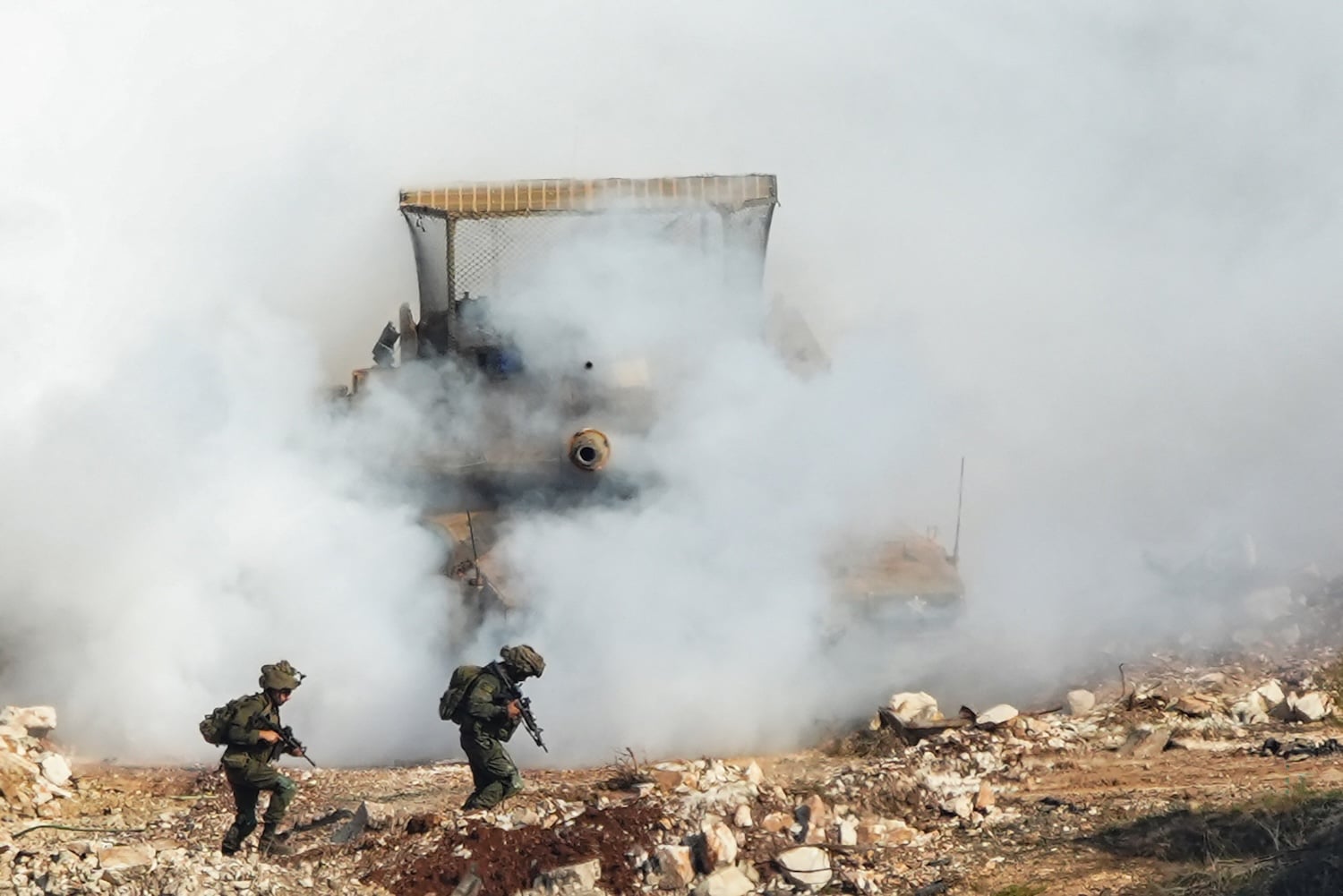
*Two armed figures in uniform walk across rocky terrain in front of a heavy military vehicle partially obscured by thick white smoke.*
Israeli soldiers conduct a military operation in the southern Lebanese village of Zawtar al-Sharkiya on Oct. 25. Ammar Ammar/AFP via Getty Images
1. Get audio access with any FP subscription.
ALREADY AN FP SUBSCRIBER? LOGIN
October 30, 2026, 12:58 PM
Israel’s election results remain unclear, but whether current Prime Minister Benjamin Netanyahu again emerges triumphant or a new government, perhaps led by Gadi Eisenkot, takes power, the country is at a crossroads. Although Israel has demonstrated its military power throughout the Middle East, it is trapped in endless conflict on multiple fronts, overstretched at home, and damaging its long-term relationship with the United States.
In the three years since Oct. 7, 2023, when a Hamas terrorist attack killed almost 1,200 Israelis, Israel’s regional military power has reached new heights. Not only did Israel smash Hamas after the attack, but it also took on the far more formidable Hezbollah, severely weakening its leadership, arsenal, and fighting forces in a continuing campaign. In 2025 and then again in 2026, Israel (along with the United States) attacked Iran, killing much of its senior leadership and setting back its nuclear program and military. In addition to striking its enemies, Israel now occupies around 70 percent of the Gaza Strip, large parts of Lebanon, and several miles along its border with Syria, using these buffer zones to guard against another Oct. 7-like attack and make it more difficult for terrorist groups to use drones, rockets, and other short-distance systems to strike Israel.
These conflicts, however, have brought with them additional problems for Israel that its new government must address. In particular, Israel has failed to translate military success into lasting strategic gains.
The Iran war is the most pressing security challenge. What was intended as a short war is now in its ninth month, with no end in sight—and indeed escalation seems possible. Although the United States is focused on the flow of oil through the Strait of Hormuz and the security of Saudi Arabia, the United Arab Emirates, and other Gulf allies, Israel is more concerned about Iran’s long-range missile arsenal and provision of drones and money to anti-Israel proxies, including Hezbollah in Lebanon, allowing the group to rearm.
More broadly, Israel must break the cycle of endless conflict. In the last three years, Israel has used military force in eight countries and territories: Gaza, Iran, Iraq, Lebanon, Qatar, Syria, the West Bank, and Yemen. Israel’s enemies, however, show no sign of folding, even as the populations they claim to represent suffer tremendously. Israel can degrade its enemies’ military capabilities, but it is far harder to stop them from rebuilding or get them to abandon their hostility. Iran may emerge from the war wounded but vengeful, and it may commit at least some of the resources it gains under any cease-fire agreement, such as the one the United States proposed in June, to countering Israel. Hamas and Hezbollah are far weaker, but Hamas is still the most important Palestinian actor in Gaza, and Hezbollah, too, remains formidable.
This lack of progress makes Israel’s wars unsustainable even as their human cost is staggering. In Lebanon, Iran, and the West Bank, Israeli operations
The Security Challenges Facing the Next Israeli Leader
Israel stands at a crossroads regardless of the election outcome, having achieved military dominance across the region while becoming trapped in multi-front conflicts that strain its domestic situation and damage its relationship with Washington. The author argues that its current wars, especially the war with Iran, are unsustainable because they have failed to produce lasting strategic gains.
Cross Lines newsroom
Share this article
#إسرائيل#بنيامين نتنياهو#الحرب مع إيران#حزب الله#حماس#الأمن الإقليمي
Original source: Foreign Policy