The Geopolitics Behind Rising U.S. Bond Yields
Foreign Policy

Foreign Policy
Original Source
Rising global bond yields this summer reflect investor concerns over mounting government debt and persistent inflation, yet sovereign analysts cannot ignore escalating U.S. geopolitical risks that threaten America's global leadership. Recent statements by Treasury Secretary Scott Bessent have intensified doubts about the reliability of U.S. economic stewardship.
The Geopolitics Behind Rising U.S. Bond Yields
By using this website, you agree to our use of cookies. This use includes personalization of content and ads, and traffic analytics. Review our Privacy Policy for more information.
!Foreign Policy
Foreign Policy
Get analysis and alerts more quickly in the mobile app.
Install
Back to Foreign Policy Magazine home page
* Latest
* Regions
+ Asia & the Pacific
+ China
+ Middle East & Africa
+ Americas
+ Europe
* Newsletters
Editors’ Picks
Evening roundup with our editors’ favorite stories of the day
!World Brief Icon
World Brief
Your guide to the most important world stories of the day
!China Brief Icon
China Brief
The latest news, analysis, and data from the country each week
Situation Report
Weekly update on what’s driving U.S. national security policy
FP Weekend
A curation of our best book reviews, deep dives, and other reads
!Africa Brief Icon
Africa Brief
Essential analysis of the stories shaping geopolitics on the continent
!South Asia Brief Icon
South Asia Brief
Weekly update on developments in India and its neighbors
The Reading List
Curated guides on geopolitics and current affairs
FP Bookshelf
A monthly guide to FP’s book reviews, excerpts, and reading recommendations
!Latin America Brief Icon
Latin America Brief
One-stop digest of politics, economics, and culture
!Southeast Asia Brief Icon
Southeast Asia Brief
A weekly dispatch with news from the region’s 11 countries
The New Geopolitics
A five-part masterclass in IR theory with Harvard Professor Stephen M. Walt
View All Newsletters
* FP Live
* Latest
* Trending:
* Iran war
* Brazil's election kicks off
Search this website
* Preferences
* My FP Feed
* Saved Articles
* Newsletters
* Magazine Archive
* Subscription Settings
* FAQs
* Log Out
Sign In
Sign In
Campus and team access Campus and team access
Subscribe SubscribeCampus and team access Campus and team access
Analysis:
The Geopolitics Behind Rising U.S. Bond Yields
*
*
* Facebook
* Bluesky
* X
* LinkedIn
* WhatsApp
* Reddit
Save
Save
1. Create an FP account to save articles to read later.
Sign Up
ALREADY AN FP SUBSCRIBER? LOGIN
PDF
PDF
1. **Downloadable PDFs** are a benefit of an FP subscription.
Subscribe Now
ALREADY AN FP SUBSCRIBER? LOGIN
Gift
Gift
*
*
* WhatsApp
1. Gifting articles is a subscriber benefit.
Subscribe Now
ALREADY AN FP SUBSCRIBER? LOGIN
2. This article is an Insider exclusive.
Contact us at [email protected] to learn about upgrade options, unlocking the ability to gift this article.
Analysis
The Geopolitics Behind Rising U.S. Bond Yields
Hollow threats of an economic D-Day just add to this summer’s list of doubts about investing in Donald Trump’s America.
By **Christopher Smart**, a managing partner of the Arbroath Group, an investment strategy consultancy, and was a senior economic policy advisor in the Obama administration.
!People look an American Flag display in Times Square, New York, on April 11, 2025.
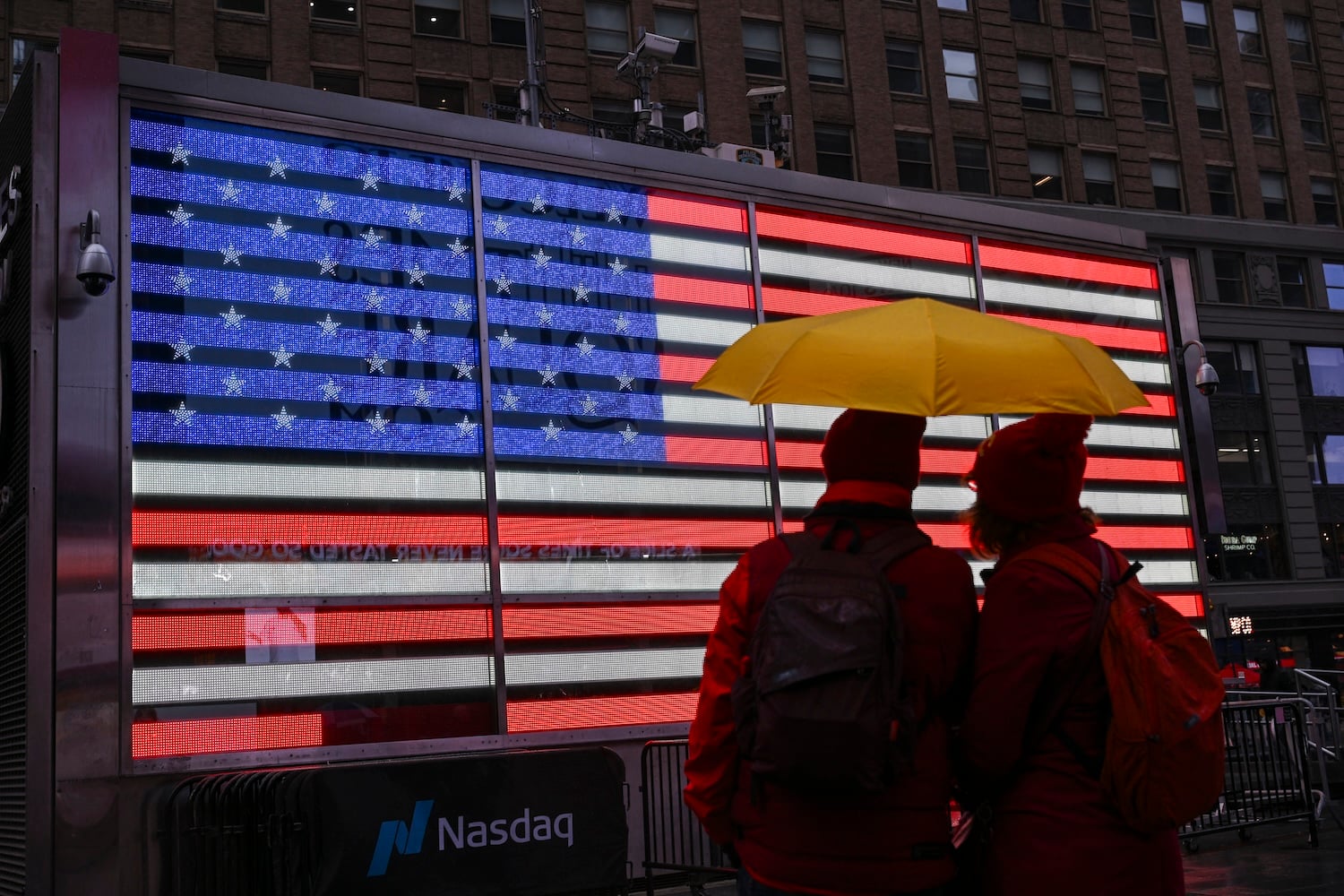
*People look an American Flag display in Times Square, New York, on April 11, 2025.*
People look an American Flag display in Times Square, New York, on April 11, 2025. Angela Weiss/AFP via Getty Images
My FP:
Follow topics and authors to get straight to what you like. Exclusively for FP subscribers. Subscribe Now | Log In
*
August 27, 2026, 6:00 AM
Markets ignore obvious risks for years until some unexpected trigger turns buyers into sellers. This summer’s rising global bond yields reflect investor concerns across advanced economies over ballooning government debts, persistent inflation, and shrinking central bank balance sheets. But no sovereign analyst of U.S. treasuries can ignore the signs of rising U.S. geopolitical risks everywhere from Tokyo, to Tehran, to the U.S. Treasury itself.
Traditionally, investors have loaned money to the U.S. government because they believe that the country’s business model will reliably produce the world’s most innovative companies regardless of any drama in Washington. But they also expect leadership to create more order than disorder, and U.S. Treasury Secretary Scott Bessent’s recent announcements have added to doubts about U.S. global leadership, which seem to have accelerated over the summer.
Markets ignore obvious risks for years until some unexpected trigger turns buyers into sellers. This summer’s rising global bond yields reflect investor concerns across advanced economies over ballooning government debts, persistent inflation, and shrinking central bank balance sheets. But no sovereign analyst of U.S. treasuries can ignore the signs of rising U.S. geopolitical risks everywhere from Tokyo, to Tehran, to the U.S. Treasury itself.
Traditionally, investors have loaned money to the U.S. government because they believe that the country’s business model will reliably produce the world’s most innovative companies regardless of any drama in Washington. But they also expect leadership to create more order than disorder, and U.S. Treasury Secretary Scott Bessent’s recent announcements have added to doubts about U.S. global leadership, which seem to have accelerated over the summer.
Rising long-term bond yields amid softer U.S. price data and a weakening job market may be the most worrying debt dynamic since the chaotic rollout of tariffs in spring 2025. Since June 30, the U.S. yield curve has steepened more than its European and Japanese counterparts, suggesting that investors are worried about developments in Washington that go beyond the direction of the global economy. Ahigher-term premium over the same period confirms that investors want compensation for much more than expectations of inflation or interest rates.
Consider these recent headlines:
**Economic D-Day**: Bombs and blockades have failed to change the Iranian regime or end its nuclear ambitions, leaving the United States struggling to declare victory and go home. Bessent’s Iran speech sounded menacing, but markets now understand that economic sanctions only deliver results slowly, if at all, and nothing he said will alter the image of a superpower sinking deeper into a quagmire of its own design. For 30-year yields, the worry is less about when the Strait of Hormuz may reopen and more about Washington’s waning ability to shape global events.
**Market Intervention**: What puzzles markets most is that a seasoned professional like Bessent believes that any government intervention works for long. He was, after all, intimately involved in the 1992 attack on the British pound sterling. His efforts to stop the Japanese yen’s slide have already given up much of the initial gain. Bessent’s current efforts to lower U.S. rates with a few bond buybacks and some tough talk looks implausible at best, given the size of the market and depth of investor skepticism about U.S. debt dynamics. His lost credibility will be much greater than any paper profit he booked by intervening successfully in the Argentine peso last year.
**Voter Anger**: Florida Rep. Angie Nixon, a Democratic Socialist, defeated a heavily financed mainstream opponent in Florida’s Senate primary election on Aug. 18. Frustration on the left echoes many Trump voters’ demands to upend a system that seems rigged by elites. Similar nominees in Michigan, Colorado, and New York foreshadow a Congress that will be even more angry and divided next year. Reasonable policies on deficits, entitlements, and growth look more elusive than ever.
**Regulatory Dependence**: The U.S. Supreme Court’s June 29 ruling that the president can fire the heads of independent regulatory agencies didn’t move markets alone. But, especially for a foreign investor, the decision fuels concerns that rules for everything from energy and communications to transportation and banking will become increasingly politicized. Worse, there will be an expectation that the rules may change with every election. That ruling did not include the Federal Reserve, but Trump’s renewed assault
By using this website, you agree to our use of cookies. This use includes personalization of content and ads, and traffic analytics. Review our Privacy Policy for more information.
!Foreign Policy
Foreign Policy
Get analysis and alerts more quickly in the mobile app.
Install
Back to Foreign Policy Magazine home page
* Latest
* Regions
+ Asia & the Pacific
+ China
+ Middle East & Africa
+ Americas
+ Europe
* Newsletters
Editors’ Picks
Evening roundup with our editors’ favorite stories of the day
!World Brief Icon
World Brief
Your guide to the most important world stories of the day
!China Brief Icon
China Brief
The latest news, analysis, and data from the country each week
Situation Report
Weekly update on what’s driving U.S. national security policy
FP Weekend
A curation of our best book reviews, deep dives, and other reads
!Africa Brief Icon
Africa Brief
Essential analysis of the stories shaping geopolitics on the continent
!South Asia Brief Icon
South Asia Brief
Weekly update on developments in India and its neighbors
The Reading List
Curated guides on geopolitics and current affairs
FP Bookshelf
A monthly guide to FP’s book reviews, excerpts, and reading recommendations
!Latin America Brief Icon
Latin America Brief
One-stop digest of politics, economics, and culture
!Southeast Asia Brief Icon
Southeast Asia Brief
A weekly dispatch with news from the region’s 11 countries
The New Geopolitics
A five-part masterclass in IR theory with Harvard Professor Stephen M. Walt
View All Newsletters
* FP Live
* Latest
* Trending:
* Iran war
* Brazil's election kicks off
Search this website
* Preferences
* My FP Feed
* Saved Articles
* Newsletters
* Magazine Archive
* Subscription Settings
* FAQs
* Log Out
Sign In
Sign In
Campus and team access Campus and team access
Subscribe SubscribeCampus and team access Campus and team access
Analysis:
The Geopolitics Behind Rising U.S. Bond Yields
*
*
* Bluesky
* X
Save
Save
1. Create an FP account to save articles to read later.
Sign Up
ALREADY AN FP SUBSCRIBER? LOGIN
1. **Downloadable PDFs** are a benefit of an FP subscription.
Subscribe Now
ALREADY AN FP SUBSCRIBER? LOGIN
Gift
Gift
*
*
1. Gifting articles is a subscriber benefit.
Subscribe Now
ALREADY AN FP SUBSCRIBER? LOGIN
2. This article is an Insider exclusive.
Contact us at [email protected] to learn about upgrade options, unlocking the ability to gift this article.
Analysis
The Geopolitics Behind Rising U.S. Bond Yields
Hollow threats of an economic D-Day just add to this summer’s list of doubts about investing in Donald Trump’s America.
By **Christopher Smart**, a managing partner of the Arbroath Group, an investment strategy consultancy, and was a senior economic policy advisor in the Obama administration.
!People look an American Flag display in Times Square, New York, on April 11, 2025.
*People look an American Flag display in Times Square, New York, on April 11, 2025.*
People look an American Flag display in Times Square, New York, on April 11, 2025. Angela Weiss/AFP via Getty Images
My FP:
Follow topics and authors to get straight to what you like. Exclusively for FP subscribers. Subscribe Now | Log In
*
August 27, 2026, 6:00 AM
Markets ignore obvious risks for years until some unexpected trigger turns buyers into sellers. This summer’s rising global bond yields reflect investor concerns across advanced economies over ballooning government debts, persistent inflation, and shrinking central bank balance sheets. But no sovereign analyst of U.S. treasuries can ignore the signs of rising U.S. geopolitical risks everywhere from Tokyo, to Tehran, to the U.S. Treasury itself.
Traditionally, investors have loaned money to the U.S. government because they believe that the country’s business model will reliably produce the world’s most innovative companies regardless of any drama in Washington. But they also expect leadership to create more order than disorder, and U.S. Treasury Secretary Scott Bessent’s recent announcements have added to doubts about U.S. global leadership, which seem to have accelerated over the summer.
Markets ignore obvious risks for years until some unexpected trigger turns buyers into sellers. This summer’s rising global bond yields reflect investor concerns across advanced economies over ballooning government debts, persistent inflation, and shrinking central bank balance sheets. But no sovereign analyst of U.S. treasuries can ignore the signs of rising U.S. geopolitical risks everywhere from Tokyo, to Tehran, to the U.S. Treasury itself.
Traditionally, investors have loaned money to the U.S. government because they believe that the country’s business model will reliably produce the world’s most innovative companies regardless of any drama in Washington. But they also expect leadership to create more order than disorder, and U.S. Treasury Secretary Scott Bessent’s recent announcements have added to doubts about U.S. global leadership, which seem to have accelerated over the summer.
Rising long-term bond yields amid softer U.S. price data and a weakening job market may be the most worrying debt dynamic since the chaotic rollout of tariffs in spring 2025. Since June 30, the U.S. yield curve has steepened more than its European and Japanese counterparts, suggesting that investors are worried about developments in Washington that go beyond the direction of the global economy. Ahigher-term premium over the same period confirms that investors want compensation for much more than expectations of inflation or interest rates.
Consider these recent headlines:
**Economic D-Day**: Bombs and blockades have failed to change the Iranian regime or end its nuclear ambitions, leaving the United States struggling to declare victory and go home. Bessent’s Iran speech sounded menacing, but markets now understand that economic sanctions only deliver results slowly, if at all, and nothing he said will alter the image of a superpower sinking deeper into a quagmire of its own design. For 30-year yields, the worry is less about when the Strait of Hormuz may reopen and more about Washington’s waning ability to shape global events.
**Market Intervention**: What puzzles markets most is that a seasoned professional like Bessent believes that any government intervention works for long. He was, after all, intimately involved in the 1992 attack on the British pound sterling. His efforts to stop the Japanese yen’s slide have already given up much of the initial gain. Bessent’s current efforts to lower U.S. rates with a few bond buybacks and some tough talk looks implausible at best, given the size of the market and depth of investor skepticism about U.S. debt dynamics. His lost credibility will be much greater than any paper profit he booked by intervening successfully in the Argentine peso last year.
**Voter Anger**: Florida Rep. Angie Nixon, a Democratic Socialist, defeated a heavily financed mainstream opponent in Florida’s Senate primary election on Aug. 18. Frustration on the left echoes many Trump voters’ demands to upend a system that seems rigged by elites. Similar nominees in Michigan, Colorado, and New York foreshadow a Congress that will be even more angry and divided next year. Reasonable policies on deficits, entitlements, and growth look more elusive than ever.
**Regulatory Dependence**: The U.S. Supreme Court’s June 29 ruling that the president can fire the heads of independent regulatory agencies didn’t move markets alone. But, especially for a foreign investor, the decision fuels concerns that rules for everything from energy and communications to transportation and banking will become increasingly politicized. Worse, there will be an expectation that the rules may change with every election. That ruling did not include the Federal Reserve, but Trump’s renewed assault
🔗 Share Article
Tags:#السندات الأمريكية#الجيوسياسة#الاقتصاد الأمريكي#أسواق رأس المال#السياسة الخارجية
Source: Foreign Policy
For Context
Related reads from the same topic or latest developments


