It’s Time to Rein in Trump’s ‘Wars on Terror’
Foreign Policy

Foreign Policy
Original Source
Congress must act to curtail executive military overreach as the Trump administration cynically invokes counterterrorism authority to justify operations without genuine legal foundation. The distinction between the post-9/11 war on terror—which had at least initial legal justification—and the administration's maritime strikes against alleged drug smugglers represents a dangerous expansion of presidential war powers.
It’s Time to Rein in Trump’s ‘Wars on Terror’
By using this website, you agree to our use of cookies. This use includes personalization of content and ads, and traffic analytics. Review our Privacy Policy for more information.
!Foreign Policy
Foreign Policy
Get analysis and alerts more quickly in the mobile app.
Install
Back to Foreign Policy Magazine home page
* Latest
* Regions
+ Asia & the Pacific
+ China
+ Middle East & Africa
+ Americas
+ Europe
* Newsletters
Editors’ Picks
Evening roundup with our editors’ favorite stories of the day
!World Brief Icon
World Brief
Your guide to the most important world stories of the day
!China Brief Icon
China Brief
The latest news, analysis, and data from the country each week
Situation Report
Weekly update on what’s driving U.S. national security policy
FP Weekend
A curation of our best book reviews, deep dives, and other reads
!Africa Brief Icon
Africa Brief
Essential analysis of the stories shaping geopolitics on the continent
!South Asia Brief Icon
South Asia Brief
Weekly update on developments in India and its neighbors
The Reading List
Curated guides on geopolitics and current affairs
FP Bookshelf
A monthly guide to FP’s book reviews, excerpts, and reading recommendations
!Latin America Brief Icon
Latin America Brief
One-stop digest of politics, economics, and culture
!Southeast Asia Brief Icon
Southeast Asia Brief
A weekly dispatch with news from the region’s 11 countries
The New Geopolitics
A five-part masterclass in IR theory with Harvard Professor Stephen M. Walt
View All Newsletters
* FP Live
* Latest
* Trending:
* Iran war
* China's bet on AI
Search this website
* Preferences
* My FP Feed
* Saved Articles
* Newsletters
* Magazine Archive
* Subscription Settings
* FAQs
* Log Out
Sign In
Sign In
Partner with FP at UNGA81 Partner with FP at UNGA81
Subscribe SubscribePartner with FP at UNGA81 Partner with FP at UNGA81
Argument:
It’s Time to Rein in Trump’s ‘Wars on Terror’
*
*
* Facebook
* Bluesky
* X
* LinkedIn
* WhatsApp
* Reddit
Save
1. Create an FP account to save articles to read later.
Sign Up
ALREADY AN FP SUBSCRIBER? LOGIN
PDF
1. **Downloadable PDFs** are a benefit of an FP subscription.
Subscribe Now
ALREADY AN FP SUBSCRIBER? LOGIN
Gift
*
*
* WhatsApp
1. Gifting articles is a subscriber benefit.
Subscribe Now
ALREADY AN FP SUBSCRIBER? LOGIN
2. This article is an Insider exclusive.
Contact us at [email protected] to learn about upgrade options, unlocking the ability to gift this article.
Argument
An expert’s point of view on a current event.
It’s Time to Rein in Trump’s ‘Wars on Terror’
Congress must act to address new and old executive abuses.
By **Brian Finucane**, senior advisor in the U.S. program at the International Crisis Group.
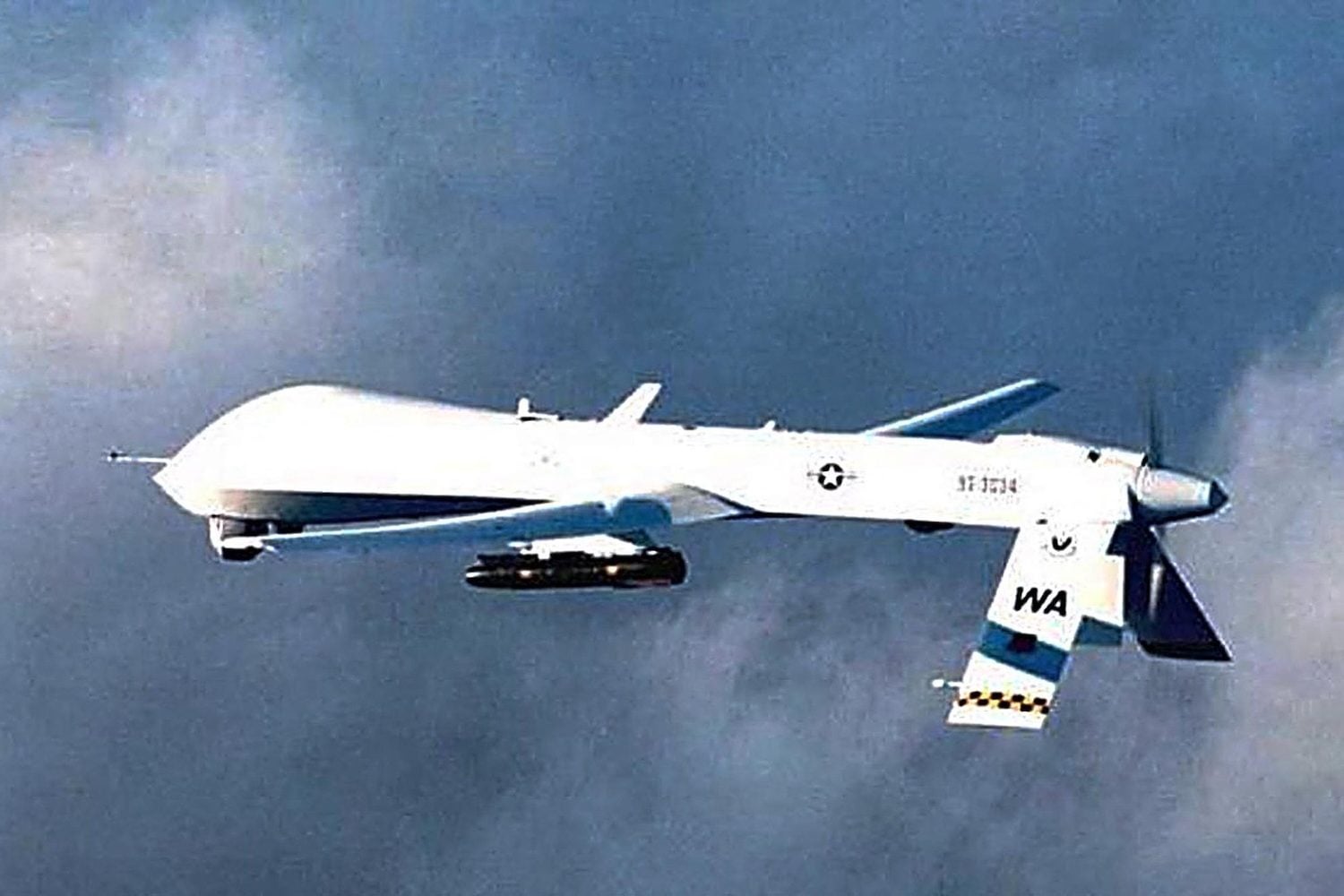
!This slightly grainy photo shows a view of the open sky, where an unmanned predator aerial vehicle with a hellfire missile attached flies against a background of dark sky and a few wispy clouds.
*This slightly grainy photo shows a view of the open sky, where an unmanned predator aerial vehicle with a hellfire missile attached flies against a background of dark sky and a few wispy clouds.*
This U.S. Air Force file photo obtained on 05 Nov. 5, 2002, shows an unmanned predator aerial vehicle with a hellfire missile attached, seen on Feb. 21, 2001. U.S. Air Force / AFP via Getty images
1. Get audio access with any FP subscription.
Subscribe Now
ALREADY AN FP SUBSCRIBER? LOGIN
August 31, 2026, 9:25 AM
Trump’s Second Term
Ongoing reports and analysis
Early September marks the anniversary of two “wars”—one an actual armed conflict with a real, albeit stretched and abused legal framework, the other a completely counterfeit enterprise from the get-go. Sept. 11 is of course the 25th anniversary of al Qaeda’s attacks upon the United States. And Sept. 2 is the first anniversary of the Trump administration’s lethal maritime strikes against vessels alleged to be smuggling drugs.
The Trump administration has cynically tried to cloak its boat strikes in the mantle of the post-9/11 “war on terror”—labeling the victims of these attacks as “narco-terrorists,” supposedly affiliated with “designated terrorist organizations,” which the administration characterizes as the “‘al Qaeda’ of our hemisphere.”
Early September marks the anniversary of two “wars”—one an actual armed conflict with a real, albeit stretched and abused legal framework, the other a completely counterfeit enterprise from the get-go. Sept. 11 is of course the 25th anniversary of al Qaeda’s attacks upon the United States. And Sept. 2 is the first anniversary of the Trump administration’s lethal maritime strikes against vessels alleged to be smuggling drugs.
The Trump administration has cynically tried to cloak its boat strikes in the mantle of the post-9/11 “war on terror”—labeling the victims of these attacks as “narco-terrorists,” supposedly affiliated with “designated terrorist organizations,” which the administration characterizes as the “‘al Qaeda’ of our hemisphere.”
But the “war” framing for the boat bombings is a sham. Although President Donald Trump has continued to wage the post-9/11 forever war, his faux war of the maritime strikes represents a frightening new development that is distinct from what came before. For Congress, though, the solution remains the same: firm action to curtail executive military adventurism.
---
The conflicts that
made up —launched in response to the 9/11 attacks—had at the outset a cognizable legal foundation in both international and domestic law. Al Qaeda—an organized armed group—launched an armed attack upon the United States that killed almost 3,000 people. Acting on the basis of self-defense under international law, the United States waged an actual armed conflict with al Qaeda.
Moreover, as a matter of domestic law, Congress authorized the conflict through the 2001 Authorization for the Use of Military Force (AUMF). The 2001 AUMF empowered the president to “use all necessary and appropriate force against those nations, organizations, or persons he determines planned, authorized, committed, or aided the terrorist attacks.” Because the perpetrators’ identities were not fully known in the immediate aftermath of 9/11, that war authorization delegated authority to the president to determine their identities.
But crucially, it granted the president only the authority to pursue military action to “prevent any future acts of international terrorism against the United States” by those responsible for the 9/11 attacks.
Although the United States’ post-9/11 conflicts had a legal basis at their inception, multiple U.S. presidents stretched and abused the 2001 AUMF to pursue new adversaries. Executive branch lawyers, using novel concepts such as “associated forces,” unilaterally expanded the scope of the 2001 war authorization to groups that did not exist on 9/11 and were never shown to pose a significant threat to the United States.
By waging hostilities against jihadis who are untethered to the original *casus belli* of 9/11, Trump has continued this misuse of the 2001 AUMF. Indeed, 25 years after 9/11, the AUMF’s principal use on the battlefield is not fighting the now-shattered al Qaeda or even its offshoot, the Islamic State, but conducting regular airstrikes against al-Shabab, an Islamic militant group in Somalia unconnected to the 2001 attacks and of seemingly minimal threat to the United States.
In the past year, the Trump administration has also conducted airstrikes in Nigeria—purportedly against Islamist militants. The administration is now reportedly deliberating over whether to conduct counterterrorism strikes in Mali against jihadi groups there. In both these latter situations, the Trump administration has not articulated the legal basis for military action, but it appears that the White House is relying on the 2001 AUMF as a catchall authority to bomb jihadis.
What any of these militar
By using this website, you agree to our use of cookies. This use includes personalization of content and ads, and traffic analytics. Review our Privacy Policy for more information.
!Foreign Policy
Foreign Policy
Get analysis and alerts more quickly in the mobile app.
Install
Back to Foreign Policy Magazine home page
* Latest
* Regions
+ Asia & the Pacific
+ China
+ Middle East & Africa
+ Americas
+ Europe
* Newsletters
Editors’ Picks
Evening roundup with our editors’ favorite stories of the day
!World Brief Icon
World Brief
Your guide to the most important world stories of the day
!China Brief Icon
China Brief
The latest news, analysis, and data from the country each week
Situation Report
Weekly update on what’s driving U.S. national security policy
FP Weekend
A curation of our best book reviews, deep dives, and other reads
!Africa Brief Icon
Africa Brief
Essential analysis of the stories shaping geopolitics on the continent
!South Asia Brief Icon
South Asia Brief
Weekly update on developments in India and its neighbors
The Reading List
Curated guides on geopolitics and current affairs
FP Bookshelf
A monthly guide to FP’s book reviews, excerpts, and reading recommendations
!Latin America Brief Icon
Latin America Brief
One-stop digest of politics, economics, and culture
!Southeast Asia Brief Icon
Southeast Asia Brief
A weekly dispatch with news from the region’s 11 countries
The New Geopolitics
A five-part masterclass in IR theory with Harvard Professor Stephen M. Walt
View All Newsletters
* FP Live
* Latest
* Trending:
* Iran war
* China's bet on AI
Search this website
* Preferences
* My FP Feed
* Saved Articles
* Newsletters
* Magazine Archive
* Subscription Settings
* FAQs
* Log Out
Sign In
Sign In
Partner with FP at UNGA81 Partner with FP at UNGA81
Subscribe SubscribePartner with FP at UNGA81 Partner with FP at UNGA81
Argument:
It’s Time to Rein in Trump’s ‘Wars on Terror’
*
*
* Bluesky
* X
Save
1. Create an FP account to save articles to read later.
Sign Up
ALREADY AN FP SUBSCRIBER? LOGIN
1. **Downloadable PDFs** are a benefit of an FP subscription.
Subscribe Now
ALREADY AN FP SUBSCRIBER? LOGIN
Gift
*
*
1. Gifting articles is a subscriber benefit.
Subscribe Now
ALREADY AN FP SUBSCRIBER? LOGIN
2. This article is an Insider exclusive.
Contact us at [email protected] to learn about upgrade options, unlocking the ability to gift this article.
Argument
An expert’s point of view on a current event.
It’s Time to Rein in Trump’s ‘Wars on Terror’
Congress must act to address new and old executive abuses.
By **Brian Finucane**, senior advisor in the U.S. program at the International Crisis Group.
!This slightly grainy photo shows a view of the open sky, where an unmanned predator aerial vehicle with a hellfire missile attached flies against a background of dark sky and a few wispy clouds.
*This slightly grainy photo shows a view of the open sky, where an unmanned predator aerial vehicle with a hellfire missile attached flies against a background of dark sky and a few wispy clouds.*
This U.S. Air Force file photo obtained on 05 Nov. 5, 2002, shows an unmanned predator aerial vehicle with a hellfire missile attached, seen on Feb. 21, 2001. U.S. Air Force / AFP via Getty images
1. Get audio access with any FP subscription.
Subscribe Now
ALREADY AN FP SUBSCRIBER? LOGIN
August 31, 2026, 9:25 AM
Trump’s Second Term
Ongoing reports and analysis
Early September marks the anniversary of two “wars”—one an actual armed conflict with a real, albeit stretched and abused legal framework, the other a completely counterfeit enterprise from the get-go. Sept. 11 is of course the 25th anniversary of al Qaeda’s attacks upon the United States. And Sept. 2 is the first anniversary of the Trump administration’s lethal maritime strikes against vessels alleged to be smuggling drugs.
The Trump administration has cynically tried to cloak its boat strikes in the mantle of the post-9/11 “war on terror”—labeling the victims of these attacks as “narco-terrorists,” supposedly affiliated with “designated terrorist organizations,” which the administration characterizes as the “‘al Qaeda’ of our hemisphere.”
Early September marks the anniversary of two “wars”—one an actual armed conflict with a real, albeit stretched and abused legal framework, the other a completely counterfeit enterprise from the get-go. Sept. 11 is of course the 25th anniversary of al Qaeda’s attacks upon the United States. And Sept. 2 is the first anniversary of the Trump administration’s lethal maritime strikes against vessels alleged to be smuggling drugs.
The Trump administration has cynically tried to cloak its boat strikes in the mantle of the post-9/11 “war on terror”—labeling the victims of these attacks as “narco-terrorists,” supposedly affiliated with “designated terrorist organizations,” which the administration characterizes as the “‘al Qaeda’ of our hemisphere.”
But the “war” framing for the boat bombings is a sham. Although President Donald Trump has continued to wage the post-9/11 forever war, his faux war of the maritime strikes represents a frightening new development that is distinct from what came before. For Congress, though, the solution remains the same: firm action to curtail executive military adventurism.
---
The conflicts that
made up —launched in response to the 9/11 attacks—had at the outset a cognizable legal foundation in both international and domestic law. Al Qaeda—an organized armed group—launched an armed attack upon the United States that killed almost 3,000 people. Acting on the basis of self-defense under international law, the United States waged an actual armed conflict with al Qaeda.
Moreover, as a matter of domestic law, Congress authorized the conflict through the 2001 Authorization for the Use of Military Force (AUMF). The 2001 AUMF empowered the president to “use all necessary and appropriate force against those nations, organizations, or persons he determines planned, authorized, committed, or aided the terrorist attacks.” Because the perpetrators’ identities were not fully known in the immediate aftermath of 9/11, that war authorization delegated authority to the president to determine their identities.
But crucially, it granted the president only the authority to pursue military action to “prevent any future acts of international terrorism against the United States” by those responsible for the 9/11 attacks.
Although the United States’ post-9/11 conflicts had a legal basis at their inception, multiple U.S. presidents stretched and abused the 2001 AUMF to pursue new adversaries. Executive branch lawyers, using novel concepts such as “associated forces,” unilaterally expanded the scope of the 2001 war authorization to groups that did not exist on 9/11 and were never shown to pose a significant threat to the United States.
By waging hostilities against jihadis who are untethered to the original *casus belli* of 9/11, Trump has continued this misuse of the 2001 AUMF. Indeed, 25 years after 9/11, the AUMF’s principal use on the battlefield is not fighting the now-shattered al Qaeda or even its offshoot, the Islamic State, but conducting regular airstrikes against al-Shabab, an Islamic militant group in Somalia unconnected to the 2001 attacks and of seemingly minimal threat to the United States.
In the past year, the Trump administration has also conducted airstrikes in Nigeria—purportedly against Islamist militants. The administration is now reportedly deliberating over whether to conduct counterterrorism strikes in Mali against jihadi groups there. In both these latter situations, the Trump administration has not articulated the legal basis for military action, but it appears that the White House is relying on the 2001 AUMF as a catchall authority to bomb jihadis.
What any of these militar
🔗 Share Article
Tags:#السياسة الأمريكية#الإرهاب#إدارة ترامب#العمليات العسكرية#سلطات الرئيس#الكونغرس
Source: Foreign Policy
For Context
Related reads from the same topic or latest developments


