US-Canada trade war escalates as Trump threatens tariff hike on vehicles
BBC World

BBC World
Original Source
President Trump threatened to raise US tariffs on Canadian vehicles and auto parts from 25% to 50% starting January 1st, escalating the trade war between the two neighbors. The threat follows the collapse of US-Canada trade talks last week, with both sides accusing each other of making unreasonable last-minute demands.
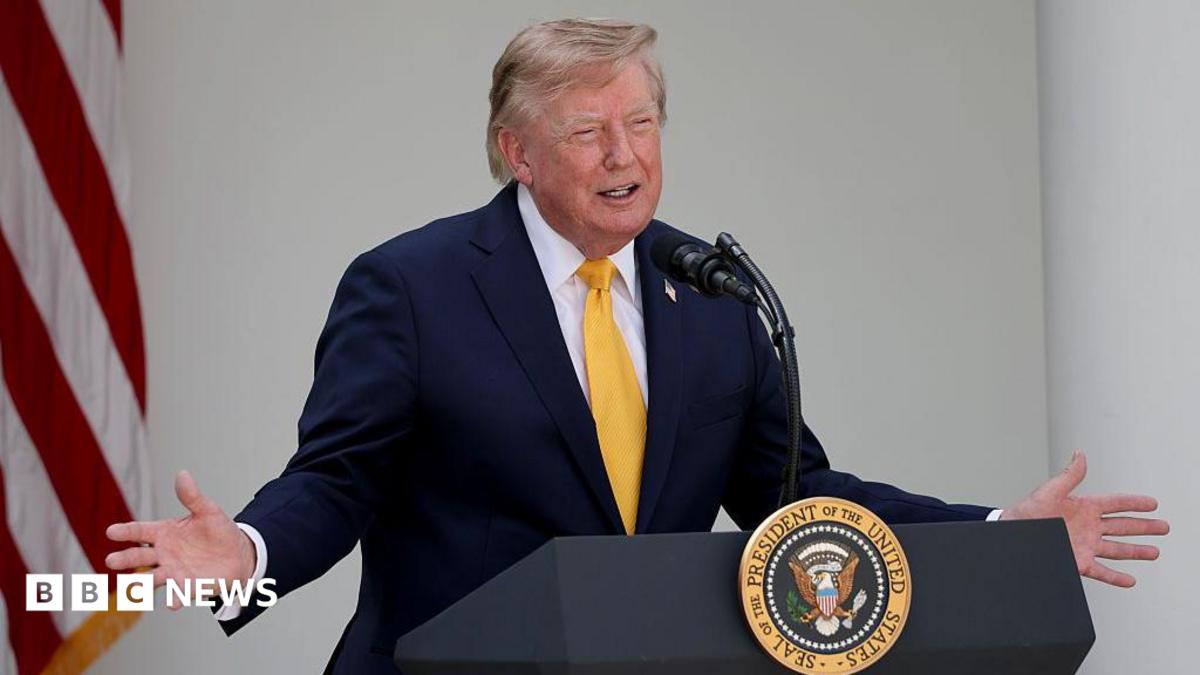
President Donald Trump has threatened to hike US tariffs on automobiles originating in Canada, as the trade war between the two neighbours continues to heat up.
Trump said on Monday that he will increase tariffs on Canadian cars and trucks, as well as auto parts, from 25% to 50% as of 1 January.
It comes after US-Canada trade talks collapsed late last week, with each side accusing the other of making unreasonable last-minute demands.
Late on Monday, Canada officials announced a news conference on Tuesday where they would outline how the country would respond to the trade war and work to "protect and support Canadian workers and businesses during these challenging times".
The news conference at 11:00 ET (16:00 BST) will include government leaders in business, finance and economic development.
Earlier in the day, Prime Minister Mark Carney called Trump's latest levy threat unsurprising and accused the president of wanting to destroy Canada's auto industry. He added that Canada is ready to resume talks only if the US comes with the "right attitude".
The war of words followed several US and Canadian officials saying that talks were suspended with no set date to resume.
Canada walked away from trade negotiations late on Friday night, moments before a US-imposed deadline that would add a 50% levy on nearly $20bn (C$28bn; £14bn) of Canadian imports.
The collapse in talks marked a significant change in tone from earlier in the week, when both sides appeared optimistic that a new US-Canada trade deal could be reached.
Canadian officials have said the US introduced last-minute demands that were "unacceptable", including a clause limiting which countries Canada could sign trade deals with.
US officials, meanwhile, said it was Canada that introduced last-minute changes.
"They wanted more," US Trade Representative Jamieson Greer said in an interview with CNBC on Monday.
The breakdown led to growing tensions as both sides publicly dug in their heels.
On Monday, Trump's tariff threats to Canada's auto industry followed Carney declaring the country would counter his levies with reciprocal tariffs on US goods "dollar for dollar".
Carney said he was focused on supporting Canadian businesses impacted by new 50% US tariffs after the Friday deadline expired, as well as building infrastructure to diversify Canada's trade, which historically has relied heavily on the US.
Carney announced funding of C$11bn ($7.95bn; £5.83bn) to build six icebreakers at a Quebec shipyard for the Canadian Coast Guard that will replace its medium and heavy ageing fleet.
The icebreakers will be used to open winter shipping routes through Canada's northern and Atlantic waters.
Businesses on both sides have warned that they stand to be hurt by the new wave of US tariffs on Canada, as well as the retaliatory tariffs that Canada plans to impose on 8 September.
In Portland, Oregon, Mike Roach and Kim Osgood, owners of Paloma Clothing say the price of one of their best-selling items - specially designed pillows made in Canada - could shoot up by around 50% to $90. For now, they are holding out on keeping the prices steady, hoping that the "tariff problem" is worked out soon, said Roach.
"It would be one thing if we had three months' notice - that would be something you could plan around, do some work with the vendors," he said. "But when it happens literally overnight you're really stuck."
The rapidly escalating trade war is also raising questions about the other country in North America - Mexico - and the trade pact between the three neighbours known as the USMCA.
Both Canada and Mexico have said they want the USMCA extended for another 16 years, but the US has said it will not renew in its current form. The pact underpins $1.6tn in North American Trade.
Escalating trade tensions mean "the risk of the USMCA unravelling has increased", experts from the Oxford Economics forecasting firm warned on Monday. That, in turn, "would plunge Canada into recession and leave it on a permanently lower growth path".
Additional reporting by Ana Faguy.
Trump said on Monday that he will increase tariffs on Canadian cars and trucks, as well as auto parts, from 25% to 50% as of 1 January.
It comes after US-Canada trade talks collapsed late last week, with each side accusing the other of making unreasonable last-minute demands.
Late on Monday, Canada officials announced a news conference on Tuesday where they would outline how the country would respond to the trade war and work to "protect and support Canadian workers and businesses during these challenging times".
The news conference at 11:00 ET (16:00 BST) will include government leaders in business, finance and economic development.
Earlier in the day, Prime Minister Mark Carney called Trump's latest levy threat unsurprising and accused the president of wanting to destroy Canada's auto industry. He added that Canada is ready to resume talks only if the US comes with the "right attitude".
The war of words followed several US and Canadian officials saying that talks were suspended with no set date to resume.
Canada walked away from trade negotiations late on Friday night, moments before a US-imposed deadline that would add a 50% levy on nearly $20bn (C$28bn; £14bn) of Canadian imports.
The collapse in talks marked a significant change in tone from earlier in the week, when both sides appeared optimistic that a new US-Canada trade deal could be reached.
Canadian officials have said the US introduced last-minute demands that were "unacceptable", including a clause limiting which countries Canada could sign trade deals with.
US officials, meanwhile, said it was Canada that introduced last-minute changes.
"They wanted more," US Trade Representative Jamieson Greer said in an interview with CNBC on Monday.
The breakdown led to growing tensions as both sides publicly dug in their heels.
On Monday, Trump's tariff threats to Canada's auto industry followed Carney declaring the country would counter his levies with reciprocal tariffs on US goods "dollar for dollar".
Carney said he was focused on supporting Canadian businesses impacted by new 50% US tariffs after the Friday deadline expired, as well as building infrastructure to diversify Canada's trade, which historically has relied heavily on the US.
Carney announced funding of C$11bn ($7.95bn; £5.83bn) to build six icebreakers at a Quebec shipyard for the Canadian Coast Guard that will replace its medium and heavy ageing fleet.
The icebreakers will be used to open winter shipping routes through Canada's northern and Atlantic waters.
Businesses on both sides have warned that they stand to be hurt by the new wave of US tariffs on Canada, as well as the retaliatory tariffs that Canada plans to impose on 8 September.
In Portland, Oregon, Mike Roach and Kim Osgood, owners of Paloma Clothing say the price of one of their best-selling items - specially designed pillows made in Canada - could shoot up by around 50% to $90. For now, they are holding out on keeping the prices steady, hoping that the "tariff problem" is worked out soon, said Roach.
"It would be one thing if we had three months' notice - that would be something you could plan around, do some work with the vendors," he said. "But when it happens literally overnight you're really stuck."
The rapidly escalating trade war is also raising questions about the other country in North America - Mexico - and the trade pact between the three neighbours known as the USMCA.
Both Canada and Mexico have said they want the USMCA extended for another 16 years, but the US has said it will not renew in its current form. The pact underpins $1.6tn in North American Trade.
Escalating trade tensions mean "the risk of the USMCA unravelling has increased", experts from the Oxford Economics forecasting firm warned on Monday. That, in turn, "would plunge Canada into recession and leave it on a permanently lower growth path".
Additional reporting by Ana Faguy.
🔗 Share Article
Tags:#التجارة الأمريكية#كندا#ترامب#الرسوم الجمركية#USMCA#الحرب التجارية
Source: BBC World
For Context
Related reads from the same topic or latest developments