China’s Leaders Go on a Summer Retreat
Foreign Policy

Foreign Policy
Original Source
China's annual leadership retreat in Beidaihe, a coastal resort east of Beijing, has been a cornerstone of Communist Party politics for decades. But under Xi Jinping's increasingly personalized rule, the collective decision-making model that once defined these meetings has eroded fundamentally.
China: What Happens at CCP's Beidaihe Leadership Retreat?
By using this website, you agree to our use of cookies. This use includes personalization of content and ads, and traffic analytics. Review our Privacy Policy for more information.
!Foreign Policy
Foreign Policy
Get analysis and alerts more quickly in the mobile app.
Install
Back to Foreign Policy Magazine home page
* Latest
* Regions
+ Asia & the Pacific
+ China
+ Middle East & Africa
+ Americas
+ Europe
* Newsletters
Editors’ Picks
Evening roundup with our editors’ favorite stories of the day
!World Brief Icon
World Brief
Your guide to the most important world stories of the day
!China Brief Icon
China Brief
The latest news, analysis, and data from the country each week
Situation Report
Weekly update on what’s driving U.S. national security policy
FP Weekend
A curation of our best book reviews, deep dives, and other reads
!Africa Brief Icon
Africa Brief
Essential analysis of the stories shaping geopolitics on the continent
!South Asia Brief Icon
South Asia Brief
Weekly update on developments in India and its neighbors
The Reading List
Curated guides on geopolitics and current affairs
FP Bookshelf
A monthly guide to FP’s book reviews, excerpts, and reading recommendations
!Latin America Brief Icon
Latin America Brief
One-stop digest of politics, economics, and culture
!Southeast Asia Brief Icon
Southeast Asia Brief
A weekly dispatch with news from the region’s 11 countries
The New Geopolitics
A five-part masterclass in IR theory with Harvard Professor Stephen M. Walt
View All Newsletters
* FP Live
* Latest
* Trending:
* Iran war
* Colombia's earthquake recovery
Search this website
* Preferences
* My FP Feed
* Saved Articles
* Newsletters
* Magazine Archive
* Subscription Settings
* FAQs
* Log Out
Sign In
Sign In
Partner with FP at UNGA81 Partner with FP at UNGA81
Subscribe SubscribePartner with FP at UNGA81 Partner with FP at UNGA81
China Brief:
China’s Leaders Go on a Summer Retreat
*
*
* Facebook
* Bluesky
* X
* LinkedIn
* WhatsApp
* Reddit
Save
Save
1. Create an FP account to save articles to read later.
Sign Up
ALREADY AN FP SUBSCRIBER? LOGIN
PDF
PDF
1. **Downloadable PDFs** are a benefit of an FP subscription.
Subscribe Now
ALREADY AN FP SUBSCRIBER? LOGIN
Gift
Gift
*
*
* WhatsApp
1. Gifting articles is a subscriber benefit.
Subscribe Now
ALREADY AN FP SUBSCRIBER? LOGIN
2. This article is an Insider exclusive.
Contact us at [email protected] to learn about upgrade options, unlocking the ability to gift this article.
China Brief
A weekly digest of the stories you should be following in China, plus exclusive analysis. Delivered Tuesday.
China’s Leaders Go on a Summer Retreat
Under Xi, the once-collective gathering has become something else.
!Palmer-James-foreign-policy-columnist20
*Palmer-James-foreign-policy-columnist20*
*James Palmer*
By **James Palmer**, a deputy editor at *Foreign Policy*.
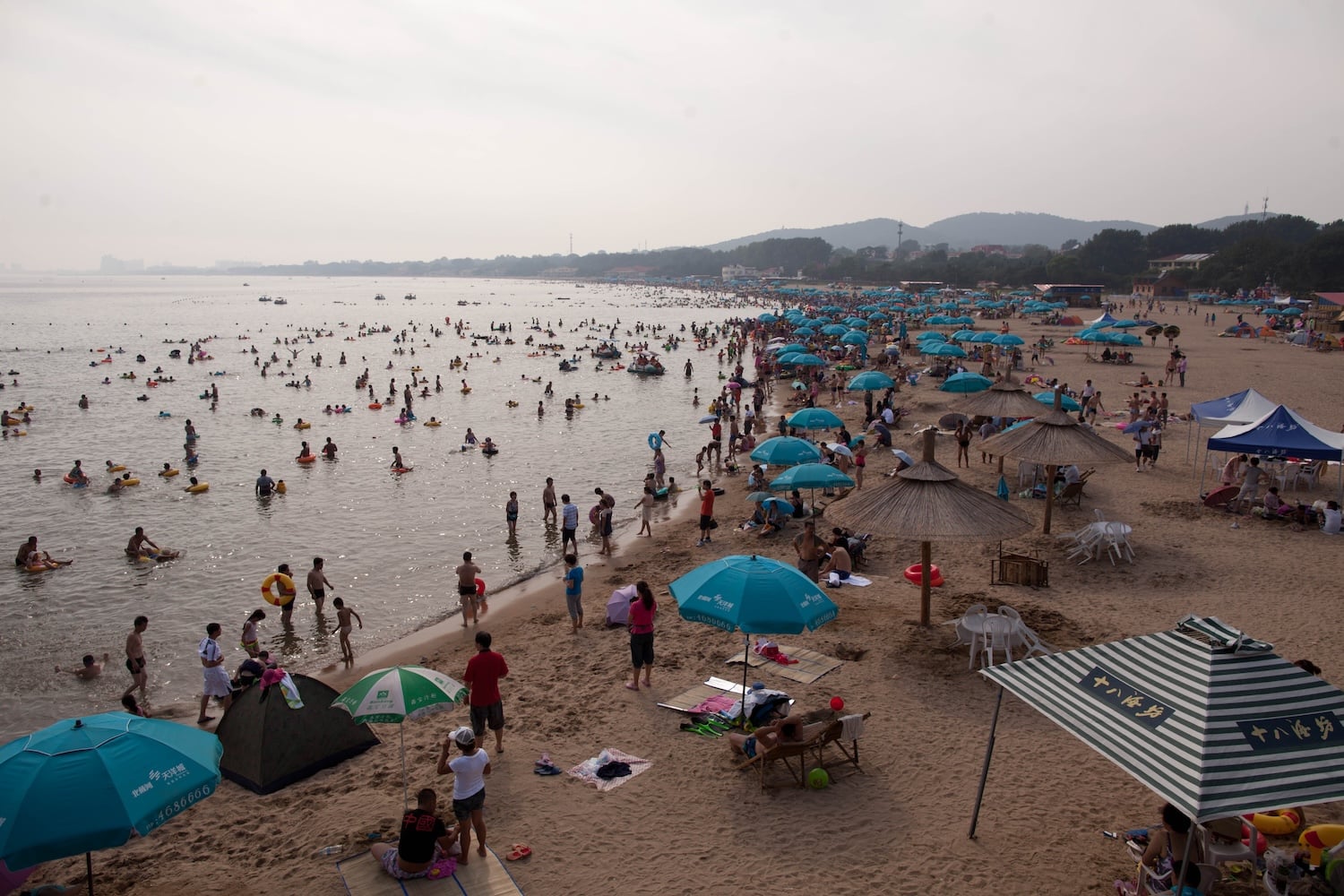
!The beachside resort of Beidaihe is seen as China’s senior leaders gathered for their annual retreat.
*The beachside resort of Beidaihe is seen as China’s senior leaders gathered for their annual retreat.*
The beachside resort of Beidaihe is seen as China’s senior leaders gathered for their annual retreat, on Aug. 6, 2012. Ed Jones/AFP via Getty Images
My FP:
Follow topics and authors to get straight to what you like. Exclusively for FP subscribers. Subscribe Now | Log In
*
*
*
August 18, 2026, 3:30 PM
Welcome to*Foreign Policy*’s China Brief.
The highlights this week: China’s leadership wraps up its **summer retreat**, **U.S.-China tensions** simmer ahead of September summit, and a low-budget Chinese film becomes a **surprise blockbuster**.
Welcome to*Foreign Policy*’s China Brief.
The highlights this week: China’s leadership wraps up its **summer retreat**, **U.S.-China tensions** simmer ahead of September summit, and a low-budget Chinese film becomes a **surprise blockbuster**.
Sign up to receive China Brief in your inbox every Tuesday.
---
CCP Leadership Goes on Summer Retreat
China’s leadership appears to have wrapped up its annual two-week retreat in Beidaihe, a seaside resort town about 180 miles east of Beijing. Each year, the top leaders of the Chinese Communist Party (CCP) gather for informal meetings to discuss policy and personnel issues behind closed doors.
As far back as the Qing dynasty, leaders governed from Beidaihe in the summer for practical reasons, as the coastal location was considerably cooler than Beijing. Mao Zedong instituted the retreat as a semi-formal practice in the early 1950s, when it had become relatively easy to return to Beijing in an emergency.
The retreat is no vacation. Historically it has been the place where much of the real work of high-level CCP politics gets done ahead of the choreographed plenums and congresses in the fall. That process allows leaders to resolve contentious decisions in private and appear unified in public.
Beidaihe has also given party elders—retired leaders who nevertheless retained considerable influence over policy and personnel—a place at the table, where they can promote the careers of their protégés and sideline their rivals.
From the scattered available accounts, Beidaihe meetings strike a balance between the extreme formality and bureaucracy of official meetings and the backstabbing, gossipy palace politics of Zhongnanhai, the CCP leadership compound in Beijing. The discussions are relatively free-wheeling, and they take place in a lighter atmosphere (Mao chaired at least one in a bathrobe after swimming), but they are focused on actual policy matters.
In 2003, Hu Jintao attempted to cancel the retreat shortly after taking over as president and CCP chairman, possibly to stymie the influence of his predecessor, Jiang Zemin. It didn’t work: The meetings continued and Jiang maintained a powerful faction throughout Hu’s tenure.
The Beidaihe meetings’ greatest test may have come in 2012, when the fall of Bo Xilai—a high-flying party official and, like Chinese President Xi Jinping, the son of a former leader—disrupted the CCP’s routine political succession. Bo’s career had collapsed after his close associate attempted to defect to the United States, prompting a series of revelations about his wife’s involvement in the murder of a British national.
It’s not clear whether the meetings sealed the decision to expel Bo from the CCP, or whether the issue was so contentious that the power struggle continued for weeks afterward, but Bo was indeed purged, and his downfall gave Xi an unprecedentedly free hand to launch his own purges when he took office a few months later.
The norms that made Beidaihe so influential were developed under the post-Mao model of collective leadership, in which elders generally emphasized that no single person or faction should dominate the CCP.
Normally, Xi, whose second term was supposed to end in 2022, would be a party elder by now. Instead, he has outlived the once-powerful Jiang and Zhu Rongji and made it brutally clear that Hu, his immediate predecessor, is powerless. As Xi has purged his own potential successors, the prospect of collective leadership is well and truly dead.
Under Xi’s one-man rule, some analysts have argued that Beidaihe has become irrelevant. But I suspect the nature of the power struggles has merely changed, with lower-ranking party officials competing for face time to assure Xi of their loyalty or push their own policy agendas. Plus, there are still plenty of policy decisions to hammer out ahead of the fifth plenum in October.
One of the peculiarities of authoritarian life is that one can never quite escape one’s colleagues. (Soviet leaders, for instance, also vacationed in clusters, mostly around the Black Sea.) I feel a touch sorry for China’s leadership. Beidaihe is fine, but there are far nicer places to vacation. I’ve known of two Chinese power networks in which officials, businesspeopl
By using this website, you agree to our use of cookies. This use includes personalization of content and ads, and traffic analytics. Review our Privacy Policy for more information.
!Foreign Policy
Foreign Policy
Get analysis and alerts more quickly in the mobile app.
Install
Back to Foreign Policy Magazine home page
* Latest
* Regions
+ Asia & the Pacific
+ China
+ Middle East & Africa
+ Americas
+ Europe
* Newsletters
Editors’ Picks
Evening roundup with our editors’ favorite stories of the day
!World Brief Icon
World Brief
Your guide to the most important world stories of the day
!China Brief Icon
China Brief
The latest news, analysis, and data from the country each week
Situation Report
Weekly update on what’s driving U.S. national security policy
FP Weekend
A curation of our best book reviews, deep dives, and other reads
!Africa Brief Icon
Africa Brief
Essential analysis of the stories shaping geopolitics on the continent
!South Asia Brief Icon
South Asia Brief
Weekly update on developments in India and its neighbors
The Reading List
Curated guides on geopolitics and current affairs
FP Bookshelf
A monthly guide to FP’s book reviews, excerpts, and reading recommendations
!Latin America Brief Icon
Latin America Brief
One-stop digest of politics, economics, and culture
!Southeast Asia Brief Icon
Southeast Asia Brief
A weekly dispatch with news from the region’s 11 countries
The New Geopolitics
A five-part masterclass in IR theory with Harvard Professor Stephen M. Walt
View All Newsletters
* FP Live
* Latest
* Trending:
* Iran war
* Colombia's earthquake recovery
Search this website
* Preferences
* My FP Feed
* Saved Articles
* Newsletters
* Magazine Archive
* Subscription Settings
* FAQs
* Log Out
Sign In
Sign In
Partner with FP at UNGA81 Partner with FP at UNGA81
Subscribe SubscribePartner with FP at UNGA81 Partner with FP at UNGA81
China Brief:
China’s Leaders Go on a Summer Retreat
*
*
* Bluesky
* X
Save
Save
1. Create an FP account to save articles to read later.
Sign Up
ALREADY AN FP SUBSCRIBER? LOGIN
1. **Downloadable PDFs** are a benefit of an FP subscription.
Subscribe Now
ALREADY AN FP SUBSCRIBER? LOGIN
Gift
Gift
*
*
1. Gifting articles is a subscriber benefit.
Subscribe Now
ALREADY AN FP SUBSCRIBER? LOGIN
2. This article is an Insider exclusive.
Contact us at [email protected] to learn about upgrade options, unlocking the ability to gift this article.
China Brief
A weekly digest of the stories you should be following in China, plus exclusive analysis. Delivered Tuesday.
China’s Leaders Go on a Summer Retreat
Under Xi, the once-collective gathering has become something else.
!Palmer-James-foreign-policy-columnist20
*Palmer-James-foreign-policy-columnist20*
*James Palmer*
By **James Palmer**, a deputy editor at *Foreign Policy*.
!The beachside resort of Beidaihe is seen as China’s senior leaders gathered for their annual retreat.
*The beachside resort of Beidaihe is seen as China’s senior leaders gathered for their annual retreat.*
The beachside resort of Beidaihe is seen as China’s senior leaders gathered for their annual retreat, on Aug. 6, 2012. Ed Jones/AFP via Getty Images
My FP:
Follow topics and authors to get straight to what you like. Exclusively for FP subscribers. Subscribe Now | Log In
*
*
*
August 18, 2026, 3:30 PM
Welcome to*Foreign Policy*’s China Brief.
The highlights this week: China’s leadership wraps up its **summer retreat**, **U.S.-China tensions** simmer ahead of September summit, and a low-budget Chinese film becomes a **surprise blockbuster**.
Welcome to*Foreign Policy*’s China Brief.
The highlights this week: China’s leadership wraps up its **summer retreat**, **U.S.-China tensions** simmer ahead of September summit, and a low-budget Chinese film becomes a **surprise blockbuster**.
Sign up to receive China Brief in your inbox every Tuesday.
---
CCP Leadership Goes on Summer Retreat
China’s leadership appears to have wrapped up its annual two-week retreat in Beidaihe, a seaside resort town about 180 miles east of Beijing. Each year, the top leaders of the Chinese Communist Party (CCP) gather for informal meetings to discuss policy and personnel issues behind closed doors.
As far back as the Qing dynasty, leaders governed from Beidaihe in the summer for practical reasons, as the coastal location was considerably cooler than Beijing. Mao Zedong instituted the retreat as a semi-formal practice in the early 1950s, when it had become relatively easy to return to Beijing in an emergency.
The retreat is no vacation. Historically it has been the place where much of the real work of high-level CCP politics gets done ahead of the choreographed plenums and congresses in the fall. That process allows leaders to resolve contentious decisions in private and appear unified in public.
Beidaihe has also given party elders—retired leaders who nevertheless retained considerable influence over policy and personnel—a place at the table, where they can promote the careers of their protégés and sideline their rivals.
From the scattered available accounts, Beidaihe meetings strike a balance between the extreme formality and bureaucracy of official meetings and the backstabbing, gossipy palace politics of Zhongnanhai, the CCP leadership compound in Beijing. The discussions are relatively free-wheeling, and they take place in a lighter atmosphere (Mao chaired at least one in a bathrobe after swimming), but they are focused on actual policy matters.
In 2003, Hu Jintao attempted to cancel the retreat shortly after taking over as president and CCP chairman, possibly to stymie the influence of his predecessor, Jiang Zemin. It didn’t work: The meetings continued and Jiang maintained a powerful faction throughout Hu’s tenure.
The Beidaihe meetings’ greatest test may have come in 2012, when the fall of Bo Xilai—a high-flying party official and, like Chinese President Xi Jinping, the son of a former leader—disrupted the CCP’s routine political succession. Bo’s career had collapsed after his close associate attempted to defect to the United States, prompting a series of revelations about his wife’s involvement in the murder of a British national.
It’s not clear whether the meetings sealed the decision to expel Bo from the CCP, or whether the issue was so contentious that the power struggle continued for weeks afterward, but Bo was indeed purged, and his downfall gave Xi an unprecedentedly free hand to launch his own purges when he took office a few months later.
The norms that made Beidaihe so influential were developed under the post-Mao model of collective leadership, in which elders generally emphasized that no single person or faction should dominate the CCP.
Normally, Xi, whose second term was supposed to end in 2022, would be a party elder by now. Instead, he has outlived the once-powerful Jiang and Zhu Rongji and made it brutally clear that Hu, his immediate predecessor, is powerless. As Xi has purged his own potential successors, the prospect of collective leadership is well and truly dead.
Under Xi’s one-man rule, some analysts have argued that Beidaihe has become irrelevant. But I suspect the nature of the power struggles has merely changed, with lower-ranking party officials competing for face time to assure Xi of their loyalty or push their own policy agendas. Plus, there are still plenty of policy decisions to hammer out ahead of the fifth plenum in October.
One of the peculiarities of authoritarian life is that one can never quite escape one’s colleagues. (Soviet leaders, for instance, also vacationed in clusters, mostly around the Black Sea.) I feel a touch sorry for China’s leadership. Beidaihe is fine, but there are far nicer places to vacation. I’ve known of two Chinese power networks in which officials, businesspeopl
🔗 Share Article
Tags:#الصين#السياسة الصينية#الحزب الشيوعي الصيني#شي جينبينغ#السلطة والقيادة#بيدايه
Source: Foreign Policy
For Context
Related reads from the same topic or latest developments


