The U.N.’s Next Leader Will Be Either a Secretary or a General
Foreign Policy

Foreign Policy
Original Source
As the race to succeed UN Secretary-General António Guterres intensifies, the permanent Security Council members face a critical choice: an administrator who manages competing interests discreetly, or an active leader willing to confront global conflicts. Four Latin American candidates—three women among them—vie for a role growing more challenging as China's influence rises and U.S. commitment wavers.
The U.N.’s Next Leader Will Be Either a Secretary or a General
By using this website, you agree to our use of cookies. This use includes personalization of content and ads, and traffic analytics. Review our Privacy Policy for more information.
!Foreign Policy
Foreign Policy
Get analysis and alerts more quickly in the mobile app.
Install
Back to Foreign Policy Magazine home page
* Latest
* Regions
+ Asia & the Pacific
+ China
+ Middle East & Africa
+ Americas
+ Europe
* Newsletters
Editors’ Picks
Evening roundup with our editors’ favorite stories of the day
!World Brief Icon
World Brief
Your guide to the most important world stories of the day
!China Brief Icon
China Brief
The latest news, analysis, and data from the country each week
Situation Report
Weekly update on what’s driving U.S. national security policy
FP Weekend
A curation of our best book reviews, deep dives, and other reads
!Africa Brief Icon
Africa Brief
Essential analysis of the stories shaping geopolitics on the continent
!South Asia Brief Icon
South Asia Brief
Weekly update on developments in India and its neighbors
The Reading List
Curated guides on geopolitics and current affairs
FP Bookshelf
A monthly guide to FP’s book reviews, excerpts, and reading recommendations
!Latin America Brief Icon
Latin America Brief
One-stop digest of politics, economics, and culture
!Southeast Asia Brief Icon
Southeast Asia Brief
A weekly dispatch with news from the region’s 11 countries
The New Geopolitics
A five-part masterclass in IR theory with Harvard Professor Stephen M. Walt
View All Newsletters
* FP Live
* Latest
* Trending:
* Iran war
* China's bet on AI
Search this website
* Preferences
* My FP Feed
* Saved Articles
* Newsletters
* Magazine Archive
* Subscription Settings
* FAQs
* Log Out
Sign In
Sign In
Partner with FP at UNGA81 Partner with FP at UNGA81
Subscribe SubscribePartner with FP at UNGA81 Partner with FP at UNGA81
Analysis:
The U.N.’s Next Leader Will Be Either a Secretary or a General
*
*
* Facebook
* Bluesky
* X
* LinkedIn
* WhatsApp
* Reddit
Save
1. Create an FP account to save articles to read later.
Sign Up
ALREADY AN FP SUBSCRIBER? LOGIN
PDF
1. **Downloadable PDFs** are a benefit of an FP subscription.
Subscribe Now
ALREADY AN FP SUBSCRIBER? LOGIN
Gift
*
*
* WhatsApp
1. Gifting articles is a subscriber benefit.
Subscribe Now
ALREADY AN FP SUBSCRIBER? LOGIN
2. This article is an Insider exclusive.
Contact us at [email protected] to learn about upgrade options, unlocking the ability to gift this article.
Analysis
The U.N.’s Next Leader Will Be Either a Secretary or a General
The race to succeed António Guterres has started—and four very different candidates are in the running.
!Vohra-Anchal-foreign-policy-columnist18
*Vohra-Anchal-foreign-policy-columnist18*
*Anchal Vohra*
By **Anchal Vohra**, a columnist at *Foreign Policy*.
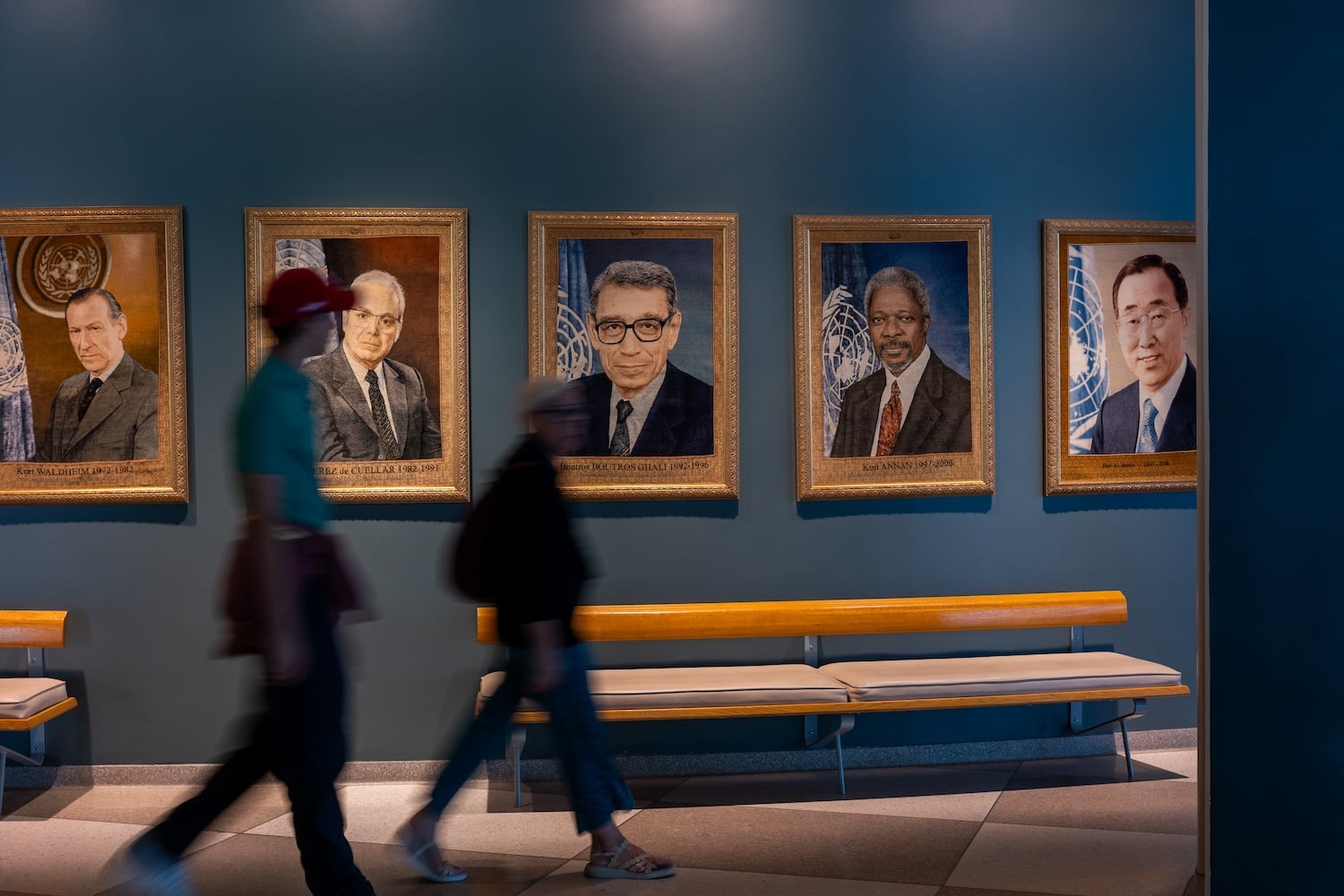
!Portraits of former United Nations Secretary Generals are displayed in the U.N.'s headquarters in Manhattan on September 09, 2025, in New York City.
*Portraits of former United Nations Secretary Generals are displayed in the U.N.'s headquarters in Manhattan on September 09, 2025, in New York City.*
Portraits of former United Nations Secretary Generals are displayed in the U.N.'s headquarters in Manhattan on September 09, 2025, in New York City. Spencer Platt/Getty Images
*
*
*
September 1, 2026, 9:17 AM
For a world mired in conflict and desperate for an unbiased interlocutor, the election of the next United Nations secretary-general couldn’t have come at a better time. The U.N.’s top boss is expected to be the peacemaker-in-chief, at least in theory, and perhaps more importantly, the guardian of a collective moral compass, regardless of national affiliations. Are any of the eight candidates up to the task?
As the race heats up, a former U.N. diplomat, who spoke with *Foreign Policy* on condition of anonymity, quipped that the key question is whether the P5—the permanent five Security Council members, which each hold a veto—want a secretary or a general.
For a world mired in conflict and desperate for an unbiased interlocutor, the election of the next United Nations secretary-general couldn’t have come at a better time. The U.N.’s top boss is expected to be the peacemaker-in-chief, at least in theory, and perhaps more importantly, the guardian of a collective moral compass, regardless of national affiliations. Are any of the eight candidates up to the task?
As the race heats up, a former U.N. diplomat, who spoke with *Foreign Policy* on condition of anonymity, quipped that the key question is whether the P5—the permanent five Security Council members, which each hold a veto—want a secretary or a general.
A general might take a hands-on approach to the various conflicts engulfing the world and try to revive an institution struggling to remain relevant as regional actors offer mediation services while the U.N. itself is bogged down by its own bureaucracy and undermined by the United States, its biggest sponsor.
But the powerful countries that have the most say in the ultimate decision seem to prefer a secretary—someone who can manage the clashing interests of global powers without grabbing attention.
The sitting U.N. chief, António Guterres, has had a tough ride under U.S. President Donald Trump, who has made no secret of his contempt for everything that the United Nations stands for: respect for due process, human rights, international law, and equal status for all in the family of nations. Guterres’s successor can expect to navigate a minefield, as the United States openlylinks its funding to further national interests as Trump sees fit.
However, Trump’s lack of faith and transactional approach won’t be the only problem.
China is thesecond-biggestcontributor, rising from contributing 1 percent of the costs in 2000 to 20 percent this year—comparable to the United States’ 22 percent. China is also assessed to contribute more than 23 percent of the budget that goes toward the organization’s peacekeeping forces, a little under the United States’ 26 percent.
Insiders say that Beijing is clamoring for a bigger say. Meanwhile, Russia intends to continue exploiting its position on the U.N. Security Council (UNSC) to gain leverage in other theaters. The United Kingdom and France also hold a veto, but their geopolitical weight is less of a factor and isn’t expected to sway the election.
The selection process has begun, with two rounds of straw or informal votes having already been held by the 15 members of the Security Council—a process undertaken to determine whether any of the five permanent members appears likely to block a candidate.
Based on those straw-poll votes, and also the geographic turn-taking that the United Nations often adheres to, most believe the next leader will be from Latin America. Specifically, the race is largely believed to be between four Latin Americans, three of whom are women.
Former Costa Rican Vice President Rebeca Grynspan is among thetop candidates. She was the front-runner in the first straw poll conducted by the UNSC, which includes 10 temporary members in addition to the five permanent ones. The poll is split into three categories: encourage, discourage, and no opinion, and nine “encourage” votes—as well as no vetoes from the permanent members—are needed to win. Ten nations “encouraged” Grynspan’s nomination in the first round, while only one expressed apprehension.
If she is the final choice, she would be the first woman and the first Jew to hold the top U.N. position at a time when Israel’s relationship with the organization has hit rock bottom.
Trump shares Israel’s mistrust of some of the U.N.’s bodies that are active in the Middle East, such as the U.N. Relief and Works Agency which is mandated to look after Palestinian refugees displaced from their homes as a result of the 1948 Arab-Israeli War, and the U.N. Interim Force in Lebanon (
By using this website, you agree to our use of cookies. This use includes personalization of content and ads, and traffic analytics. Review our Privacy Policy for more information.
!Foreign Policy
Foreign Policy
Get analysis and alerts more quickly in the mobile app.
Install
Back to Foreign Policy Magazine home page
* Latest
* Regions
+ Asia & the Pacific
+ China
+ Middle East & Africa
+ Americas
+ Europe
* Newsletters
Editors’ Picks
Evening roundup with our editors’ favorite stories of the day
!World Brief Icon
World Brief
Your guide to the most important world stories of the day
!China Brief Icon
China Brief
The latest news, analysis, and data from the country each week
Situation Report
Weekly update on what’s driving U.S. national security policy
FP Weekend
A curation of our best book reviews, deep dives, and other reads
!Africa Brief Icon
Africa Brief
Essential analysis of the stories shaping geopolitics on the continent
!South Asia Brief Icon
South Asia Brief
Weekly update on developments in India and its neighbors
The Reading List
Curated guides on geopolitics and current affairs
FP Bookshelf
A monthly guide to FP’s book reviews, excerpts, and reading recommendations
!Latin America Brief Icon
Latin America Brief
One-stop digest of politics, economics, and culture
!Southeast Asia Brief Icon
Southeast Asia Brief
A weekly dispatch with news from the region’s 11 countries
The New Geopolitics
A five-part masterclass in IR theory with Harvard Professor Stephen M. Walt
View All Newsletters
* FP Live
* Latest
* Trending:
* Iran war
* China's bet on AI
Search this website
* Preferences
* My FP Feed
* Saved Articles
* Newsletters
* Magazine Archive
* Subscription Settings
* FAQs
* Log Out
Sign In
Sign In
Partner with FP at UNGA81 Partner with FP at UNGA81
Subscribe SubscribePartner with FP at UNGA81 Partner with FP at UNGA81
Analysis:
The U.N.’s Next Leader Will Be Either a Secretary or a General
*
*
* Bluesky
* X
Save
1. Create an FP account to save articles to read later.
Sign Up
ALREADY AN FP SUBSCRIBER? LOGIN
1. **Downloadable PDFs** are a benefit of an FP subscription.
Subscribe Now
ALREADY AN FP SUBSCRIBER? LOGIN
Gift
*
*
1. Gifting articles is a subscriber benefit.
Subscribe Now
ALREADY AN FP SUBSCRIBER? LOGIN
2. This article is an Insider exclusive.
Contact us at [email protected] to learn about upgrade options, unlocking the ability to gift this article.
Analysis
The U.N.’s Next Leader Will Be Either a Secretary or a General
The race to succeed António Guterres has started—and four very different candidates are in the running.
!Vohra-Anchal-foreign-policy-columnist18
*Vohra-Anchal-foreign-policy-columnist18*
*Anchal Vohra*
By **Anchal Vohra**, a columnist at *Foreign Policy*.
!Portraits of former United Nations Secretary Generals are displayed in the U.N.'s headquarters in Manhattan on September 09, 2025, in New York City.
*Portraits of former United Nations Secretary Generals are displayed in the U.N.'s headquarters in Manhattan on September 09, 2025, in New York City.*
Portraits of former United Nations Secretary Generals are displayed in the U.N.'s headquarters in Manhattan on September 09, 2025, in New York City. Spencer Platt/Getty Images
*
*
*
September 1, 2026, 9:17 AM
For a world mired in conflict and desperate for an unbiased interlocutor, the election of the next United Nations secretary-general couldn’t have come at a better time. The U.N.’s top boss is expected to be the peacemaker-in-chief, at least in theory, and perhaps more importantly, the guardian of a collective moral compass, regardless of national affiliations. Are any of the eight candidates up to the task?
As the race heats up, a former U.N. diplomat, who spoke with *Foreign Policy* on condition of anonymity, quipped that the key question is whether the P5—the permanent five Security Council members, which each hold a veto—want a secretary or a general.
For a world mired in conflict and desperate for an unbiased interlocutor, the election of the next United Nations secretary-general couldn’t have come at a better time. The U.N.’s top boss is expected to be the peacemaker-in-chief, at least in theory, and perhaps more importantly, the guardian of a collective moral compass, regardless of national affiliations. Are any of the eight candidates up to the task?
As the race heats up, a former U.N. diplomat, who spoke with *Foreign Policy* on condition of anonymity, quipped that the key question is whether the P5—the permanent five Security Council members, which each hold a veto—want a secretary or a general.
A general might take a hands-on approach to the various conflicts engulfing the world and try to revive an institution struggling to remain relevant as regional actors offer mediation services while the U.N. itself is bogged down by its own bureaucracy and undermined by the United States, its biggest sponsor.
But the powerful countries that have the most say in the ultimate decision seem to prefer a secretary—someone who can manage the clashing interests of global powers without grabbing attention.
The sitting U.N. chief, António Guterres, has had a tough ride under U.S. President Donald Trump, who has made no secret of his contempt for everything that the United Nations stands for: respect for due process, human rights, international law, and equal status for all in the family of nations. Guterres’s successor can expect to navigate a minefield, as the United States openlylinks its funding to further national interests as Trump sees fit.
However, Trump’s lack of faith and transactional approach won’t be the only problem.
China is thesecond-biggestcontributor, rising from contributing 1 percent of the costs in 2000 to 20 percent this year—comparable to the United States’ 22 percent. China is also assessed to contribute more than 23 percent of the budget that goes toward the organization’s peacekeeping forces, a little under the United States’ 26 percent.
Insiders say that Beijing is clamoring for a bigger say. Meanwhile, Russia intends to continue exploiting its position on the U.N. Security Council (UNSC) to gain leverage in other theaters. The United Kingdom and France also hold a veto, but their geopolitical weight is less of a factor and isn’t expected to sway the election.
The selection process has begun, with two rounds of straw or informal votes having already been held by the 15 members of the Security Council—a process undertaken to determine whether any of the five permanent members appears likely to block a candidate.
Based on those straw-poll votes, and also the geographic turn-taking that the United Nations often adheres to, most believe the next leader will be from Latin America. Specifically, the race is largely believed to be between four Latin Americans, three of whom are women.
Former Costa Rican Vice President Rebeca Grynspan is among thetop candidates. She was the front-runner in the first straw poll conducted by the UNSC, which includes 10 temporary members in addition to the five permanent ones. The poll is split into three categories: encourage, discourage, and no opinion, and nine “encourage” votes—as well as no vetoes from the permanent members—are needed to win. Ten nations “encouraged” Grynspan’s nomination in the first round, while only one expressed apprehension.
If she is the final choice, she would be the first woman and the first Jew to hold the top U.N. position at a time when Israel’s relationship with the organization has hit rock bottom.
Trump shares Israel’s mistrust of some of the U.N.’s bodies that are active in the Middle East, such as the U.N. Relief and Works Agency which is mandated to look after Palestinian refugees displaced from their homes as a result of the 1948 Arab-Israeli War, and the U.N. Interim Force in Lebanon (
🔗 Share Article
Tags:#الأمم المتحدة#الأمين العام#مجلس الأمن#أمريكا اللاتينية#الجيوسياسة
Source: Foreign Policy
For Context
Related reads from the same topic or latest developments


