Cognitive Dissonance Dominates Hormuz
Foreign Policy

Foreign Policy
Original Source
While President Trump insists that all mines have been cleared from the Strait of Hormuz, the global shipping community refuses to believe the claim and continues avoiding supposedly safe shipping lanes. The contradiction reflects a broader disconnect between Trump's assertions and ground reality.
Cognitive Dissonance Dominates Hormuz
By using this website, you agree to our use of cookies. This use includes personalization of content and ads, and traffic analytics. Review our Privacy Policy for more information.
!Foreign Policy
Foreign Policy
Get analysis and alerts more quickly in the mobile app.
Install
Back to Foreign Policy Magazine home page
* Latest
* Regions
+ Asia & the Pacific
+ China
+ Middle East & Africa
+ Americas
+ Europe
* Newsletters
Editors’ Picks
Evening roundup with our editors’ favorite stories of the day
!World Brief Icon
World Brief
Your guide to the most important world stories of the day
!China Brief Icon
China Brief
The latest news, analysis, and data from the country each week
Situation Report
Weekly update on what’s driving U.S. national security policy
FP Weekend
A curation of our best book reviews, deep dives, and other reads
!Africa Brief Icon
Africa Brief
Essential analysis of the stories shaping geopolitics on the continent
!South Asia Brief Icon
South Asia Brief
Weekly update on developments in India and its neighbors
The Reading List
Curated guides on geopolitics and current affairs
FP Bookshelf
A monthly guide to FP’s book reviews, excerpts, and reading recommendations
!Latin America Brief Icon
Latin America Brief
One-stop digest of politics, economics, and culture
!Southeast Asia Brief Icon
Southeast Asia Brief
A weekly dispatch with news from the region’s 11 countries
The New Geopolitics
A five-part masterclass in IR theory with Harvard Professor Stephen M. Walt
View All Newsletters
* FP Live
* Latest
* Trending:
* Iran war
* China's bet on AI
Search this website
* Preferences
* My FP Feed
* Saved Articles
* Newsletters
* Magazine Archive
* Subscription Settings
* FAQs
* Log Out
Sign In
Sign In
Partner with FP at UNGA81 Partner with FP at UNGA81
Subscribe SubscribePartner with FP at UNGA81 Partner with FP at UNGA81
Argument:
Cognitive Dissonance Dominates Hormuz
*
*
* Facebook
* Bluesky
* X
* LinkedIn
* WhatsApp
* Reddit
Save
1. Create an FP account to save articles to read later.
Sign Up
ALREADY AN FP SUBSCRIBER? LOGIN
PDF
1. **Downloadable PDFs** are a benefit of an FP subscription.
Subscribe Now
ALREADY AN FP SUBSCRIBER? LOGIN
Gift
*
*
* WhatsApp
1. Gifting articles is a subscriber benefit.
Subscribe Now
ALREADY AN FP SUBSCRIBER? LOGIN
2. This article is an Insider exclusive.
Contact us at [email protected] to learn about upgrade options, unlocking the ability to gift this article.
Argument
An expert’s point of view on a current event.
Cognitive Dissonance Dominates Hormuz
Ships can’t navigate a reality that exists only in Trump’s head.
!Braw-Elisabeth-foreign-policy-columnist3
*Braw-Elisabeth-foreign-policy-columnist3*
*Elisabeth Braw*
By **Elisabeth Braw**, a columnist at *Foreign Policy* and a senior fellow at the Atlantic Council.
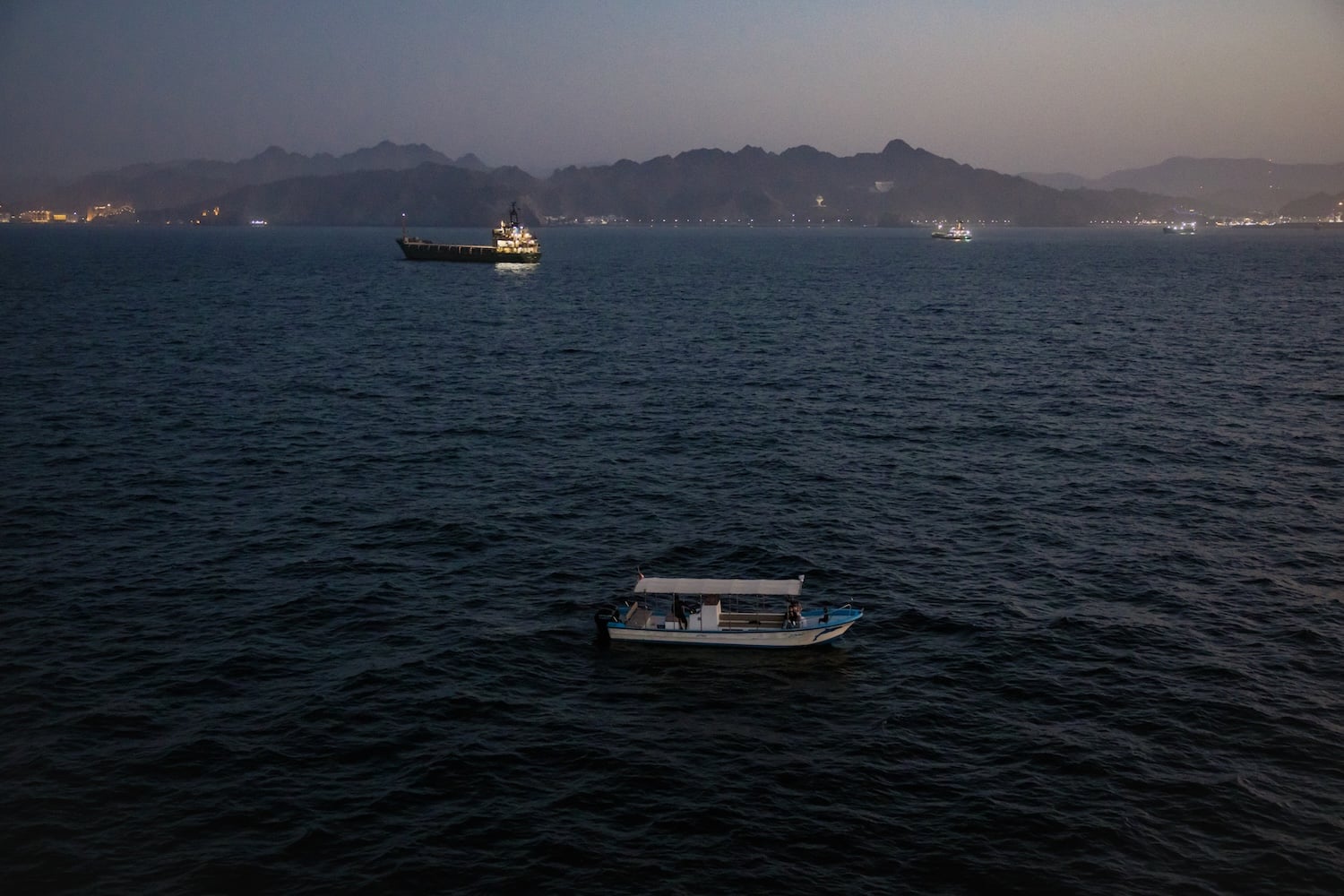
!Oil tankers and cargo vessels are anchored off the coast of Oman.
*Oil tankers and cargo vessels are anchored off the coast of Oman.*
Oil tankers and cargo vessels are anchored off the coast of Oman on June 23. Elke Scholiers/Getty Images
1. Get audio access with any FP subscription.
Subscribe Now
ALREADY AN FP SUBSCRIBER? LOGIN
September 1, 2026, 11:56 AM
“I have just been informed by the United States Navy that all mines have been removed and/or detonated from within the International Waters of the Strait of Hormuz,” U.S. President Donald Trump posted on Truth Social on Aug. 25. At the beginning of the war, Iran had mined the Strait of Hormuz’s Traffic Separation Scheme (TSS), the official shipping lane that runs through the middle of the strait. Mines, of course, make it extremely risky for ships to sail through. And now, Trump has said that the mines are gone.
It is fantastic news because removing mines is painstaking and dangerous work, particularly during an ongoing conflict. “Now that the mines have been cleared, ships will be able to move simultaneously in both directions through the strait with protection from the U.S. Air Force, allowing the export of more oil to global energy markets,” Axios reported.
“I have just been informed by the United States Navy that all mines have been removed and/or detonated from within the International Waters of the Strait of Hormuz,” U.S. President Donald Trump posted on Truth Social on Aug. 25. At the beginning of the war, Iran had mined the Strait of Hormuz’s Traffic Separation Scheme (TSS), the official shipping lane that runs through the middle of the strait. Mines, of course, make it extremely risky for ships to sail through. And now, Trump has said that the mines are gone.
It is fantastic news because removing mines is painstaking and dangerous work, particularly during an ongoing conflict. “Now that the mines have been cleared, ships will be able to move simultaneously in both directions through the strait with protection from the U.S. Air Force, allowing the export of more oil to global energy markets,” Axios reported.
The shipping community, alas, didn’t believe the announcement. Despite the news from Washington, ship traffic remained steady at around 30 transits each day, compared to a daily average of 129 before the war—and most of them opted for the routes along the Iranian and Omani coasts, respectively, not the supposedly safe TSS.
Indeed, cognitive dissonance now dominates the Strait of Hormuz: There’s what Trump the President of the United States says, and there’s what shipowners see on the ground (or rather, on the water). Indeed, cognitive dissonance now seems to dominate Trump’s relations with the world.
“That sucker is open,” Trump insisted on Aug. 27, two days after his first announcement. The following day, U.S. Central Command leader Brad Cooper delivered a similar message on social media. “We have successfully cleared sea mines in the strait’s international shipping lanes,” he said, adding that “internationally recognized transit routes are free of Iranian sea mines thanks to the incredible work of the U.S. military.” Bravo Zulu to the U.S. Navy divers and SEALs who, with great skill and bravery, managed to clear the mines. Unlike Trump, however, Cooper didn’t say that all the mines had been cleared, because it’s impossible to know how many mines have been laid and where they are.
Trump’s messages, and even that of Cooper, appeared to have been intended to mollify global oil markets. But traffic in the strait still did not increase; the shipping community had deduced that not all mines had been cleared. What’s more, mines are not the only peril facing ships in the strait these days. On Aug. 30, the United States fired missiles and rockets at Iran once again, after Centcom discovered that Iran was planning to lay more mines in the Strait of Hormuz. The following day, Trump posted an artificial intelligence video of Iran’s Kharg Island “being blown to smithereens.” Oil prices promptly rose.
The cognitive dissonance in the White House extends far beyond a narrow maritime passage in the Middle East. In January of this year, when Trump was entertaining taking Greenland from Denmark, he let it be known that the Greenlanders “want to be with us.” But in an opinion last year, 85 percent of Greenlanders said that they didn’t want the island to be annexed by the United States, and the island’s leaders have repeatedly told the world as much.
A few weeks after weighing in on the wishes of Greenlanders, Trump attacked Iran. In his speech to the nation, he also turned to the people of Iran, promising that “the hour of your freedom is at hand. Stay sheltered. Don’t leave your home. It’s very dangerous outside. Bombs will be dropping everywhere. When we are finished, take over your government. It will be yours to take.”
Read More
*
*White House Press Secretary Karoline Leavitt shows an artist's rendering of US President Donald Trump's planned Triumphal Arch during a press briefing in the Brady Briefing Room at the White House in Wa
By using this website, you agree to our use of cookies. This use includes personalization of content and ads, and traffic analytics. Review our Privacy Policy for more information.
!Foreign Policy
Foreign Policy
Get analysis and alerts more quickly in the mobile app.
Install
Back to Foreign Policy Magazine home page
* Latest
* Regions
+ Asia & the Pacific
+ China
+ Middle East & Africa
+ Americas
+ Europe
* Newsletters
Editors’ Picks
Evening roundup with our editors’ favorite stories of the day
!World Brief Icon
World Brief
Your guide to the most important world stories of the day
!China Brief Icon
China Brief
The latest news, analysis, and data from the country each week
Situation Report
Weekly update on what’s driving U.S. national security policy
FP Weekend
A curation of our best book reviews, deep dives, and other reads
!Africa Brief Icon
Africa Brief
Essential analysis of the stories shaping geopolitics on the continent
!South Asia Brief Icon
South Asia Brief
Weekly update on developments in India and its neighbors
The Reading List
Curated guides on geopolitics and current affairs
FP Bookshelf
A monthly guide to FP’s book reviews, excerpts, and reading recommendations
!Latin America Brief Icon
Latin America Brief
One-stop digest of politics, economics, and culture
!Southeast Asia Brief Icon
Southeast Asia Brief
A weekly dispatch with news from the region’s 11 countries
The New Geopolitics
A five-part masterclass in IR theory with Harvard Professor Stephen M. Walt
View All Newsletters
* FP Live
* Latest
* Trending:
* Iran war
* China's bet on AI
Search this website
* Preferences
* My FP Feed
* Saved Articles
* Newsletters
* Magazine Archive
* Subscription Settings
* FAQs
* Log Out
Sign In
Sign In
Partner with FP at UNGA81 Partner with FP at UNGA81
Subscribe SubscribePartner with FP at UNGA81 Partner with FP at UNGA81
Argument:
Cognitive Dissonance Dominates Hormuz
*
*
* Bluesky
* X
Save
1. Create an FP account to save articles to read later.
Sign Up
ALREADY AN FP SUBSCRIBER? LOGIN
1. **Downloadable PDFs** are a benefit of an FP subscription.
Subscribe Now
ALREADY AN FP SUBSCRIBER? LOGIN
Gift
*
*
1. Gifting articles is a subscriber benefit.
Subscribe Now
ALREADY AN FP SUBSCRIBER? LOGIN
2. This article is an Insider exclusive.
Contact us at [email protected] to learn about upgrade options, unlocking the ability to gift this article.
Argument
An expert’s point of view on a current event.
Cognitive Dissonance Dominates Hormuz
Ships can’t navigate a reality that exists only in Trump’s head.
!Braw-Elisabeth-foreign-policy-columnist3
*Braw-Elisabeth-foreign-policy-columnist3*
*Elisabeth Braw*
By **Elisabeth Braw**, a columnist at *Foreign Policy* and a senior fellow at the Atlantic Council.
!Oil tankers and cargo vessels are anchored off the coast of Oman.
*Oil tankers and cargo vessels are anchored off the coast of Oman.*
Oil tankers and cargo vessels are anchored off the coast of Oman on June 23. Elke Scholiers/Getty Images
1. Get audio access with any FP subscription.
Subscribe Now
ALREADY AN FP SUBSCRIBER? LOGIN
September 1, 2026, 11:56 AM
“I have just been informed by the United States Navy that all mines have been removed and/or detonated from within the International Waters of the Strait of Hormuz,” U.S. President Donald Trump posted on Truth Social on Aug. 25. At the beginning of the war, Iran had mined the Strait of Hormuz’s Traffic Separation Scheme (TSS), the official shipping lane that runs through the middle of the strait. Mines, of course, make it extremely risky for ships to sail through. And now, Trump has said that the mines are gone.
It is fantastic news because removing mines is painstaking and dangerous work, particularly during an ongoing conflict. “Now that the mines have been cleared, ships will be able to move simultaneously in both directions through the strait with protection from the U.S. Air Force, allowing the export of more oil to global energy markets,” Axios reported.
“I have just been informed by the United States Navy that all mines have been removed and/or detonated from within the International Waters of the Strait of Hormuz,” U.S. President Donald Trump posted on Truth Social on Aug. 25. At the beginning of the war, Iran had mined the Strait of Hormuz’s Traffic Separation Scheme (TSS), the official shipping lane that runs through the middle of the strait. Mines, of course, make it extremely risky for ships to sail through. And now, Trump has said that the mines are gone.
It is fantastic news because removing mines is painstaking and dangerous work, particularly during an ongoing conflict. “Now that the mines have been cleared, ships will be able to move simultaneously in both directions through the strait with protection from the U.S. Air Force, allowing the export of more oil to global energy markets,” Axios reported.
The shipping community, alas, didn’t believe the announcement. Despite the news from Washington, ship traffic remained steady at around 30 transits each day, compared to a daily average of 129 before the war—and most of them opted for the routes along the Iranian and Omani coasts, respectively, not the supposedly safe TSS.
Indeed, cognitive dissonance now dominates the Strait of Hormuz: There’s what Trump the President of the United States says, and there’s what shipowners see on the ground (or rather, on the water). Indeed, cognitive dissonance now seems to dominate Trump’s relations with the world.
“That sucker is open,” Trump insisted on Aug. 27, two days after his first announcement. The following day, U.S. Central Command leader Brad Cooper delivered a similar message on social media. “We have successfully cleared sea mines in the strait’s international shipping lanes,” he said, adding that “internationally recognized transit routes are free of Iranian sea mines thanks to the incredible work of the U.S. military.” Bravo Zulu to the U.S. Navy divers and SEALs who, with great skill and bravery, managed to clear the mines. Unlike Trump, however, Cooper didn’t say that all the mines had been cleared, because it’s impossible to know how many mines have been laid and where they are.
Trump’s messages, and even that of Cooper, appeared to have been intended to mollify global oil markets. But traffic in the strait still did not increase; the shipping community had deduced that not all mines had been cleared. What’s more, mines are not the only peril facing ships in the strait these days. On Aug. 30, the United States fired missiles and rockets at Iran once again, after Centcom discovered that Iran was planning to lay more mines in the Strait of Hormuz. The following day, Trump posted an artificial intelligence video of Iran’s Kharg Island “being blown to smithereens.” Oil prices promptly rose.
The cognitive dissonance in the White House extends far beyond a narrow maritime passage in the Middle East. In January of this year, when Trump was entertaining taking Greenland from Denmark, he let it be known that the Greenlanders “want to be with us.” But in an opinion last year, 85 percent of Greenlanders said that they didn’t want the island to be annexed by the United States, and the island’s leaders have repeatedly told the world as much.
A few weeks after weighing in on the wishes of Greenlanders, Trump attacked Iran. In his speech to the nation, he also turned to the people of Iran, promising that “the hour of your freedom is at hand. Stay sheltered. Don’t leave your home. It’s very dangerous outside. Bombs will be dropping everywhere. When we are finished, take over your government. It will be yours to take.”
Read More
*
*White House Press Secretary Karoline Leavitt shows an artist's rendering of US President Donald Trump's planned Triumphal Arch during a press briefing in the Brady Briefing Room at the White House in Wa
🔗 Share Article
Tags:#مضيق هرمز#الولايات المتحدة#إيران#النفط#ترامب#الصراع
Source: Foreign Policy
For Context
Related reads from the same topic or latest developments


