Expedia Faces Off With Cuban Families Over Land Seized Decades Ago
New York Times
N
New York Times
Original Source
A federal court trial opened in Miami against travel booking giant Expedia, as Cuban families seek damages over land seized by Castro's regime decades ago. The lawsuit is the second against the company in 18 months and part of a growing wave of claims against American firms permitted under current U.S. policy.
Expedia Faces Off With Cuban Families Over Land Seized Decades Ago - The New York Times
Skip to contentSkip to site index
Americas
Log in
Sunday, August 30, 2026
Today’s Paper
* Home
* + U.S.
+ International
+ Canada
+ Español
+ 中文
Trump
Administration
* U.S. Debt
* New White House Counsel
* U.S.-Canada Trade War
* Plans to Overhaul Voting
* Approval Rating
Advertisement
SKIP ADVERTISEMENT
You have a preview view of this article while we are checking your access. When we have confirmed access, the full article content will load.
Supported by
SKIP ADVERTISEMENT
Expedia Faces Off With Cuban Families Over Land Seized Decades Ago
A trial involving claims against the travel company has opened in federal court. Dozens of such lawsuits have been filed since President Trump opened the door to them.
Listen · 6:04 min
*
*
*
!A beach view with palm trees and turquoise water.
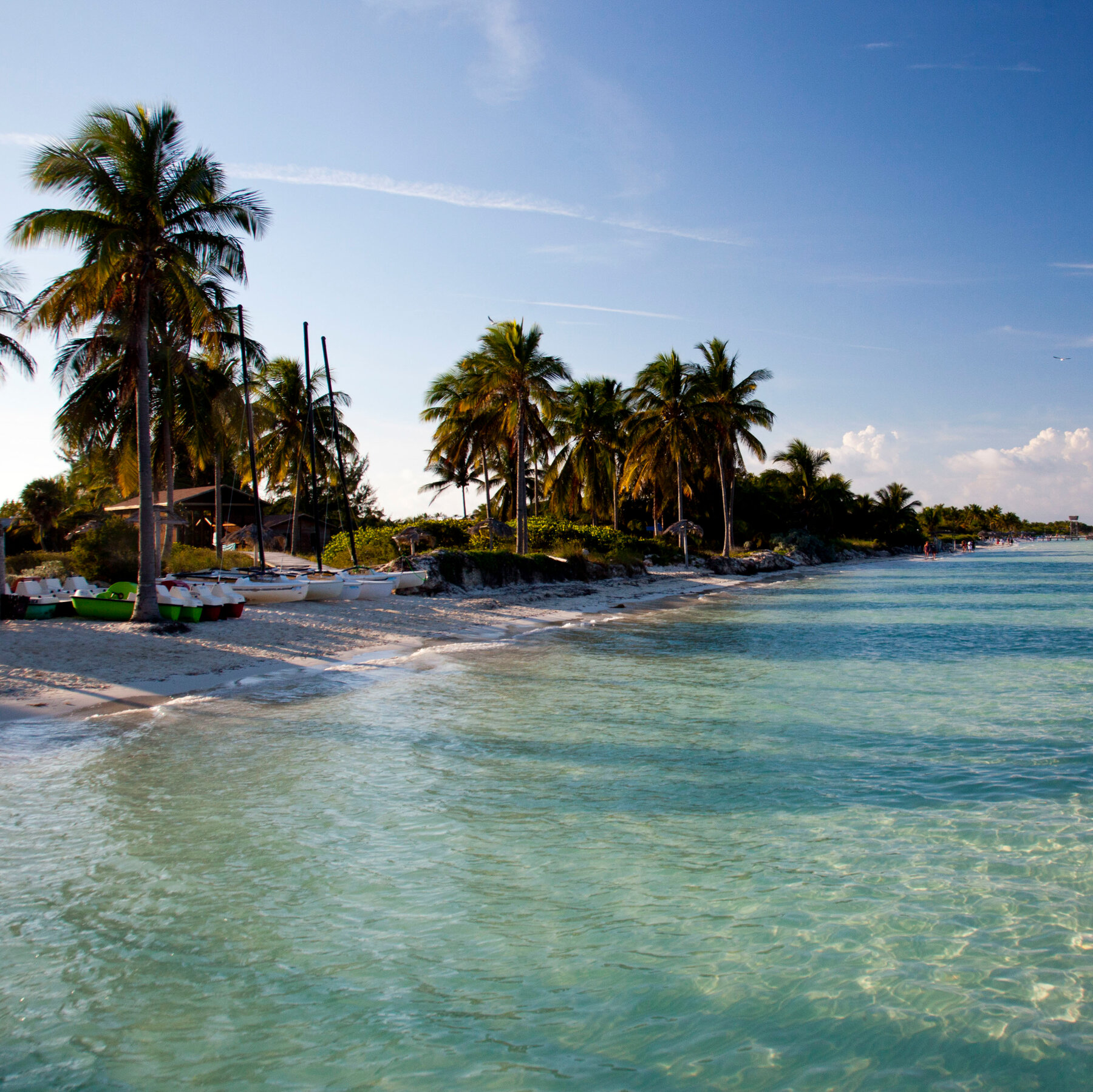
*A beach on Cayo Coco island in Cuba. Land on the cay, off Cuba’s north coast, was seized decades ago by Cuba’s Communist authorities and eventually developed for tourism.
Credit...
Phil Clarke Hill/Corbis, via Getty Images*
By
David C. Adams
Reporting from Miami
Aug. 30, 2026, 12:01 a.m. ET
Leer en español
See more of our coverage in your search results. Encuentra más de nuestra cobertura en los resultados de búsqueda. Add The New York Times on Google Agrega The New York Times en Google
Little did Mario Echevarria know, growing up, that the site of his father’s cattle and charcoal business on a cay north of Cuba would one day become a jewel in the Communist island’s tourism industry.
Now 87, stooped and gray-haired, Mr. Echevarria is seeking damages against Expedia Group, the travel booking giant, for failing to obtain his permission when reserving rooms in hotels built on Cayo Coco, land confiscated from his family in 1960.
Testifying in Miami federal court last week, he was asked who authorized the bookings.
“That was given to them by the dictatorship,” he said.
The civil trial is the second in the past 18 months against Expedia, whose lawyers argue the company believed it was acting legally. The claims stem from a section of a 1996 law that lets U.S. citizens — including Cubans who were not Americans at the time — accuse companies of having illegally “trafficked” in assets seized without compensation.
Expedia entered Cuba in 2017, after President Barack Obama issued new rules letting American hotel chains operate there.
The lawsuit is one in a surge by Cuban families making claims over confiscated assets, dating back to the beginning of the Cuban Revolution in 1959, and comes as President Trump intensifies a pressure campaign on the island.
---
Thank you for your patience while we verify access. If you are in Reader mode please exit andlog intoyour Times account, orsubscribefor all of The Times.
---
Thank you for your patience while we verify access.
Already a subscriber?Log in.
Want all of The Times?Subscribe.
Related Content
*
*
*
*
*
*
*
*
*
*
*
*
*
*
*
*
*
*
*
Advertisement
SKIP ADVERTISEMENT
Site Index
Site Information Navigation
* ©2026 The New York Times Company
* NYTCo
* Contact Us
* Accessibility
* Work with us
* Advertise
* T Brand Studio
* Privacy Policy
* Cookie Policy
* Terms of Service
* Terms of Sale
* Site Map
* Canada
* International
* Help
* Subscriptions
*
Skip to contentSkip to site index
Americas
Log in
Sunday, August 30, 2026
Today’s Paper
* Home
* + U.S.
+ International
+ Canada
+ Español
+ 中文
Trump
Administration
* U.S. Debt
* New White House Counsel
* U.S.-Canada Trade War
* Plans to Overhaul Voting
* Approval Rating
Advertisement
SKIP ADVERTISEMENT
You have a preview view of this article while we are checking your access. When we have confirmed access, the full article content will load.
Supported by
SKIP ADVERTISEMENT
Expedia Faces Off With Cuban Families Over Land Seized Decades Ago
A trial involving claims against the travel company has opened in federal court. Dozens of such lawsuits have been filed since President Trump opened the door to them.
Listen · 6:04 min
*
*
*
!A beach view with palm trees and turquoise water.
*A beach on Cayo Coco island in Cuba. Land on the cay, off Cuba’s north coast, was seized decades ago by Cuba’s Communist authorities and eventually developed for tourism.
Credit...
Phil Clarke Hill/Corbis, via Getty Images*
By
David C. Adams
Reporting from Miami
Aug. 30, 2026, 12:01 a.m. ET
Leer en español
See more of our coverage in your search results. Encuentra más de nuestra cobertura en los resultados de búsqueda. Add The New York Times on Google Agrega The New York Times en Google
Little did Mario Echevarria know, growing up, that the site of his father’s cattle and charcoal business on a cay north of Cuba would one day become a jewel in the Communist island’s tourism industry.
Now 87, stooped and gray-haired, Mr. Echevarria is seeking damages against Expedia Group, the travel booking giant, for failing to obtain his permission when reserving rooms in hotels built on Cayo Coco, land confiscated from his family in 1960.
Testifying in Miami federal court last week, he was asked who authorized the bookings.
“That was given to them by the dictatorship,” he said.
The civil trial is the second in the past 18 months against Expedia, whose lawyers argue the company believed it was acting legally. The claims stem from a section of a 1996 law that lets U.S. citizens — including Cubans who were not Americans at the time — accuse companies of having illegally “trafficked” in assets seized without compensation.
Expedia entered Cuba in 2017, after President Barack Obama issued new rules letting American hotel chains operate there.
The lawsuit is one in a surge by Cuban families making claims over confiscated assets, dating back to the beginning of the Cuban Revolution in 1959, and comes as President Trump intensifies a pressure campaign on the island.
---
Thank you for your patience while we verify access. If you are in Reader mode please exit andlog intoyour Times account, orsubscribefor all of The Times.
---
Thank you for your patience while we verify access.
Already a subscriber?Log in.
Want all of The Times?Subscribe.
Related Content
*
*
*
*
*
*
*
*
*
*
*
*
*
*
*
*
*
*
*
Advertisement
SKIP ADVERTISEMENT
Site Index
Site Information Navigation
* ©2026 The New York Times Company
* NYTCo
* Contact Us
* Accessibility
* Work with us
* Advertise
* T Brand Studio
* Privacy Policy
* Cookie Policy
* Terms of Service
* Terms of Sale
* Site Map
* Canada
* International
* Help
* Subscriptions
*
🔗 Share Article
Tags:#كوبا#إكسبيديا#قضايا تعويضات#أملاك مصادرة#الثورة الكوبية#المحاكم الفيدرالية
Source: New York Times
For Context
Related reads from the same topic or latest developments