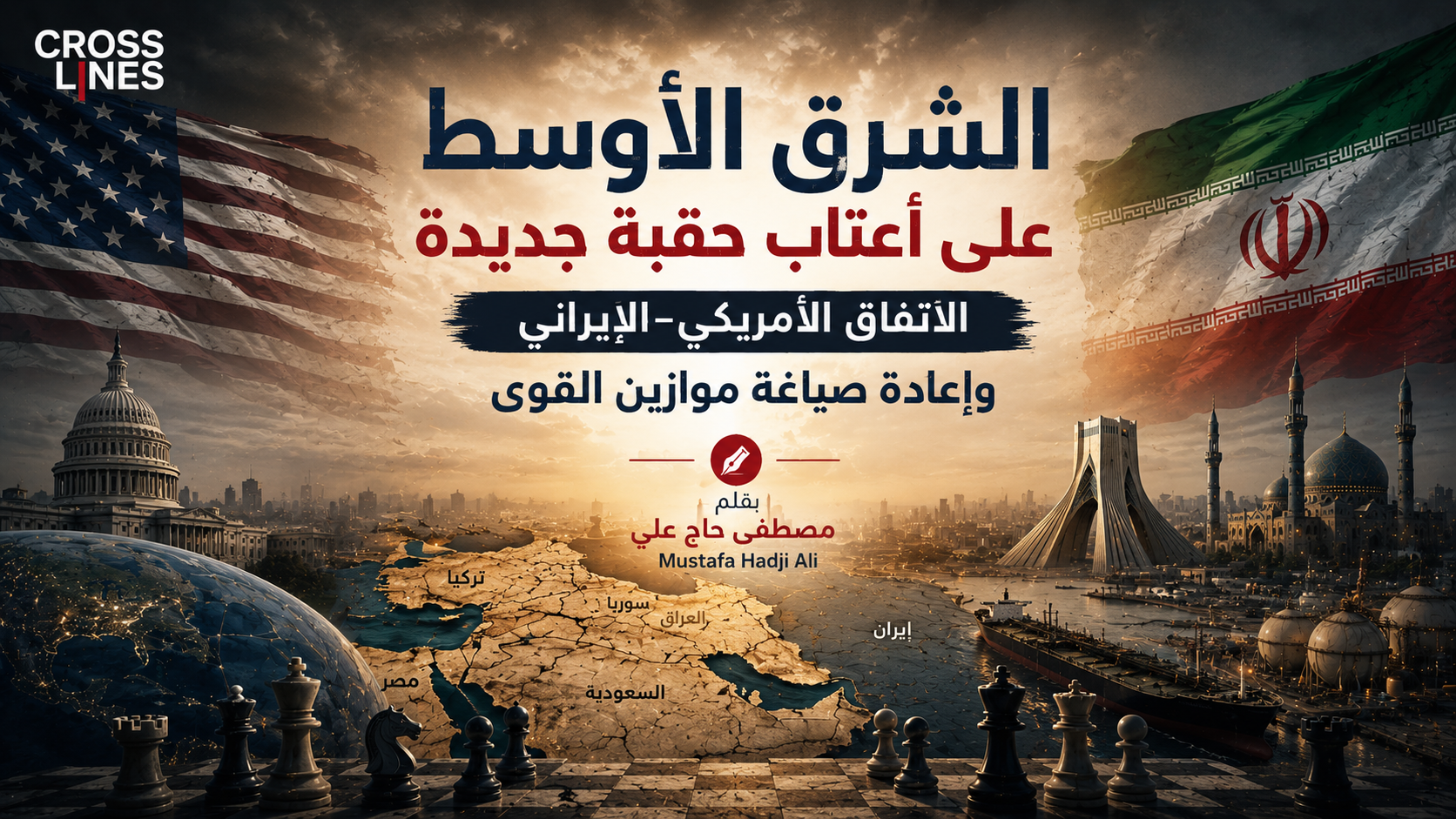
The Middle East on the Brink of a New Era: The U.S.-Iran Agreement and the Reshaping of the Balance of Power
Mustafa Mohammed Al-Hajj Ali
Writer at CROSS LINES
In a geopolitical shift that is redrawing the maps of influence in the Middle East in 2026, the U.S.-Iran memorandum of understanding has emerged as a pivotal event.
In a geopolitical shift that is redrawing the maps of influence in the Middle East in 2026, the U.S.-Iran memorandum of understanding has emerged as a pivotal event. It does not merely end the phase of direct escalation; it also raises profound questions about the nature of the real concessions made and who actually benefits from this complex deal.
Under these circumstances, Israel now finds itself in a difficult position. The agreement represents a sharp setback for the Israeli bet that, for years, had been built on persuading Washington to adopt the option of open military action or a harsher deterrence-based approach toward Tehran.
The American shift toward the language of dialogue and bilateral agreements isolates Israel’s hardline position and makes Tel Aviv feel that it is now operating outside the circle of influence over the major strategic decisions concerning regional security. This makes Israel the party most harmed by this sudden transformation.
Analysts familiar with the behind-the-scenes dynamics of the negotiations believe that Tehran succeeded in applying a negotiating strategy based on exchanging promises and reassurances for tangible political and economic gains, without compromising its strategic constants or regional influence. This dynamic is reflected in two main tracks:
The Paradox of the Nuclear File
Washington is marketing the agreement as a historic achievement aimed at preventing Iran from acquiring a nuclear weapon. Yet the paradox lies in the fact that Tehran, based on its official declared position that it is not seeking to produce such a weapon, has effectively conceded an ambition it says does not exist in its military agenda in the first place.
Through this maneuver, Iran transformed the nuclear file into a negotiating card through which it seeks to gain international recognition of its current nuclear status and secure a partial easing of the isolation imposed on it.
Maritime Security as a New Pressure Tool
In a notable move, Tehran appeared to be offering a major concession by pledging to guarantee the security of navigation in the Strait of Hormuz and protect international trade. In reality, however, this file had not been an active crisis before the latest wave of escalation. Tehran succeeded in turning it into a newly created bargaining chip and imposing it on the negotiating table.
As a result, Iran presented itself as a flexible party offering substantial concessions, while in reality it did not lose any of the core pillars of its regional influence.
The Strategy of Constants and the Fortification of Influence
These facts demonstrate that Tehran was able to preserve its fundamental pillars and even exploit Washington’s urgent desire for de-escalation to extract international recognition of its position as a regional power that cannot be bypassed in any future security arrangements.
What Iran offered Washington amounts to procedural reassurances on files that it either has no interest in escalating — such as nuclear weapons — or that it managed to reframe as bargaining cards, such as maritime security. This makes Iran the party that emerged with the largest share of political and diplomatic gains.
The Future of the Region After the Deal
This agreement places the Middle East before a new political reality, one in which Iran has proven its ability to maneuver diplomatically with the same effectiveness as its field presence.
While regional capitals carefully monitor the outcomes of this de-escalation and its implications for hot-button files, it appears clear that Tehran has succeeded in turning the crisis of escalation into a new phase for consolidating its influence, without paying a price from its strategic capital or political doctrine.
Under these circumstances, Israel now finds itself in a difficult position. The agreement represents a sharp setback for the Israeli bet that, for years, had been built on persuading Washington to adopt the option of open military action or a harsher deterrence-based approach toward Tehran.
The American shift toward the language of dialogue and bilateral agreements isolates Israel’s hardline position and makes Tel Aviv feel that it is now operating outside the circle of influence over the major strategic decisions concerning regional security. This makes Israel the party most harmed by this sudden transformation.
Analysts familiar with the behind-the-scenes dynamics of the negotiations believe that Tehran succeeded in applying a negotiating strategy based on exchanging promises and reassurances for tangible political and economic gains, without compromising its strategic constants or regional influence. This dynamic is reflected in two main tracks:
The Paradox of the Nuclear File
Washington is marketing the agreement as a historic achievement aimed at preventing Iran from acquiring a nuclear weapon. Yet the paradox lies in the fact that Tehran, based on its official declared position that it is not seeking to produce such a weapon, has effectively conceded an ambition it says does not exist in its military agenda in the first place.
Through this maneuver, Iran transformed the nuclear file into a negotiating card through which it seeks to gain international recognition of its current nuclear status and secure a partial easing of the isolation imposed on it.
Maritime Security as a New Pressure Tool
In a notable move, Tehran appeared to be offering a major concession by pledging to guarantee the security of navigation in the Strait of Hormuz and protect international trade. In reality, however, this file had not been an active crisis before the latest wave of escalation. Tehran succeeded in turning it into a newly created bargaining chip and imposing it on the negotiating table.
As a result, Iran presented itself as a flexible party offering substantial concessions, while in reality it did not lose any of the core pillars of its regional influence.
The Strategy of Constants and the Fortification of Influence
These facts demonstrate that Tehran was able to preserve its fundamental pillars and even exploit Washington’s urgent desire for de-escalation to extract international recognition of its position as a regional power that cannot be bypassed in any future security arrangements.
What Iran offered Washington amounts to procedural reassurances on files that it either has no interest in escalating — such as nuclear weapons — or that it managed to reframe as bargaining cards, such as maritime security. This makes Iran the party that emerged with the largest share of political and diplomatic gains.
The Future of the Region After the Deal
This agreement places the Middle East before a new political reality, one in which Iran has proven its ability to maneuver diplomatically with the same effectiveness as its field presence.
While regional capitals carefully monitor the outcomes of this de-escalation and its implications for hot-button files, it appears clear that Tehran has succeeded in turning the crisis of escalation into a new phase for consolidating its influence, without paying a price from its strategic capital or political doctrine.
🔗 Share Article
For Context
Related reads from the same topic or latest developments