ViewsAvailable in English
Strait of Hormuz: How Geography Is Redrawing the Map of the Middle East
Editorial
Cross Lines editing
Source
CROSS LINES

Wafaa Al-Fatlawi
Writer at CROSS LINES
Not all geographical locations are equal in their ability to influence international politics.
Not all geographical locations are equal in their ability to influence international politics. Some transcend their physical boundaries to become decisive factors in shaping the balance of power and the interests of nations. The Strait of Hormuz stands at the forefront of such locations, serving as a vital passageway for global energy supplies and trade, and a strategic crossroads where Gulf security considerations, Iranian ambitions, and the interests of major powers converge.
From this perspective, tensions surrounding the strait cannot be understood merely as disputes over a maritime passage. Rather, they must be viewed as part of broader transformations that are redefining influence, alliances, and security priorities across the Middle East.
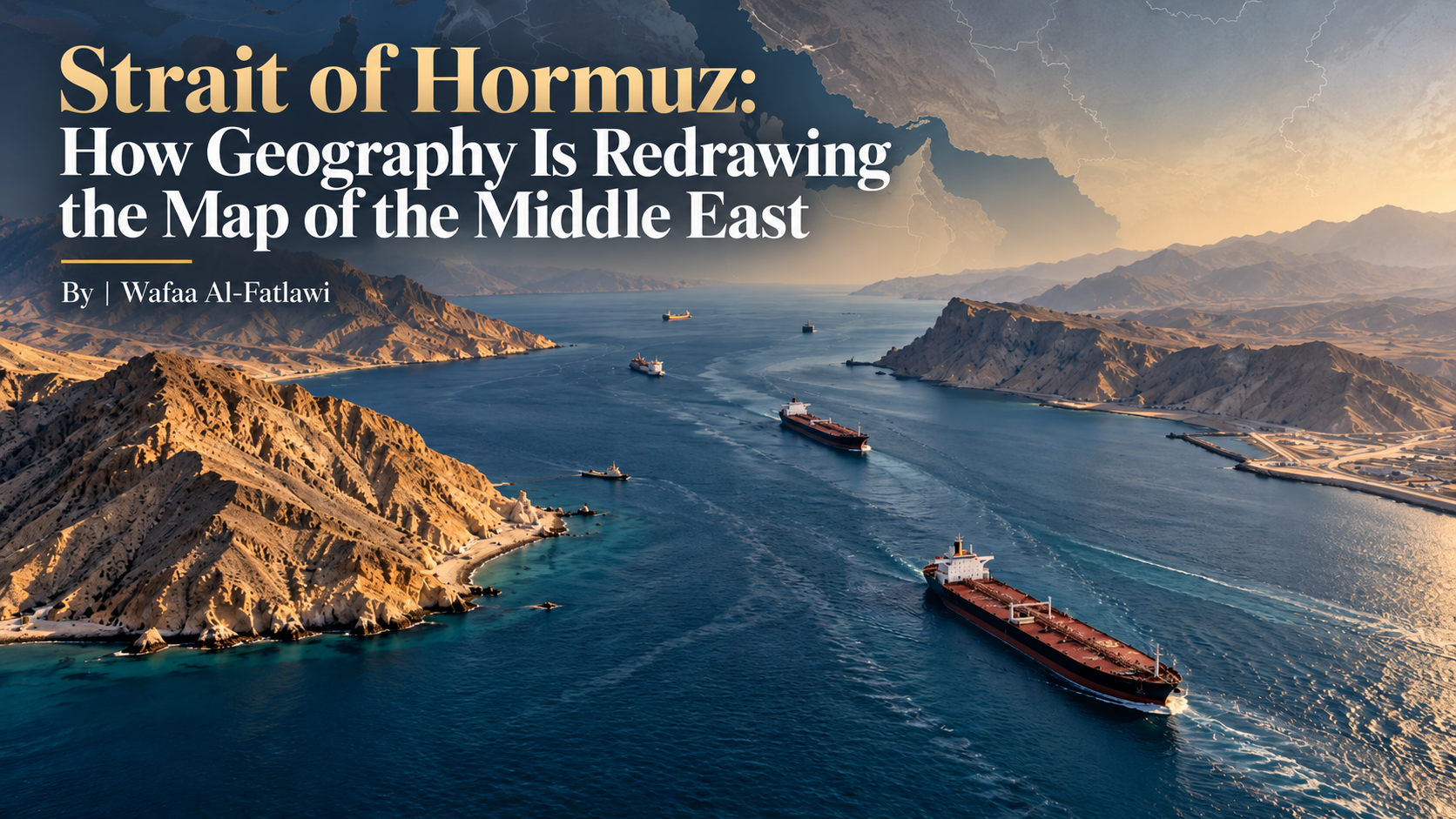
The strategic importance of the Strait of Hormuz stems from its geographical position connecting the Gulf to the Gulf of Oman and the Arabian Sea, with Iran to the north and the Sultanate of Oman to the south. The strait measures approximately 39 kilometers across at its narrowest point, while commercial vessels navigate through designated shipping lanes. This makes the security of maritime transit dependent on a relatively confined geographical area with far-reaching global implications.
The figures illustrate the scale of this importance. According to estimates by the International Energy Agency, an average of approximately 20 million barrels of crude oil and petroleum products passed through the strait daily in 2025. A substantial share of global liquefied natural gas trade also passes through the waterway, particularly Qatari exports. Consequently, any prolonged disruption could significantly affect energy markets, transportation costs, and insurance premiums.
The strait's importance lies not only in the volume of energy shipments passing through it but also in the difficulty of replacing those flows quickly. Saudi Arabia operates the East–West Pipeline, which transports oil to the Red Sea, while the United Arab Emirates has the Abu Dhabi–Fujairah pipeline, providing access to the Gulf of Oman without passing through the strait.
However, these alternatives cannot necessarily compensate for all affected volumes, making uninterrupted navigation a strategic interest that extends well beyond the Gulf's coastal states.
Within this equation, Iran's geographical position gives it considerable leverage over maritime security calculations. Nevertheless, exercising this leverage carries economic and political costs. Any widespread disruption to shipping would not only place pressure on Iran's rivals but also threaten regional trade and exports, potentially prompting international powers to strengthen their presence or reconsider their security policies.
The implications of this equation are also evident for Iraq, whose seaborne oil exports depend heavily on its southern ports along the Gulf. Any disruption to maritime navigation could affect export flows and, consequently, government revenues. This makes stability in the Strait of Hormuz an integral part of Iraq's economic calculations, even when the country is not directly involved in the tensions surrounding the waterway.
Redrawing the map of the Middle East through the influence of Hormuz does not necessarily mean changing political borders. Rather, it involves redistributing strategic importance and the ability to influence regional and international decision-making.
Countries that possess practical alternatives and effectively manage their foreign relations are better positioned to absorb shocks, while those more heavily dependent on limited maritime routes face increasingly difficult choices.
Ultimately, geography does not automatically guarantee victory to those who control strategic locations. Instead, it provides instruments that can become either sources of strength or burdens.
The future of the Strait of Hormuz will remain closely tied to the ability of the parties concerned to balance deterrence with negotiation, and national interests with the requirements of international stability.
The strait connecting the Gulf to the wider world is reshaping the region not merely through its waters, but through the reassessment it demands of the very concepts of security, alliances, and economic sovereignty.
From this perspective, tensions surrounding the strait cannot be understood merely as disputes over a maritime passage. Rather, they must be viewed as part of broader transformations that are redefining influence, alliances, and security priorities across the Middle East.
The strategic importance of the Strait of Hormuz stems from its geographical position connecting the Gulf to the Gulf of Oman and the Arabian Sea, with Iran to the north and the Sultanate of Oman to the south. The strait measures approximately 39 kilometers across at its narrowest point, while commercial vessels navigate through designated shipping lanes. This makes the security of maritime transit dependent on a relatively confined geographical area with far-reaching global implications.
The figures illustrate the scale of this importance. According to estimates by the International Energy Agency, an average of approximately 20 million barrels of crude oil and petroleum products passed through the strait daily in 2025. A substantial share of global liquefied natural gas trade also passes through the waterway, particularly Qatari exports. Consequently, any prolonged disruption could significantly affect energy markets, transportation costs, and insurance premiums.
The strait's importance lies not only in the volume of energy shipments passing through it but also in the difficulty of replacing those flows quickly. Saudi Arabia operates the East–West Pipeline, which transports oil to the Red Sea, while the United Arab Emirates has the Abu Dhabi–Fujairah pipeline, providing access to the Gulf of Oman without passing through the strait.
However, these alternatives cannot necessarily compensate for all affected volumes, making uninterrupted navigation a strategic interest that extends well beyond the Gulf's coastal states.
Within this equation, Iran's geographical position gives it considerable leverage over maritime security calculations. Nevertheless, exercising this leverage carries economic and political costs. Any widespread disruption to shipping would not only place pressure on Iran's rivals but also threaten regional trade and exports, potentially prompting international powers to strengthen their presence or reconsider their security policies.
The implications of this equation are also evident for Iraq, whose seaborne oil exports depend heavily on its southern ports along the Gulf. Any disruption to maritime navigation could affect export flows and, consequently, government revenues. This makes stability in the Strait of Hormuz an integral part of Iraq's economic calculations, even when the country is not directly involved in the tensions surrounding the waterway.
Redrawing the map of the Middle East through the influence of Hormuz does not necessarily mean changing political borders. Rather, it involves redistributing strategic importance and the ability to influence regional and international decision-making.
Countries that possess practical alternatives and effectively manage their foreign relations are better positioned to absorb shocks, while those more heavily dependent on limited maritime routes face increasingly difficult choices.
Ultimately, geography does not automatically guarantee victory to those who control strategic locations. Instead, it provides instruments that can become either sources of strength or burdens.
The future of the Strait of Hormuz will remain closely tied to the ability of the parties concerned to balance deterrence with negotiation, and national interests with the requirements of international stability.
The strait connecting the Gulf to the wider world is reshaping the region not merely through its waters, but through the reassessment it demands of the very concepts of security, alliances, and economic sovereignty.
Share Article
For Context
Related reads from the same topic or latest developments