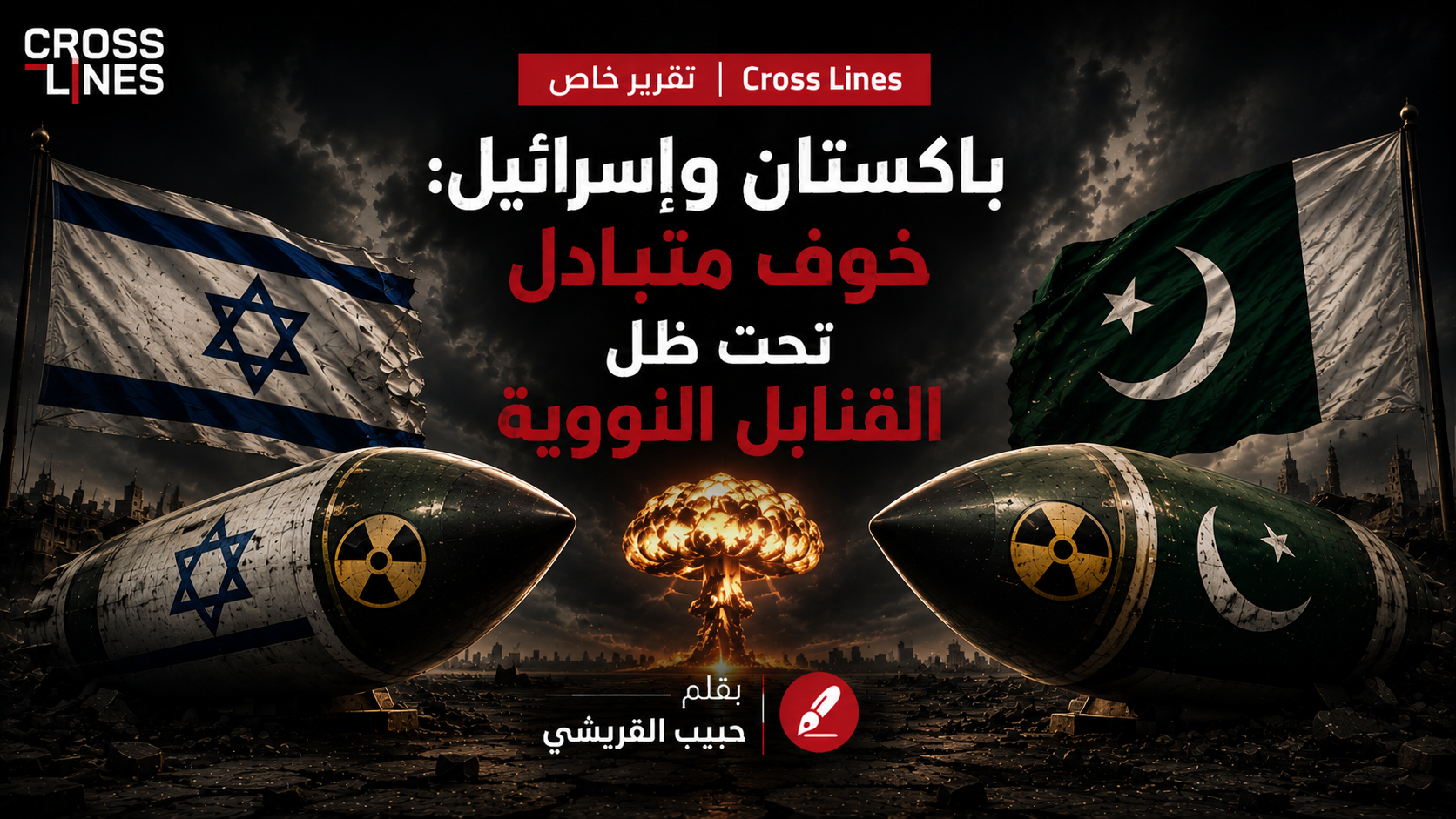
Mutual Fear Between Nuclear Powers: Pakistan and Israel

Habib Al-Quraishi
Writer at CROSS LINES
Mutual Fear Between Nuclear Powers: Pakistan and Israel Pakistan mediated because it has a channel with Iran and a relationship with the United States.
Mutual Fear Between Nuclear Powers: Pakistan and Israel
Pakistan mediated because it has a channel with Iran and a relationship with the United States. However, the continuation of the war threatened its security and interests. At the same time, the crisis presented an opportunity for Islamabad to raise its global diplomatic weight.
Pakistan’s mediation between Iran and the United States was driven by several factors related to geography, politics, and national interests — not merely by its position as a neutral party. Islamabad emerged as a channel of communication between the two sides during the latest crisis, amid reports of its role in conveying messages and helping pave the way for understandings.
Pakistan does not maintain official diplomatic relations with Israel and does not recognize it as a state. Historically, the Pakistani position has been tied to the Palestinian cause and to the broader Arab and Islamic stance, particularly the view that resolving the Palestinian issue remains a fundamental condition for any change in position.
Pakistan’s nuclear program was originally launched for security reasons linked to its rivalry with India, especially after the wars between the two countries and India’s nuclear tests. Pakistan continued developing its nuclear capabilities until it conducted its first publicly declared nuclear tests in 1998.
Israel has historically viewed Pakistan’s nuclear program with concern, as the possession of nuclear weapons by a major Muslim state alters regional calculations in the Middle East. This is despite Pakistan’s repeated assertion that its nuclear program is primarily designed as a deterrent against India, not Israel.
Pakistan is trying to preserve a difficult balance: relations with the West, closeness to the Islamic world, borders with Iran, and possession of nuclear power. These factors make it a regional actor that cannot be ignored. At the same time, the growing concern among Islamic countries over Israel’s project in the region cannot be overlooked.
Pakistan is one of the major Islamic countries that may be viewed as being on the list of potential pressure targets after Egypt, Turkey, and Saudi Arabia.
On the surface, there were traditional reasons behind Pakistan’s intervention to defuse the conflict: geography, relations with the parties involved, preventing the expansion of war, and projecting its international standing.
Pakistan shares a border with Iran, and any prolonged war between Iran and the United States would have direct repercussions on its security, borders, and economy. Therefore, Islamabad had a clear interest in de-escalating the confrontation.
Pakistan also has historic relations with the United States, particularly in the security and military fields. At the same time, it maintains diplomatic, commercial, and security relations with Iran. This positioned Islamabad to play the role of a bridge between the two sides.
Any wider confrontation could affect Gulf security, energy supplies, and trade movement. Pakistan would be among the countries affected by rising oil prices or regional instability. For this reason, it viewed mediation as serving its national security.
Pakistan also seeks to present itself as a regional power capable of resolving crises, rather than merely a country affected by major conflicts. Mediation gives Islamabad greater political influence in the region.
There is also a large Shiite component inside Pakistan. Any American-Iranian war could create internal tensions, meaning that ending the escalation also serves domestic stability.
However, the main reason is preventing absolute Israeli superiority in the region, as well as preventing the elimination of Iran’s role in deterring and containing Israel. From this perspective, Pakistan does not want to see itself become the next target of pressure aimed at forcing normalization, especially as it is surrounded by a historic adversary that maintains a partnership with Israel.
Pakistan mediated because it has a channel with Iran and a relationship with the United States. But the continuation of the war threatened its security and interests, while also offering Islamabad an opportunity to elevate its global diplomatic standing.
Pakistan mediated because it has a channel with Iran and a relationship with the United States. However, the continuation of the war threatened its security and interests. At the same time, the crisis presented an opportunity for Islamabad to raise its global diplomatic weight.
Pakistan’s mediation between Iran and the United States was driven by several factors related to geography, politics, and national interests — not merely by its position as a neutral party. Islamabad emerged as a channel of communication between the two sides during the latest crisis, amid reports of its role in conveying messages and helping pave the way for understandings.
Pakistan does not maintain official diplomatic relations with Israel and does not recognize it as a state. Historically, the Pakistani position has been tied to the Palestinian cause and to the broader Arab and Islamic stance, particularly the view that resolving the Palestinian issue remains a fundamental condition for any change in position.
Pakistan’s nuclear program was originally launched for security reasons linked to its rivalry with India, especially after the wars between the two countries and India’s nuclear tests. Pakistan continued developing its nuclear capabilities until it conducted its first publicly declared nuclear tests in 1998.
Israel has historically viewed Pakistan’s nuclear program with concern, as the possession of nuclear weapons by a major Muslim state alters regional calculations in the Middle East. This is despite Pakistan’s repeated assertion that its nuclear program is primarily designed as a deterrent against India, not Israel.
Pakistan is trying to preserve a difficult balance: relations with the West, closeness to the Islamic world, borders with Iran, and possession of nuclear power. These factors make it a regional actor that cannot be ignored. At the same time, the growing concern among Islamic countries over Israel’s project in the region cannot be overlooked.
Pakistan is one of the major Islamic countries that may be viewed as being on the list of potential pressure targets after Egypt, Turkey, and Saudi Arabia.
On the surface, there were traditional reasons behind Pakistan’s intervention to defuse the conflict: geography, relations with the parties involved, preventing the expansion of war, and projecting its international standing.
Pakistan shares a border with Iran, and any prolonged war between Iran and the United States would have direct repercussions on its security, borders, and economy. Therefore, Islamabad had a clear interest in de-escalating the confrontation.
Pakistan also has historic relations with the United States, particularly in the security and military fields. At the same time, it maintains diplomatic, commercial, and security relations with Iran. This positioned Islamabad to play the role of a bridge between the two sides.
Any wider confrontation could affect Gulf security, energy supplies, and trade movement. Pakistan would be among the countries affected by rising oil prices or regional instability. For this reason, it viewed mediation as serving its national security.
Pakistan also seeks to present itself as a regional power capable of resolving crises, rather than merely a country affected by major conflicts. Mediation gives Islamabad greater political influence in the region.
There is also a large Shiite component inside Pakistan. Any American-Iranian war could create internal tensions, meaning that ending the escalation also serves domestic stability.
However, the main reason is preventing absolute Israeli superiority in the region, as well as preventing the elimination of Iran’s role in deterring and containing Israel. From this perspective, Pakistan does not want to see itself become the next target of pressure aimed at forcing normalization, especially as it is surrounded by a historic adversary that maintains a partnership with Israel.
Pakistan mediated because it has a channel with Iran and a relationship with the United States. But the continuation of the war threatened its security and interests, while also offering Islamabad an opportunity to elevate its global diplomatic standing.
🔗 Share Article
For Context
Related reads from the same topic or latest developments