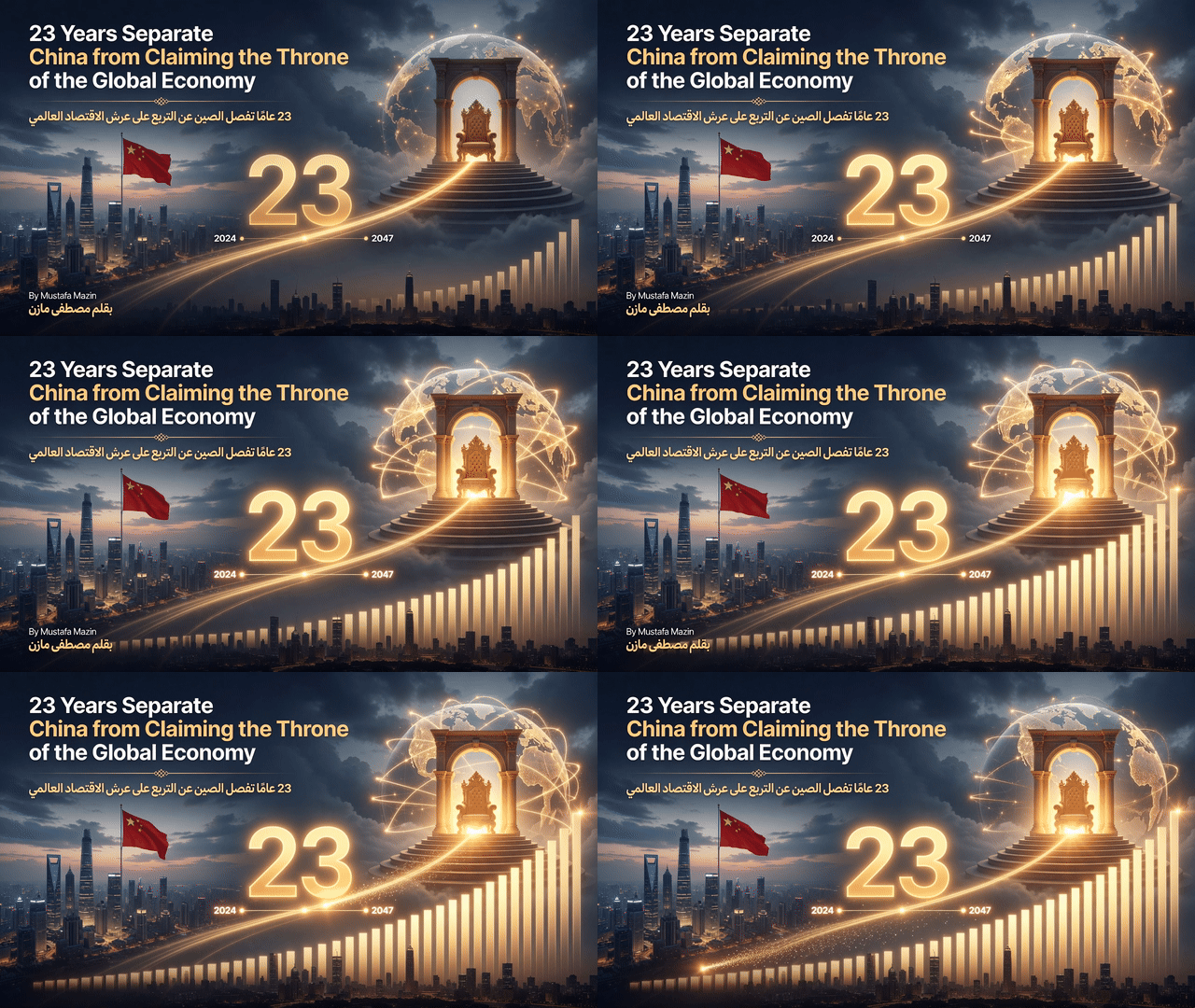
23 Years Separate China from Claiming the Throne of the Global Economy
CROSS LINES
Mustafa Mazin
Writer at CROSS LINES
This article examines, through figures and data, what China may look like in 23 years, when the country marks the centenary of the founding of the People’s Republic of China. It reviews what China has achieved so far, the goals it has set for that milestone, and the progress it has made in trade, artificial intelligence, electric vehicles, clean energy, and the Belt and Road Initiative, as well as President Xi Jinping’s broader economic vision.
When China announced in February 2021 that it had eliminated poverty according to its national standards, this did not mark the end of an economic project that had lasted for more than four decades. Rather, it signaled the beginning of a new and more ambitious phase—one in which the country’s gross domestic product had grown to more than $18 trillion annually.
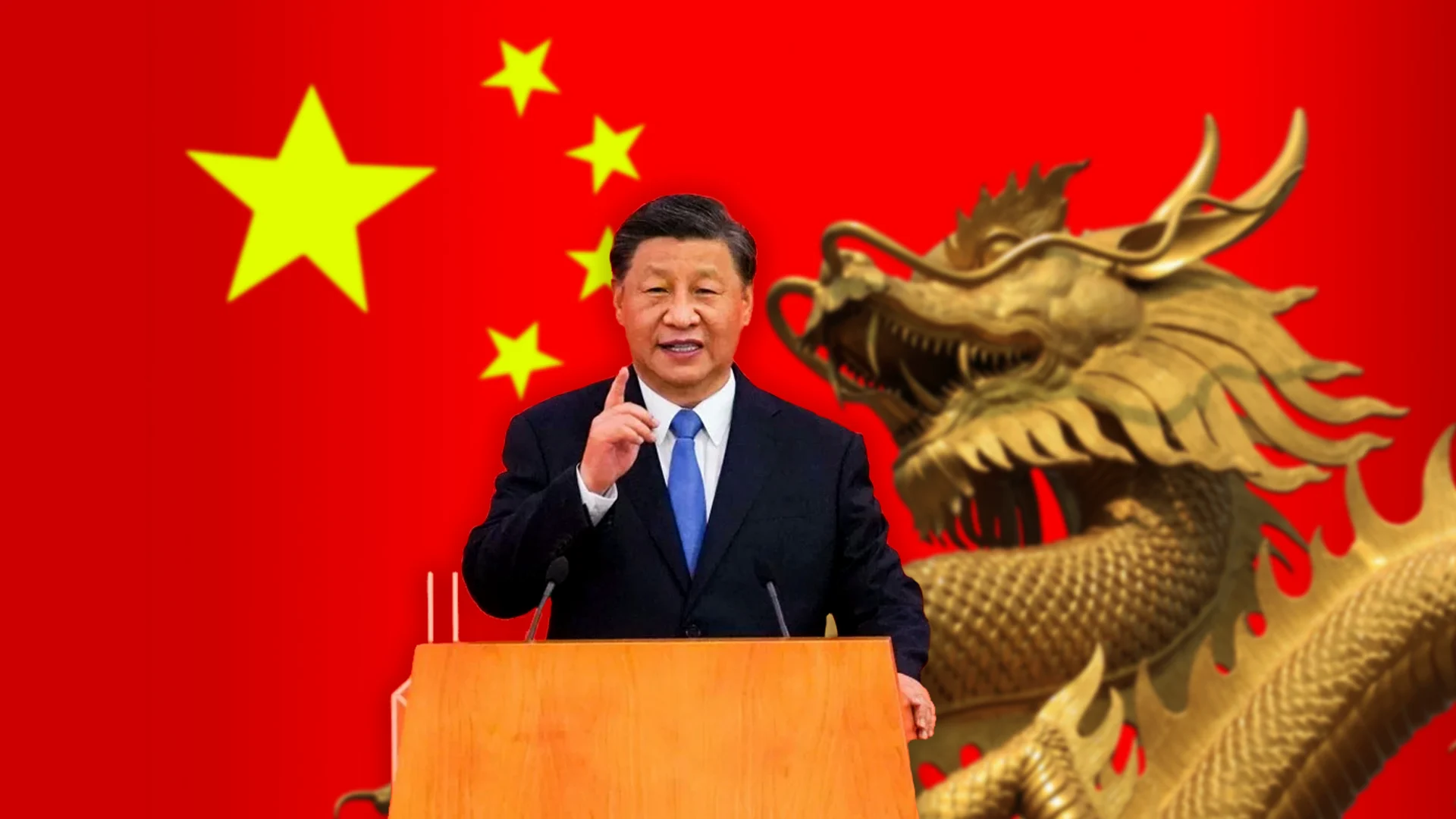
The president of China Xi Jinping
President Xi Jinping has described this phase as one of “high-quality development.” It represents a shift from an economy dependent on mass production and exports toward one driven by innovation, technology, and domestic consumption, with the long-term goal of building a modern and powerful state by 2049, the centenary of the founding of the People’s Republic of China.
It is difficult to understand China’s current project without briefly returning to its starting point. In 1978, the Chinese economy was worth no more than approximately $150 billion, while per capita income stood at less than $200 annually, and China accounted for less than 2 percent of the global economy.
Today, China’s gross domestic product exceeds $18.9 trillion, and the country accounts for approximately 17 percent of the global economy. It has become the world’s largest exporter of goods, with annual exports totaling around $3.5 trillion, while GDP per capita has risen to more than $13,000.
The achievement Beijing takes the greatest pride in, however, is lifting approximately 800 million people out of poverty since the beginning of reform and opening-up. According to World Bank data, this represents more than 70 percent of the total global reduction in extreme poverty.
Yet China’s leadership now views these achievements as part of the past. The next stage of competition, in Beijing’s view, will not be determined by the size of factories, but by the ability to possess and develop advanced technology.
The person currently leading this transformation is President Xi Jinping, whose strategy focuses on increasing growth and development rates and moving the country into a new era in which the economy has been restructured.
For this reason, the Chinese government has established objectives extending to 2035 and 2049. These goals are being implemented through successive five-year plans, accompanied by large-scale investment in strategic sectors.
The World’s Largest Innovation Workshop
While the United States leads the world in major technology corporations, China is seeking to become the world’s largest center for industrial innovation.
In 2024 alone, China’s spending on research and development exceeded 3.6 trillion yuan, equivalent to around $500 billion. The country also had approximately 4.7 million researchers, the largest research workforce of any nation in the world.
China records hundreds of thousands of patent applications annually and leads the world in a number of intellectual property indicators.
Its investments are concentrated in artificial intelligence, semiconductors, industrial robotics, quantum computing, satellites, pharmaceuticals, and biotechnology.
Equally important is China’s transition toward a fully digital economy, which has become one of the main pillars of the country’s growth.
Official data indicate that the added value of the digital economy has exceeded 50 trillion yuan in recent years, accounting for approximately 40 percent of gross domestic product.
Beijing is currently focusing on the development of internet infrastructure, particularly fifth-generation networks, or 5G, as well as large-scale data centers, cloud computing, smart cities, artificial intelligence, and sixth-generation technologies.
It is also important to examine China’s transformation from the “factory of the world” into a “technology factory.”
China’s priorities have changed. It has become the world’s largest producer and exporter of automobiles and the leading manufacturer of electric batteries and solar panels.
The government is seeking to increase the contribution of advanced industries to the economy and reduce dependence on imported sensitive technologies, particularly in the semiconductor sector.
Despite the country’s rapid economic development, President Xi’s strategy has not neglected environmental protection and green investment.
Successive Chinese five-year plans view clean energy not only as an environmental issue, but also as an economic opportunity.
As a result, China has become the world’s leading producer of solar panels and wind turbines and the largest annual investor in renewable energy.
It also aims to reach peak carbon emissions by 2030.
China’s new economic plan also seeks to stimulate the domestic market. The country has a population of more than 1.4 billion people and a middle class estimated at hundreds of millions of consumers.
For this reason, the government is working to raise income levels, improve pension and health insurance systems, encourage consumption, support the digital economy, and expand the services sector.
These policies fall within the framework of the “dual circulation” strategy, which makes domestic demand a central pillar of growth while preserving China’s openness to international trade.
The final issue that must be examined is one of China’s most significant global projects: the Belt and Road Initiative, an infrastructure program designed to reshape international trade.
Since its launch in 2013, more than 150 countries and 30 international organizations have joined the initiative.
The cumulative value of trade between China and participating countries has exceeded $20 trillion.
The initiative has also attracted hundreds of billions of dollars in direct investment in ports, railways, energy projects, and other infrastructure.
What Does China Want to Achieve by 2035?
By 2035, Beijing aims to achieve major global breakthroughs in advanced technology, deepen its reliance on innovation, modernize its industrial sector, strengthen food and energy security, raise real average incomes, expand the middle class, and complete the digital transformation of the economy and public administration.
And What About 2049?
The year 2049 is not merely a symbolic date. It is the deadline by which China seeks to complete the national project it began in 1949.
China Via the year 2049 As presented by the Chinese leadership, the objective is to build a modern socialist state with an advanced innovation-driven economy, high-technology industries, and global economic influence, while maintaining a central role in international trade, investment, and global supply chains.
Over the past several decades, China has succeeded in winning the battle of industrialization and poverty reduction.
The new battle, however, is far more complex: leading the global economy in the age of artificial intelligence.
Beijing is now attempting to move beyond its title as the “factory of the world” and establish itself as the “global center of innovation.”
The success or failure of this ambition will help determine the shape of the international economy for decades to come.
🔗 Share Article
For Context
Related reads from the same topic or latest developments