Two Rival Security Orders Are Emerging in the Middle East
Editorial
Cross Lines editing
Source
CROSS LINES
CROSS LINES
Peiman Salehi
Writer at CROSS LINES
Mohsen Rezaei's return, pressure on Iraq's armed groups and the new Mecca defense pact point to a deeper struggle over who will shape the region's post-war security order.
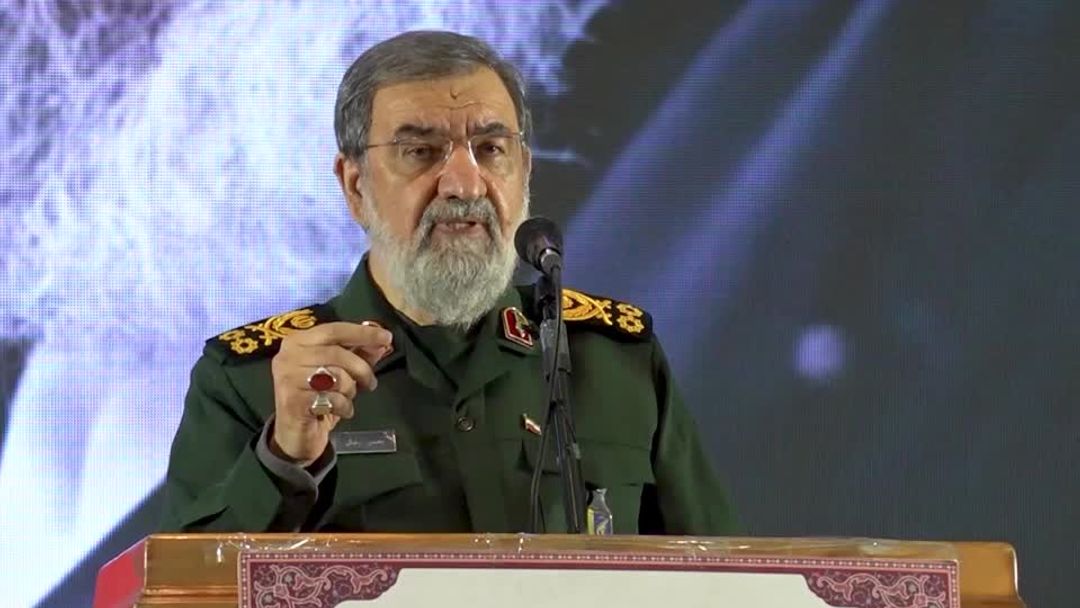
The appointment of Mohsen Rezaei as secretary of Iran's Supreme National Security Council may look, from outside Tehran, like another personnel change inside the Islamic Republic. It is more significant than that. Rezaei is not simply a former military commander returning to a senior state post. He commanded the Islamic Revolutionary Guard Corps for sixteen years, leading it through most of the eight-year Iran-Iraq War, and later spent years at the Expediency Council before serving as economic vice president under President Ebrahim Raisi. Few figures in Iran's political establishment combine military, political and economic experience to this degree. Mohsen Rezaei That combination matters because Tehran's current security challenge is no longer purely military. Iran has emerged from a year of war facing several interconnected pressures at once. Its regional allies are under growing military and political strain. Washington is backing efforts to bring armed groups in Iraq under exclusive state control. Saudi Arabia, Pakistan and Türkiye have formed a new trilateral defense arrangement. And the Strait of Hormuz has become the most consequential instrument of leverage available to Tehran in its confrontation with the United States. Seen against that backdrop, Rezaei's appointment suggests Iran is preparing not merely for another round of negotiations or another military confrontation, but for a broader contest over the regional security order that emerges from the war. Two distinct models of regional power are beginning to take shape.
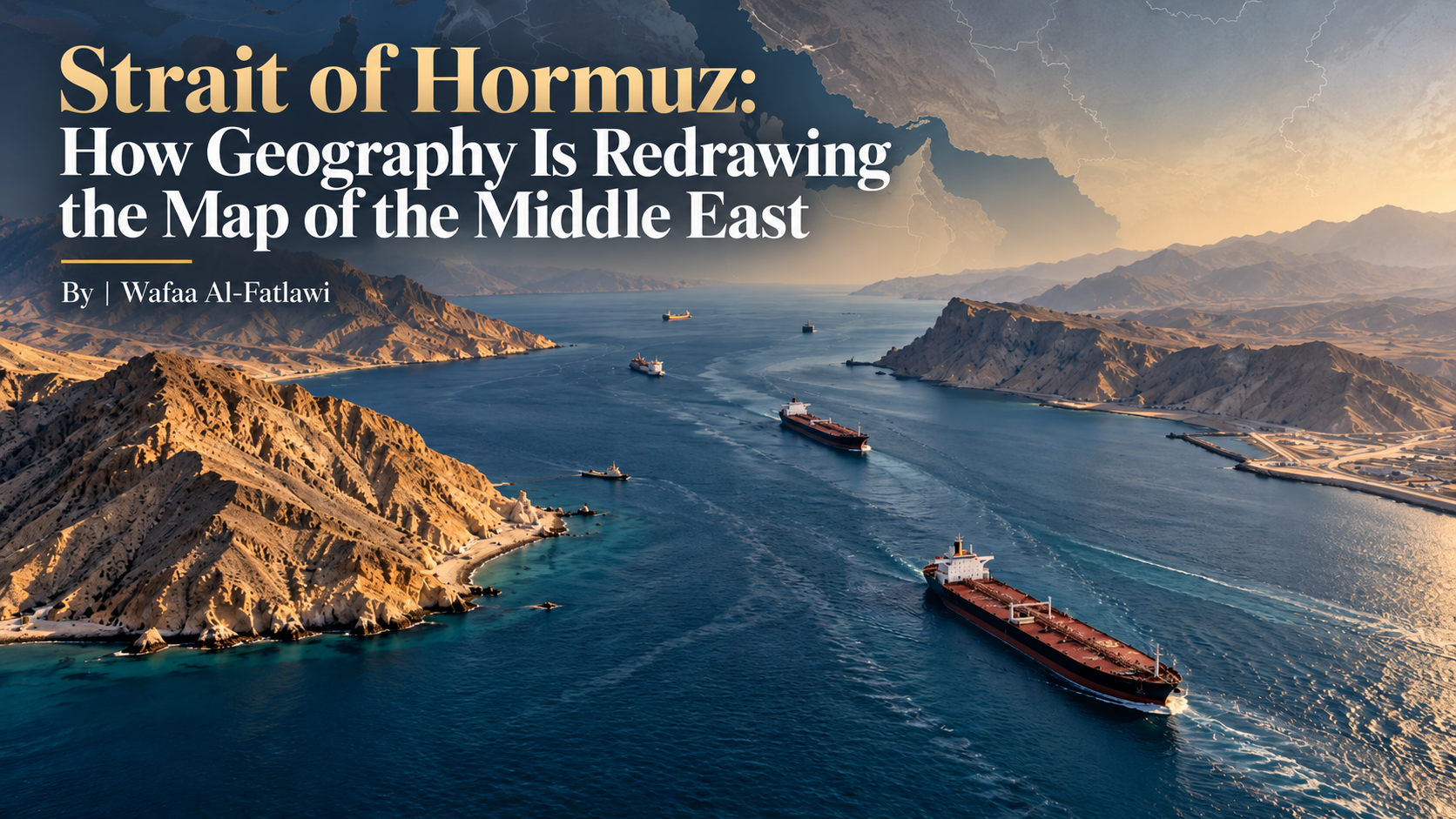
Why Rezaei, and why now Rezaei's first moves in the job offer a sense of how Tehran is thinking. Iran has refused to treat the Strait of Hormuz as an isolated maritime dispute. On August 11, Rezaei said the waterway would remain closed unless Washington changed course and met Iran's conditions — demands that extend well beyond shipping and into broader political and economic terrain. The distinction matters. Much of the discussion outside Iran has focused on the revenue Tehran might extract from controlling traffic through Hormuz. Inside Iran's strategic debate, though, the strait increasingly represents something larger: a mechanism for imposing costs on adversaries that Iran cannot impose through conventional diplomacy alone. Iran has spent decades negotiating under sanctions, watching agreements give way to renewed pressure — most notably the U.S. withdrawal from the 2015 nuclear deal in 2018. That history has bred deep skepticism in Tehran toward any concession that isn't backed by leverage capable of outlasting the negotiation itself. Hormuz now supplies exactly that. Its value, then, is not limited to revenue or relief for Iran's own economy. Control over maritime traffic lets Tehran connect military pressure on Iran to consequences for energy markets, shipping and the political calculations of governments with no direct stake in the conflict. The current stalemate makes the point. Despite repeated attempts to revive an interim arrangement between Washington and Tehran, Iran said on August 12 that no progress had been made, with both sides still at odds over sanctions, frozen Iranian assets and the terms for reopening the strait. Rezaei's arrival at the Supreme National Security Council, in other words, comes precisely when Iran needs to fuse military deterrence, diplomacy and economic pressure into a single strategy.
But Hormuz is only one part of the picture. The battle over Iraq The second front is Iraq. For years, the Popular Mobilization Forces and other armed groups have been among the most important components of Iran's regional security architecture, giving Tehran strategic depth beyond its borders and an added layer of deterrence against attacks on Iran itself. That architecture is now under pressure. The Iraqi government has set September 30 as a deadline after which weapons outside the formal state framework will be treated as unauthorized, framing the move around the principle that the state must hold a monopoly on armed force. The implications reach beyond Iraqi domestic politics. If the most capable factions are absorbed, disarmed or stripped of strategic weapons, Iran loses part of the decentralized security network it has spent decades building. The real question isn't whether individual Iraqi factions keep their weapons — it's whether the regional model through which Iran has generated strategic depth can survive the post-war political order. This is where Rezaei's appointment becomes more revealing. Pressure on Iran's regional allies does not appear to have convinced Tehran these relationships are obsolete; if anything, the opposite conclusion may be taking hold — that after direct war with the United States and Israel, regional depth matters more, not less. From Tehran's vantage point, the past year's lesson is hard to miss: Iran has now absorbed direct attacks on its own territory, and whatever damage its military infrastructure sustained, the conflict also showed that geography, regional partners, missile capability and control over strategic waterways can impose costs well beyond Iran's borders. Iran is unlikely, then, to read pressure on Iraqi armed groups as a purely Iraqi administrative matter. It is part of a far larger contest over the architecture of deterrence across the Middle East.
The Mecca pact That contest came into sharper focus with the new defense agreement between Saudi Arabia, Pakistan and Türkiye. Signed in Mecca, the agreement establishes a trilateral security framework among three of the most militarily significant Sunni-majority states, with a collective-defense clause — an attack on one treated as a matter for all three — that has understandably fueled speculation about an emerging anti-Iran bloc. I'm not convinced that's the most useful way to read it. After the wars of the past year, Saudi Arabia, Pakistan and Türkiye have little incentive to deliberately test Iran's military capacity in direct confrontation. Iran has shown not just its ability to absorb heavy military pressure, but its capacity to internationalize the economic fallout of conflict through the Persian Gulf. The more consequential function of the Mecca arrangement may be indirect: deeper intelligence coordination, defense planning and security cooperation among the three states, strengthening governments and state institutions against non-state armed actors across the region. That would pose a very different kind of challenge for Tehran. The emerging competition, in other words, isn't necessarily Iran on one side and three hostile states on the other. It's increasingly a contest between two different models of regional security.
A network versus a bloc Iran's regional architecture has always been network-based. The groups commonly grouped under the Axis of Resistance are not members of a conventional military alliance — they operate in different political environments, answer to different domestic constituencies and maintain varying degrees of autonomy from Tehran. What binds them isn't a NATO-style treaty; it's a mix of ideology, shared security interests, political ties, military cooperation and a common opposition to U.S. and Israeli regional power. That looseness gives the Iranian model an unusual flexibility. A formal alliance can be pressured through governments. A decentralized network is harder to dismantle, because its components are embedded within their own societies and political systems. The emerging Saudi-Turkish-Pakistani model is built differently. It is state-centered, drawing its power from governments, conventional armed forces, intelligence services, defense industries and formal diplomatic commitments. One architecture runs through networks; the other runs through states — and that distinction may define the next phase of Middle Eastern competition more accurately than the old Sunni-Shiite framework, or the simpler idea of an Iranian-Arab confrontation. Tehran appears to understand this.
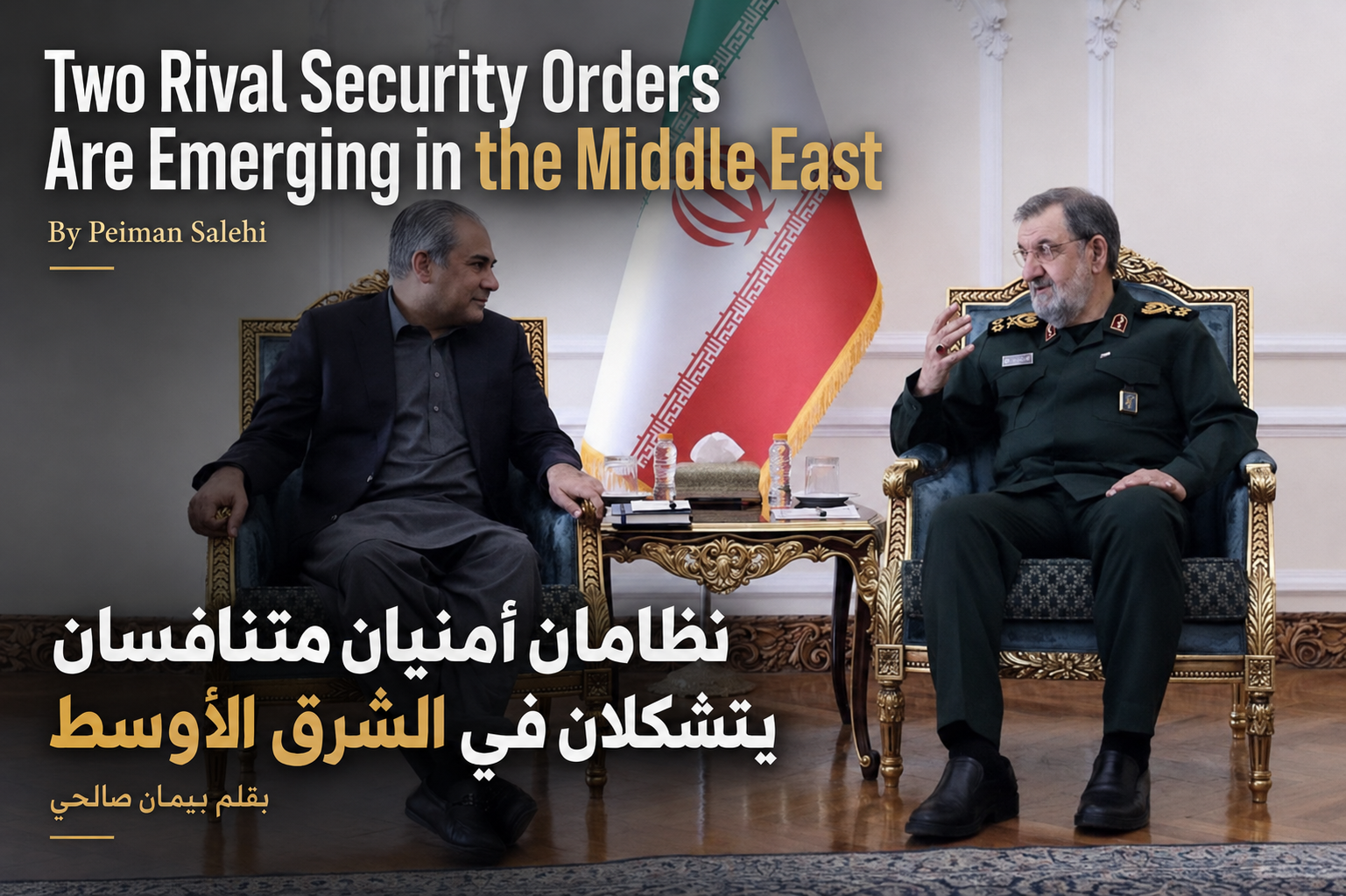
Rezaei's message to Pakistan That's what makes Rezaei's recent language toward Pakistan so revealing. In his meeting with Pakistani Interior Minister Mohsin Naqvi, Rezaei did not treat Pakistan publicly as part of an emerging hostile bloc. Instead, he stressed Pakistan's importance and spoke of the responsibility major Muslim states share in strengthening unity and convergence across the Islamic world — framing that named not only Iran and Pakistan but Türkiye, Saudi Arabia, Egypt and Indonesia as well. That language reads as more than diplomatic courtesy. Iran still has an interest in keeping the emerging defense architecture from becoming explicitly anti-Iranian; Tehran gains nothing from turning Pakistan, Türkiye and Saudi Arabia into simultaneous strategic adversaries. The message carries both an invitation and an implicit warning: these countries can help build a more autonomous regional order in which major Muslim states manage their own security relationships — but if the new arrangements become tools for dismantling Iran's regional partners or piling further pressure on Tehran, Iran is unlikely to stay passive. That distinction will matter most in Iraq and Yemen. The Axis after the war Predictions of the Axis of Resistance's decline have followed nearly every setback its members have suffered, and the past two years have imposed real costs: Hezbollah under sustained military pressure, Hamas severely weakened, Iraqi factions facing mounting political pressure, Ansar Allah pulled into an expanding regional confrontation. But the strategic question for Tehran isn't whether these groups are as strong as they were years ago. It's whether Iran can afford to give up the regional depth they provide — and the answer, after the recent wars, is almost certainly no. If anything, direct attacks on Iranian territory strengthen the argument inside Iran's security establishment that deterrence can't rest on defending Iranian soil alone. That doesn't mean reviving the old model unchanged. The regional network may grow more decentralized, more politically cautious, and more tightly woven into Iran's broader economic and diplomatic strategy. Rezaei, whose background spans exactly the three areas Iran now needs to fuse — military deterrence, political management and economic resilience — is unusually well suited to oversee that transition. Hormuz changes the equation The Strait of Hormuz adds a final dimension that sets this moment apart from earlier phases of regional competition. For decades, Iran's adversaries held overwhelming economic advantages — sanctions could damage Iranian trade while imposing only limited direct costs on the states enforcing them. Hormuz breaks that asymmetry. The longer disruption continues, the further its consequences travel beyond Iran itself, into global energy prices, shipping costs and the calculations of governments with no direct stake in the conflict. Iranian strategy increasingly treats the strait not as a source of income but as an instrument of deterrence. That's why Tehran hasn't simply reopened it in exchange for another round of diplomacy: on August 11, Iran again tied the waterway's reopening to changes in U.S. behavior rather than treating freedom of navigation as a stand-alone technical issue. The message is straightforward — returning to endless negotiation while economic and military pressure continues is no longer enough. Iran wants leverage that survives the negotiating table. The next regional order This is why Rezaei's appointment shouldn't be read in isolation — and neither should the pressure on Iraq's armed groups or the formation of the Mecca defense framework. Together, they point to a Middle East entering a contest over what replaces the security order shattered by the past year's wars: one model built on stronger states, centralized military authority and formal defense partnerships; the other built on Iran's combination of national military power, strategic geography and a network of regional partners capable of operating beyond Iranian territory. Neither system is fixed. Saudi Arabia and Iran still have reasons to avoid direct confrontation. Pakistan maintains important ties with Tehran. Türkiye competes with Iran in some theaters while cooperating in others. Even Iran's own regional partners have domestic priorities that don't always align with Tehran's. Describing the emerging order as simply two hostile camps would be a mistake — but the structural competition underneath is becoming harder to ignore. The central question after the war is no longer only whether Iran and the United States will reach another agreement. It is who will hold enough leverage to shape the environment in which any agreement has to operate. Iran's answer looks increasingly clear: it will not rely on diplomacy alone. It will work to preserve its regional network, deepen the economic dimension of deterrence, and hold on to control over strategic pressure points like the Strait of Hormuz. Mohsen Rezaei's return to the center of Iran's national security establishment, then, is more than a personnel change. It may be the clearest sign yet of how Tehran intends to fight the next phase of this struggle — not necessarily through another war, but through rebuilding the regional leverage that makes another war harder to impose.
Share Article
For Context
Related reads from the same topic or latest developments