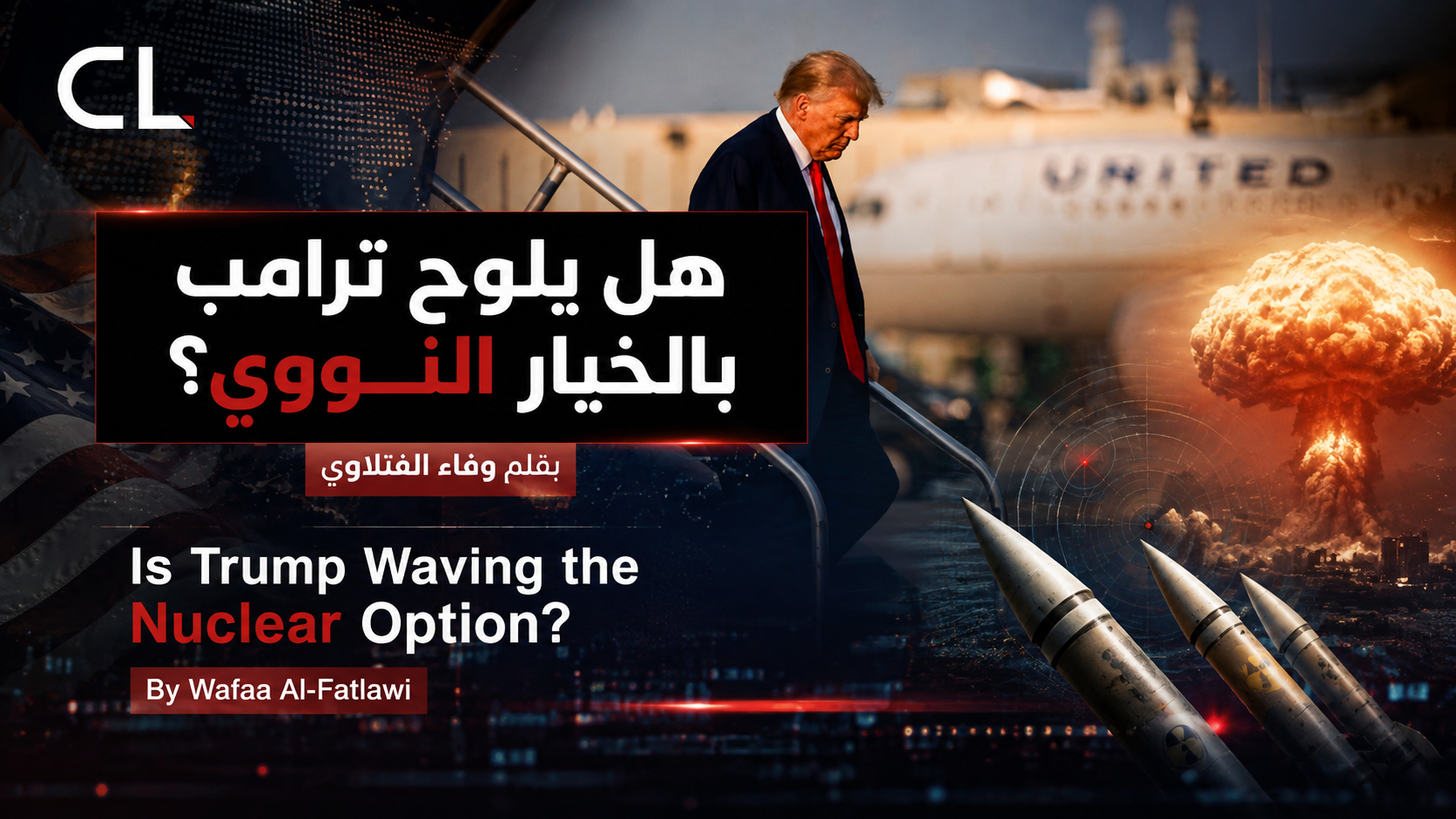
Is Trump Waving the Nuclear Option?

Wafaa Al-Fatlawi
Writer at CROSS LINES
Washington Raises the Stakes as Critical Deadlines Approach
By Wafaa Al-Fatlawi
Journalist and Writer
Iran continues to frame any comprehensive agreement with the United States as one that must balance rights and obligations. Tehran argues that a durable settlement should begin with the removal of economic sanctions, recognition of its right to pursue the peaceful use of nuclear energy under international law, and guarantees that prevent a repeat of Washington's unilateral withdrawal from previous agreements.
At the same time, the Trump administration has intensified both its rhetoric and military posture. As key political milestones draw closer, the White House has revived language reminiscent of the Second World War era, fueling speculation over the seriousness of Gulf mediation efforts and whether the current escalation could ultimately raise the specter of a nuclear option.
From Tehran's perspective, lifting economic sanctions, ending restrictions on trade, restoring full access to global markets, and releasing frozen financial assets are essential confidence-building measures. Iranian officials argue that these steps are necessary to reverse years of economic pressure that have weighed heavily on the country's economy and its population.
Iran also maintains that its sovereign rights over its territorial waters and its role in safeguarding regional maritime security—including the Strait of Hormuz—are non-negotiable. It views the strategic waterway as an integral component of regional security rather than a tool of confrontation.
Tehran further insists that negotiations must follow a "step-for-step" approach, in which reciprocal measures are matched by credible international guarantees. The demand reflects Iran's experience with the 2015 nuclear agreement, from which the United States later withdrew before reimposing sanctions.
Regarding its missile capabilities and regional influence, Iran argues that these issues are inseparable from its national security. In Tehran's view, any discussion of these matters must take place within a broader framework based on mutual respect, balanced guarantees, and dialogue—not coercion or military pressure.
Washington's Pressure Strategy: Between Deterrence and Domestic Politics
President Donald Trump, meanwhile, continues to pursue a strategy that combines economic pressure with military signaling. Analysts remain divided over whether this approach is intended primarily to strengthen Washington's negotiating position or to force Iran into accepting a more restrictive agreement.
The strategy, however, faces significant domestic and international constraints. Policymakers continue to weigh the potential economic consequences of a large-scale military conflict, as well as the risk of broader regional escalation in one of the world's most strategically sensitive regions.
The administration's increasingly forceful rhetoric—including references to extreme military options—has prompted renewed debate over whether Washington is genuinely preparing for confrontation or simply employing maximum-pressure tactics to extract concessions from Tehran.
Iran's Diplomatic Approach From a Position of Strength
Iran maintains that diplomacy—not confrontation—offers the most realistic path toward resolving the crisis. Iranian officials argue that the country possesses sufficient political, economic, and regional leverage to require any lasting agreement to recognize its legitimate interests and regional role.
According to Tehran's perspective, lasting security in the Gulf cannot be achieved through sanctions or military threats. Instead, it must be built upon regional dialogue, mutual respect, and arrangements that safeguard the rights and interests of all parties.
As references to the Second World War increasingly appear in the rhetoric of President Trump and Defense Secretary Pete Hegseth amid discussions of possible escalation against Iran, one central question remains:
Is Trump genuinely prepared to contemplate the use of nuclear weapons to resolve this complex regional confrontation, or does such rhetoric remain part of a broader strategy of maximum pressure designed to strengthen Washington's negotiating leverage?
Journalist and Writer
Iran continues to frame any comprehensive agreement with the United States as one that must balance rights and obligations. Tehran argues that a durable settlement should begin with the removal of economic sanctions, recognition of its right to pursue the peaceful use of nuclear energy under international law, and guarantees that prevent a repeat of Washington's unilateral withdrawal from previous agreements.
At the same time, the Trump administration has intensified both its rhetoric and military posture. As key political milestones draw closer, the White House has revived language reminiscent of the Second World War era, fueling speculation over the seriousness of Gulf mediation efforts and whether the current escalation could ultimately raise the specter of a nuclear option.
From Tehran's perspective, lifting economic sanctions, ending restrictions on trade, restoring full access to global markets, and releasing frozen financial assets are essential confidence-building measures. Iranian officials argue that these steps are necessary to reverse years of economic pressure that have weighed heavily on the country's economy and its population.
Iran also maintains that its sovereign rights over its territorial waters and its role in safeguarding regional maritime security—including the Strait of Hormuz—are non-negotiable. It views the strategic waterway as an integral component of regional security rather than a tool of confrontation.
Tehran further insists that negotiations must follow a "step-for-step" approach, in which reciprocal measures are matched by credible international guarantees. The demand reflects Iran's experience with the 2015 nuclear agreement, from which the United States later withdrew before reimposing sanctions.
Regarding its missile capabilities and regional influence, Iran argues that these issues are inseparable from its national security. In Tehran's view, any discussion of these matters must take place within a broader framework based on mutual respect, balanced guarantees, and dialogue—not coercion or military pressure.
Washington's Pressure Strategy: Between Deterrence and Domestic Politics
President Donald Trump, meanwhile, continues to pursue a strategy that combines economic pressure with military signaling. Analysts remain divided over whether this approach is intended primarily to strengthen Washington's negotiating position or to force Iran into accepting a more restrictive agreement.
The strategy, however, faces significant domestic and international constraints. Policymakers continue to weigh the potential economic consequences of a large-scale military conflict, as well as the risk of broader regional escalation in one of the world's most strategically sensitive regions.
The administration's increasingly forceful rhetoric—including references to extreme military options—has prompted renewed debate over whether Washington is genuinely preparing for confrontation or simply employing maximum-pressure tactics to extract concessions from Tehran.
Iran's Diplomatic Approach From a Position of Strength
Iran maintains that diplomacy—not confrontation—offers the most realistic path toward resolving the crisis. Iranian officials argue that the country possesses sufficient political, economic, and regional leverage to require any lasting agreement to recognize its legitimate interests and regional role.
According to Tehran's perspective, lasting security in the Gulf cannot be achieved through sanctions or military threats. Instead, it must be built upon regional dialogue, mutual respect, and arrangements that safeguard the rights and interests of all parties.
As references to the Second World War increasingly appear in the rhetoric of President Trump and Defense Secretary Pete Hegseth amid discussions of possible escalation against Iran, one central question remains:
Is Trump genuinely prepared to contemplate the use of nuclear weapons to resolve this complex regional confrontation, or does such rhetoric remain part of a broader strategy of maximum pressure designed to strengthen Washington's negotiating leverage?
🔗 Share Article
For Context
Related reads from the same topic or latest developments