The Last Barrel of Oil: A Greener Future for the World

Mustafa Mazin
Writer at CROSS LINES
Leading Energy Journalist Ken Silverstein Tells the Story of a Successful Bet on Clean Energy
Two decades ago, when talk of the “end of the oil age” sounded more like speculation than serious policy debate, Abu Dhabi made a bold decision: to take part of its substantial oil revenues and invest them in a wager on solar power and wind energy.
At the time, these technologies were expensive, relatively immature, and far from being considered an obvious economic choice.
That wager — with all its challenges, setbacks, and eventual successes — is at the heart of American journalist Ken Silverstein’s book, The Last Barrel of Oil, which takes readers inside one of the world’s most ambitious energy-transition experiments: the rise of the UAE renewable-energy company Masdar.
Silverstein is no casual observer of the energy sector. A veteran energy journalist and Forbes contributor, he previously appeared as a guest on a special episode of Cross Lines. That background gives his book additional weight. He approaches Masdar not simply as an advocate of clean energy, but as someone deeply familiar with the economics of oil and natural gas — and therefore well aware of just how unconventional Abu Dhabi’s decision was in 2006.
More Than a Slogan
Silverstein reminds readers that the phrase “the last barrel of oil,” which became the title of his book, was not created in a public-relations meeting.
The idea was articulated years earlier by the father of the UAE’s current president, reflecting an early recognition that oil wealth, however vast it may appear, is ultimately finite.
It was from this understanding that Masdar emerged.
Sheikh Mohammed bin Zayed Al Nahyan established the company through Mubadala Investment Company on April 23, 2006, with a clear mandate: diversify the UAE economy and accelerate the global deployment of renewable energy.
What Silverstein emphasizes — and what forms a central part of his analysis — is that the decision was not driven by international public pressure. At the time, oil-producing countries were not yet facing the level of scrutiny they encounter today over their energy policies.
Instead, the move was fundamentally proactive: Abu Dhabi was preparing for a future before external circumstances forced it to do so.
A Road That Was Far From Easy
Silverstein does not portray Masdar’s story as an uninterrupted success, and that is precisely what gives his account credibility.
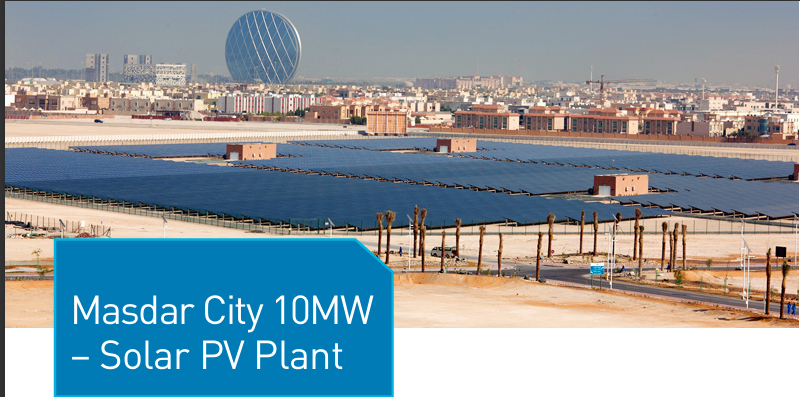
The company began with a single grid-connected solar installation at Masdar City in 2009 and went through years of difficult development before evolving into one of the world’s major renewable-energy developers.
Silverstein contrasts Masdar’s trajectory with that of oil giant Shell, which at one stage entered the clean-energy sector before pulling back after a relatively short period.
In Silverstein’s interpretation, Shell’s initial move into renewable energy was driven less by a fundamental strategic commitment than by a desire to improve its public image and respond to growing concern over climate change.
The contrast is telling: one company retreated when the transition became difficult, while another continued investing despite setbacks.
For Silverstein, that persistence is what makes Masdar more than a corporate success story. It makes the company a case study in long-term energy strategy.
The numbers illustrate just how far Masdar has come.
In 2018, its international portfolio stood at around four gigawatts, with projects spread across the UAE, the United Kingdom, Seychelles, Spain and other markets.
Today, two decades after its establishment, Masdar’s portfolio exceeds 65 gigawatts across six continents, with a publicly stated target of reaching 100 gigawatts by 2030.
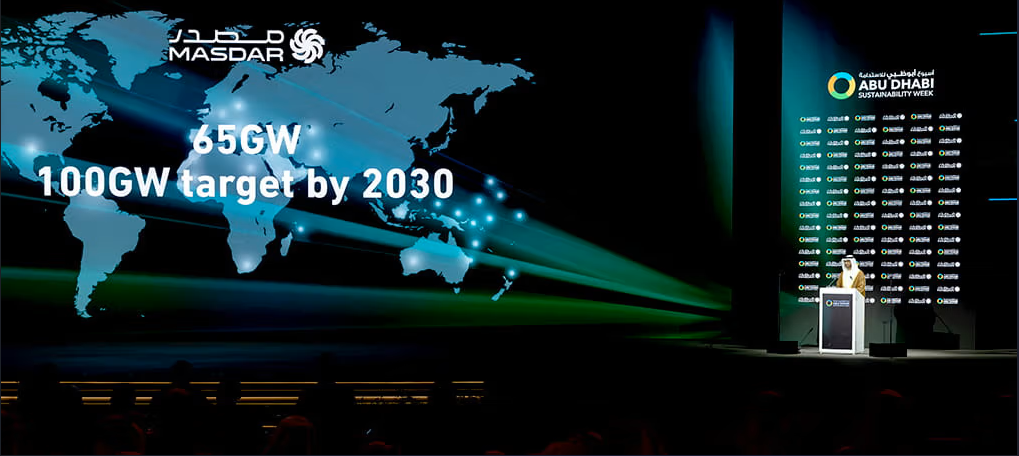 image:Masdar’s capacity reaches 65GW" loading="lazy" decoding="async"/>
The company is now jointly owned by three major Emirati institutions — Mubadala, ADNOC and TAQA — and operates in more than 40 countries worldwide.
Expansion at a New Pace
What is particularly striking in recent years is the speed of Masdar’s expansion.
In April, the company signed a binding agreement with France’s TotalEnergies to establish a $2.2 billion, 50-50 joint venture combining the two companies’ onshore renewable-energy activities across nine Asian markets: Azerbaijan, Indonesia, Japan, Kazakhstan, Malaysia, the Philippines, Singapore, South Korea and Uzbekistan.
The joint venture is expected to include around three gigawatts of operating assets and another six gigawatts in advanced development, with those projects expected to become operational by 2030.
In Africa, Masdar has tripled its presence to more than three gigawatts of capacity, as part of a broader plan to reach ten gigawatts on the continent by the end of the decade.
Among its projects is the 150-megawatt Quipungo solar project in Angola, which is expected to provide electricity to roughly 300,000 homes and create around 2,000 jobs.
Back in Abu Dhabi, Masdar is working with Emirates Water and Electricity Company on one of the world’s most ambitious integrated renewable-energy projects: a 5.2-gigawatt solar power plant paired with a 19-gigawatt-hour battery storage system.
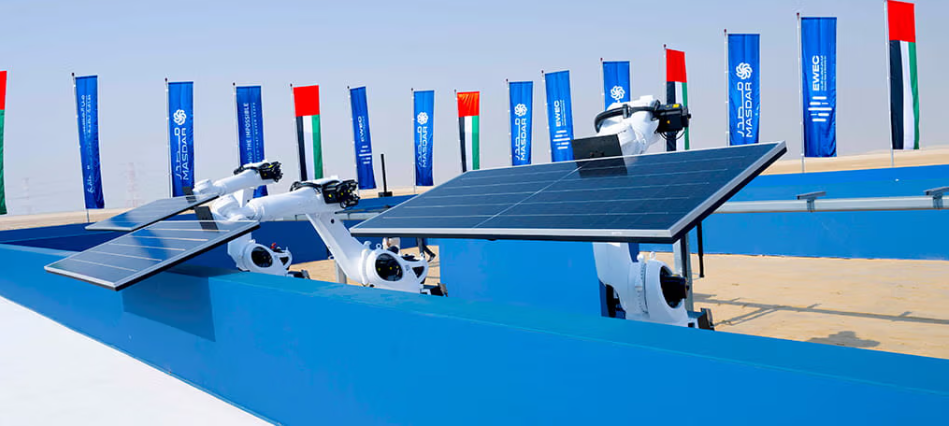
The system is designed to deliver one gigawatt of continuous baseload renewable power around the clock.
It is, in many ways, a practical demonstration of the formula Silverstein sees as central to the future of the energy sector: solar power, wind power and intelligent energy storage.
## The World Is Moving — and Some Countries Are Moving Faster
Masdar, however, represents only one chapter in the broader story Silverstein tells: a world rapidly redrawing its energy map at a pace few experts would have predicted only a few years ago.
Solar power alone accounted for roughly 8.8% of global electricity generation in 2025, while wind accounted for about 8.6%. Together, the two sources contributed approximately 17.4% of the global electricity mix.
That share will need to rise dramatically by 2030 if the world is to remain on a pathway consistent with long-term net-zero objectives.
China, as Silverstein notes and the broader data confirms, dominates the sector in absolute scale.
In 2025, China generated approximately 2,894 terawatt-hours of renewable electricity, accounting for close to one-third of the global total.
In a single year, it added around 315 gigawatts of solar capacity and 118 gigawatts of wind power — representing a substantial share of all new renewable-energy installations worldwide.
Yet there is an important paradox.
Despite the enormous scale of China’s renewable buildout, solar and wind still represent only around one-fifth of the country’s domestic electricity mix, as Beijing continues to rely heavily on coal.
When the question shifts from absolute volume to the percentage of electricity supplied by renewables, Denmark presents a very different model.
In 2024, approximately 88% of Denmark’s electricity came from renewable sources, with wind alone supplying around 58%.
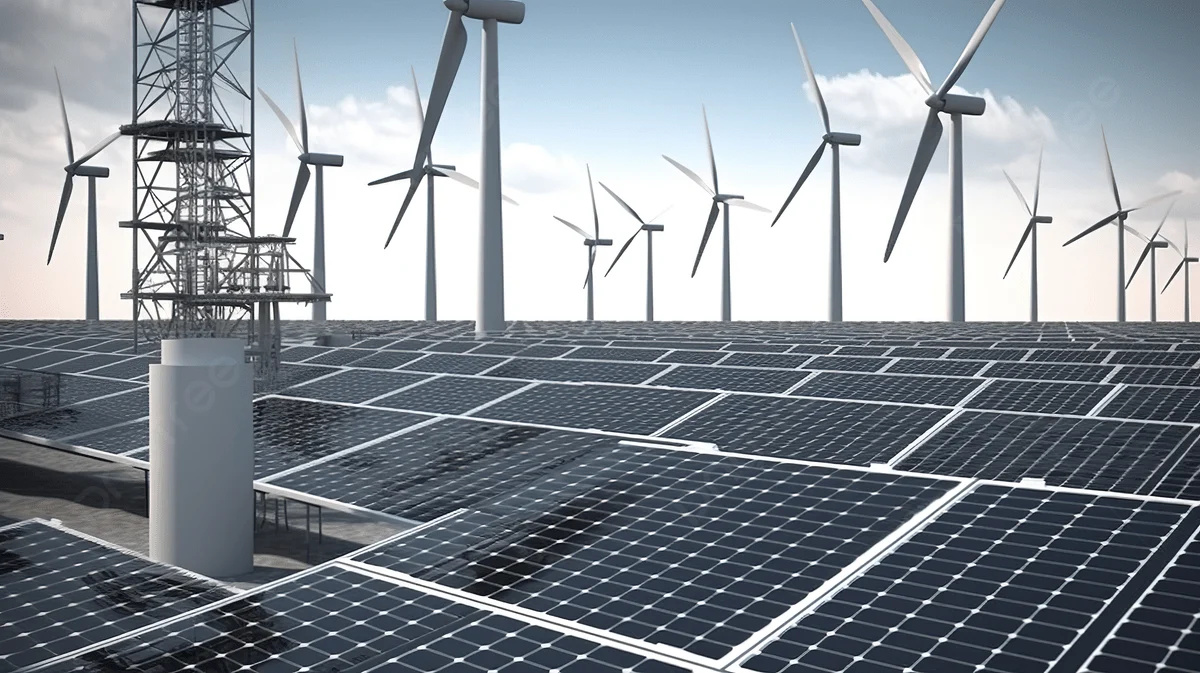
The country is moving toward an even more deeply renewable electricity system by 2030.
The transformation is especially striking because Denmark once depended on oil for close to 90% of its energy needs — making its transition one of the most dramatic restructurings of a national energy system in modern history.
Other countries are also moving rapidly.
Uruguay, Namibia and the Netherlands have emerged among countries approaching the growth rates required for the next phase of the global transition, while Lithuania, Chile and Jordan have recorded expansion rates well above historical global averages.
Spain, meanwhile, has reached a point where solar and wind together provide roughly 43% of its electricity.
Ireland ended coal-fired electricity generation altogether in June 2025, after expanding its wind capacity from only 117 megawatts in 2000 to more than five gigawatts.
This is exactly what Silverstein means when he describes the emerging energy equation: solar, wind and artificial intelligence working together to manage generation and storage with levels of efficiency that were unavailable only a few years ago.
Historically, the central obstacle facing renewable energy was not the ability to generate electricity, but the ability to store it — ensuring a stable supply when the sun is not shining and the wind is not blowing.
Today, that problem is increasingly being addressed through large-scale battery systems, intelligent grids and AI-supported energy management.
Projects such as Masdar’s massive battery-storage development in Abu Dhabi show how quickly those solutions are moving from theory into practice.
Silverstein and Trump
Silverstein does not avoid politics in his analysis.
He openly criticizes U.S. President Donald Trump’s efforts to place greater emphasis on oil, gas and coal, contrasting them with the policies pursued under former President Barack Obama, whose administration encouraged investment in clean energy.
Silverstein’s argument is that global economic and technological trends are moving in a different direction from the policy preferences of the current U.S. administration.
In his assessment, the transition toward cleaner energy has moved beyond being merely an ideological or environmental cause.
Increasingly, it is being driven by economics, falling technology costs, investment flows and market competitiveness.
From that perspective, he argues, renewable energy is no longer simply an environmental alternative. It is becoming an increasingly compelling commercial proposition in its own right.
## And Iraq? An Opportunity Still Waiting to Be Seized
In his interview with Cross Lines, Silverstein also devoted significant attention to Iraq.
He argues that Baghdad should allocate part of its oil revenues to investments in clean energy, which he describes as increasingly affordable, environmentally sustainable and capable of creating meaningful employment in an economy that continues to struggle with limited diversification.
Iraq, he notes, possesses one of the region’s most important natural advantages: an arid climate and exceptionally high levels of solar irradiation throughout much of the year.
That makes the country particularly well positioned to benefit from large-scale solar-power development.
Yet this comparative advantage remains significantly underutilized.
Its economic importance is likely to grow further as global demand for clean energy accelerates and artificial intelligence becomes more deeply integrated into the way electricity is generated, stored and distributed.
For Iraq, the question is therefore no longer simply whether renewable energy is technologically feasible.
It is whether the country can use the revenues generated by its existing oil wealth to finance the energy system it will need in the future.
Preparing for the World After Oil
In The Last Barrel of Oil, Ken Silverstein does more than chronicle the commercial success of an Emirati company.
He presents a case study in how an oil-producing country can begin preparing for its post-oil future before circumstances force it to do so.
Masdar’s story demonstrates how a costly and uncertain idea can, over the course of two decades, evolve into one of the world’s largest clean-energy portfolios.
Drawing on his long experience covering energy for Forbes and his extensive knowledge of the Middle East — reflected in his appearance on Cross Lines — Silverstein offers a detailed account of an energy transition already reshaping economies across the world.
The central lesson is straightforward: oil wealth does not have to stand in opposition to the clean-energy transition.
It can finance it.
For every oil-producing capital looking for a place in the energy economy of the future, Masdar offers a model worth studying.
And perhaps nowhere is that lesson more relevant today than in Baghdad.
🔗 Share Article
For Context
Related reads from the same topic or latest developments