Finland Tries to Protect Children Against Deepfakes, With Russia in Mind
New York Times
N
New York Times
Original Source
Finland is leveraging decades of media literacy education to prepare students for an era of sophisticated deepfakes and AI-generated misinformation. Yet even the Nordic nation's advanced educational system faces an unprecedented challenge as artificial intelligence technology rapidly evolves.
Finland Tries to Protect Children Against Deepfakes, With Russia in Mind - The New York Times
Skip to contentSkip to site index
Europe
Log in
Wednesday, August 5, 2026
Today’s Paper
* Home
* + U.S.
+ International
+ Canada
+ Español
+ 中文
Europe
|
Finland Tries to Protect Children Against Deepfakes, With Russia in Mind
https://www.nytimes.com/2026/08/05/world/europe/finland-deepfakes-ai.html
*
*
*
*
Advertisement
SKIP ADVERTISEMENT
You have a preview view of this article while we are checking your access. When we have confirmed access, the full article content will load.
Supported by
SKIP ADVERTISEMENT
Finland Tries to Protect Children Against Deepfakes, With Russia in Mind
Finland, wary of misinformation from Moscow and beyond, has a leg up on other nations in spotting fake news. But A.I. is a whole new challenge.
Listen · 8:41 min
*
*
*
*
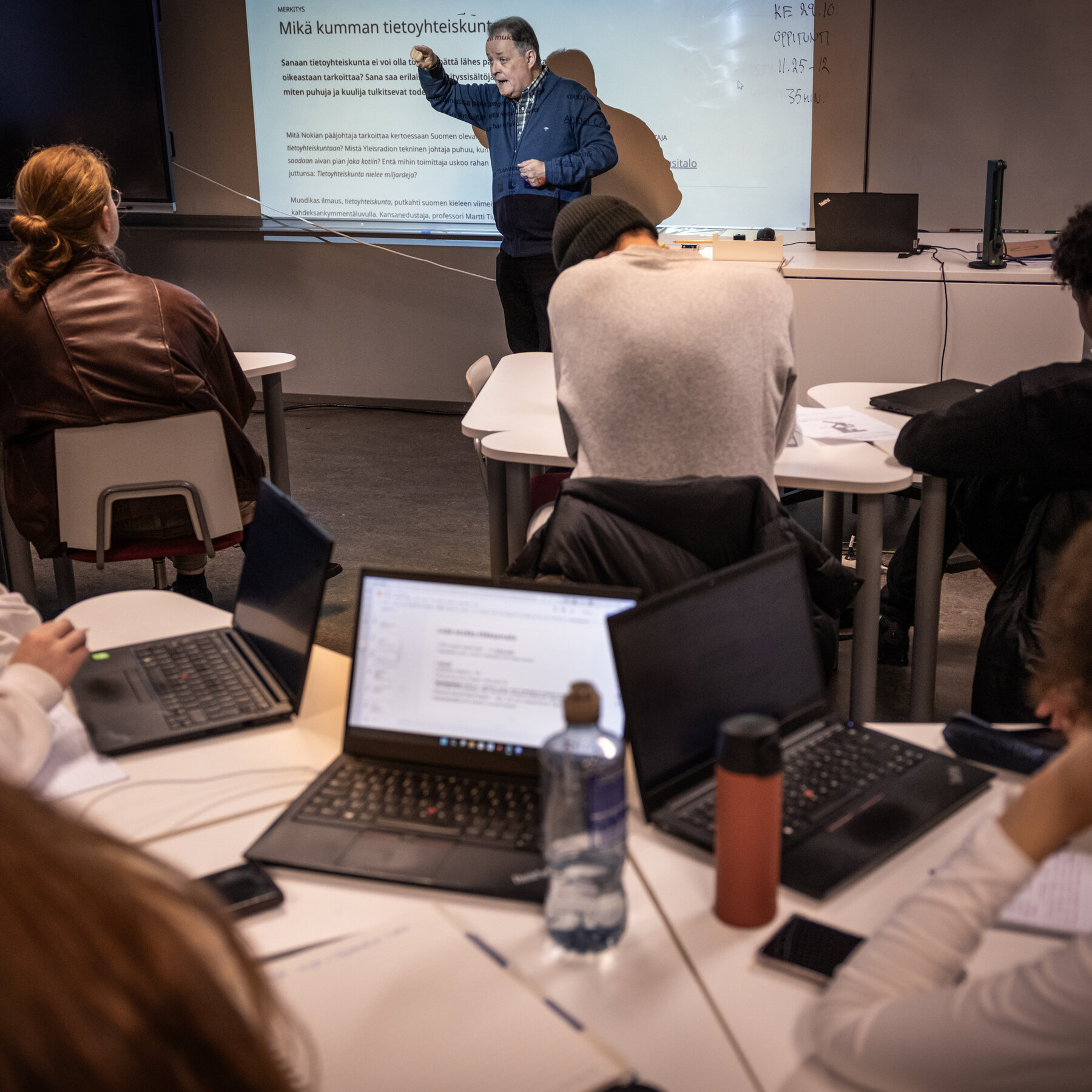
!A man stands at the front of a classroom while students sit at desks with laptops in front of them.
*A class at the Helsinki Upper Secondary School of Media Arts. Educators in Finland teach students how to spot fake news.
Credit...
Meeri Koutaniemi for the New York Times*
By
Amelia Nierenberg
Amelia Nierenberg attended two high school classes in the Helsinki area and spoke with students, teachers and experts.
Aug. 5, 2026, 5:04 a.m. ET
See more of our coverage in your search results. Encuentra más de nuestra cobertura en los resultados de búsqueda. Add The New York Times on Google Agrega The New York Times en Google
Finland is preparing for uncertain times ahead. To the east, it is boosting defenses along its 830-mile-long border with Russia, the longest in the NATO alliance. In the north, its soldiers are teaching other Western troops to fight in Arctic conditions.
And in its schools, young Finns are learning to defend another frontline: reality itself.
Educators around the world are scrambling to prepare students for life in the A.I. age, in which deepfake videos — those made or manipulated with artificial intelligence and often designed to deceive — are so good that even global experts struggle to tell what’s real.
Finland may have a big head start. Finns rank among the world’s most media-literate people, in part because educators in the Nordic country of close to six million already teach students how to spot fake news. It’s all part of an effort to teach Finns to think critically, in hopes of strengthening Finland’s democracy and protecting the country from misinformation.
But A.I. may test even the Finnish system.
“We’ve been learning about deepfakes even before the A.I. boom,” said Olli Malankin, a 20-year-old graduating senior at the Helsinki Upper Secondary School of Media Arts, in the Finnish capital, who had just come from a social studies class focused on the dangers of trusting A.I. “That’s getting all the more harder since A.I. is getting better all the time.”
Image
!A side profile of Mr. Malankin, wearing glasses and with his long red hair fashioned into a bun.
*“We’ve been learning about deepfakes even before the A.I. boom,” said Olli Malankin, a 20-year-old graduating senior.
Credit...
Meeri Koutaniemi for the New York Times*
A giraffe playing soccer
Finnish teachers have long taught students to separate fiction from reality even before they have lost all their baby teeth. Efforts to promote media literacy started in the 1950s during the Cold War.
---
Thank you for your patience while we verify access. If you are in Reader mode please exit andlog intoyour Times account, orsubscribefor all of The Times.
---
Thank you for your patience while we verify access.
Already a subscriber?Log in.
Want all of The Times?Subscribe.
Related Content
*
*
*
*
*
*
*
*
*
*
*
*
*
*
*
*
*
*
*
Advertisement
SKIP ADVERTISEMENT
Site Index
Site Information Navigation
* ©2026 The New York Times Company
* NYTCo
* Contact Us
* Accessibility
* Work with us
* Advertise
* T Brand Studio
* Privacy Policy
* Cookie Policy
* Terms of Service
* Terms of Sale
* Site Map
* Canada
* International
* Help
* Subscriptions
*
* California Notices
Skip to contentSkip to site index
Europe
Log in
Wednesday, August 5, 2026
Today’s Paper
* Home
* + U.S.
+ International
+ Canada
+ Español
+ 中文
Europe
|
Finland Tries to Protect Children Against Deepfakes, With Russia in Mind
https://www.nytimes.com/2026/08/05/world/europe/finland-deepfakes-ai.html
*
*
*
*
Advertisement
SKIP ADVERTISEMENT
You have a preview view of this article while we are checking your access. When we have confirmed access, the full article content will load.
Supported by
SKIP ADVERTISEMENT
Finland Tries to Protect Children Against Deepfakes, With Russia in Mind
Finland, wary of misinformation from Moscow and beyond, has a leg up on other nations in spotting fake news. But A.I. is a whole new challenge.
Listen · 8:41 min
*
*
*
*
!A man stands at the front of a classroom while students sit at desks with laptops in front of them.
*A class at the Helsinki Upper Secondary School of Media Arts. Educators in Finland teach students how to spot fake news.
Credit...
Meeri Koutaniemi for the New York Times*
By
Amelia Nierenberg
Amelia Nierenberg attended two high school classes in the Helsinki area and spoke with students, teachers and experts.
Aug. 5, 2026, 5:04 a.m. ET
See more of our coverage in your search results. Encuentra más de nuestra cobertura en los resultados de búsqueda. Add The New York Times on Google Agrega The New York Times en Google
Finland is preparing for uncertain times ahead. To the east, it is boosting defenses along its 830-mile-long border with Russia, the longest in the NATO alliance. In the north, its soldiers are teaching other Western troops to fight in Arctic conditions.
And in its schools, young Finns are learning to defend another frontline: reality itself.
Educators around the world are scrambling to prepare students for life in the A.I. age, in which deepfake videos — those made or manipulated with artificial intelligence and often designed to deceive — are so good that even global experts struggle to tell what’s real.
Finland may have a big head start. Finns rank among the world’s most media-literate people, in part because educators in the Nordic country of close to six million already teach students how to spot fake news. It’s all part of an effort to teach Finns to think critically, in hopes of strengthening Finland’s democracy and protecting the country from misinformation.
But A.I. may test even the Finnish system.
“We’ve been learning about deepfakes even before the A.I. boom,” said Olli Malankin, a 20-year-old graduating senior at the Helsinki Upper Secondary School of Media Arts, in the Finnish capital, who had just come from a social studies class focused on the dangers of trusting A.I. “That’s getting all the more harder since A.I. is getting better all the time.”
Image
!A side profile of Mr. Malankin, wearing glasses and with his long red hair fashioned into a bun.
*“We’ve been learning about deepfakes even before the A.I. boom,” said Olli Malankin, a 20-year-old graduating senior.
Credit...
Meeri Koutaniemi for the New York Times*
A giraffe playing soccer
Finnish teachers have long taught students to separate fiction from reality even before they have lost all their baby teeth. Efforts to promote media literacy started in the 1950s during the Cold War.
---
Thank you for your patience while we verify access. If you are in Reader mode please exit andlog intoyour Times account, orsubscribefor all of The Times.
---
Thank you for your patience while we verify access.
Already a subscriber?Log in.
Want all of The Times?Subscribe.
Related Content
*
*
*
*
*
*
*
*
*
*
*
*
*
*
*
*
*
*
*
Advertisement
SKIP ADVERTISEMENT
Site Index
Site Information Navigation
* ©2026 The New York Times Company
* NYTCo
* Contact Us
* Accessibility
* Work with us
* Advertise
* T Brand Studio
* Privacy Policy
* Cookie Policy
* Terms of Service
* Terms of Sale
* Site Map
* Canada
* International
* Help
* Subscriptions
*
* California Notices
🔗 Share Article
Tags:#فنلندا#الذكاء الاصطناعي#الفيديوهات المزيفة#التعليم#الأمن السيبراني#روسيا
Source: New York Times
For Context
Related reads from the same topic or latest developments


