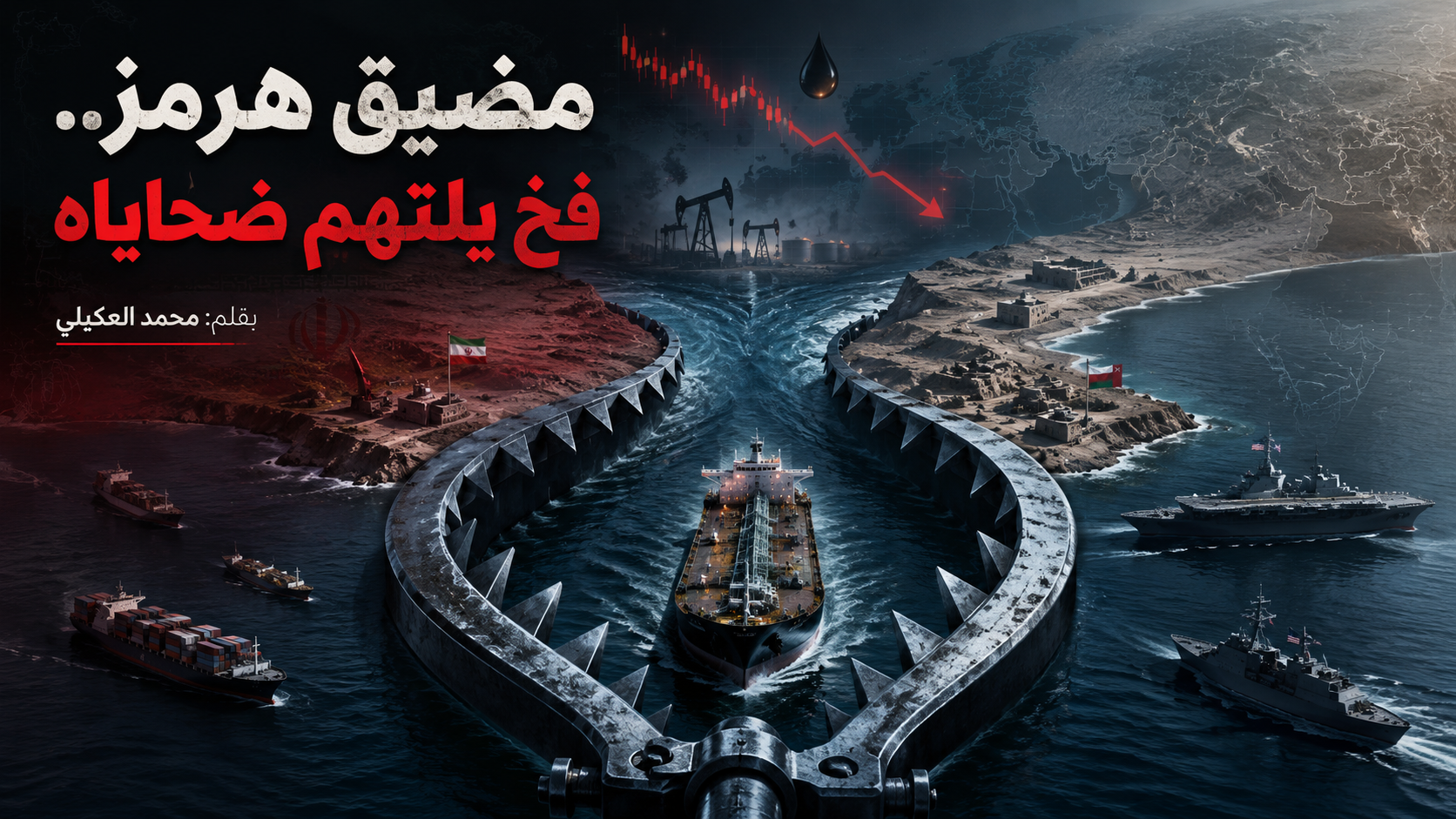
The Strait of Hormuz: A Trap That Devours Its Victims

Mohammed Al-Aqili
Writer at CROSS LINES
This article examines the current situation in the Strait of Hormuz, its impact on the regional economy, and the possibility that Iran could lose its control over the strategic waterway unless a mutually acceptable formula is reached to end the ongoing war between Washington and Tehran.
Since the signing of the fragile and faltering memorandum of understanding in Switzerland aimed at halting the war between Iran and the United States, the Strait of Hormuz has emerged as a major Iranian instrument of pressure against the American military machine. This marked a strategic shift away from the conventional use of available military means in the conflict.
The move triggered a global energy crisis that pushed the U.S. administration to enter negotiations with Iran in Switzerland, hoping that Tehran would agree to reopen the strait.
Control Amid a Foreign Military Presence
Although Iran possesses significant control over the Strait of Hormuz, the U.S. military remains present in its waters and has regained the initiative in escorting and facilitating the passage of vessels.
This became particularly evident after U.S. President Donald Trump announced the reimposition of a naval blockade on Iran as a continuing instrument of pressure, despite the existing understandings.
Tehran responded by firmly refusing to make any concessions regarding its control over the Strait of Hormuz. It also threatened not to allow the region’s oil exports to resume until a final agreement is reached to bring the war to a complete end.
A Double-Edged Weapon
Iran’s control over the Strait of Hormuz has proven to be a double-edged weapon.
On the one hand, it has demonstrated Iran’s military ability to obstruct the movement of ships. On the other, it has exposed a strategic capability that Tehran had carefully avoided using for decades, drawing the country into a major economic confrontation with the states of the region.
Through its actions, Iran effectively monopolized the export routes used by Iraqi and Gulf oil and brought regional trade close to a standstill. This could fundamentally reshape the economic landscape and market structures of the surrounding region.
Such developments may generate growing regional caution toward Iran. They could also create conditions for a future alliance aimed at placing navigation through the Strait of Hormuz under international rules and mechanisms that either bypass Tehran entirely or significantly restrict its control over maritime traffic.
Iranian Control Put to the Test
On the other side, the deployment of the U.S. military near the Strait of Hormuz appears to indicate that Washington had already secured the necessary strategic and political cover to intervene in maritime traffic and position itself as a direct counterweight to Iran.
This could become the foundation for a new phase of international involvement in the management of the strait, reducing Iran to the status of merely one of the coastal states bordering the waterway, with authority limited to the waters adjacent to its own shores.
Such an arrangement could emerge through a broader American, Gulf, and international agreement designed to restore navigation through the strait while removing this strategic card from Iran’s hands.
A Possible Pretext for Prolonging the War
Iran’s decision to use the Strait of Hormuz as leverage in its war with the United States may ultimately become more of a liability than an advantage.
Many observers believe that U.S. President Donald Trump deliberately sought to push Iran toward this point in order to create a justification for prolonging the war and securing additional military and economic gains in the region.
This appears to be part of a broader plan to encircle Tehran through recent diplomatic moves, particularly following Trump’s notably warm reception of Iraqi Prime Minister Ali Al-Zaidi in Washington and his similar engagement with Syrian President Ahmed Al-Sharaa.
Trump is reportedly counting on both leaders to help reshape the regional map and weaken Tehran’s influence once the war comes to an end.
The move triggered a global energy crisis that pushed the U.S. administration to enter negotiations with Iran in Switzerland, hoping that Tehran would agree to reopen the strait.
Control Amid a Foreign Military Presence
Although Iran possesses significant control over the Strait of Hormuz, the U.S. military remains present in its waters and has regained the initiative in escorting and facilitating the passage of vessels.
This became particularly evident after U.S. President Donald Trump announced the reimposition of a naval blockade on Iran as a continuing instrument of pressure, despite the existing understandings.
Tehran responded by firmly refusing to make any concessions regarding its control over the Strait of Hormuz. It also threatened not to allow the region’s oil exports to resume until a final agreement is reached to bring the war to a complete end.
A Double-Edged Weapon
Iran’s control over the Strait of Hormuz has proven to be a double-edged weapon.
On the one hand, it has demonstrated Iran’s military ability to obstruct the movement of ships. On the other, it has exposed a strategic capability that Tehran had carefully avoided using for decades, drawing the country into a major economic confrontation with the states of the region.
Through its actions, Iran effectively monopolized the export routes used by Iraqi and Gulf oil and brought regional trade close to a standstill. This could fundamentally reshape the economic landscape and market structures of the surrounding region.
Such developments may generate growing regional caution toward Iran. They could also create conditions for a future alliance aimed at placing navigation through the Strait of Hormuz under international rules and mechanisms that either bypass Tehran entirely or significantly restrict its control over maritime traffic.
Iranian Control Put to the Test
On the other side, the deployment of the U.S. military near the Strait of Hormuz appears to indicate that Washington had already secured the necessary strategic and political cover to intervene in maritime traffic and position itself as a direct counterweight to Iran.
This could become the foundation for a new phase of international involvement in the management of the strait, reducing Iran to the status of merely one of the coastal states bordering the waterway, with authority limited to the waters adjacent to its own shores.
Such an arrangement could emerge through a broader American, Gulf, and international agreement designed to restore navigation through the strait while removing this strategic card from Iran’s hands.
A Possible Pretext for Prolonging the War
Iran’s decision to use the Strait of Hormuz as leverage in its war with the United States may ultimately become more of a liability than an advantage.
Many observers believe that U.S. President Donald Trump deliberately sought to push Iran toward this point in order to create a justification for prolonging the war and securing additional military and economic gains in the region.
This appears to be part of a broader plan to encircle Tehran through recent diplomatic moves, particularly following Trump’s notably warm reception of Iraqi Prime Minister Ali Al-Zaidi in Washington and his similar engagement with Syrian President Ahmed Al-Sharaa.
Trump is reportedly counting on both leaders to help reshape the regional map and weaken Tehran’s influence once the war comes to an end.
🔗 Share Article
For Context
Related reads from the same topic or latest developments