Al-Zaidi’s Washington Visit: From the Security Agenda to the Economic Table—and the Challenge of Navigating a Minefield

Mohammed Al-Aqili
Writer at CROSS LINES
The article examines Iraqi Prime Minister Ali Al-Zaidi’s visit to the United States, his meeting with President Donald Trump, and the potential gains and challenges that may emerge in the period ahead.
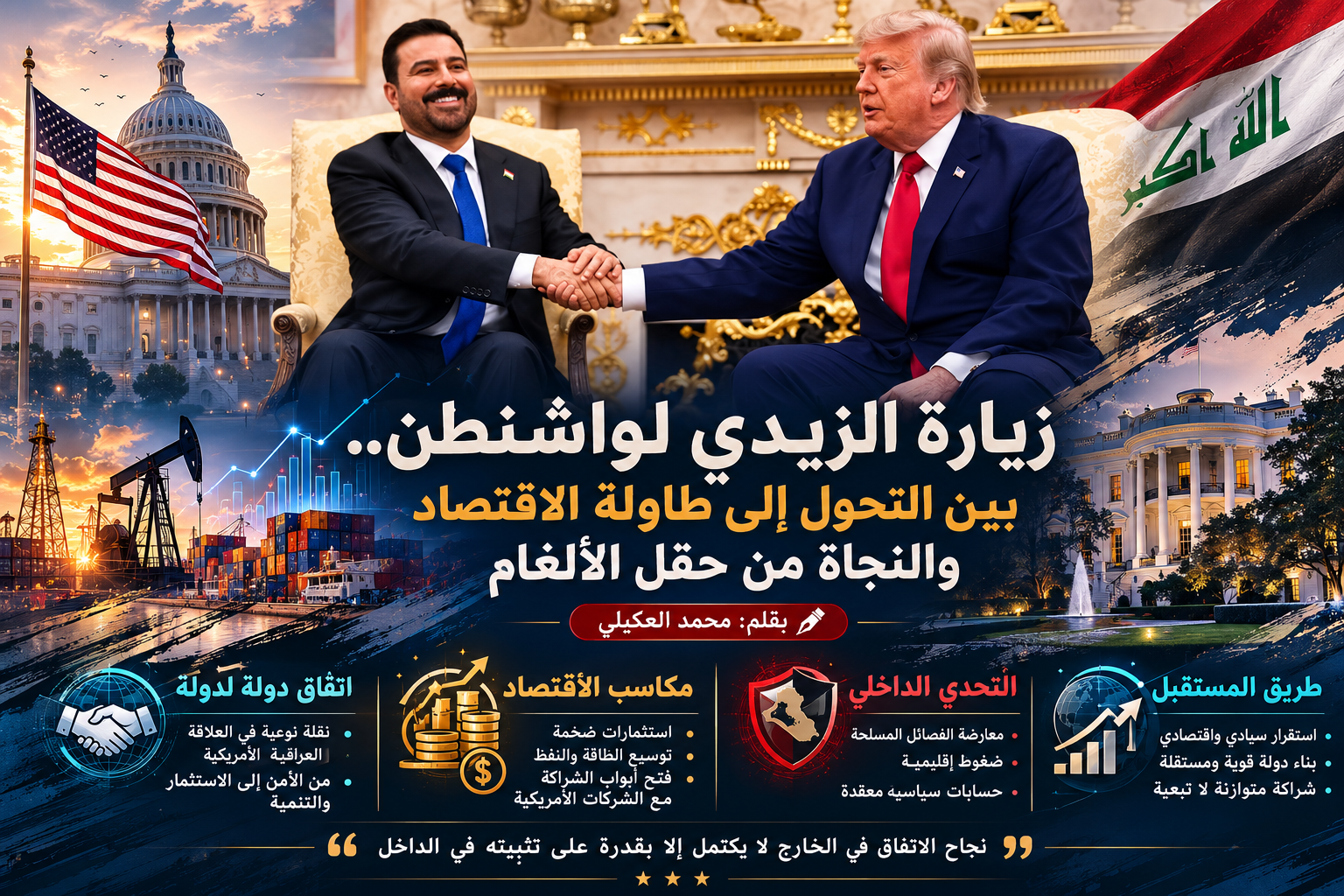
The official visit by Iraqi Prime Minister Ali Falih Al-Zaidi to Washington, including his meeting with U.S. President Donald Trump at the White House, represents a pivotal turning point in the course of Iraqi–American relations.
Taking place at an exceptionally sensitive moment, the visit went far beyond conventional diplomatic protocol. It carried the potential for a comprehensive restructuring of the American presence in Iraq while placing the Iraqi government before a serious test: managing domestic challenges while maintaining a delicate balance among competing regional and international interests.
Economics as an Alternative to Security
The Al-Zaidi–Trump summit produced a new formula that both sides articulated clearly: American troops would leave, while American companies would enter.
The summit’s key outcomes can be summarized as follows:
1. Ending the Military Presence
The two sides agreed that U.S. forces would leave Iraq by September 30, with full responsibility for the country’s security file transferred to the Iraqi armed forces.
2. Investment and Energy Partnership
The U.S. administration signaled the possibility of concluding major agreements in the oil and energy sectors, alongside expanding the participation of American companies in Iraq’s infrastructure projects.
3. Closing the Chapter of Unregulated Weapons
Al-Zaidi publicly stated that there would be no justification for the continued existence of armed factions after the end of September.
He also indicated that the government had already received quantities of weapons and intended to cooperate with factions willing to abandon armed activity and participate exclusively in the political process.
The Future of Relations and Strategic Gains
From a strategic perspective, the visit could produce far-reaching benefits for the structure of the Iraqi state.
It shifts Iraq’s relationship with one of the world’s most influential powers away from the framework of crisis management and security concerns and toward development, investment, and economic cooperation.
Iraq is seeking to strengthen its national sovereignty by diversifying its economy and rehabilitating its deteriorating infrastructure through large-scale investment.
Replacing the American military presence with an expanded commercial and investment role for major U.S. companies could also weaken the principal argument used by some actors to justify the continued militarization of Iraqi political and public life.
Such a transition may help create a more stable environment for foreign capital and long-term economic partnerships.
The Minefield: Expected Domestic Opposition
Despite the potential strategic benefits, Al-Zaidi’s return to Baghdad will not be met with universal approval. The prime minister is likely to face a fierce and multifaceted opposition campaign.
1. Washington’s Provocative Remarks on the Regional Axis
Trump’s remarks during the meeting, in which he described Iran as a “bully” toward the countries of the region and “the greatest burden on Iraq,” are likely to provoke political blocs and armed groups close to Tehran.
These factions may attempt to obstruct or undermine agreements concluded with the United States.
2. The September 30 Challenge
The deadline set by Al-Zaidi for ending the perceived need for armed factions amounts, in practical terms, to a declaration of confrontation.
Groups that have built their political and economic influence around their possession of weapons are unlikely to surrender their gains easily.
The government’s plan to collect weapons and encourage armed factions to transition exclusively into political activity will therefore be vulnerable to accusations of betrayal, political pressure, and possibly even field escalation designed to disrupt the process and reassert those groups’ influence.
A State-to-State Agreement
In Washington, Al-Zaidi succeeded in formulating a state-to-state framework capable of delivering clear sovereign and developmental gains for Iraq.
The greatest challenge, however, does not lie in signing agreements. It lies in presenting them convincingly to the Iraqi public and protecting them within an increasingly tense domestic political environment.
The coming months—particularly the period leading up to September 30—will be decisive.
They will determine whether Iraq can genuinely move toward a new era of economic partnership or once again slide into confrontation, political retaliation, and the settling of internal and regional scores.
Taking place at an exceptionally sensitive moment, the visit went far beyond conventional diplomatic protocol. It carried the potential for a comprehensive restructuring of the American presence in Iraq while placing the Iraqi government before a serious test: managing domestic challenges while maintaining a delicate balance among competing regional and international interests.
Economics as an Alternative to Security
The Al-Zaidi–Trump summit produced a new formula that both sides articulated clearly: American troops would leave, while American companies would enter.
The summit’s key outcomes can be summarized as follows:
1. Ending the Military Presence
The two sides agreed that U.S. forces would leave Iraq by September 30, with full responsibility for the country’s security file transferred to the Iraqi armed forces.
2. Investment and Energy Partnership
The U.S. administration signaled the possibility of concluding major agreements in the oil and energy sectors, alongside expanding the participation of American companies in Iraq’s infrastructure projects.
3. Closing the Chapter of Unregulated Weapons
Al-Zaidi publicly stated that there would be no justification for the continued existence of armed factions after the end of September.
He also indicated that the government had already received quantities of weapons and intended to cooperate with factions willing to abandon armed activity and participate exclusively in the political process.
The Future of Relations and Strategic Gains
From a strategic perspective, the visit could produce far-reaching benefits for the structure of the Iraqi state.
It shifts Iraq’s relationship with one of the world’s most influential powers away from the framework of crisis management and security concerns and toward development, investment, and economic cooperation.
Iraq is seeking to strengthen its national sovereignty by diversifying its economy and rehabilitating its deteriorating infrastructure through large-scale investment.
Replacing the American military presence with an expanded commercial and investment role for major U.S. companies could also weaken the principal argument used by some actors to justify the continued militarization of Iraqi political and public life.
Such a transition may help create a more stable environment for foreign capital and long-term economic partnerships.
The Minefield: Expected Domestic Opposition
Despite the potential strategic benefits, Al-Zaidi’s return to Baghdad will not be met with universal approval. The prime minister is likely to face a fierce and multifaceted opposition campaign.
1. Washington’s Provocative Remarks on the Regional Axis
Trump’s remarks during the meeting, in which he described Iran as a “bully” toward the countries of the region and “the greatest burden on Iraq,” are likely to provoke political blocs and armed groups close to Tehran.
These factions may attempt to obstruct or undermine agreements concluded with the United States.
2. The September 30 Challenge
The deadline set by Al-Zaidi for ending the perceived need for armed factions amounts, in practical terms, to a declaration of confrontation.
Groups that have built their political and economic influence around their possession of weapons are unlikely to surrender their gains easily.
The government’s plan to collect weapons and encourage armed factions to transition exclusively into political activity will therefore be vulnerable to accusations of betrayal, political pressure, and possibly even field escalation designed to disrupt the process and reassert those groups’ influence.
A State-to-State Agreement
In Washington, Al-Zaidi succeeded in formulating a state-to-state framework capable of delivering clear sovereign and developmental gains for Iraq.
The greatest challenge, however, does not lie in signing agreements. It lies in presenting them convincingly to the Iraqi public and protecting them within an increasingly tense domestic political environment.
The coming months—particularly the period leading up to September 30—will be decisive.
They will determine whether Iraq can genuinely move toward a new era of economic partnership or once again slide into confrontation, political retaliation, and the settling of internal and regional scores.
🔗 Share Article
For Context
Related reads from the same topic or latest developments