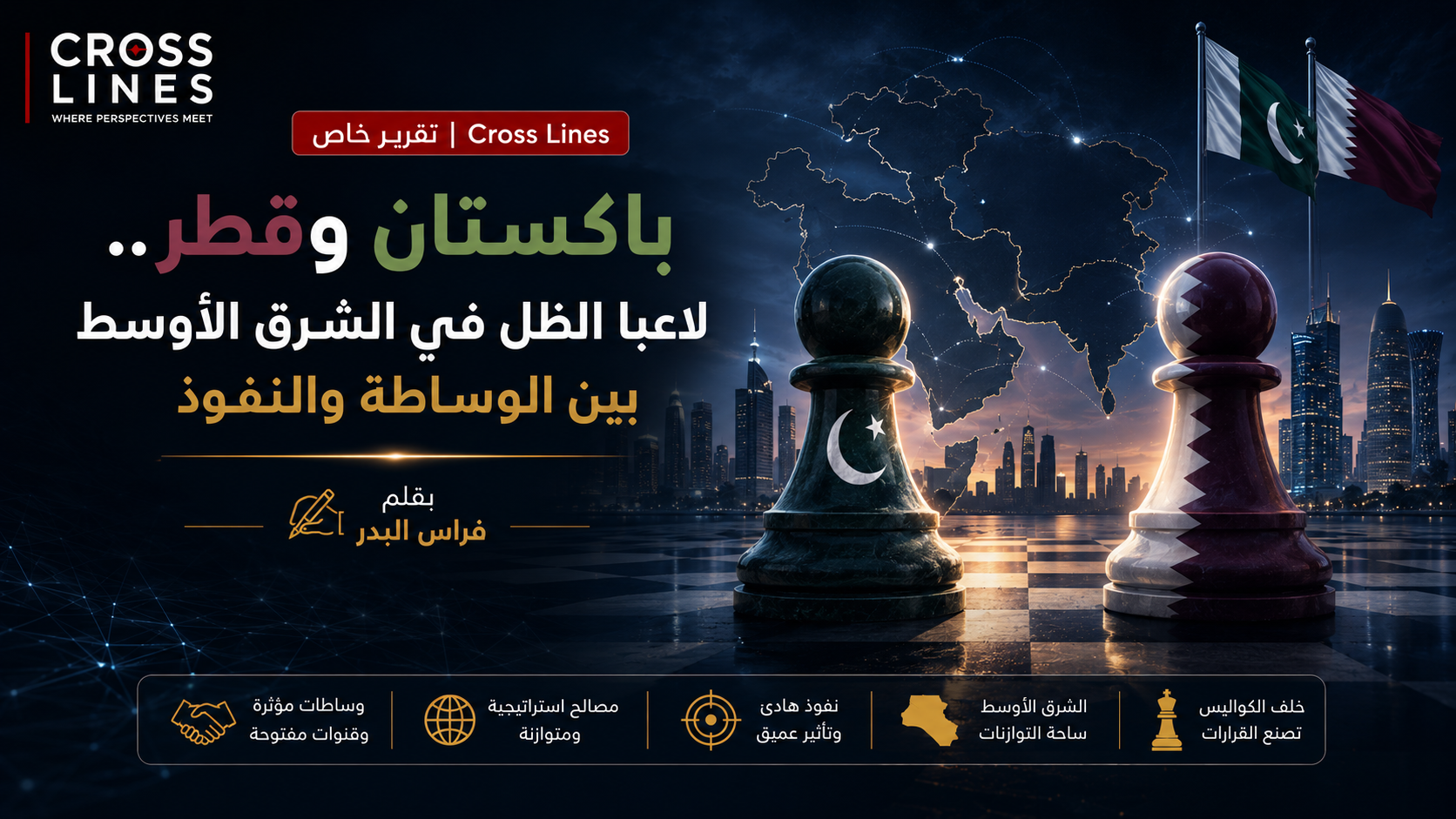
Pakistan and Qatar: Shadow players in the Middle East, between mediation and influence

Firas Majid Al-Badr
Writer at CROSS LINES
After the escalation of the Iranian-American-Israeli war in the Middle East, and its repercussions reaching dangerous and widespread proportions, even threatening Europe and the world due to the closure of the Strait of Hormuz and the resulting global econo...
After the escalation of the Iranian-American-Israeli war in the Middle East, and its repercussions reaching dangerous and widespread proportions, even threatening Europe and the world due to the closure of the Strait of Hormuz and the resulting global economic damage, in addition to the extensive destruction of infrastructure in the region following the bombing and targeting of American bases and Iranian infrastructure, and the subsequent destruction within Israel and its settlements, intervention through mediation and halting the escalation of the war became imperative. This intervention was undertaken by powerful entities with a respected voice and standing in the world, particularly between the warring parties, Iran and America.
Pakistan, the only nuclear power in the Islamic world, joined Qatar as the two mediating countries that played a significant and influential role in stopping this raging war, whose repercussions threatened everyone in the region and the world. Pakistan and Qatar, with their influence on the United States and the Islamic Republic, along with Israel and Lebanon, worked to de-escalate the situation and the ongoing military escalation, leading to a truce to end the war and then to constructive negotiations as a prelude to a final agreement and lasting peace. So, what was the impact of Pakistan and Qatar in this? Attempts at de-escalation and restraint, and their gains and interests in this current mediation.
Islamabad emerged at a pivotal regional moment, serving as the primary mediator between Washington and Tehran. It became a key player in a war in which it was not a party. It led the negotiations for days, successfully brokering the first ceasefire, and was instrumental in facilitating the agreement between the United States and the Islamic Republic. It spearheaded the first round of negotiations in Switzerland, supported by two prominent figures: Pakistani Prime Minister Shehbaz Sharif and Pakistani Army Chief Asim Munir. These two figures spearheaded the negotiations and became key players in the crisis. They acted as intermediaries between the two countries' negotiators, mediating between Araqchi and Qalibaf and the Iranian diplomatic representatives, and Jared Kushner, Wittkov, and J.D. Vance, the American representatives.
Following the initiation of diplomatic talks, Pakistan, in coordination with Qatar, sponsored a negotiating track based on the formation of a high-level political committee and technical discussions regarding the Iranian nuclear program and sanctions. This included a hotline to prevent incidents in the Strait of Hormuz and a de-escalation mechanism in Lebanon.
According to Bloomberg Middle East, the war propelled Islamabad to the forefront of mediation efforts, granting it political weight it had lacked for decades in the region. This, coupled with a stellar diplomatic image, significant international influence, and close ties with the Gulf states, the United States, China, and Russia, has transformed Pakistan from a country with virtually no influence in the Middle East in early 2025 to a major diplomatic and military player in the region today.
According to a former US Department of Defense official, Pakistan has gone from being a country with virtually no influence in the Middle East in early 2025 to a significant diplomatic and military player in the region today.
Pakistan is currently striving to transform the US-Iranian negotiations into a lasting agreement and sustainable peace. This would ultimately bring it political gains and international recognition of its diplomatic strength, which it has thus far demonstrated by opening political channels with Washington and channeling economic investments to the Gulf region, Iran, and even China and Europe. From a distinctly Pakistani perspective, this would secure it a prominent position in the modern world.
For years, India has been Washington's preferred regional partner, but Pakistan's rapprochement with Trump has contributed to pushing New Delhi away, especially given Islamabad's role as a peace mediator. This has greatly benefited Pakistan in this regard. Furthermore, Pakistan possesses strategic flexibility and the ability to advance high-value international initiatives, as demonstrated four months after the US-Iranian conflict erupted in the region. Pakistan played a key role in bridging the gap between the opposing sides, bringing them together at the negotiating table.
If we recall, for example, the Peace Council established by US President Donald Trump to resolve the long-standing conflict in Gaza, we find that Pakistan quickly moved to become a "founding member" during a mass signing ceremony held last January on the sidelines of the World Economic Forum in Davos. This also motivates Islamabad to be present in all international arenas and events that contribute to its diplomatic and political growth and build a significant and influential presence in the region and the world.
As the Institute of Regional Studies, a strategic research center in Islamabad, states, the personal relationship between the Trump administration and Pakistan, along with the working relationship between Islamabad and its neighbor Iran, has positioned the country well to play a mediating role in the conflict.
We should not forget that this regional mediation comes after significant US investments in Pakistan last year in the fields of cryptocurrencies, bio-metals, and numerous memoranda of understanding, amounting to billions of dollars.
Let's briefly touch upon Qatar's negotiating role and its position as a mediator between two bitter rivals. The factors that qualify it for this role are, most notably, Qatar's strong security relationship with Washington and its maintenance of open communication channels with Tehran due to geographical proximity and political and economic ties. This has enabled it to convey direct messages. Furthermore, Doha fears the impact of military escalation on the entire Gulf region and views de-escalation not only as a diplomatic imperative but also as a matter of national security. Moreover, Qatar's mediation is advantageous to all parties, given its success in cultivating a strong political and regional image among global powers and its ability to bring adversaries to the negotiating table.
In a related context, we have witnessed a surge in regional events throughout the past period, from Gaza to Israel and other regional issues, which were trending towards further escalation. We observe that Doha has maintained open communication channels with all parties without exception, and this approach has become a political asset, granting Qatar a rare ability to maneuver in the most sensitive and complex matters.
Pakistan, the only nuclear power in the Islamic world, joined Qatar as the two mediating countries that played a significant and influential role in stopping this raging war, whose repercussions threatened everyone in the region and the world. Pakistan and Qatar, with their influence on the United States and the Islamic Republic, along with Israel and Lebanon, worked to de-escalate the situation and the ongoing military escalation, leading to a truce to end the war and then to constructive negotiations as a prelude to a final agreement and lasting peace. So, what was the impact of Pakistan and Qatar in this? Attempts at de-escalation and restraint, and their gains and interests in this current mediation.
Islamabad emerged at a pivotal regional moment, serving as the primary mediator between Washington and Tehran. It became a key player in a war in which it was not a party. It led the negotiations for days, successfully brokering the first ceasefire, and was instrumental in facilitating the agreement between the United States and the Islamic Republic. It spearheaded the first round of negotiations in Switzerland, supported by two prominent figures: Pakistani Prime Minister Shehbaz Sharif and Pakistani Army Chief Asim Munir. These two figures spearheaded the negotiations and became key players in the crisis. They acted as intermediaries between the two countries' negotiators, mediating between Araqchi and Qalibaf and the Iranian diplomatic representatives, and Jared Kushner, Wittkov, and J.D. Vance, the American representatives.
Following the initiation of diplomatic talks, Pakistan, in coordination with Qatar, sponsored a negotiating track based on the formation of a high-level political committee and technical discussions regarding the Iranian nuclear program and sanctions. This included a hotline to prevent incidents in the Strait of Hormuz and a de-escalation mechanism in Lebanon.
According to Bloomberg Middle East, the war propelled Islamabad to the forefront of mediation efforts, granting it political weight it had lacked for decades in the region. This, coupled with a stellar diplomatic image, significant international influence, and close ties with the Gulf states, the United States, China, and Russia, has transformed Pakistan from a country with virtually no influence in the Middle East in early 2025 to a major diplomatic and military player in the region today.
According to a former US Department of Defense official, Pakistan has gone from being a country with virtually no influence in the Middle East in early 2025 to a significant diplomatic and military player in the region today.
Pakistan is currently striving to transform the US-Iranian negotiations into a lasting agreement and sustainable peace. This would ultimately bring it political gains and international recognition of its diplomatic strength, which it has thus far demonstrated by opening political channels with Washington and channeling economic investments to the Gulf region, Iran, and even China and Europe. From a distinctly Pakistani perspective, this would secure it a prominent position in the modern world.
For years, India has been Washington's preferred regional partner, but Pakistan's rapprochement with Trump has contributed to pushing New Delhi away, especially given Islamabad's role as a peace mediator. This has greatly benefited Pakistan in this regard. Furthermore, Pakistan possesses strategic flexibility and the ability to advance high-value international initiatives, as demonstrated four months after the US-Iranian conflict erupted in the region. Pakistan played a key role in bridging the gap between the opposing sides, bringing them together at the negotiating table.
If we recall, for example, the Peace Council established by US President Donald Trump to resolve the long-standing conflict in Gaza, we find that Pakistan quickly moved to become a "founding member" during a mass signing ceremony held last January on the sidelines of the World Economic Forum in Davos. This also motivates Islamabad to be present in all international arenas and events that contribute to its diplomatic and political growth and build a significant and influential presence in the region and the world.
As the Institute of Regional Studies, a strategic research center in Islamabad, states, the personal relationship between the Trump administration and Pakistan, along with the working relationship between Islamabad and its neighbor Iran, has positioned the country well to play a mediating role in the conflict.
We should not forget that this regional mediation comes after significant US investments in Pakistan last year in the fields of cryptocurrencies, bio-metals, and numerous memoranda of understanding, amounting to billions of dollars.
Let's briefly touch upon Qatar's negotiating role and its position as a mediator between two bitter rivals. The factors that qualify it for this role are, most notably, Qatar's strong security relationship with Washington and its maintenance of open communication channels with Tehran due to geographical proximity and political and economic ties. This has enabled it to convey direct messages. Furthermore, Doha fears the impact of military escalation on the entire Gulf region and views de-escalation not only as a diplomatic imperative but also as a matter of national security. Moreover, Qatar's mediation is advantageous to all parties, given its success in cultivating a strong political and regional image among global powers and its ability to bring adversaries to the negotiating table.
In a related context, we have witnessed a surge in regional events throughout the past period, from Gaza to Israel and other regional issues, which were trending towards further escalation. We observe that Doha has maintained open communication channels with all parties without exception, and this approach has become a political asset, granting Qatar a rare ability to maneuver in the most sensitive and complex matters.
🔗 Share Article
For Context
Related reads from the same topic or latest developments