After September 30: Armed Groups Face the Test of State Authority

Mohammed Al-Aqili
Writer at CROSS LINES
This report examines the decisions adopted at the latest meeting of Iraq’s State Administration Coalition, the country’s highest-level political coalition, particularly those concerning the state’s monopoly over arms, as well as the official positions and meetings that followed regarding the implementation of those decisions.
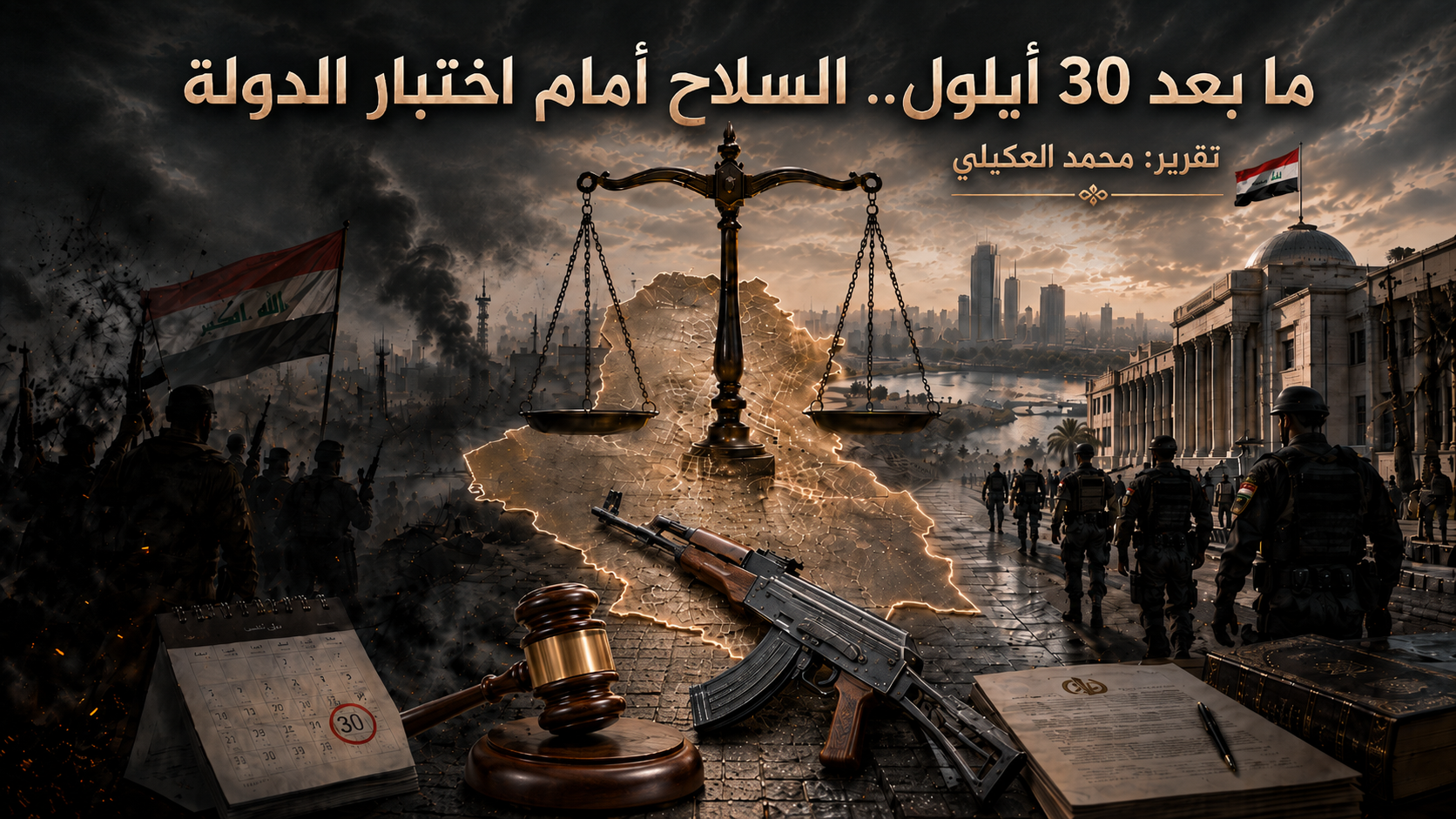
The issue of bringing all weapons under exclusive state control in Iraq is entering a more sensitive phase after the State Administration Coalition set September 30 as a decisive deadline separating the period of political dialogue from the enforcement of the law against any armed activity operating outside official state institutions.
The coalition’s 37th regular meeting, attended by senior political and judicial figures, went beyond reaffirming the principle of restricting arms to the state. It also stated that any use of Iraqi territory to attack neighboring countries or drag the country into regional conflicts would constitute a threat to state security and a violation of the law.
Participants also called for the Anti-Terrorism Law to be applied to armed conduct outside the framework of the state once the deadline expires. The message carries two dimensions: a political one, aimed at encouraging factions that reject the decision to reconsider their positions, and a legal one, preparing the ground for shifting the issue from negotiation to judicial prosecution when acts occur that fall within the provisions of the law.
In this context, the republication of the Anti-Terrorism Law was intended to clarify the types of conduct that could constitute an armed threat to the state, particularly attacks against security forces, commanding armed formations without official authorization, inciting rebellion, or threatening security and stability.
However, enforcing the law does not automatically mean classifying every group that rejects the decision as a terrorist organization. The legal characterization of specific acts and the determination of individual responsibility remain matters for the judiciary, based on evidence and the nature of the conduct involved. A clear distinction must therefore be maintained between political opposition and the use or threat of armed force.
Alongside the increasingly assertive legal rhetoric, the President of the Supreme Judicial Council held two separate meetings with the head of the Counter-Terrorism Service and the Director of the Office of the Commander-in-Chief of the Armed Forces. The meetings addressed cooperation and procedures aimed at ensuring the rule of law and supporting stability.
These developments coincided with directives to raise the readiness of Iraq’s security and military forces, from the country’s border areas to other regions, while strengthening intelligence capabilities and accelerating responses to incoming information. These measures may reflect preparations by the state for a range of possible security scenarios, but they do not necessarily indicate that a decision has already been made to pursue an armed confrontation.
What Comes After September 30?
The period following September 30 could unfold according to several scenarios.
The first scenario would involve the factions complying with the decision by surrendering heavy weapons, integrating their personnel into official institutions under state regulations, or transitioning their activities into the political and civilian spheres. Under this scenario, Iraq could achieve a gradual transition toward unified security decision-making while reducing the risk of foreign strikes or being drawn into regional conflicts.
The second scenario could involve partial compliance, with factions publicly declaring their commitment while retaining some armed capabilities or delaying implementation on political or security grounds. In such circumstances, the government could extend dialogue within a clearly defined timetable while linking funding, official positions, and privileges to the extent of actual compliance with state decisions.
The third scenario would involve continued rejection without resorting to armed force. In this case, the state could address the issue through legal warnings, restrictions on unauthorized armed activities, greater financial and administrative oversight, and judicial warrants against individuals accused of specific violations, while keeping the door open for negotiations.
The government will need a gradual strategy that combines dialogue with legal pressure, provides guarantees for integration into state institutions, and establishes a unified political approach toward all armed groups without selective enforcement.
Successful implementation will also require protecting the security forces from political interference, ensuring judicial and parliamentary oversight of enforcement measures, and avoiding inflammatory rhetoric that could transform an issue of state sovereignty and the rule of law into a confrontation between political forces or social components.
September 30, therefore, will not mark the end of the crisis. Rather, it will represent the beginning of a genuine test of the state’s ability to assert its authority without sliding into internal confrontation — and of the armed factions’ willingness to choose between integration into the formal state system or accepting the legal and security consequences of maintaining weapons outside state authority.
The coalition’s 37th regular meeting, attended by senior political and judicial figures, went beyond reaffirming the principle of restricting arms to the state. It also stated that any use of Iraqi territory to attack neighboring countries or drag the country into regional conflicts would constitute a threat to state security and a violation of the law.
Participants also called for the Anti-Terrorism Law to be applied to armed conduct outside the framework of the state once the deadline expires. The message carries two dimensions: a political one, aimed at encouraging factions that reject the decision to reconsider their positions, and a legal one, preparing the ground for shifting the issue from negotiation to judicial prosecution when acts occur that fall within the provisions of the law.
In this context, the republication of the Anti-Terrorism Law was intended to clarify the types of conduct that could constitute an armed threat to the state, particularly attacks against security forces, commanding armed formations without official authorization, inciting rebellion, or threatening security and stability.
However, enforcing the law does not automatically mean classifying every group that rejects the decision as a terrorist organization. The legal characterization of specific acts and the determination of individual responsibility remain matters for the judiciary, based on evidence and the nature of the conduct involved. A clear distinction must therefore be maintained between political opposition and the use or threat of armed force.
Alongside the increasingly assertive legal rhetoric, the President of the Supreme Judicial Council held two separate meetings with the head of the Counter-Terrorism Service and the Director of the Office of the Commander-in-Chief of the Armed Forces. The meetings addressed cooperation and procedures aimed at ensuring the rule of law and supporting stability.
These developments coincided with directives to raise the readiness of Iraq’s security and military forces, from the country’s border areas to other regions, while strengthening intelligence capabilities and accelerating responses to incoming information. These measures may reflect preparations by the state for a range of possible security scenarios, but they do not necessarily indicate that a decision has already been made to pursue an armed confrontation.
What Comes After September 30?
The period following September 30 could unfold according to several scenarios.
The first scenario would involve the factions complying with the decision by surrendering heavy weapons, integrating their personnel into official institutions under state regulations, or transitioning their activities into the political and civilian spheres. Under this scenario, Iraq could achieve a gradual transition toward unified security decision-making while reducing the risk of foreign strikes or being drawn into regional conflicts.
The second scenario could involve partial compliance, with factions publicly declaring their commitment while retaining some armed capabilities or delaying implementation on political or security grounds. In such circumstances, the government could extend dialogue within a clearly defined timetable while linking funding, official positions, and privileges to the extent of actual compliance with state decisions.
The third scenario would involve continued rejection without resorting to armed force. In this case, the state could address the issue through legal warnings, restrictions on unauthorized armed activities, greater financial and administrative oversight, and judicial warrants against individuals accused of specific violations, while keeping the door open for negotiations.
The government will need a gradual strategy that combines dialogue with legal pressure, provides guarantees for integration into state institutions, and establishes a unified political approach toward all armed groups without selective enforcement.
Successful implementation will also require protecting the security forces from political interference, ensuring judicial and parliamentary oversight of enforcement measures, and avoiding inflammatory rhetoric that could transform an issue of state sovereignty and the rule of law into a confrontation between political forces or social components.
September 30, therefore, will not mark the end of the crisis. Rather, it will represent the beginning of a genuine test of the state’s ability to assert its authority without sliding into internal confrontation — and of the armed factions’ willingness to choose between integration into the formal state system or accepting the legal and security consequences of maintaining weapons outside state authority.
🔗 Share Article
For Context
Related reads from the same topic or latest developments