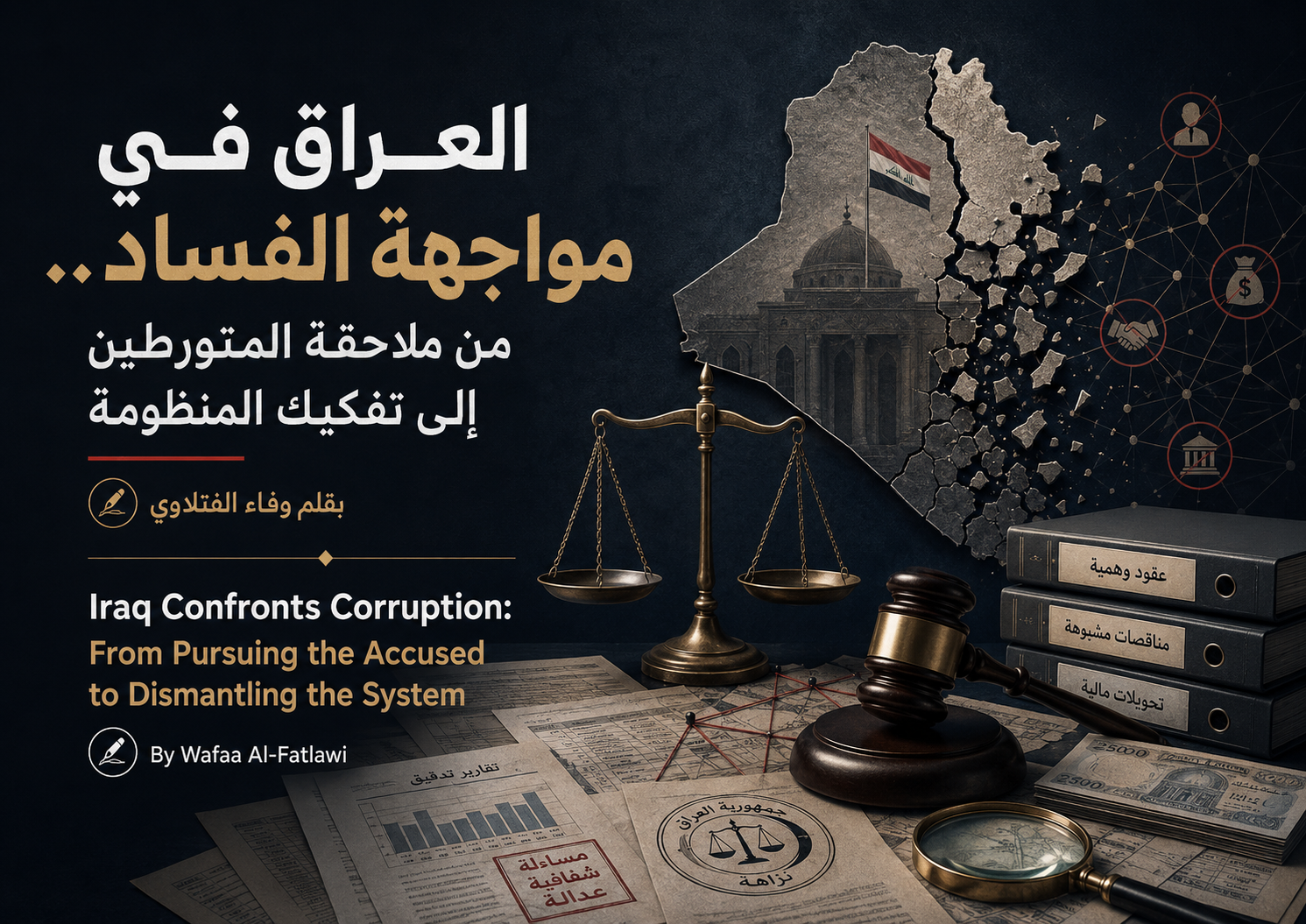
Iraq Confronts Corruption: From Pursuing the Accused to Dismantling the System

Wafaa Al-Fatlawi
Writer at CROSS LINES
The fight against corruption in Iraq has evolved far beyond a purely legal or administrative matter. Over the past two decades, it has become one of the country's most pressing national challenges, leaving profound consequences for state institutions, economic development, public services, and citizens' confidence in the political system's ability to safeguard public resources.
Since 2003, corruption has remained a central obstacle to state-building. Numerous reports and investigations have documented extensive financial losses across a wide range of sectors—from public infrastructure projects to economic and administrative institutions—making the fight against corruption a continuous public demand. For many Iraqis, corruption is not an abstract political issue but a daily reality reflected in declining public services and weakened state performance.
Against this backdrop, the current government's efforts to reopen corruption files and pursue those responsible carry significant political and public importance. Confronting corruption requires, above all, a clear political decision and a genuine commitment to enforcing the law without exception.
These efforts have received support from the political forces that formed the government, particularly the Coordination Framework, alongside several other political parties that have emphasized the importance of holding those responsible accountable and restoring the authority of the state. Success in combating corruption cannot depend on a single institution; it requires broad political backing that places the interests of the state above narrow political calculations.
The effectiveness of any anti-corruption campaign should not be measured solely by the number of investigations launched, but by the nature of the cases it targets and its ability to reach the real centers of corruption and the networks that accumulated wealth and influence through the abuse of public office.
Within this context, Operation "Dawn" has highlighted the scale of the ongoing investigations. Iraqi authorities announced the seizure of approximately 127 billion Iraqi dinars and $24 million, in addition to confiscating real estate, vehicles, and gold jewelry, while investigations continue to identify additional suspects and complete the necessary legal procedures.
The fact that investigations have extended to members of parliament and senior state officials is also a significant indicator that the campaign is not limited to lower-ranking figures. Instead, it seeks to reinforce a fundamental principle: that official position and political influence should never serve as immunity from accountability when public funds are involved.
Nevertheless, the true success of any anti-corruption strategy cannot be measured solely by the value of seized assets or the number of arrests. Such measures represent only the beginning of a much longer process. The greater challenge lies in shifting from addressing the consequences of corruption to eliminating its underlying causes—from pursuing isolated cases to dismantling the environment that enabled corruption networks to emerge and flourish.
Iraq must target the foundations of corruption itself: its financial resources, the institutions and individuals that provide protection for corrupt networks, and the so-called "big fish" who played a decisive role in building systems of illicit influence. Holding individual offenders accountable, regardless of their prominence, will not be sufficient if the structural conditions that produce corruption remain intact.
Likewise, the strength of the state in confronting corruption should not be judged by highly publicized arrests or displays of force. Rather, it should be measured by the ability of judicial and oversight institutions to build strong legal cases, conduct fair trials, recover stolen public funds, and prevent future abuses.
The fight against corruption is not a short-term media campaign but a long-term national reform project. It requires strengthening oversight mechanisms, enhancing transparency, limiting opportunities for the abuse of power, and building professional institutions that operate according to legal and administrative standards rather than personal or political interests.
Today, both the government and the political forces supporting it face a critical test. Iraqi citizens do not simply want to see new names making headlines; they want tangible improvements that protect public resources, improve essential services, and reinforce the principle that no one is above the law.
If pursued with consistency, professionalism, and genuine determination, Iraq's anti-corruption campaign—particularly its willingness to confront powerful centers of influence—could become an important step toward restoring public trust in the state and transforming anti-corruption efforts from a recurring political slogan into a comprehensive national project capable of addressing one of Iraq's most enduring and destructive challenges.
Against this backdrop, the current government's efforts to reopen corruption files and pursue those responsible carry significant political and public importance. Confronting corruption requires, above all, a clear political decision and a genuine commitment to enforcing the law without exception.
These efforts have received support from the political forces that formed the government, particularly the Coordination Framework, alongside several other political parties that have emphasized the importance of holding those responsible accountable and restoring the authority of the state. Success in combating corruption cannot depend on a single institution; it requires broad political backing that places the interests of the state above narrow political calculations.
The effectiveness of any anti-corruption campaign should not be measured solely by the number of investigations launched, but by the nature of the cases it targets and its ability to reach the real centers of corruption and the networks that accumulated wealth and influence through the abuse of public office.
Within this context, Operation "Dawn" has highlighted the scale of the ongoing investigations. Iraqi authorities announced the seizure of approximately 127 billion Iraqi dinars and $24 million, in addition to confiscating real estate, vehicles, and gold jewelry, while investigations continue to identify additional suspects and complete the necessary legal procedures.
The fact that investigations have extended to members of parliament and senior state officials is also a significant indicator that the campaign is not limited to lower-ranking figures. Instead, it seeks to reinforce a fundamental principle: that official position and political influence should never serve as immunity from accountability when public funds are involved.
Nevertheless, the true success of any anti-corruption strategy cannot be measured solely by the value of seized assets or the number of arrests. Such measures represent only the beginning of a much longer process. The greater challenge lies in shifting from addressing the consequences of corruption to eliminating its underlying causes—from pursuing isolated cases to dismantling the environment that enabled corruption networks to emerge and flourish.
Iraq must target the foundations of corruption itself: its financial resources, the institutions and individuals that provide protection for corrupt networks, and the so-called "big fish" who played a decisive role in building systems of illicit influence. Holding individual offenders accountable, regardless of their prominence, will not be sufficient if the structural conditions that produce corruption remain intact.
Likewise, the strength of the state in confronting corruption should not be judged by highly publicized arrests or displays of force. Rather, it should be measured by the ability of judicial and oversight institutions to build strong legal cases, conduct fair trials, recover stolen public funds, and prevent future abuses.
The fight against corruption is not a short-term media campaign but a long-term national reform project. It requires strengthening oversight mechanisms, enhancing transparency, limiting opportunities for the abuse of power, and building professional institutions that operate according to legal and administrative standards rather than personal or political interests.
Today, both the government and the political forces supporting it face a critical test. Iraqi citizens do not simply want to see new names making headlines; they want tangible improvements that protect public resources, improve essential services, and reinforce the principle that no one is above the law.
If pursued with consistency, professionalism, and genuine determination, Iraq's anti-corruption campaign—particularly its willingness to confront powerful centers of influence—could become an important step toward restoring public trust in the state and transforming anti-corruption efforts from a recurring political slogan into a comprehensive national project capable of addressing one of Iraq's most enduring and destructive challenges.
🔗 Share Article
For Context
Related reads from the same topic or latest developments