ViewsAvailable in English
The “Children of ISIS Members” Generation: A Ticking Time Bomb in Rooms of Social Isolation
Editorial
Cross Lines editing
Source
CROSS LINES

Mohammed Al-Aqili
Writer at CROSS LINES
The military battles have ended and the pages of gunfire have been turned, but the dust of war has revealed a silent humanitarian and security crisis that continues to grow day after day: an entire generation of children born to fathers who belonged to terr...
The military battles have ended and the pages of gunfire have been turned, but the dust of war has revealed a silent humanitarian and security crisis that continues to grow day after day: an entire generation of children born to fathers who belonged to terrorist organizations.
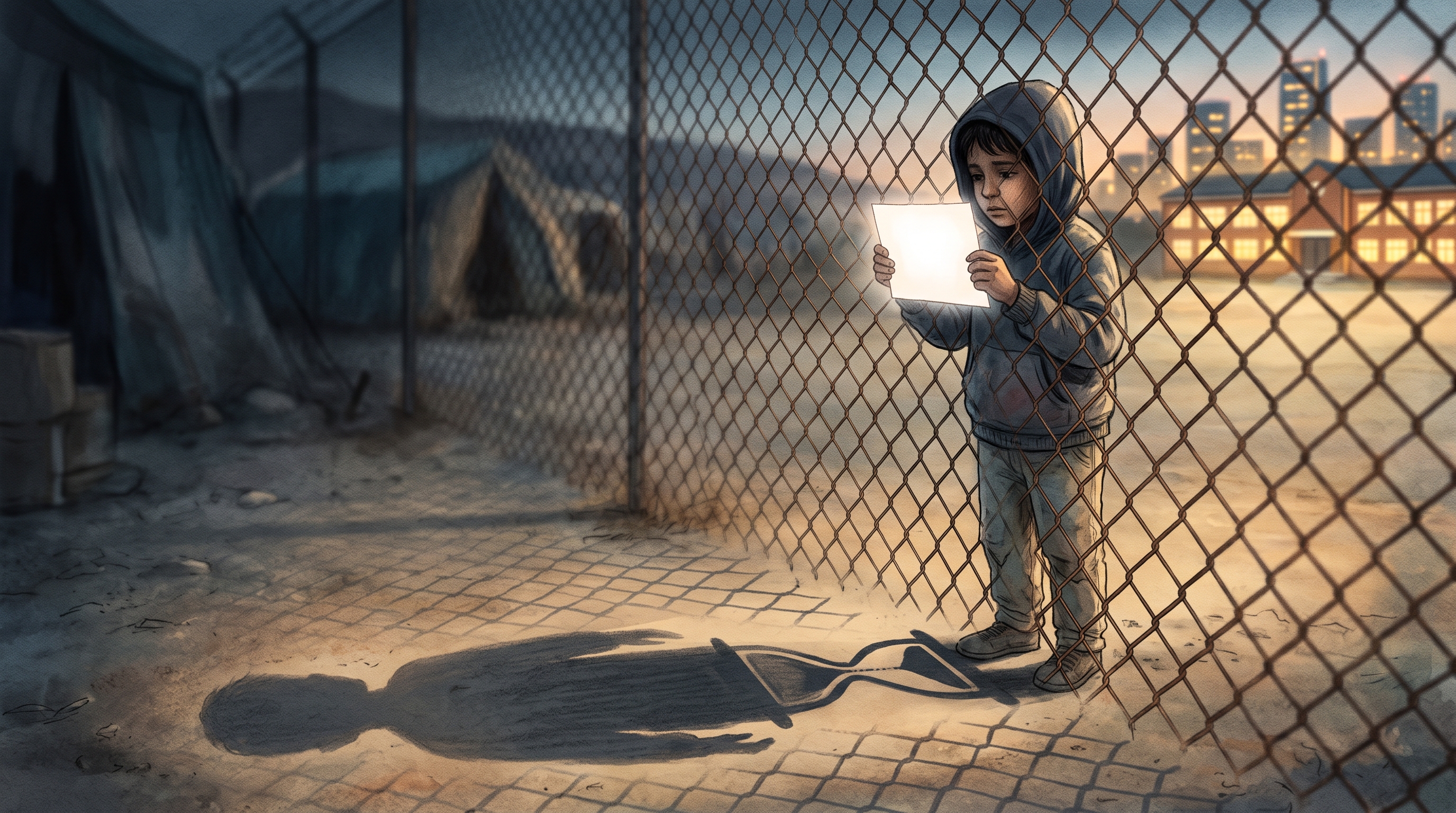
These children, many of whom now live in remote camps or on the margins of cities, have become victims of circumstances they never chose and potential sources of future crises that could once again threaten stability.
(https://fvszcdsgcuwvzazywcuu.supabase.co/storage/v1/object/public/images/article-media/image/1787739058357-r9kzqivv0x.jpg)
Camps of Oblivion and the Stripping of Identity
Thousands of these children live in environments that lack even the most basic necessities of a dignified human life. They face a series of systematic forms of deprivation that deny them their most fundamental rights:
1- Lack of official identification documents: The absence of legal documentation makes them “ghosts” in the eyes of the law. They are unable to prove their lineage and are deprived of basic civil rights.
2- Deprivation of education: The absence of regular schools inside the camps, combined with the complications surrounding their integration into public schools, leaves their minds vulnerable to the acceptance of any ideology and deprives them of opportunities to build a normal professional future.
3- Social isolation: They are surrounded by walls of social rejection and hostility, deepening their sense of inferiority and their complete separation from the wider national community.
(https://fvszcdsgcuwvzazywcuu.supabase.co/storage/v1/object/public/images/article-media/image/1787739105275-p1z5me772gg.jpg)
The Harsh Taboo: Should a Child Be Held Accountable for the Crimes of His Father?
This issue confronts a highly complex moral and social dilemma: holding these children responsible for the horrific crimes committed by their fathers.
The social attitude that punishes a child for an offense he did not commit disregards the well-established humanitarian and legal principle of individual criminal responsibility, under which punishment must be personal and cannot be transferred from one person to another.
This social taboo represents the strongest barrier preventing any serious attempt to rescue and rehabilitate these children, undermining integration initiatives before they even begin.
(https://fvszcdsgcuwvzazywcuu.supabase.co/storage/v1/object/public/images/article-media/image/1787739146830-k575ow56y1.webp)
Manufacturing Extremism Through Marginalization
The strategic danger does not lie in these children’s past, but in the future that we are creating for them today through neglect and the perpetuation of isolation.
According to specialists, isolating an innocent child and depriving him of education, identity, and a sense of belonging to society is one of the shortest paths toward turning him into a resentful individual who may seek revenge against an environment that rejected and excluded him.
The continuation of this marginalization creates ideal conditions for the emergence of new extremist organizations. Instead of defusing this ticking time bomb, policies of isolation risk activating its detonator.
Addressing this issue requires political and social courage that moves beyond the logic of emotional revenge and toward the logic of state-building, integrating all citizens under the protection of law and humanitarian principles.
What Are the Solutions?
First: Separating these children from any environment that could contribute to raising them according to extremist or terrorist ideologies.
Second: Providing them with specialized education and continuous supervision by qualified experts in order to help reshape their outlook away from extremism and radicalization.
Third: Ensuring sustained psychological follow-up and providing appropriate supportive environments, while at the same time maintaining safeguards that protect community security and prevent potential risks.
These children, many of whom now live in remote camps or on the margins of cities, have become victims of circumstances they never chose and potential sources of future crises that could once again threaten stability.
(https://fvszcdsgcuwvzazywcuu.supabase.co/storage/v1/object/public/images/article-media/image/1787739058357-r9kzqivv0x.jpg)
Camps of Oblivion and the Stripping of Identity
Thousands of these children live in environments that lack even the most basic necessities of a dignified human life. They face a series of systematic forms of deprivation that deny them their most fundamental rights:
1- Lack of official identification documents: The absence of legal documentation makes them “ghosts” in the eyes of the law. They are unable to prove their lineage and are deprived of basic civil rights.
2- Deprivation of education: The absence of regular schools inside the camps, combined with the complications surrounding their integration into public schools, leaves their minds vulnerable to the acceptance of any ideology and deprives them of opportunities to build a normal professional future.
3- Social isolation: They are surrounded by walls of social rejection and hostility, deepening their sense of inferiority and their complete separation from the wider national community.
(https://fvszcdsgcuwvzazywcuu.supabase.co/storage/v1/object/public/images/article-media/image/1787739105275-p1z5me772gg.jpg)
The Harsh Taboo: Should a Child Be Held Accountable for the Crimes of His Father?
This issue confronts a highly complex moral and social dilemma: holding these children responsible for the horrific crimes committed by their fathers.
The social attitude that punishes a child for an offense he did not commit disregards the well-established humanitarian and legal principle of individual criminal responsibility, under which punishment must be personal and cannot be transferred from one person to another.
This social taboo represents the strongest barrier preventing any serious attempt to rescue and rehabilitate these children, undermining integration initiatives before they even begin.
(https://fvszcdsgcuwvzazywcuu.supabase.co/storage/v1/object/public/images/article-media/image/1787739146830-k575ow56y1.webp)
Manufacturing Extremism Through Marginalization
The strategic danger does not lie in these children’s past, but in the future that we are creating for them today through neglect and the perpetuation of isolation.
According to specialists, isolating an innocent child and depriving him of education, identity, and a sense of belonging to society is one of the shortest paths toward turning him into a resentful individual who may seek revenge against an environment that rejected and excluded him.
The continuation of this marginalization creates ideal conditions for the emergence of new extremist organizations. Instead of defusing this ticking time bomb, policies of isolation risk activating its detonator.
Addressing this issue requires political and social courage that moves beyond the logic of emotional revenge and toward the logic of state-building, integrating all citizens under the protection of law and humanitarian principles.
What Are the Solutions?
First: Separating these children from any environment that could contribute to raising them according to extremist or terrorist ideologies.
Second: Providing them with specialized education and continuous supervision by qualified experts in order to help reshape their outlook away from extremism and radicalization.
Third: Ensuring sustained psychological follow-up and providing appropriate supportive environments, while at the same time maintaining safeguards that protect community security and prevent potential risks.
Share Article
For Context
Related reads from the same topic or latest developments