When Women's Faces Become Targets of Revenge
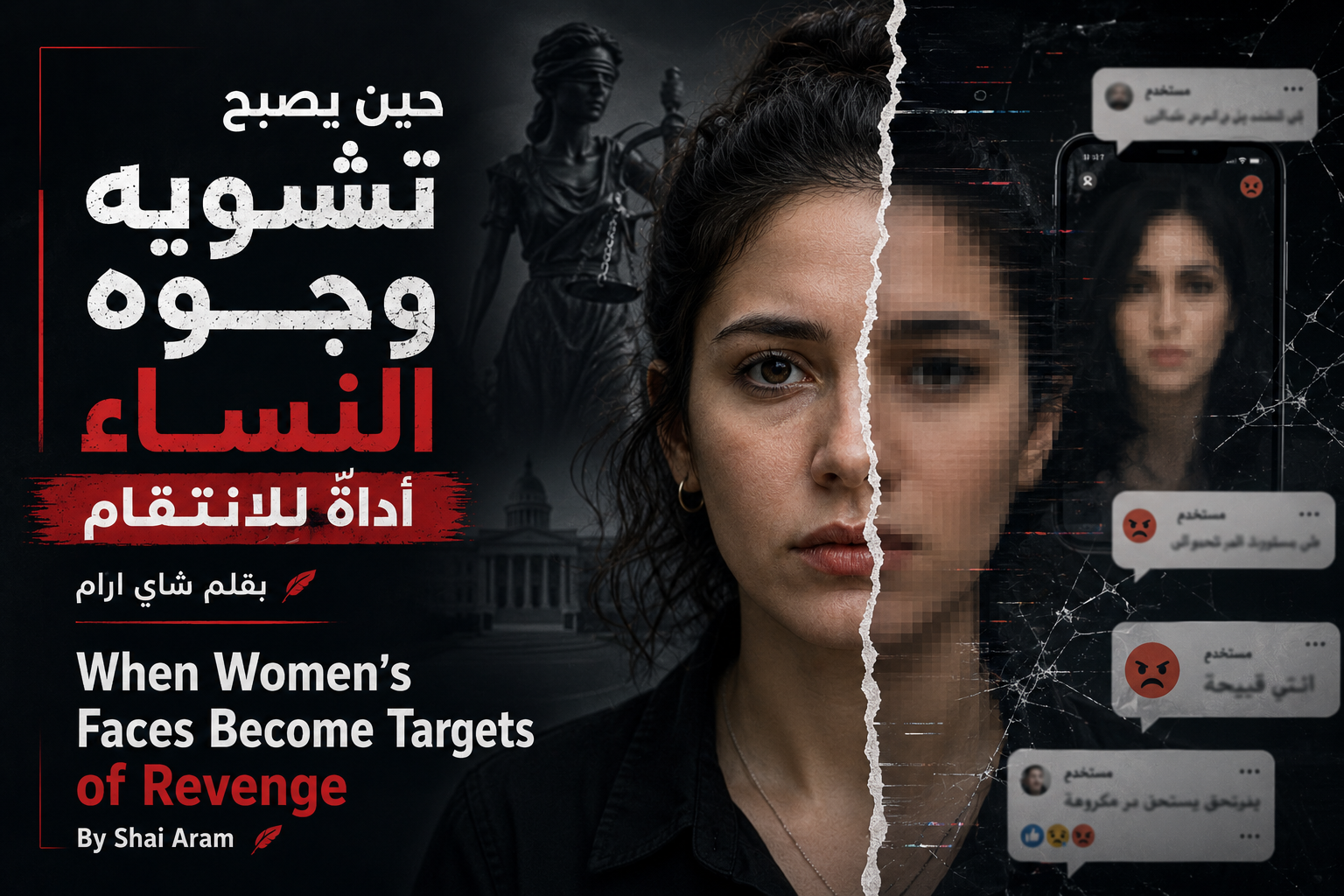

Shai Aram
Writer at CROSS LINES
This report examines some of Iraq's most shocking cases of gender-based violence, alongside medical testimonies that expose the hidden crimes taking place behind closed doors every day.
Amid the persistent recurrence of gender-based violence and the complete absence of official statistics documenting its scale, women's faces in Iraq have increasingly become targets of revenge and instruments of domination. A pressing question now resonates among journalists, human rights advocates, and civil society organizations alike: How long will women continue to be disfigured with impunity? When will meaningful protection and accountability become a genuine priority for Iraq's legal institutions? And who bears responsibility for this reality—is it solely the perpetrators, or does institutional and societal silence also share the blame?
Different Names, One Shared Tragedy
The threat directed at women—rooted in a mentality of possession and control—is often distilled into one chilling sentence:
"If you cannot be mine, I will make sure your face is never the same again."
This mentality has manifested itself in a series of devastating attacks that have shaken Iraqi public opinion.
The Case of Nabaa (Fayrouz)
Days after the attack on specialist anesthesiologist Nabaa (Fayrouz), the investigation remains in its preliminary stages. According to her lawyer, her former husband poured boiling oil over her face, leaving her with severe burns and in critical medical condition.
The Case of Nour Al-Khafaji
Media personality Nour Al-Khafaji suffered a similarly brutal assault targeting both her body and face, sparking widespread outrage across Iraq.
The Case of Maryam Al-Rikabi (2021)
After rejecting a marriage proposal from a young man, Maryam Al-Rikabi was attacked with a corrosive substance (acid), transforming her case into one of Iraq's most recognized symbols of violence against women who exercise the right to refuse.
The Case of Shahinda (2024)
Following an attempted murder, Shahinda lost one of her eyes, while extensive injuries permanently disfigured her face.
The Case of Malak Al-Zubaidi (2020)
Although the forensic medical report confirmed that Malak Al-Zubaidi remained alive for more than an hour after sustaining her injuries, serious irregularities throughout the legal proceedings ultimately resulted in the perpetrator escaping accountability.
Legal Challenges and Political Realities
Speaking from a legal perspective, lawyer and former Member of Parliament Rezan Sheikh Delir explains that Article 411 of the Iraqi Penal Code provides severe penalties for crimes involving permanent bodily disfigurement, with prison sentences beginning at fifteen years.
However, she argues that the primary problem lies not in the legislation itself, but in its implementation.
She notes that Iraqi law permits reconciliation ("Sulh") between the parties, yet such agreements only waive the victim's personal claim and do not eliminate the state's right to prosecute. Criminal responsibility remains intact, and the judiciary is still obligated to impose legal punishment.
Criticizing external interference, she states:
"In reality, some perpetrators seek protection from political parties, obtain political cover, or evade justice through tribal influence. Nevertheless, the law is unequivocal: once a perpetrator appears before the court, they must receive the punishment prescribed by law, regardless of any reconciliation or tribal settlement."
The Hidden Crisis: No National Database
Despite the continued occurrence of these crimes, Iraq still lacks a unified national database or specialized institution dedicated to documenting cases of facial disfigurement and severe violence against women.
This absence of reliable data leaves countless victims invisible. Many cases never reach the courts or the media, and only those that happen to gain attention through social media or public campaigns become known to society.
Medical Testimony: What Emergency Rooms Reveal
Beyond the cases that dominate headlines, Dr. Haifa Sahi, a dermatologist in Baghdad, describes a far more disturbing reality based on her experience working in hospital emergency departments.
She explains:
"When violence targets two well-known social media figures, the issue becomes a matter of public concern, and there is at least a chance that justice may be served. But the real question is: how many women experience violence every single day without anyone ever hearing their stories?"
She continues:
"We received women almost every day who had already died before arriving at the emergency department. In many cases, their husbands brought them in and immediately claimed they had simply fallen or experienced breathing difficulties. Yet medical examinations revealed strangulation, internal bleeding, multiple fractures, and severe bruising caused by brutal physical abuse."
Recalling one particularly tragic incident, she says:
"On one occasion, a young girl was brought in after dying from a violent beating. We later discovered that, instead of taking her to a hospital, her family had taken her to traditional healers who claimed to be expelling evil spirits from her body. She ultimately died under the torture inflicted during that ordeal."
From Diagnosis to Reform
A scientific study conducted by Dr. Israa Al-Din Nouri of the College of Political Science at Al-Nahrain University concludes that combating domestic violence requires a comprehensive national strategy beginning with the protection of children's rights and the establishment of genuine equality within the family.
Legislative Reform
The study calls for the urgent enactment of a comprehensive domestic violence law that criminalizes abuse, guarantees safe shelters, and provides independent financial support for mothers and their children.
It also emphasizes the importance of amending the Iraqi Penal Code by repealing all provisions that discriminate against women, bringing national legislation into alignment with international human rights standards and the Convention on the Elimination of All Forms of Discrimination Against Women (CEDAW).
Education and Media
Educational institutions, the study argues, must play a central role in promoting equality and mutual respect from an early age. Achieving this requires dismantling discriminatory attitudes within families, particularly unequal treatment between boys and girls.
The media and civil society organizations also have a critical responsibility to challenge outdated social norms, replacing unquestioned obedience with dialogue, equality, and democratic family values.
Institutional Development
Among the study's principal recommendations is the creation of a unified national database documenting all forms of violence against women in cooperation with relevant government institutions.
It also advocates establishing specialized psychological and social rehabilitation centers for survivors, while introducing behavioral rehabilitation programs for offenders to encourage peaceful conflict resolution and strengthen family stability.
Conclusion
The reality exposed throughout this report, together with the recommendations put forward by academic research, demands immediate legal, institutional, and societal action.
Iraq urgently needs comprehensive reforms that provide meaningful protection for its most vulnerable citizens—particularly women and children. Until effective legislation against domestic violence is enacted and consistently enforced, women will continue to bear the cost of institutional silence, inadequate protection, and the failure to deliver justice.
Different Names, One Shared Tragedy
The threat directed at women—rooted in a mentality of possession and control—is often distilled into one chilling sentence:
"If you cannot be mine, I will make sure your face is never the same again."
This mentality has manifested itself in a series of devastating attacks that have shaken Iraqi public opinion.
The Case of Nabaa (Fayrouz)
Days after the attack on specialist anesthesiologist Nabaa (Fayrouz), the investigation remains in its preliminary stages. According to her lawyer, her former husband poured boiling oil over her face, leaving her with severe burns and in critical medical condition.
The Case of Nour Al-Khafaji
Media personality Nour Al-Khafaji suffered a similarly brutal assault targeting both her body and face, sparking widespread outrage across Iraq.
The Case of Maryam Al-Rikabi (2021)
After rejecting a marriage proposal from a young man, Maryam Al-Rikabi was attacked with a corrosive substance (acid), transforming her case into one of Iraq's most recognized symbols of violence against women who exercise the right to refuse.
The Case of Shahinda (2024)
Following an attempted murder, Shahinda lost one of her eyes, while extensive injuries permanently disfigured her face.
The Case of Malak Al-Zubaidi (2020)
Although the forensic medical report confirmed that Malak Al-Zubaidi remained alive for more than an hour after sustaining her injuries, serious irregularities throughout the legal proceedings ultimately resulted in the perpetrator escaping accountability.
Legal Challenges and Political Realities
Speaking from a legal perspective, lawyer and former Member of Parliament Rezan Sheikh Delir explains that Article 411 of the Iraqi Penal Code provides severe penalties for crimes involving permanent bodily disfigurement, with prison sentences beginning at fifteen years.
However, she argues that the primary problem lies not in the legislation itself, but in its implementation.
She notes that Iraqi law permits reconciliation ("Sulh") between the parties, yet such agreements only waive the victim's personal claim and do not eliminate the state's right to prosecute. Criminal responsibility remains intact, and the judiciary is still obligated to impose legal punishment.
Criticizing external interference, she states:
"In reality, some perpetrators seek protection from political parties, obtain political cover, or evade justice through tribal influence. Nevertheless, the law is unequivocal: once a perpetrator appears before the court, they must receive the punishment prescribed by law, regardless of any reconciliation or tribal settlement."
The Hidden Crisis: No National Database
Despite the continued occurrence of these crimes, Iraq still lacks a unified national database or specialized institution dedicated to documenting cases of facial disfigurement and severe violence against women.
This absence of reliable data leaves countless victims invisible. Many cases never reach the courts or the media, and only those that happen to gain attention through social media or public campaigns become known to society.
Medical Testimony: What Emergency Rooms Reveal
Beyond the cases that dominate headlines, Dr. Haifa Sahi, a dermatologist in Baghdad, describes a far more disturbing reality based on her experience working in hospital emergency departments.
She explains:
"When violence targets two well-known social media figures, the issue becomes a matter of public concern, and there is at least a chance that justice may be served. But the real question is: how many women experience violence every single day without anyone ever hearing their stories?"
She continues:
"We received women almost every day who had already died before arriving at the emergency department. In many cases, their husbands brought them in and immediately claimed they had simply fallen or experienced breathing difficulties. Yet medical examinations revealed strangulation, internal bleeding, multiple fractures, and severe bruising caused by brutal physical abuse."
Recalling one particularly tragic incident, she says:
"On one occasion, a young girl was brought in after dying from a violent beating. We later discovered that, instead of taking her to a hospital, her family had taken her to traditional healers who claimed to be expelling evil spirits from her body. She ultimately died under the torture inflicted during that ordeal."
From Diagnosis to Reform
A scientific study conducted by Dr. Israa Al-Din Nouri of the College of Political Science at Al-Nahrain University concludes that combating domestic violence requires a comprehensive national strategy beginning with the protection of children's rights and the establishment of genuine equality within the family.
Legislative Reform
The study calls for the urgent enactment of a comprehensive domestic violence law that criminalizes abuse, guarantees safe shelters, and provides independent financial support for mothers and their children.
It also emphasizes the importance of amending the Iraqi Penal Code by repealing all provisions that discriminate against women, bringing national legislation into alignment with international human rights standards and the Convention on the Elimination of All Forms of Discrimination Against Women (CEDAW).
Education and Media
Educational institutions, the study argues, must play a central role in promoting equality and mutual respect from an early age. Achieving this requires dismantling discriminatory attitudes within families, particularly unequal treatment between boys and girls.
The media and civil society organizations also have a critical responsibility to challenge outdated social norms, replacing unquestioned obedience with dialogue, equality, and democratic family values.
Institutional Development
Among the study's principal recommendations is the creation of a unified national database documenting all forms of violence against women in cooperation with relevant government institutions.
It also advocates establishing specialized psychological and social rehabilitation centers for survivors, while introducing behavioral rehabilitation programs for offenders to encourage peaceful conflict resolution and strengthen family stability.
Conclusion
The reality exposed throughout this report, together with the recommendations put forward by academic research, demands immediate legal, institutional, and societal action.
Iraq urgently needs comprehensive reforms that provide meaningful protection for its most vulnerable citizens—particularly women and children. Until effective legislation against domestic violence is enacted and consistently enforced, women will continue to bear the cost of institutional silence, inadequate protection, and the failure to deliver justice.
🔗 Share Article
For Context
Related reads from the same topic or latest developments