A Melting Glacier in Nepal Was a Time Bomb. There Are More to Come.
New York Times
N
New York Times
Original Source
A geologist reflects on Nepal's catastrophic flooding and warns that rapid climate warming will make deadly glacial outburst floods far more frequent across the Himalayas. Thousands of glacial lakes now dot the mountain range, posing growing hazards to communities and infrastructure below.
A Melting Glacier in Nepal Was a Time Bomb. There Are More to Come. - The New York Times
Skip to contentSkip to site index
Climate
Log in
Saturday, August 29, 2026
Today’s Paper
* Home
* + U.S.
+ International
+ Canada
+ Español
+ 中文
Floods in
Nepal and Tibet
* live
Updates
Aug. 29, 2026, 5:06 a.m. ET
4m ago
* What to Know
* Photos and Videos
* Scale of Destruction
* Maps
* Survivors’ Accounts
Advertisement
SKIP ADVERTISEMENT
You have a preview view of this article while we are checking your access. When we have confirmed access, the full article content will load.
Newsletter Climate ForwardA Melting Glacier in Nepal Was a Time Bomb. There Are More to Come.
A geologist reflects on the disaster and explains why rapid warming will make deadly glacial floods far more common.
Listen · 6:51 min
*
*
*
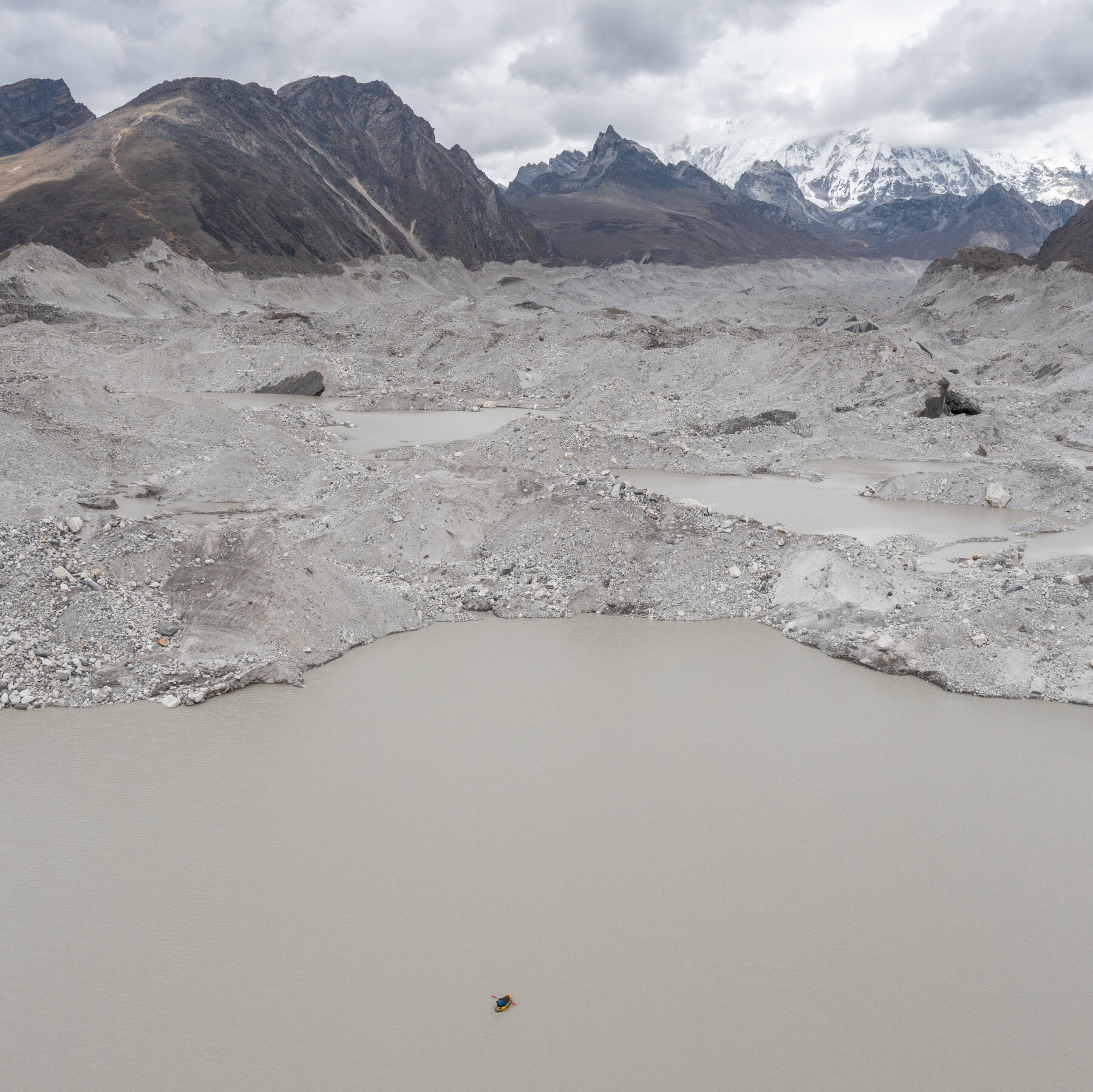
!A man paddles a kayak across a gray glacial lake, seen from above.
*A researcher paddled an inflatable kayak equipped with sonar to measure the depths of a meltwater lake on the Ngozumpa Glacier in Nepal last year.
Credit...
Jason Gulley for The New York Times*
By
Jason Gulley
Jason Gulley is a professor of geology at the University of South Florida who focuses on glacier hydrology, including in Nepal.
Aug. 28, 2026
See more of our coverage in your search results. Encuentra más de nuestra cobertura en los resultados de búsqueda. Add The New York Times on Google Agrega The New York Times en Google
Like much of the world, I watched and rewatched the videos of the catastrophic flood that have been filtering out of Nepal since Wednesday with horror and sadness.
But unlike many, I have an intimate knowledge of this part of the world, where I first traveled as an undergraduate geology student in 2005 to study how glaciers in the Khumbu region disintegrate into hazardous lakes. I’ve made six expeditions there over the last two decades.
Because of the remote location, scientists don’t know what precisely triggered Wednesday’s disaster — yet. What’s clear at this point is that a giant hunk of glacier peeled off the side of the mountain, tumbled down 4,000 vertical feet and slammed into a tributary of the Bhote Koshi River in China.
Originally misidentified as an earthquake, the mountain-shaking event registered as a 5.2 magnitude seismic event. Moments later, a wall of rocks and water blasted through the Gyriong Port building as the flood barreled down the valley.
The source of the water remains a mystery.
In many catastrophic floods in the Himalaya, glacier lakes are to blame. When Nepal’s glaciers were healthy, they bulldozed down mountains and pushed up piles of rocky debris hundreds of feet high to form features glaciologists call moraines.
Image
!Low buildings with green roofs and white walls sit near fields divided by stone walls.
*The Sherpa village of Thame, in the Khumbu region of Nepal. Flow from the 2024 glacier flood is visible in the distance.
Credit...
Jason Gulley for The New York Times*
Sites of glacier failures since 1900
Glacier avalanche or collapse
CHINA
Site of Aug. 26th
avalanche and flooding
NEPAL
BHUTAN
INDIA
Area of
detail
Glacier avalanche or collapse
CHINA
Site of Aug. 26th
avalanche and flooding
NEPAL
BHUTAN
INDIA
Area of
detail
Glacier avalanche or collapse
CHINA
Site of Aug. 26th
avalanche and flooding
NEPAL
BHUTAN
INDIA
Area of
detail
Glacier avalanche or collapse
CHINA
Site of Aug. 26th
avalanche and flooding
NEPAL
BHUTAN
INDIA
Area of
detail
Note: Glacier failures include ice avalanches, rock-ice avalanches and glacier detachments.
Source: Bashkova, et. al., Earth System Science Data, 2026 (preprint).
By Mira Rojanasakul/The New York Times
Thousands of glacial lakes now dot the Himalayas
Mt. Everest
Kathmandu
NEPAL
CHINA
INDIA
N
25 mi.
Mt. Everest
Kathmandu
NEPAL
CHINA
INDIA
N
25 mi.
Mt. Everest
Kathmandu
NEPAL
CHINA
INDIA
N
25 mi.
Sources: Survey of glacial lakes (2024) by Taigang Zhang, Weicai Wang and Baosheng An; roads and country borders from OpenStreetMaps; satellite image by Landsat and Copernicus.
---
Thank you for your patience while we verify access. If you are in Reader mode please exit andlog intoyour Times account, orsubscribefor all of The Times.
---
Thank you for your patience while we verify access.
Already a subscriber?Log in.
Want all of The Times?Subscribe.
Related Content
*
*
*
*
*
*
*
*
*
*
*
*
*
*
*
*
*
*
*
Advertisement
SKIP ADVERTISEMENT
Site Index
Site Information Navigation
* ©2026 The New York Times Company
* NYTCo
* Contact Us
* Accessibility
* Work with us
* Advertise
* T Brand Studio
* Privacy Policy
* Cookie Policy
* Terms of Service
* Terms of Sale
* Site Map
* Canada
* International
* Help
* Subscriptions
*
Skip to contentSkip to site index
Climate
Log in
Saturday, August 29, 2026
Today’s Paper
* Home
* + U.S.
+ International
+ Canada
+ Español
+ 中文
Floods in
Nepal and Tibet
* live
Updates
Aug. 29, 2026, 5:06 a.m. ET
4m ago
* What to Know
* Photos and Videos
* Scale of Destruction
* Maps
* Survivors’ Accounts
Advertisement
SKIP ADVERTISEMENT
You have a preview view of this article while we are checking your access. When we have confirmed access, the full article content will load.
Newsletter Climate ForwardA Melting Glacier in Nepal Was a Time Bomb. There Are More to Come.
A geologist reflects on the disaster and explains why rapid warming will make deadly glacial floods far more common.
Listen · 6:51 min
*
*
*
!A man paddles a kayak across a gray glacial lake, seen from above.
*A researcher paddled an inflatable kayak equipped with sonar to measure the depths of a meltwater lake on the Ngozumpa Glacier in Nepal last year.
Credit...
Jason Gulley for The New York Times*
By
Jason Gulley
Jason Gulley is a professor of geology at the University of South Florida who focuses on glacier hydrology, including in Nepal.
Aug. 28, 2026
See more of our coverage in your search results. Encuentra más de nuestra cobertura en los resultados de búsqueda. Add The New York Times on Google Agrega The New York Times en Google
Like much of the world, I watched and rewatched the videos of the catastrophic flood that have been filtering out of Nepal since Wednesday with horror and sadness.
But unlike many, I have an intimate knowledge of this part of the world, where I first traveled as an undergraduate geology student in 2005 to study how glaciers in the Khumbu region disintegrate into hazardous lakes. I’ve made six expeditions there over the last two decades.
Because of the remote location, scientists don’t know what precisely triggered Wednesday’s disaster — yet. What’s clear at this point is that a giant hunk of glacier peeled off the side of the mountain, tumbled down 4,000 vertical feet and slammed into a tributary of the Bhote Koshi River in China.
Originally misidentified as an earthquake, the mountain-shaking event registered as a 5.2 magnitude seismic event. Moments later, a wall of rocks and water blasted through the Gyriong Port building as the flood barreled down the valley.
The source of the water remains a mystery.
In many catastrophic floods in the Himalaya, glacier lakes are to blame. When Nepal’s glaciers were healthy, they bulldozed down mountains and pushed up piles of rocky debris hundreds of feet high to form features glaciologists call moraines.
Image
!Low buildings with green roofs and white walls sit near fields divided by stone walls.
*The Sherpa village of Thame, in the Khumbu region of Nepal. Flow from the 2024 glacier flood is visible in the distance.
Credit...
Jason Gulley for The New York Times*
Sites of glacier failures since 1900
Glacier avalanche or collapse
CHINA
Site of Aug. 26th
avalanche and flooding
NEPAL
BHUTAN
INDIA
Area of
detail
Glacier avalanche or collapse
CHINA
Site of Aug. 26th
avalanche and flooding
NEPAL
BHUTAN
INDIA
Area of
detail
Glacier avalanche or collapse
CHINA
Site of Aug. 26th
avalanche and flooding
NEPAL
BHUTAN
INDIA
Area of
detail
Glacier avalanche or collapse
CHINA
Site of Aug. 26th
avalanche and flooding
NEPAL
BHUTAN
INDIA
Area of
detail
Note: Glacier failures include ice avalanches, rock-ice avalanches and glacier detachments.
Source: Bashkova, et. al., Earth System Science Data, 2026 (preprint).
By Mira Rojanasakul/The New York Times
Thousands of glacial lakes now dot the Himalayas
Mt. Everest
Kathmandu
NEPAL
CHINA
INDIA
N
25 mi.
Mt. Everest
Kathmandu
NEPAL
CHINA
INDIA
N
25 mi.
Mt. Everest
Kathmandu
NEPAL
CHINA
INDIA
N
25 mi.
Sources: Survey of glacial lakes (2024) by Taigang Zhang, Weicai Wang and Baosheng An; roads and country borders from OpenStreetMaps; satellite image by Landsat and Copernicus.
---
Thank you for your patience while we verify access. If you are in Reader mode please exit andlog intoyour Times account, orsubscribefor all of The Times.
---
Thank you for your patience while we verify access.
Already a subscriber?Log in.
Want all of The Times?Subscribe.
Related Content
*
*
*
*
*
*
*
*
*
*
*
*
*
*
*
*
*
*
*
Advertisement
SKIP ADVERTISEMENT
Site Index
Site Information Navigation
* ©2026 The New York Times Company
* NYTCo
* Contact Us
* Accessibility
* Work with us
* Advertise
* T Brand Studio
* Privacy Policy
* Cookie Policy
* Terms of Service
* Terms of Sale
* Site Map
* Canada
* International
* Help
* Subscriptions
*
🔗 Share Article
Tags:#نيبال#جليد#فيضانات#تغير المناخ#هيمالايا#كارثة طبيعية
Source: New York Times
For Context
Related reads from the same topic or latest developments