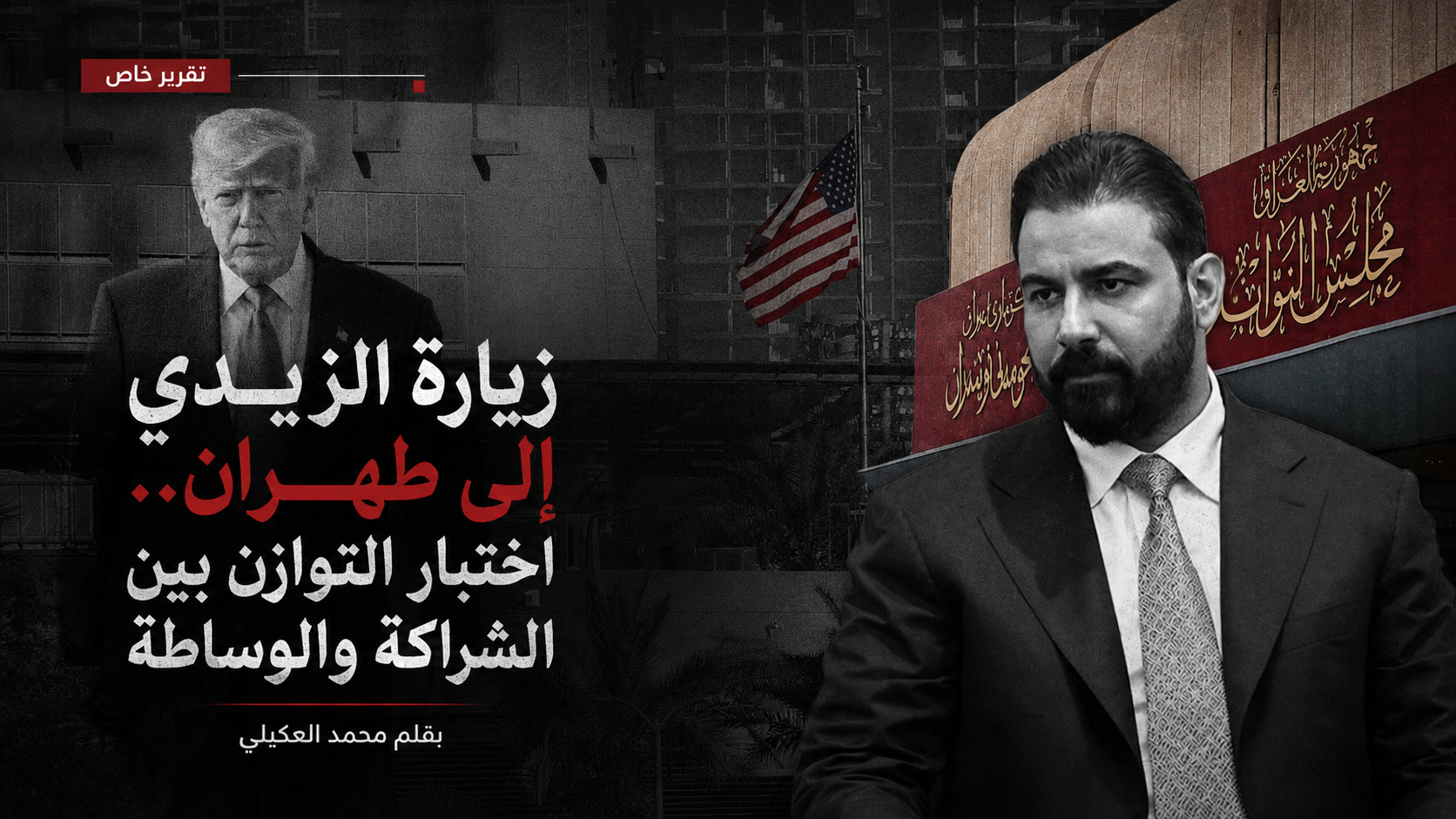
Al-Zaidi's Visit to Tehran: A Test of Balance Between Partnership and Mediation

Mohammed Al-Aqili
Writer at CROSS LINES
The visit of Iraqi Prime Minister Ali Al-Zaidi to Iran cannot be viewed as a routine bilateral trip focused solely on trade, energy, and border affairs.
The visit of Iraqi Prime Minister Ali Al-Zaidi to Iran cannot be viewed as a routine bilateral trip focused solely on trade, energy, and border affairs. It comes only days after his official visit to Washington and his meeting with U.S. President Donald Trump, at a time when the Middle East is experiencing one of its most dangerous periods of escalating tensions between the United States and Iran.
The timing gives the visit a dual significance. On one level, it concerns the future of Iraq-Iran relations. On another, it represents Baghdad's attempt to demonstrate that it can engage constructively with two rival powers without becoming part of either camp or allowing Iraq to serve as an arena for their confrontation.
Leading a high-level ministerial delegation, Al-Zaidi held talks in Tehran with Iranian President Masoud Pezeshkian. Official discussions centered on political, economic, and security cooperation, regional developments, and a roadmap for expanding strategic collaboration in energy, transportation, trade, infrastructure, and border security.
A Reassurance Visit Following the Washington Opening
One of the visit's primary objectives appears to be easing Iranian concerns following Al-Zaidi's trip to Washington, particularly after Iraq signed numerous agreements and memoranda of understanding with American companies while emphasizing expanded cooperation in the oil, gas, electricity, and infrastructure sectors.
From Tehran's perspective, Iraq's growing engagement with Washington could be interpreted as the beginning of a gradual strategic shift—from heavy reliance on Iran toward a broader diversification of international partnerships and a stronger American presence in key sectors of the Iraqi economy.
Al-Zaidi therefore appears intent on delivering a clear message: strengthening ties with the United States does not mean transforming Iraq into an anti-Iranian platform. Rather, Baghdad seeks to diversify its foreign relations and free itself from excessive dependence on any single partner.
Yet this balancing act faces a difficult test. Strategic equilibrium is achieved not through frequent diplomatic visits but through Iraq's ability to make sovereign decisions that are dictated neither by Washington nor by Tehran.
What Can Iraq Gain?
The visit offers several potential advantages for Iraq. Foremost among them is preserving stability along its eastern border and preventing the U.S.-Iran confrontation from spilling onto Iraqi territory.
Iran shares a long border with Iraq and maintains extensive economic, religious, and social ties, as well as significant political and security influence. Any serious deterioration in relations could affect border security, trade, energy supplies, religious travel, and Iraq's internal political balance.
Energy remains another immediate concern. Iraq continues to rely on Iranian natural gas to operate a number of its electricity-generating facilities despite ongoing efforts to diversify energy sources. Consequently, securing continued gas supplies remains one of the most practical issues on the agenda.
The visit also creates opportunities to expand transportation projects, railway connections, and trade corridors linking the two countries. If managed transparently and according to Iraq's national economic interests, these initiatives could transform the shared border from a security challenge into a regional commercial gateway connecting the Gulf with Central Asia.
The Other Side of Economic Cooperation
Greater economic cooperation with Iran is not without risks.
Dependence on imported Iranian gas and consumer goods could become a long-term strategic vulnerability if Iraq fails to use this transitional period to develop domestic production capacity. While importing energy may be an immediate necessity, it should not evolve into a permanent policy that leaves Iraq exposed to political pressure, supply disruptions, international sanctions, or price volatility.
Similarly, Baghdad must ensure that bilateral trade remains balanced rather than allowing Iraq to function primarily as a market for Iranian products. A successful economic partnership should stimulate Iraqi manufacturing, agriculture, and employment—not deepen trade deficits or undermine domestic industries.
Armed Groups: The Most Sensitive File
Perhaps the most delicate subject in Al-Zaidi's discussions with Iranian officials concerns Iraq's armed factions.
His government has pledged to consolidate all weapons under state authority and integrate armed formations into official institutions. At the same time, several Iraqi factions maintain ideological, political, and military ties with Tehran.
Reports suggest Baghdad hopes to persuade Iran to restrain groups that advocate the "Unity of Fronts" doctrine and seek to involve Iraq in wider regional conflicts. In return, Iraq would reaffirm that its territory and airspace will not be used to launch attacks against Iran.
In principle, this represents a logical framework: Iraq would neither serve as a launchpad for attacks on Iran nor permit any external actor to use armed groups inside Iraq to dictate decisions regarding war and peace.
However, its success ultimately depends on Tehran recognizing Iraq as a fully sovereign state rather than a strategic extension of its regional security architecture—and on Baghdad's own ability to implement its decisions domestically.
Shared Security or Sovereignty?
Prime Minister Al-Zaidi has emphasized that Iraq's security is closely linked to Iran's and reaffirmed that Iraqi territory will not be used to threaten its neighbor. This position aligns with Iraq's broader interest in avoiding becoming a platform for external conflict.
Nevertheless, the concept of "shared security" requires careful definition. Genuine cooperation should focus on border management, counterterrorism, combating narcotics trafficking, and intelligence sharing—not on granting any external power the right to intervene inside Iraqi territory or influence Iraq's sovereign security decisions.
Can Iraq Become a Credible Mediator?
Iraq possesses several advantages that position it as a potential mediator between Tehran and Washington. It maintains broad political, security, and economic relations with Iran while simultaneously preserving a strategic partnership with the United States and remaining deeply connected to the American-led international financial system.
Moreover, Iraq arguably has more to lose than any other regional state from continued escalation. Disruption of the Strait of Hormuz, attacks on Iraqi energy infrastructure, interruptions to trade routes, or the involvement of armed factions in regional conflict would directly threaten Iraq's economy and national security.
According to circulating reports, Al-Zaidi carried messages related to de-escalation, ensuring freedom of navigation through the Strait of Hormuz, preventing Iraqi territory from being used against Iran, and potentially hosting future dialogue between Tehran and Washington in Baghdad.
Yet maintaining relations with both sides alone is insufficient for successful mediation. A credible mediator must enjoy the confidence of both parties while possessing enough political leverage to influence outcomes. Iraq itself continues to operate under the competing pressures exerted by both Washington and Tehran.
Conditions for Successful Iraqi Mediation
For any Iraqi mediation initiative to be effective, it must move beyond the simple exchange of diplomatic messages toward a structured framework built on reciprocal commitments.
These include preventing Iraqi territory from being used in attacks against Iran, ensuring that armed factions refrain from targeting American interests without government authorization, safeguarding Iraqi oil exports and maritime trade, establishing a structured U.S.-Iran dialogue covering ceasefire arrangements, maritime security, military deployments, and regional stability, while coordinating Iraqi mediation with countries pursuing similar diplomatic efforts, including Oman, Qatar, and Pakistan.
No Rupture, No Dependence
It is unrealistic to expect Iraq to distance itself completely from Iran, just as it is impossible for Baghdad to abandon its strategic relationship with the United States.
The future of Iraqi foreign policy will continue to depend on managing this dual relationship. The real question is whether Iraq remains caught between competing pressures or succeeds in pursuing a more independent strategy based solely on its own national interests.
The objective is not to isolate Iran nor to align against it. Rather, it is to establish a normal relationship between two neighboring states—one that acknowledges historical, religious, and economic ties while firmly rejecting interference in Iraq's political and security decision-making.
An Early Test for Al-Zaidi's Government
Ultimately, Prime Minister Ali Al-Zaidi's visit to Tehran represents an early test of his government's ability to transform the principle of strategic balance into practical policy.
Its success will not be measured by ceremonial receptions or the number of agreements signed, but by whether it helps shield Iraq from regional conflict, safeguard its economic interests, regulate security relations with Iran, and reinforce the exclusive authority of the Iraqi state over decisions of war and peace.
Iraq's aspiration to serve as a bridge between Washington and Tehran is both realistic and valuable—but only if Baghdad first consolidates its own sovereignty. A country seeking to mediate between major rivals must ensure that its territory, institutions, and security apparatus operate under a single national authority. Only then can Iraq transform itself from a battleground for regional competition into a credible platform for regional dialogue and diplomatic settlement.
The timing gives the visit a dual significance. On one level, it concerns the future of Iraq-Iran relations. On another, it represents Baghdad's attempt to demonstrate that it can engage constructively with two rival powers without becoming part of either camp or allowing Iraq to serve as an arena for their confrontation.
Leading a high-level ministerial delegation, Al-Zaidi held talks in Tehran with Iranian President Masoud Pezeshkian. Official discussions centered on political, economic, and security cooperation, regional developments, and a roadmap for expanding strategic collaboration in energy, transportation, trade, infrastructure, and border security.
A Reassurance Visit Following the Washington Opening
One of the visit's primary objectives appears to be easing Iranian concerns following Al-Zaidi's trip to Washington, particularly after Iraq signed numerous agreements and memoranda of understanding with American companies while emphasizing expanded cooperation in the oil, gas, electricity, and infrastructure sectors.
From Tehran's perspective, Iraq's growing engagement with Washington could be interpreted as the beginning of a gradual strategic shift—from heavy reliance on Iran toward a broader diversification of international partnerships and a stronger American presence in key sectors of the Iraqi economy.
Al-Zaidi therefore appears intent on delivering a clear message: strengthening ties with the United States does not mean transforming Iraq into an anti-Iranian platform. Rather, Baghdad seeks to diversify its foreign relations and free itself from excessive dependence on any single partner.
Yet this balancing act faces a difficult test. Strategic equilibrium is achieved not through frequent diplomatic visits but through Iraq's ability to make sovereign decisions that are dictated neither by Washington nor by Tehran.
What Can Iraq Gain?
The visit offers several potential advantages for Iraq. Foremost among them is preserving stability along its eastern border and preventing the U.S.-Iran confrontation from spilling onto Iraqi territory.
Iran shares a long border with Iraq and maintains extensive economic, religious, and social ties, as well as significant political and security influence. Any serious deterioration in relations could affect border security, trade, energy supplies, religious travel, and Iraq's internal political balance.
Energy remains another immediate concern. Iraq continues to rely on Iranian natural gas to operate a number of its electricity-generating facilities despite ongoing efforts to diversify energy sources. Consequently, securing continued gas supplies remains one of the most practical issues on the agenda.
The visit also creates opportunities to expand transportation projects, railway connections, and trade corridors linking the two countries. If managed transparently and according to Iraq's national economic interests, these initiatives could transform the shared border from a security challenge into a regional commercial gateway connecting the Gulf with Central Asia.
The Other Side of Economic Cooperation
Greater economic cooperation with Iran is not without risks.
Dependence on imported Iranian gas and consumer goods could become a long-term strategic vulnerability if Iraq fails to use this transitional period to develop domestic production capacity. While importing energy may be an immediate necessity, it should not evolve into a permanent policy that leaves Iraq exposed to political pressure, supply disruptions, international sanctions, or price volatility.
Similarly, Baghdad must ensure that bilateral trade remains balanced rather than allowing Iraq to function primarily as a market for Iranian products. A successful economic partnership should stimulate Iraqi manufacturing, agriculture, and employment—not deepen trade deficits or undermine domestic industries.
Armed Groups: The Most Sensitive File
Perhaps the most delicate subject in Al-Zaidi's discussions with Iranian officials concerns Iraq's armed factions.
His government has pledged to consolidate all weapons under state authority and integrate armed formations into official institutions. At the same time, several Iraqi factions maintain ideological, political, and military ties with Tehran.
Reports suggest Baghdad hopes to persuade Iran to restrain groups that advocate the "Unity of Fronts" doctrine and seek to involve Iraq in wider regional conflicts. In return, Iraq would reaffirm that its territory and airspace will not be used to launch attacks against Iran.
In principle, this represents a logical framework: Iraq would neither serve as a launchpad for attacks on Iran nor permit any external actor to use armed groups inside Iraq to dictate decisions regarding war and peace.
However, its success ultimately depends on Tehran recognizing Iraq as a fully sovereign state rather than a strategic extension of its regional security architecture—and on Baghdad's own ability to implement its decisions domestically.
Shared Security or Sovereignty?
Prime Minister Al-Zaidi has emphasized that Iraq's security is closely linked to Iran's and reaffirmed that Iraqi territory will not be used to threaten its neighbor. This position aligns with Iraq's broader interest in avoiding becoming a platform for external conflict.
Nevertheless, the concept of "shared security" requires careful definition. Genuine cooperation should focus on border management, counterterrorism, combating narcotics trafficking, and intelligence sharing—not on granting any external power the right to intervene inside Iraqi territory or influence Iraq's sovereign security decisions.
Can Iraq Become a Credible Mediator?
Iraq possesses several advantages that position it as a potential mediator between Tehran and Washington. It maintains broad political, security, and economic relations with Iran while simultaneously preserving a strategic partnership with the United States and remaining deeply connected to the American-led international financial system.
Moreover, Iraq arguably has more to lose than any other regional state from continued escalation. Disruption of the Strait of Hormuz, attacks on Iraqi energy infrastructure, interruptions to trade routes, or the involvement of armed factions in regional conflict would directly threaten Iraq's economy and national security.
According to circulating reports, Al-Zaidi carried messages related to de-escalation, ensuring freedom of navigation through the Strait of Hormuz, preventing Iraqi territory from being used against Iran, and potentially hosting future dialogue between Tehran and Washington in Baghdad.
Yet maintaining relations with both sides alone is insufficient for successful mediation. A credible mediator must enjoy the confidence of both parties while possessing enough political leverage to influence outcomes. Iraq itself continues to operate under the competing pressures exerted by both Washington and Tehran.
Conditions for Successful Iraqi Mediation
For any Iraqi mediation initiative to be effective, it must move beyond the simple exchange of diplomatic messages toward a structured framework built on reciprocal commitments.
These include preventing Iraqi territory from being used in attacks against Iran, ensuring that armed factions refrain from targeting American interests without government authorization, safeguarding Iraqi oil exports and maritime trade, establishing a structured U.S.-Iran dialogue covering ceasefire arrangements, maritime security, military deployments, and regional stability, while coordinating Iraqi mediation with countries pursuing similar diplomatic efforts, including Oman, Qatar, and Pakistan.
No Rupture, No Dependence
It is unrealistic to expect Iraq to distance itself completely from Iran, just as it is impossible for Baghdad to abandon its strategic relationship with the United States.
The future of Iraqi foreign policy will continue to depend on managing this dual relationship. The real question is whether Iraq remains caught between competing pressures or succeeds in pursuing a more independent strategy based solely on its own national interests.
The objective is not to isolate Iran nor to align against it. Rather, it is to establish a normal relationship between two neighboring states—one that acknowledges historical, religious, and economic ties while firmly rejecting interference in Iraq's political and security decision-making.
An Early Test for Al-Zaidi's Government
Ultimately, Prime Minister Ali Al-Zaidi's visit to Tehran represents an early test of his government's ability to transform the principle of strategic balance into practical policy.
Its success will not be measured by ceremonial receptions or the number of agreements signed, but by whether it helps shield Iraq from regional conflict, safeguard its economic interests, regulate security relations with Iran, and reinforce the exclusive authority of the Iraqi state over decisions of war and peace.
Iraq's aspiration to serve as a bridge between Washington and Tehran is both realistic and valuable—but only if Baghdad first consolidates its own sovereignty. A country seeking to mediate between major rivals must ensure that its territory, institutions, and security apparatus operate under a single national authority. Only then can Iraq transform itself from a battleground for regional competition into a credible platform for regional dialogue and diplomatic settlement.
🔗 Share Article
For Context
Related reads from the same topic or latest developments