Trump Strikes Iran, Cuts Aid to Israel as Americans Vote in Midterm Elections
By using this website, you agree to our use of cookies. This use includes personalization of content and ads, and traffic analytics. Review our Privacy Policy for more information.
Foreign Policy Get analysis and alerts more quickly in the mobile app.
Install
**An error has occurred**
Midterm Flash Sale! Join FP for only $14.99.
CLAIM OFFER
Back to Foreign Policy Magazine home page
Evening roundup with our editors’ favorite stories of the day
World Brief
Your guide to the most important world stories of the day
China Brief
The latest news, analysis, and data from the country each week
Situation Report
Weekly update on what’s driving U.S. national security policy
FP Weekend
A curation of our best book reviews, deep dives, and other reads
Africa Brief
Essential analysis of the stories shaping geopolitics on the continent
South Asia Brief
Weekly update on developments in India and its neighbors
The Reading List
Curated guides on geopolitics and current affairs
FP Bookshelf
A monthly guide to FP’s book reviews, excerpts, and reading recommendations
Latin America Brief
One-stop digest of politics, economics, and culture
Southeast Asia Brief
A weekly dispatch with news from the region’s 11 countries
The New Geopolitics
A five-part masterclass in IR theory with Harvard Professor Stephen M. Walt
View All Newsletters
Subscribe Subscribe Team access Team access
World Brief: Iran Strikes and Israel Aid Cuts Shake Up Election Day
1. Create an FP account to save articles to read later.
Sign Up
ALREADY AN FP SUBSCRIBER? LOGIN
PDF
1. **Downloadable PDFs** are a benefit of an FP subscription.
ALREADY AN FP SUBSCRIBER? LOGIN
Gift
1. Gifting articles is a subscriber benefit.
ALREADY AN FP SUBSCRIBER? LOGIN
2. This article is an Insider exclusive.
Contact us at [email protected] to learn about upgrade options, unlocking the ability to gift this article.
World Brief
FP’s flagship daily newsletter, catching you up on 24 hours of news in five minutes. Delivered weekdays.
Iran Strikes and Israel Aid Cuts Shake Up Election Day
Two last-minute foreign-policy developments could impact U.S. voters’ midterm decisions.
By **Maxine Davey**, an editorial fellow at *Foreign Policy*, and **Maya Krainc**, an editorial fellow at *Foreign Policy*.
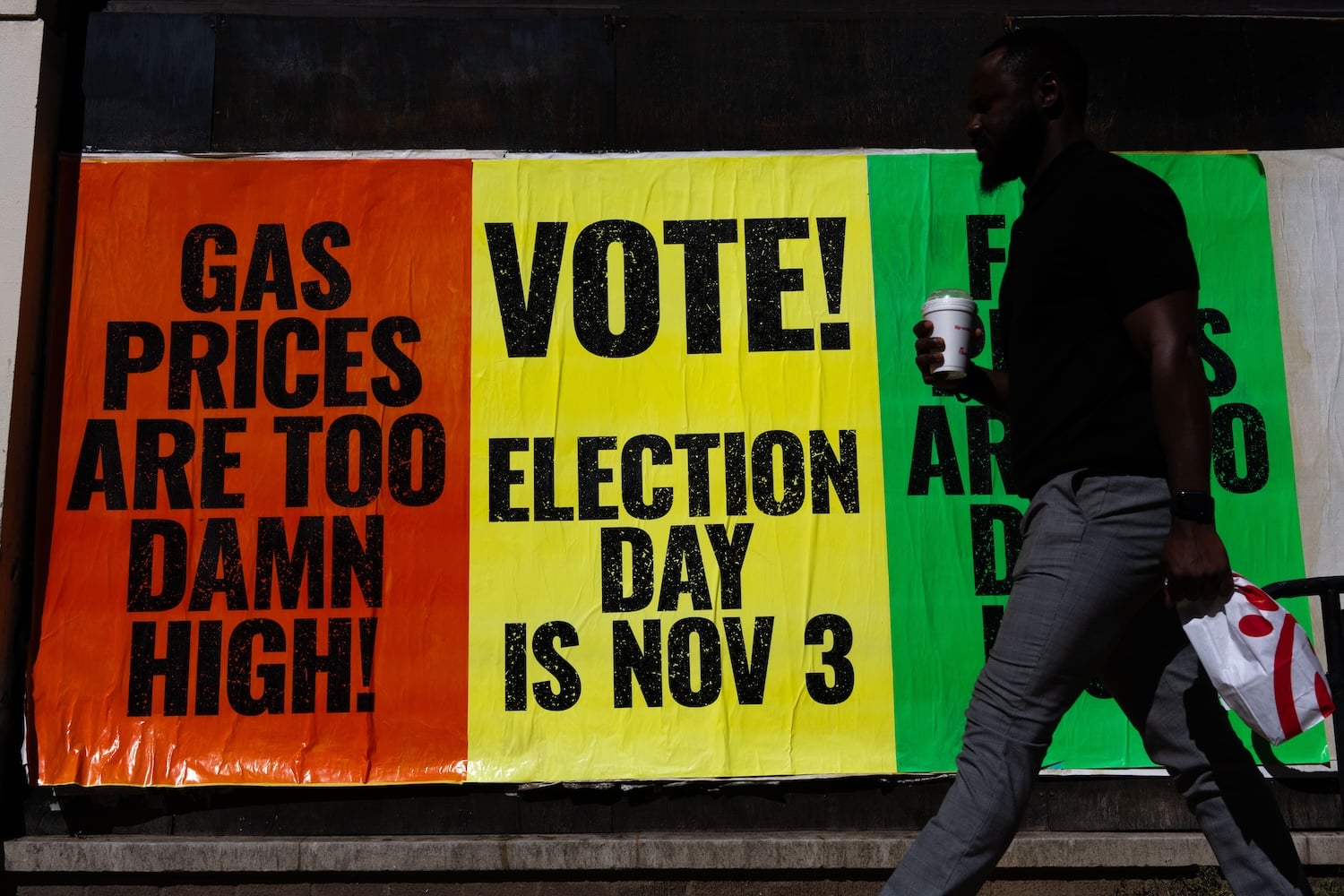
*A person walks by an Election Day sign.*
A person walks by an Election Day sign in Dallas on Nov. 3. Adam Gray/Getty Images
My FP: Follow topics and authors to get straight to what you like. Exclusively for FP subscribers. Subscribe Now | Log In
Welcome back to World Brief, where we’re looking at **U.S.** strikes on **Iran**, future **U.S.**\-mediated peace talks between **Russia** and **Ukraine**, and a challenge to **Australia**’s landmark social media legislation.
Midterm Surprises
U.S. Midterm Elections
Analysis and arguments.
As Americans head to the polls in today’s midterm elections, two last-minute foreign-policy developments could impact voters’ decisions.
Welcome back to World Brief, where we’re looking at **U.S.** strikes on **Iran**, future **U.S.**\-mediated peace talks between **Russia** and **Ukraine**, and a challenge to **Australia**’s landmark social media legislation.
Sign up to receive World Brief in your inbox every weekday.
Midterm Surprises
U.S. Midterm Elections
Analysis and arguments.
As Americans head to the polls in today’s midterm elections, two last-minute foreign-policy developments could impact voters’ decisions.
On Monday—election eve—the United States attacked Iran’s Qeshm Island, targeting an anti-aircraft facility in what U.S. officials described as a defensive measure amid reports that Iran was planning missile strikes. “It’s just a minor attack. It wasn’t war,” U.S. President Donald Trump told Fox News Tuesday morning.
Prior to the strikes, Iran’s foreign ministry said Monday that it would reopen the Strait of Hormuz if the United States agreed to a set of demands, and Trump posted on Truth Social that a settlement “could happen!” Monday’s attack makes such a deal seem unlikely in the near term, however. On Tuesday, senior Iranian security official Mohsen Rezaei wrote on X that “America’s response to Iran’s rights and demands was not convincing.” Rezaei, who is the secretary of Iran’s Supreme National Security Council, is the official to whom U.S. Vice President J.D. Vance recently sent a letter in an attempt to find common ground on negotiations.
Many analysts fear that Trump may be planning to renew large-scale offensive strikes on Iran following the midterm elections. According to reports in recent weeks, Washington has relocated troops in preparation for an escalation, deployed a Patriot missile defense system to Israel, and urged several Gulf Arab countries to prepare for a military campaign.
The war and its economic repercussions have been a focal point in the midterms, with a September-October Pew survey reporting that around two-thirds of Americans disapprove of Trump’s handling of the conflict. Mark Zandi, the chief economist of Moody’s Analytics, estimated that the Iran war has cost the average American household an extra $2,000. The closure of the Strait of Hormuz has resulted in soaring gas and diesel prices—up 43 percent and 68 percent, respectively, since the war started—and price increases in global commodities from condoms to Diet Coke.
American voters cite the economy as the top issue in this year’s elections, and if polls forecasting a Democratic takeover of both the House of Representatives and the Senate prove correct, Trump’s war in Iran could be partly to blame. However, if Democrats do win in the Senate, they will have the power to decide whether to stop funding the war, Sen. Chris Murphy told *Foreign Policy* in October.
U.S. support for Israel has also been a key issue in the midterms, with many progressive Democrats making ending that support a central campaign talking point. And on Tuesday, in what some are interpreting as a last-ditch effort to prevent a blue wave, Trump abruptly announced that the United States would cut off $4 billion in aid to Israel by the end of the year.
Washington currently provides Israel with $3.8 billion annually in military assistance, part of a 10-year deal lasting through 2028 that was struck under former U.S. President Barack Obama. Ending that agreement early would likely require congressional support.
“The left uses the $4 billion payment—that everybody knows about, it’s no secret—as a signal of unfairness, and we can’t allow that to happen,” Trump said.
He said that Israeli Prime Minister Benjamin Netanyahu had agreed to the deal “months ago.” In May, Netanyahu voiced a desire for the U.S.-Israel relationship to move “from aid to partnership.”
However, Israel’s defense ministry seemed blindsided by the news. “We were surprised by the president’s statements, especially today,” a spokesperson told Israeli media. “We are in ongoing talks with the Americans. We will study the implications.”
Iran Strikes and Israel Aid Cuts Shake Up Election Day
The United States struck Iran's Qeshm Island on the eve of the midterm elections, while President Trump announced plans to cut $4 billion in aid to Israel by the end of the year. Analysts say both developments could shape the decisions of American voters.
Cross Lines newsroom
Share this article
#إيران#إسرائيل#الانتخابات النصفية#ترامب#مضيق هرمز#المساعدات العسكرية
Original source: Foreign Policy