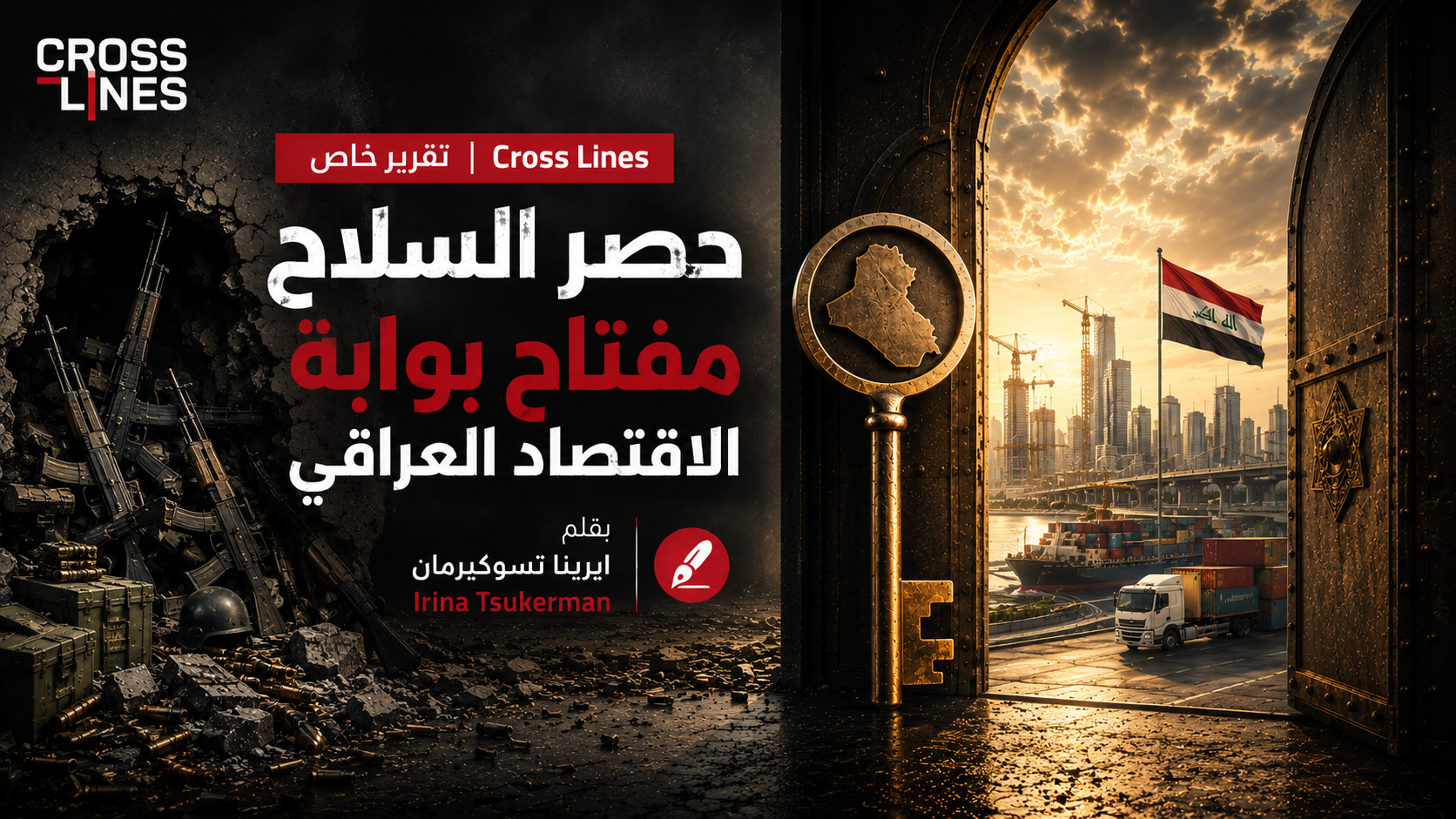
Weapon control is the key to Iraq's economic gateway

Irina Tsukerman
Writer at CROSS LINES
Iraq’s Sovereignty By: Irina Tsukerman Iraq’s Coordination Framework Launches Initiative to Consolidate State Authority Over Arms Iraq’s Coordination Framework has unveiled a new initiative aimed at placing all weapons under state control and severing ties...
Iraq’s Sovereignty
By: Irina Tsukerman
Iraq’s Coordination Framework Launches Initiative to Consolidate State Authority Over Arms
Iraq’s Coordination Framework has unveiled a new initiative aimed at placing all weapons under state control and severing ties between political actors and armed formations, marking one of the most consequential moments in the country’s post-2003 history.
The proposal comes amid a period of escalating regional tensions that have disrupted energy markets, threatened maritime trade routes, hampered transportation corridors, and placed critical infrastructure across the Middle East under renewed pressure. Simultaneously, Iraq has entered the next phase of its security transition, as Baghdad prepares to assume broader responsibilities following the conclusion of the International Coalition’s mission and the transfer of its major facilities to Iraqi control.
Political alliances that dominate Iraq’s governing landscape quickly moved to endorse the initiative. In official statements, they emphasized the necessity of restricting arms to Iraq’s military and security institutions, framing the policy as an existential national imperative dictated by the country’s supreme interests. Their support reflected a broader understanding that the issue extends far beyond technical security arrangements and lies at the heart of Iraq’s sovereignty agenda.
Strategic Realities Amid Regional Volatility
The timing of the initiative reflects strategic realities that Iraq can no longer afford to ignore. The region is undergoing a period of persistent and escalating instability. The confrontation between Israel and Iran, attacks on commercial shipping lanes, recurring threats to maritime freedom of navigation, and renewed concerns over energy infrastructure have collectively reshaped regional security calculations.
Each wave of escalation has produced immediate repercussions for oil prices, shipping costs, insurance premiums, and investor confidence. Global markets now react within hours to developments across the Middle East, while regional governments increasingly place infrastructure protection, energy security, and supply chain resilience at the center of their national security strategies.
These developments carry particular significance for Iraq, whose economy remains heavily dependent on energy exports. Baghdad seeks to attract foreign investment, expand infrastructure, modernize the national economy, and position itself as a strategic transportation and logistics hub connecting the Gulf to Turkey and Europe through the Development Road Project.
Achieving these ambitions, however, requires investors, commercial partners, and foreign governments to maintain confidence in Iraq’s institutions, infrastructure, and security architecture.
At its core, that confidence depends on the state’s ability to exercise consistent and effective authority across its entire territory. Energy facilities require permanent protection, transportation corridors demand coordinated management, border crossings necessitate effective administration, and investors seek a governance environment that is predictable and reliable. Economic planning alone cannot achieve these objectives; the state must possess the capacity to implement decisions through a unified and clearly defined chain of command.
The Roots of the Challenge
Iraq’s modern history explains why this objective remains difficult to achieve. The collapse of state institutions after 2003 created a fragmented and fragile security environment. Insurgency, sectarian conflict, terrorism, and institutional weakness encouraged the emergence of multiple armed actors operating outside formal state structures.
When ISIS launched its offensive in 2014 and threatened the survival of the Iraqi state, thousands of volunteers joined the Popular Mobilization Forces (PMF), playing a decisive role in halting the group’s advance and liberating occupied territories.
While the defeat of ISIS brought an end to one major crisis, it simultaneously generated a different set of challenges. Wartime mobilization gradually evolved into an entrenched political, economic, and institutional reality.
The consequences became increasingly evident. Successive governments frequently encountered obstacles when attempting to implement policies that affected established interests. Economic actors often found themselves dealing with multiple centers of power rather than a single regulatory authority, while companies considering investment repeatedly cited uncertainty regarding governance structures and local authority as a primary concern.
Foreign Policy and State-Building Dimensions
The implications of this reality have extended into Iraq’s foreign policy and national security calculations. Regional governments and international partners have frequently assessed Iraq through the lens of this ambiguity, with every security incident reinforcing concerns about the gap between Iraq’s constitutional authority and the actual distribution of power on the ground.
The current initiative seeks to address precisely this issue. The broad political support it has received reflects a growing recognition that Iraq’s next stage of development requires stronger institutions and clearer lines of authority.
At its essence, the initiative is not merely about weapons. It raises a deeper question concerning the relationship between power and the state itself.
Debates surrounding this issue are often reduced to discussions about arms inventories, force structures, and legal authorities. Yet the more fundamental dimension involves control over budgets, personnel systems, procurement mechanisms, intelligence coordination, operational planning, logistics networks, and strategic decision-making. Those who command these functions wield real authority, and any serious effort to strengthen Iraqi sovereignty must confront these issues directly.
Stability as an Economic Imperative
Current regional dynamics further underscore the urgency of this undertaking. Energy security has become a central concern for global markets. Disruptions in the Red Sea have forced shipping companies to reroute vessels and absorb higher costs, while attacks on maritime infrastructure have reshaped trade flows across multiple sectors. Military escalations have repeatedly triggered volatility in oil markets, prompting governments throughout the region to intensify efforts to secure transportation corridors, protect critical infrastructure, and strengthen resilience against external shocks.
Iraq cannot continue pursuing its economic ambitions without addressing these realities. The country seeks to transform itself into a commercial gateway linking regional markets, attract foreign capital, develop strategic infrastructure, and expand its role in regional connectivity initiatives.
These objectives require robust institutional cohesion. Investors must be confident in the ability of national institutions to enforce contracts, protect assets, and manage crises. Equally important, they must trust Baghdad’s capacity to implement policies through internationally recognized state structures.
Sovereignty cannot be achieved through legal recognition alone. It requires institutions capable of exercising authority, maintaining security, protecting infrastructure, guiding economic development, and responding effectively to regional crises.
Ultimately, the debate initiated by the Coordination Framework concerns the future architecture of the Iraqi state. Iraq stands today before a historic opportunity to strengthen the institutions responsible for national security, economic development, and strategic decision-making.
Regional instability, concerns over energy security, vulnerabilities in global supply chains, and Iraq’s own developmental aspirations all point toward a single conclusion: the country’s long-term stability depends on its ability to build institutions that exercise authority through the rule of law, accountability, and a unified national framework. Consolidating arms under state control is not merely a policy option—it is an essential step on that broader path.
By: Irina Tsukerman
Iraq’s Coordination Framework Launches Initiative to Consolidate State Authority Over Arms
Iraq’s Coordination Framework has unveiled a new initiative aimed at placing all weapons under state control and severing ties between political actors and armed formations, marking one of the most consequential moments in the country’s post-2003 history.
The proposal comes amid a period of escalating regional tensions that have disrupted energy markets, threatened maritime trade routes, hampered transportation corridors, and placed critical infrastructure across the Middle East under renewed pressure. Simultaneously, Iraq has entered the next phase of its security transition, as Baghdad prepares to assume broader responsibilities following the conclusion of the International Coalition’s mission and the transfer of its major facilities to Iraqi control.
Political alliances that dominate Iraq’s governing landscape quickly moved to endorse the initiative. In official statements, they emphasized the necessity of restricting arms to Iraq’s military and security institutions, framing the policy as an existential national imperative dictated by the country’s supreme interests. Their support reflected a broader understanding that the issue extends far beyond technical security arrangements and lies at the heart of Iraq’s sovereignty agenda.
Strategic Realities Amid Regional Volatility
The timing of the initiative reflects strategic realities that Iraq can no longer afford to ignore. The region is undergoing a period of persistent and escalating instability. The confrontation between Israel and Iran, attacks on commercial shipping lanes, recurring threats to maritime freedom of navigation, and renewed concerns over energy infrastructure have collectively reshaped regional security calculations.
Each wave of escalation has produced immediate repercussions for oil prices, shipping costs, insurance premiums, and investor confidence. Global markets now react within hours to developments across the Middle East, while regional governments increasingly place infrastructure protection, energy security, and supply chain resilience at the center of their national security strategies.
These developments carry particular significance for Iraq, whose economy remains heavily dependent on energy exports. Baghdad seeks to attract foreign investment, expand infrastructure, modernize the national economy, and position itself as a strategic transportation and logistics hub connecting the Gulf to Turkey and Europe through the Development Road Project.
Achieving these ambitions, however, requires investors, commercial partners, and foreign governments to maintain confidence in Iraq’s institutions, infrastructure, and security architecture.
At its core, that confidence depends on the state’s ability to exercise consistent and effective authority across its entire territory. Energy facilities require permanent protection, transportation corridors demand coordinated management, border crossings necessitate effective administration, and investors seek a governance environment that is predictable and reliable. Economic planning alone cannot achieve these objectives; the state must possess the capacity to implement decisions through a unified and clearly defined chain of command.
The Roots of the Challenge
Iraq’s modern history explains why this objective remains difficult to achieve. The collapse of state institutions after 2003 created a fragmented and fragile security environment. Insurgency, sectarian conflict, terrorism, and institutional weakness encouraged the emergence of multiple armed actors operating outside formal state structures.
When ISIS launched its offensive in 2014 and threatened the survival of the Iraqi state, thousands of volunteers joined the Popular Mobilization Forces (PMF), playing a decisive role in halting the group’s advance and liberating occupied territories.
While the defeat of ISIS brought an end to one major crisis, it simultaneously generated a different set of challenges. Wartime mobilization gradually evolved into an entrenched political, economic, and institutional reality.
The consequences became increasingly evident. Successive governments frequently encountered obstacles when attempting to implement policies that affected established interests. Economic actors often found themselves dealing with multiple centers of power rather than a single regulatory authority, while companies considering investment repeatedly cited uncertainty regarding governance structures and local authority as a primary concern.
Foreign Policy and State-Building Dimensions
The implications of this reality have extended into Iraq’s foreign policy and national security calculations. Regional governments and international partners have frequently assessed Iraq through the lens of this ambiguity, with every security incident reinforcing concerns about the gap between Iraq’s constitutional authority and the actual distribution of power on the ground.
The current initiative seeks to address precisely this issue. The broad political support it has received reflects a growing recognition that Iraq’s next stage of development requires stronger institutions and clearer lines of authority.
At its essence, the initiative is not merely about weapons. It raises a deeper question concerning the relationship between power and the state itself.
Debates surrounding this issue are often reduced to discussions about arms inventories, force structures, and legal authorities. Yet the more fundamental dimension involves control over budgets, personnel systems, procurement mechanisms, intelligence coordination, operational planning, logistics networks, and strategic decision-making. Those who command these functions wield real authority, and any serious effort to strengthen Iraqi sovereignty must confront these issues directly.
Stability as an Economic Imperative
Current regional dynamics further underscore the urgency of this undertaking. Energy security has become a central concern for global markets. Disruptions in the Red Sea have forced shipping companies to reroute vessels and absorb higher costs, while attacks on maritime infrastructure have reshaped trade flows across multiple sectors. Military escalations have repeatedly triggered volatility in oil markets, prompting governments throughout the region to intensify efforts to secure transportation corridors, protect critical infrastructure, and strengthen resilience against external shocks.
Iraq cannot continue pursuing its economic ambitions without addressing these realities. The country seeks to transform itself into a commercial gateway linking regional markets, attract foreign capital, develop strategic infrastructure, and expand its role in regional connectivity initiatives.
These objectives require robust institutional cohesion. Investors must be confident in the ability of national institutions to enforce contracts, protect assets, and manage crises. Equally important, they must trust Baghdad’s capacity to implement policies through internationally recognized state structures.
Sovereignty cannot be achieved through legal recognition alone. It requires institutions capable of exercising authority, maintaining security, protecting infrastructure, guiding economic development, and responding effectively to regional crises.
Ultimately, the debate initiated by the Coordination Framework concerns the future architecture of the Iraqi state. Iraq stands today before a historic opportunity to strengthen the institutions responsible for national security, economic development, and strategic decision-making.
Regional instability, concerns over energy security, vulnerabilities in global supply chains, and Iraq’s own developmental aspirations all point toward a single conclusion: the country’s long-term stability depends on its ability to build institutions that exercise authority through the rule of law, accountability, and a unified national framework. Consolidating arms under state control is not merely a policy option—it is an essential step on that broader path.
🔗 Share Article
For Context
Related reads from the same topic or latest developments