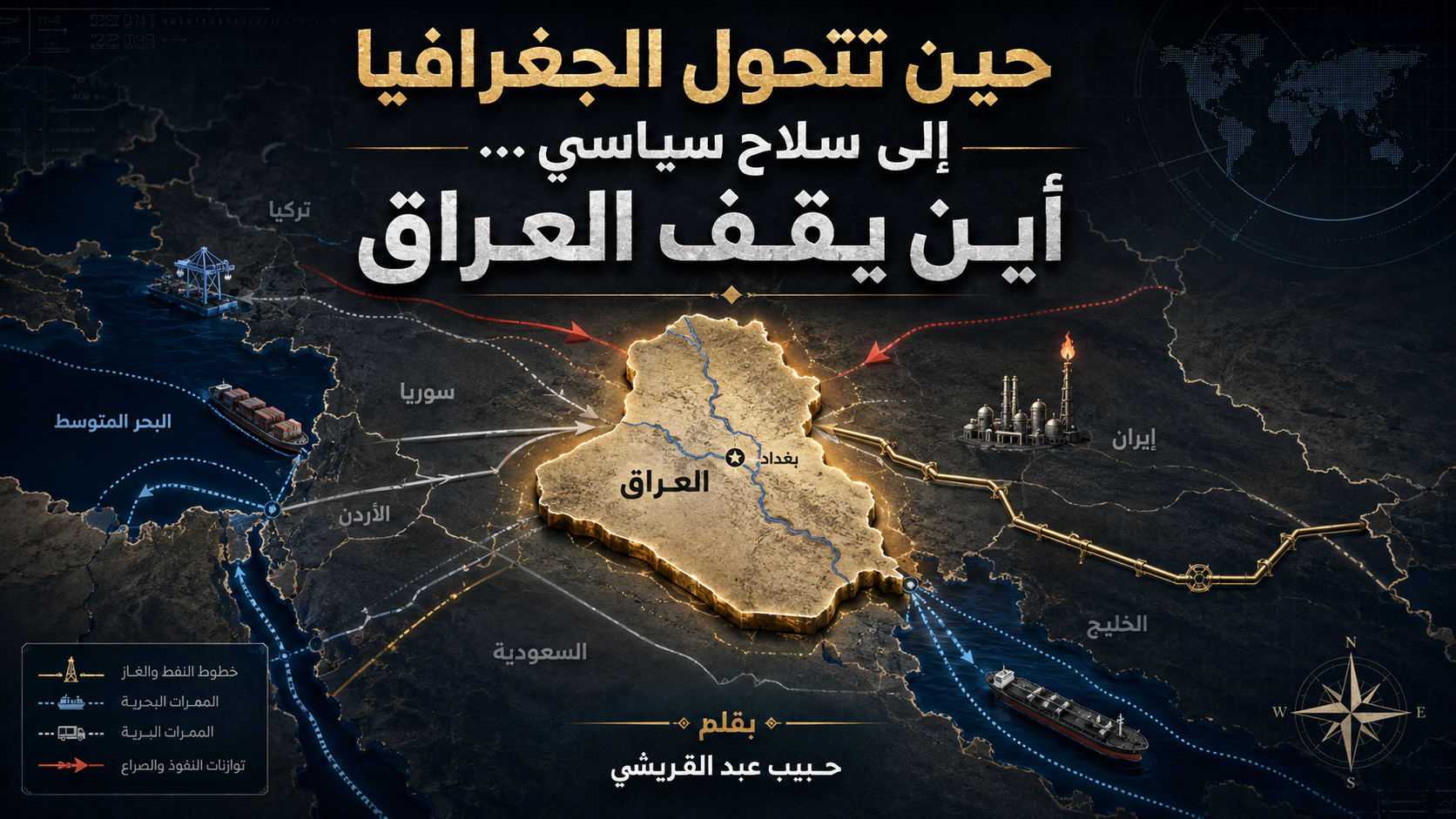
When Geography Becomes a Political Weapon… Where Does Iraq Stand?

Habib Al-Quraishi
Writer at CROSS LINES
Geography, Oil, and Influence: Why Does Iraq Fail to Use Them?
International experience shows that states do not manage their foreign relations through courtesies, but through the leverage they possess. Geography, energy, water, migration, markets, and alliances are all instruments that countries use to defend their interests and achieve their political objectives.
In 2021, Moroccan-Spanish relations entered a severe crisis after Madrid received Brahim Ghali, the leader of the Polisario Front, for medical treatment. Rabat viewed the move as a direct challenge to its strategic interests.
At the height of the dispute, the Spanish enclave of Ceuta witnessed a major influx of migrants after Moroccan authorities relaxed border controls. Many observers interpreted the move as a political message intended to pressure Spain.
The crisis continues to cast a shadow over relations between the two countries, despite the subsequent improvement that followed Spain’s change of position on the Western Sahara issue.
The rivalry between Morocco and Algeria, along with Madrid’s relations with Algeria in the fields of energy and economic cooperation, adds another dimension to the region’s calculations.
Morocco’s relations with Israel and the Spanish government’s position on the war in Gaza have also become part of a complex political environment in which regional and international interests overlap.
Morocco is not an exception in its use of instruments of influence.
Turkey has used the refugee issue in its negotiations with the European Union, while capitalizing on its strategic location in the Black Sea and its control of the Bosporus and Dardanelles straits. It also possesses considerable leverage over water-related issues involving Iraq and Syria.
Iran employs its strategic position near the Strait of Hormuz. Ethiopia uses the Grand Ethiopian Renaissance Dam as a negotiating tool with Egypt, while Mexico holds significant influence over migration-related issues with the United States. The list goes on.
This raises the most important question for Iraq:
Does Iraq lack instruments of power?
Iraq occupies a geographic position connecting the Gulf with the Levant, Turkey, and Iran. It possesses one of the world’s largest oil reserves, in addition to substantial gas, water, and agricultural resources.
It also has a large consumer market, a central position in regional transport and trade projects, and an extensive network of relations with both Eastern and Western powers.
Why, then, have these assets not been transformed into instruments of political and economic leverage that serve Iraq’s national interests?
Is the problem that Iraq carries no real weight in regional and international power calculations?
Or is the opposite true—that Iraq possesses significant sources of influence, but the absence of strategic vision, political division, poor management of foreign policy, and the inability to use its leverage have left these capabilities dormant?
States are not measured solely by what they possess, but by their ability to transform those assets into influence.
A state that fails to use its own instruments of power leaves others free to use theirs against it.
The question therefore remains before Iraqi decision-makers: Has the time come to move from a policy of reacting to events toward a policy of shaping them?
Or will Iraq continue to hold winning cards that no one knows how to play?
By Habib Abd
In 2021, Moroccan-Spanish relations entered a severe crisis after Madrid received Brahim Ghali, the leader of the Polisario Front, for medical treatment. Rabat viewed the move as a direct challenge to its strategic interests.
At the height of the dispute, the Spanish enclave of Ceuta witnessed a major influx of migrants after Moroccan authorities relaxed border controls. Many observers interpreted the move as a political message intended to pressure Spain.
The crisis continues to cast a shadow over relations between the two countries, despite the subsequent improvement that followed Spain’s change of position on the Western Sahara issue.
The rivalry between Morocco and Algeria, along with Madrid’s relations with Algeria in the fields of energy and economic cooperation, adds another dimension to the region’s calculations.
Morocco’s relations with Israel and the Spanish government’s position on the war in Gaza have also become part of a complex political environment in which regional and international interests overlap.
Morocco is not an exception in its use of instruments of influence.
Turkey has used the refugee issue in its negotiations with the European Union, while capitalizing on its strategic location in the Black Sea and its control of the Bosporus and Dardanelles straits. It also possesses considerable leverage over water-related issues involving Iraq and Syria.
Iran employs its strategic position near the Strait of Hormuz. Ethiopia uses the Grand Ethiopian Renaissance Dam as a negotiating tool with Egypt, while Mexico holds significant influence over migration-related issues with the United States. The list goes on.
This raises the most important question for Iraq:
Does Iraq lack instruments of power?
Iraq occupies a geographic position connecting the Gulf with the Levant, Turkey, and Iran. It possesses one of the world’s largest oil reserves, in addition to substantial gas, water, and agricultural resources.
It also has a large consumer market, a central position in regional transport and trade projects, and an extensive network of relations with both Eastern and Western powers.
Why, then, have these assets not been transformed into instruments of political and economic leverage that serve Iraq’s national interests?
Is the problem that Iraq carries no real weight in regional and international power calculations?
Or is the opposite true—that Iraq possesses significant sources of influence, but the absence of strategic vision, political division, poor management of foreign policy, and the inability to use its leverage have left these capabilities dormant?
States are not measured solely by what they possess, but by their ability to transform those assets into influence.
A state that fails to use its own instruments of power leaves others free to use theirs against it.
The question therefore remains before Iraqi decision-makers: Has the time come to move from a policy of reacting to events toward a policy of shaping them?
Or will Iraq continue to hold winning cards that no one knows how to play?
By Habib Abd
🔗 Share Article
For Context
Related reads from the same topic or latest developments