"The Politicization of the World Cup: When National Sovereignty Swallows International Sports Charters"
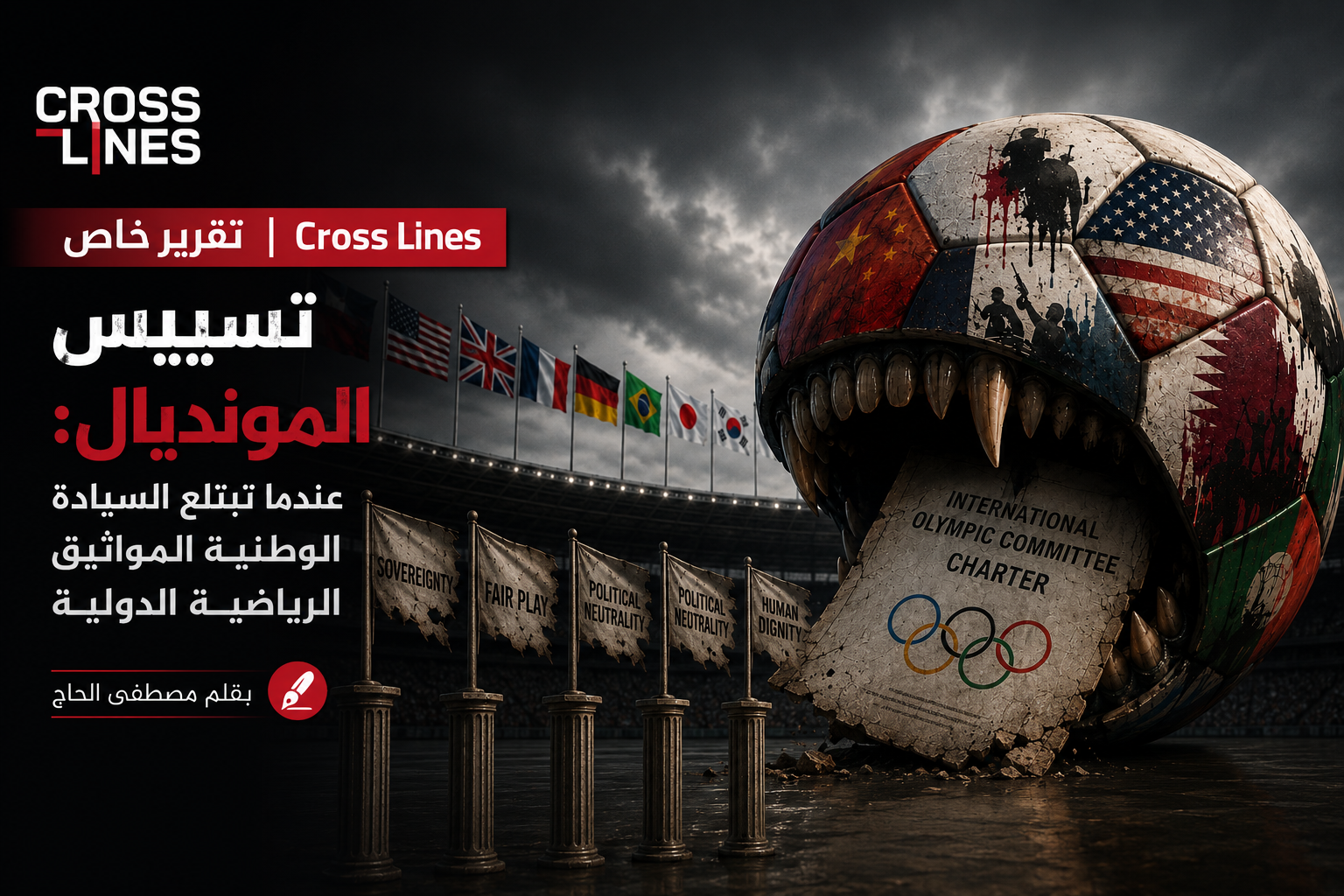
The Illusion of separating Sports from Politics: American Sovereignty Defeats the FIFA Charter International sports organizations (such as FIFA and the International Olympic Committee) were founded on a fundamental principle enshrined in their charters: sep...
The Illusion of separating Sports from Politics: American Sovereignty Defeats the FIFA Charter
International sports organizations (such as FIFA and the International Olympic Committee) were founded on a fundamental principle enshrined in their charters: separating sports from politics and guaranteeing fair competition among nations, regardless of diplomatic disputes.
According to these charters, any country bidding to host a global championship pledges to facilitate the entry of all official delegation members, including players, administrators, and media personnel.
However, the recent incident involving the Iraqi national team delegation at Chicago Airport ahead of the 2026 World Cup—coinciding with Washington's refusal to grant entry visas to 15 administrative and technical staff members of the Iranian national team (including the president of the Iranian Football Federation)—proves that these pledges become mere ink on paper when they clash with the domestic laws of superpowers, specifically the United States, as reported by Reuters and the British newspaper The Guardian.
Historical Roots: When Did Championships Turn into Political Tools?
Claiming that sports have never been a political tool is a form of wishful idealism. Politics has been intertwined with sports for decades. However, the difference today lies in the shift of the tool itself—moving from voluntary boycotts by nations to forced bans imposed by the host country, exploiting its sovereignty over its borders.
The Cold War Era and the Weapon of Boycotts
During the last century, political interference was driven by governments deciding to boycott tournaments:
The 1980 Moscow Olympics: The United States led a widespread boycott involving more than 60 nations in protest against the Soviet invasion of Afghanistan.
The 1984 Los Angeles Olympics: The Soviet Union and its allies retaliated in kind, boycotting the games in America.
During this era, the decision was purely political, yet it stemmed from the participating (boycotting) countries rather than the host nation barring guests from entering.
The Principle of American Exceptionalism: What is Forbidden to Others is Allowed for Washington
The United States approaches the hosting of international championships with a mindset of absolute sovereignty that supersedes international charters.
Despite the guarantees given by governments to FIFA to ensure the safe and smooth entry of delegations, American laws (such as the Immigration and Nationality Act, and presidential executive orders related to national security) grant immigration officers at airports the authority to revoke any visa based on individual suspicion or security assessments.
Furthermore, President Donald Trump's administration established a specialized committee for the tournament, named the White House Task Force on the FIFA World Cup 2026. Andrew Giuliani—son of former New York City Mayor Rudy Giuliani and a former golfer—officially serves as its Executive Director, having been appointed by the U.S. administration to oversee this strategic portfolio.
With the activation of these special task forces led by Giuliani, the promises the United States previously made to FIFA—which included granting exceptions for World Cup delegations—vanished. The procedures executed on the ground proved to be the exact opposite of those promises.
Consequently, subjecting Iraqi striker Aymen Hussein to a 7-hour interrogation and searching his personal phone, alongside barring photographer Talal Salah after a 12-hour detention, are measures executed under the banner of stringent national security. This is a pretext that America alone possesses the power to enforce without fearing sanctions from FIFA. Conversely, if any other developing nation had taken the same measures against a Western delegation, international sanctions—ranging from stripping its hosting rights to freezing its sports activities—would have been swift and decisive.
Conclusion
The transformation of sports stadiums into extensions of interrogation rooms at international airports reflects the decline of the ethical value of global sports. What the Iraqi delegation endured in June 2026 proves that the slogan "separating sports from politics" is a selective one—raised in the faces of weaker nations to force compliance, yet entirely dropped when superpowers decide to use their borders and visas as tools for political punishment or security showmanship.
Accordingly, the international sports governance system is in desperate need of a genuine revolution that guarantees "sporting immunity," preventing any host nation from compromising the safety and dignity of its guests.
International sports organizations (such as FIFA and the International Olympic Committee) were founded on a fundamental principle enshrined in their charters: separating sports from politics and guaranteeing fair competition among nations, regardless of diplomatic disputes.
According to these charters, any country bidding to host a global championship pledges to facilitate the entry of all official delegation members, including players, administrators, and media personnel.
However, the recent incident involving the Iraqi national team delegation at Chicago Airport ahead of the 2026 World Cup—coinciding with Washington's refusal to grant entry visas to 15 administrative and technical staff members of the Iranian national team (including the president of the Iranian Football Federation)—proves that these pledges become mere ink on paper when they clash with the domestic laws of superpowers, specifically the United States, as reported by Reuters and the British newspaper The Guardian.
Historical Roots: When Did Championships Turn into Political Tools?
Claiming that sports have never been a political tool is a form of wishful idealism. Politics has been intertwined with sports for decades. However, the difference today lies in the shift of the tool itself—moving from voluntary boycotts by nations to forced bans imposed by the host country, exploiting its sovereignty over its borders.
The Cold War Era and the Weapon of Boycotts
During the last century, political interference was driven by governments deciding to boycott tournaments:
The 1980 Moscow Olympics: The United States led a widespread boycott involving more than 60 nations in protest against the Soviet invasion of Afghanistan.
The 1984 Los Angeles Olympics: The Soviet Union and its allies retaliated in kind, boycotting the games in America.
During this era, the decision was purely political, yet it stemmed from the participating (boycotting) countries rather than the host nation barring guests from entering.
The Principle of American Exceptionalism: What is Forbidden to Others is Allowed for Washington
The United States approaches the hosting of international championships with a mindset of absolute sovereignty that supersedes international charters.
Despite the guarantees given by governments to FIFA to ensure the safe and smooth entry of delegations, American laws (such as the Immigration and Nationality Act, and presidential executive orders related to national security) grant immigration officers at airports the authority to revoke any visa based on individual suspicion or security assessments.
Furthermore, President Donald Trump's administration established a specialized committee for the tournament, named the White House Task Force on the FIFA World Cup 2026. Andrew Giuliani—son of former New York City Mayor Rudy Giuliani and a former golfer—officially serves as its Executive Director, having been appointed by the U.S. administration to oversee this strategic portfolio.
With the activation of these special task forces led by Giuliani, the promises the United States previously made to FIFA—which included granting exceptions for World Cup delegations—vanished. The procedures executed on the ground proved to be the exact opposite of those promises.
Consequently, subjecting Iraqi striker Aymen Hussein to a 7-hour interrogation and searching his personal phone, alongside barring photographer Talal Salah after a 12-hour detention, are measures executed under the banner of stringent national security. This is a pretext that America alone possesses the power to enforce without fearing sanctions from FIFA. Conversely, if any other developing nation had taken the same measures against a Western delegation, international sanctions—ranging from stripping its hosting rights to freezing its sports activities—would have been swift and decisive.
Conclusion
The transformation of sports stadiums into extensions of interrogation rooms at international airports reflects the decline of the ethical value of global sports. What the Iraqi delegation endured in June 2026 proves that the slogan "separating sports from politics" is a selective one—raised in the faces of weaker nations to force compliance, yet entirely dropped when superpowers decide to use their borders and visas as tools for political punishment or security showmanship.
Accordingly, the international sports governance system is in desperate need of a genuine revolution that guarantees "sporting immunity," preventing any host nation from compromising the safety and dignity of its guests.
🔗 Share Article
For Context
Related reads from the same topic or latest developments