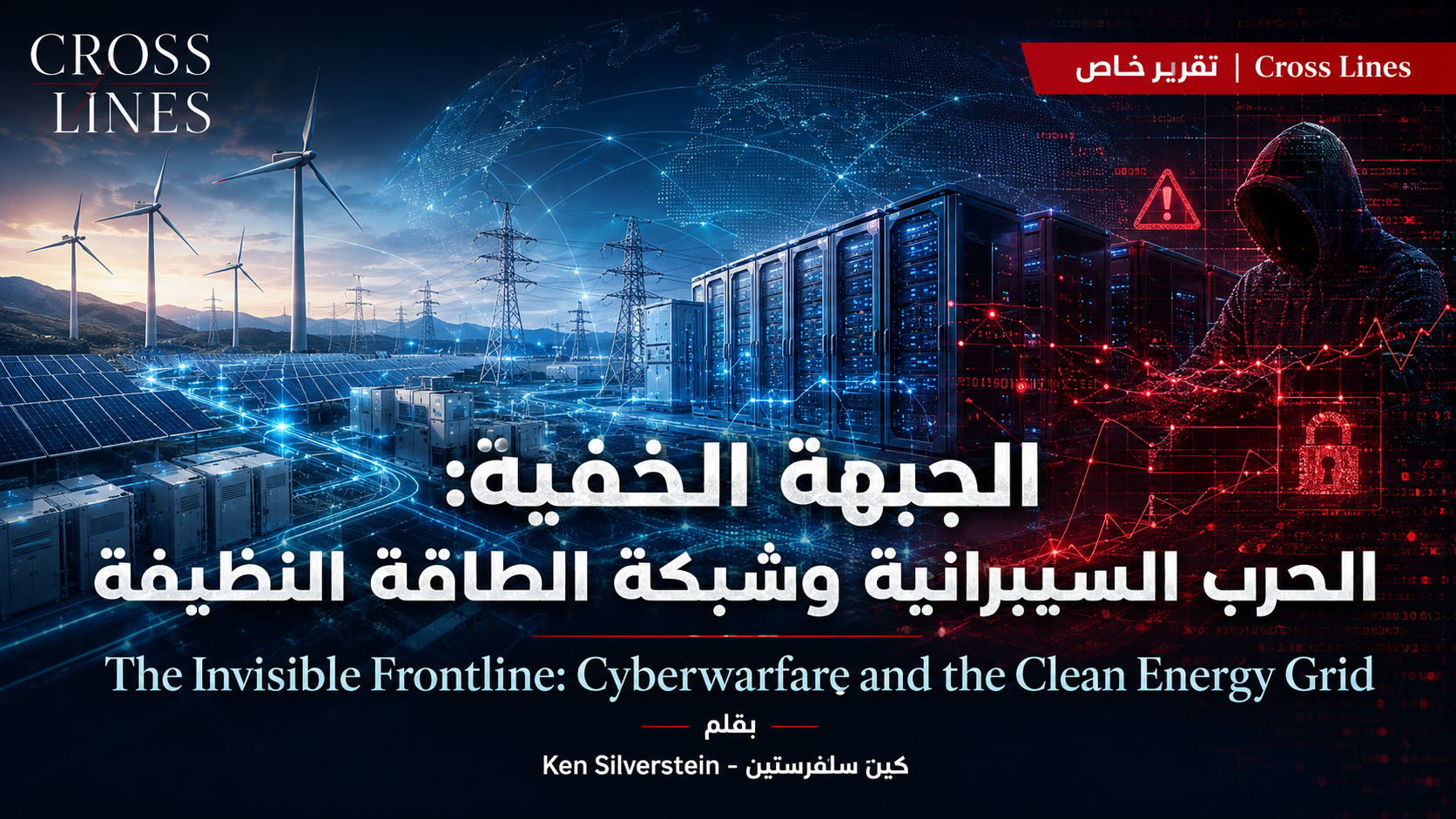
The Invisible Frontline: Cyberwarfare and the Clean Energy Grid

Ken Silverstein
Writer at CROSS LINES
The theater of modern warfare has permanently shifted. While traditional military maneuvers dominate the headlines, an invisible, state-sponsored cyber campaign is quietly threatening a different kind of critical infrastructure: the global energy grid.
The theater of modern warfare has permanently shifted. While traditional military maneuvers dominate the headlines, an invisible, state-sponsored cyber campaign is quietly threatening a different kind of critical infrastructure: the global energy grid.
While initial focus centered primarily on traditional energy targets and immediate conflict zones like Ukraine, the battlefield has rapidly expanded. Dynamic economies like Poland and Italy are finding themselves increasingly square in the crosshairs of highly sophisticated cyber operations. However, the nature of the target itself is changing, revealing a massive, systemic vulnerability born directly out of the global transition to clean energy.
The Decentralized Target
The shift toward a greener grid relies heavily on a sprawling, interconnected web of wind, solar, and distributed energy storage assets. While this decentralization offers environmental resilience, it creates a massive "attack surface" for hostile actors. Unlike the highly centralized fossil fuel or nuclear plants of the past, a distributed grid relies on thousands of digital touchpoints, smart inverters, and automated software systems to balance supply and demand.
In essence, Europe has traded a physical reliance on Russian natural gas pipelines for a complex, software-dependent clean energy infrastructure. For cyber-adversaries, this means a geometric increase in potential entry points. If a hostile actor can manipulate the digital switches governing these generation assets, they can effectively manipulate the power supply itself.
The Gulf’s Hard-Learned Lessons
For the Middle East, this convergence of energy and digital vulnerability is a familiar, dangerous landscape. The Gulf states learned the hard way over a decade ago just how aggressively state-sponsored actors will target vital infrastructure. The devastating 2012 "Shamoon" cyberattack on Saudi Aramco—which wiped out tens of thousands of computers in a matter of hours—remains a historic case study in the physical consequences of digital warfare.
Subsequent years saw repeated, highly targeted campaigns aimed at petrochemical plants, safety systems, and water facilities across the GCC. The critical takeaway for regional security planners then is even more urgent now: hostile actors will always seek out the economic jugular. As Arab Gulf states aggressively pivot toward their own massive green energy targets and build out vast solar arrays and smart grids, they are inheriting the exact same decentralized vulnerabilities now being exploited in Europe.
Beyond Data Theft: The Cyber-Physical Threat
State-sponsored hacking groups are moving well past simple espionage or data theft. Security analysts note that these actors are actively mapping the digital backdoors of clean generation assets. The objective is clear: achieving the capability to disrupt actual, physical grid operations on a massive scale during moments of peak geopolitical tension.
As global power demands skyrocket—driven by the explosion of AI, massive data centers, and the rapid electrification of transit—securing these decentralized generation assets is no longer just an IT concern. For energy-exporting regions and developing grids alike, it has rapidly evolved into a core pillar of international security and geopolitical defense.
While initial focus centered primarily on traditional energy targets and immediate conflict zones like Ukraine, the battlefield has rapidly expanded. Dynamic economies like Poland and Italy are finding themselves increasingly square in the crosshairs of highly sophisticated cyber operations. However, the nature of the target itself is changing, revealing a massive, systemic vulnerability born directly out of the global transition to clean energy.
The Decentralized Target
The shift toward a greener grid relies heavily on a sprawling, interconnected web of wind, solar, and distributed energy storage assets. While this decentralization offers environmental resilience, it creates a massive "attack surface" for hostile actors. Unlike the highly centralized fossil fuel or nuclear plants of the past, a distributed grid relies on thousands of digital touchpoints, smart inverters, and automated software systems to balance supply and demand.
In essence, Europe has traded a physical reliance on Russian natural gas pipelines for a complex, software-dependent clean energy infrastructure. For cyber-adversaries, this means a geometric increase in potential entry points. If a hostile actor can manipulate the digital switches governing these generation assets, they can effectively manipulate the power supply itself.
The Gulf’s Hard-Learned Lessons
For the Middle East, this convergence of energy and digital vulnerability is a familiar, dangerous landscape. The Gulf states learned the hard way over a decade ago just how aggressively state-sponsored actors will target vital infrastructure. The devastating 2012 "Shamoon" cyberattack on Saudi Aramco—which wiped out tens of thousands of computers in a matter of hours—remains a historic case study in the physical consequences of digital warfare.
Subsequent years saw repeated, highly targeted campaigns aimed at petrochemical plants, safety systems, and water facilities across the GCC. The critical takeaway for regional security planners then is even more urgent now: hostile actors will always seek out the economic jugular. As Arab Gulf states aggressively pivot toward their own massive green energy targets and build out vast solar arrays and smart grids, they are inheriting the exact same decentralized vulnerabilities now being exploited in Europe.
Beyond Data Theft: The Cyber-Physical Threat
State-sponsored hacking groups are moving well past simple espionage or data theft. Security analysts note that these actors are actively mapping the digital backdoors of clean generation assets. The objective is clear: achieving the capability to disrupt actual, physical grid operations on a massive scale during moments of peak geopolitical tension.
As global power demands skyrocket—driven by the explosion of AI, massive data centers, and the rapid electrification of transit—securing these decentralized generation assets is no longer just an IT concern. For energy-exporting regions and developing grids alike, it has rapidly evolved into a core pillar of international security and geopolitical defense.
🔗 Share Article
Source: Dreamtime
For Context
Related reads from the same topic or latest developments