PoliticsAvailable in English
The Radioactive Ore That Could Break China’s Grip on Rare Earths
Editorial
Cross Lines editing
Source
Foreign Policy
Visuals
Editorial cover when needed
Foreign Policy

Foreign Policy
Original Source
Western powers are racing to secure monazite, an ore rich in rare earths that could help loosen China's dominance of the market. Yet its radioactive content demands strict oversight, raising questions about whether those powers can manage it.
Monazite Is the Radioactive Ore That Could Break China’s Grip on Rare Earths
By using this website, you agree to our use of cookies. This use includes personalization of content and ads, and traffic analytics. Review our Privacy Policy for more information.
!Foreign Policy
Foreign Policy Get analysis and alerts more quickly in the mobile app.
Install
Back to Foreign Policy Magazine home page
* Latest
* Regions
+ Asia & the Pacific
+ China
+ Middle East & Africa
+ Americas
+ Europe
* Newsletters
Editors’ Picks
Evening roundup with our editors’ favorite stories of the day
!World Brief Icon
World Brief
Your guide to the most important world stories of the day
!China Brief Icon
China Brief
The latest news, analysis, and data from the country each week
Situation Report
Weekly update on what’s driving U.S. national security policy
FP Weekend
A curation of our best book reviews, deep dives, and other reads
!Africa Brief Icon
Africa Brief
Essential analysis of the stories shaping geopolitics on the continent
!South Asia Brief Icon
South Asia Brief
Weekly update on developments in India and its neighbors
The Reading List
Curated guides on geopolitics and current affairs
FP Bookshelf
A monthly guide to FP’s book reviews, excerpts, and reading recommendations
!Latin America Brief Icon
Latin America Brief
One-stop digest of politics, economics, and culture
!Southeast Asia Brief Icon
Southeast Asia Brief
A weekly dispatch with news from the region’s 11 countries
The New Geopolitics
A five-part masterclass in IR theory with Harvard Professor Stephen M. Walt
View All Newsletters
* FP Live
* Latest
* Trending:
* Diesel price crisis
* Nobel Peace Prize
* Data center controversies
* France's student protests
Search this website
* Preferences
* My FP Feed
* Saved Articles
* Newsletters
* Magazine Archive
* Subscription Settings
* FAQs
* Log Out
Sign In
Sign In
Team access Team access
Subscribe Subscribe Team access Team access
Deep Dive: The Radioactive Ore That Could Break China’s Grip on Rare Earths
*
*
* Facebook
* Bluesky
* X
* LinkedIn
* WhatsApp
* Reddit
Save
1. Create an FP account to save articles to read later.
Sign Up
ALREADY AN FP SUBSCRIBER? LOGIN
PDF
1. **Downloadable PDFs** are a benefit of an FP subscription.
Subscribe Now
ALREADY AN FP SUBSCRIBER? LOGIN
Gift
*
*
* WhatsApp
1. Gifting articles is a subscriber benefit.
Subscribe Now
ALREADY AN FP SUBSCRIBER? LOGIN
2. This article is an Insider exclusive.
Contact us at [email protected] to learn about upgrade options, unlocking the ability to gift this article.
Deep Dive
The Radioactive Ore That Could Break China’s Grip on Rare Earths
Western powers are scrambling for monazite ore—but can they handle it?
October 15, 2026, 9:00 AM
By **Glenn Zorpette**, editorial director, content development, at IEEE Spectrum.
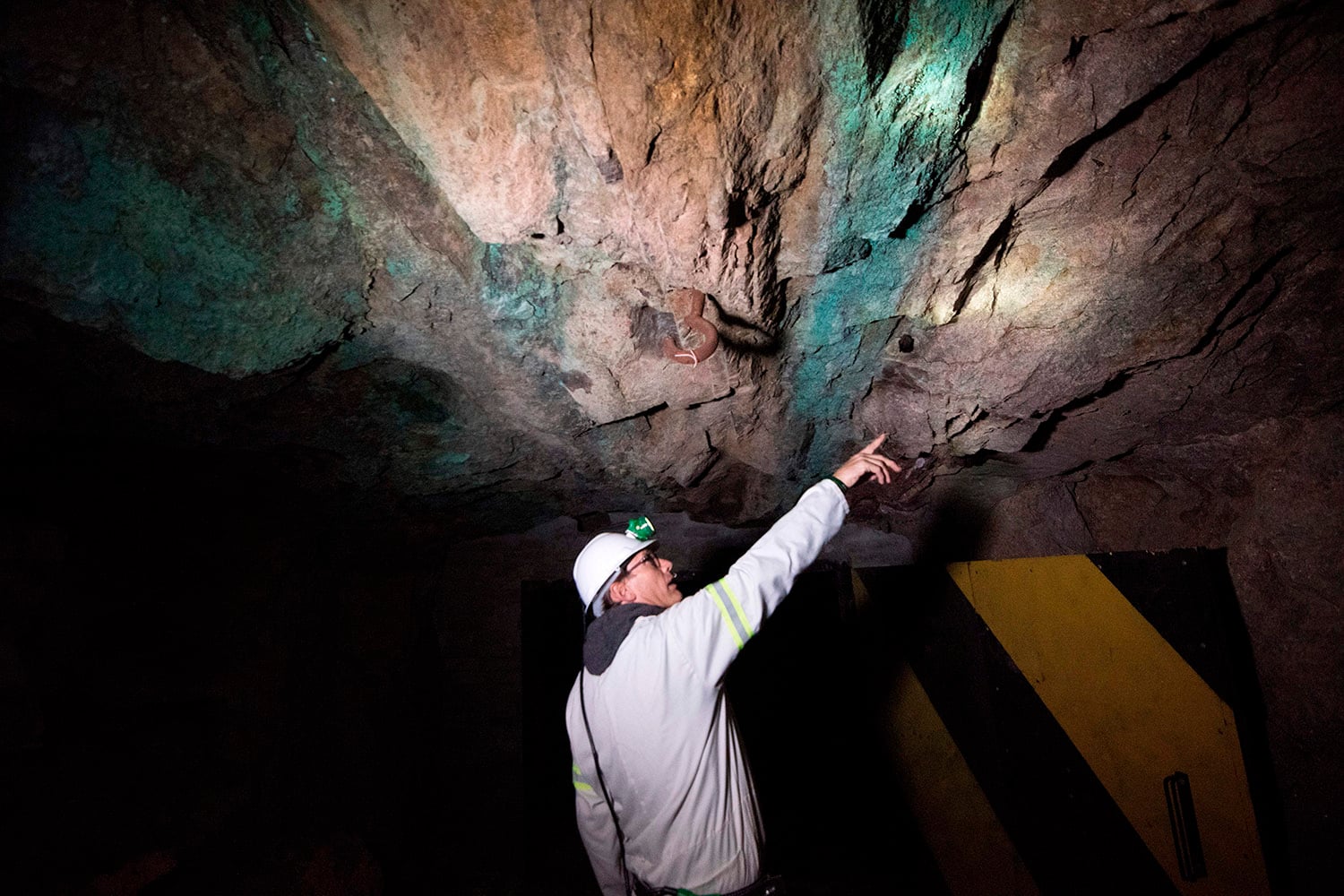
!A person in a white jacket, hard hat, and glasses standing in a dark cave or mine tunnel, pointing up at a rocky ceiling illuminated by a flashlight.
*A person in a white jacket, hard hat, and glasses standing in a dark cave or mine tunnel, pointing up at a rocky ceiling illuminated by a flashlight.*
A mine geologist points to the monazite reef underground at the Steenkampskraal rare-earth mine near the Western Cape town of Vanrhynsdorp, South Africa, on July 29, 2019. Rodger Bosch/AFP via Getty Images
*This article is a collaboration between* IEEE Spectrum*, the flagship magazine of the Institute of Electrical and Electronics Engineers, and* Foreign Policy*.*
The global campaigns to break China’s dominance of vital rare-earth markets are shaping up into one of the signature geostrategic struggles of the early 21st century. Hundreds of mining companies, government agencies, and industrial facilities scattered across North America, Australasia, and Europe are striving to compete with Chinese firms, which control roughly 90 percent of the markets for rare-earth oxides and rare-earth metals.
*This article is a collaboration between* IEEE Spectrum*, the flagship magazine of the Institute of Electrical and Electronics Engineers, and* Foreign Policy*.*
The global campaigns to break China’s dominance of vital rare-earth markets are shaping up into one of the signature geostrategic struggles of the early 21st century. Hundreds of mining companies, government agencies, and industrial facilities scattered across North America, Australasia, and Europe are striving to compete with Chinese firms, which control roughly 90 percent of the markets for rare-earth oxides and rare-earth metals.
These are the ingredients upon which vast and crucial manufacturing categories depend: semiconductors, LEDs, lasers, displays, metal alloys, optical lenses, and catalysts for petroleum and chemical processing. Most important, though, are permanent magnets. Essentially all powerful electric motors (and most high-quality audio speakers) are based on rare-earth permanent magnets. These motors are the heart of electric vehicles, heating and cooling systems, robots, appliances, tools, and military systems—from tactical drones to ballistic-missile submarines.
Succinctly put, any industrial power that wants to remain competitive in vital, high-tech industries must have access to a steady supply of rare-earth elements or products based on them. The traditional supply chain for these elements, originating in China, is increasingly fraught—so much so that some analysts are beginning to use the term “mineral war.” But the countries that are now scrambling to piece together alternative supply chains, whether by themselves or in cooperation with each other, face daunting odds. Putting aside the sheer momentum of the Chinese rare-earths juggernaut, few industries can match the rare-earths business for instability, risk, intrigue, and sheer frustration.
!A close-up view of a person using a wooden hand sieve to sift fine brown and black sand or mineral grains into a bowl below.
*A close-up view of a person using a wooden hand sieve to sift fine brown and black sand or mineral grains into a bowl below.*
A worker processes minerals for export at a monazite ore plant in Jos, Nigeria, on March 5.Sodiq Adelakun/Reuters
This tumult notwithstanding, many rare-earth experts see a way forward, and it depends on a specific kind of ore, called monazite.
“The future is monazite,” according to Jack Lifton, an analyst and the co-chairman of the Critical Minerals Institute, an organization formed to promote the creation of a North American supply chain. Lifton, who has been studying the rare-earths industry since 1962, has seen countless trends, companies, and technologies come and go, and he is not given to sweeping statements. But on the subject of monazites, he’s unabashedly bullish. “Right now,” he said, “monazite is the most important rare-earth ore.”
---
!A worker wearing a hard hat, high-visibility vest, and yellow boots walking along a path next to a rocky embankment, with a piece of heavy equipment parked above under a cloudy sky.
*A worker wearing a hard hat, high-visibility vest, and yellow boots walking along a path next to a rocky embankment, with a piece of heavy equipment parked above under a cloudy sky.*
A worker walks past the construction site for a Lynas Rare Earths Ltd. plant in Gebeng, Malaysia, on Feb. 1, 2012.Mohd Rasfan/AFP via Getty Images
The path forward with monazite isn’t going to be smooth or straight, Lifton and others are quick to acknowledge. Monazite contains not only huge amounts of valuable rare earths, it also typically contains radioactive thorium and, sometimes, uranium, which means its handling, storage, and processing is tightly regulated by government agencies.
Nevertheless, major investment is now flowing to monazite mines and processing t
By using this website, you agree to our use of cookies. This use includes personalization of content and ads, and traffic analytics. Review our Privacy Policy for more information.
!Foreign Policy
Foreign Policy Get analysis and alerts more quickly in the mobile app.
Install
Back to Foreign Policy Magazine home page
* Latest
* Regions
+ Asia & the Pacific
+ China
+ Middle East & Africa
+ Americas
+ Europe
* Newsletters
Editors’ Picks
Evening roundup with our editors’ favorite stories of the day
!World Brief Icon
World Brief
Your guide to the most important world stories of the day
!China Brief Icon
China Brief
The latest news, analysis, and data from the country each week
Situation Report
Weekly update on what’s driving U.S. national security policy
FP Weekend
A curation of our best book reviews, deep dives, and other reads
!Africa Brief Icon
Africa Brief
Essential analysis of the stories shaping geopolitics on the continent
!South Asia Brief Icon
South Asia Brief
Weekly update on developments in India and its neighbors
The Reading List
Curated guides on geopolitics and current affairs
FP Bookshelf
A monthly guide to FP’s book reviews, excerpts, and reading recommendations
!Latin America Brief Icon
Latin America Brief
One-stop digest of politics, economics, and culture
!Southeast Asia Brief Icon
Southeast Asia Brief
A weekly dispatch with news from the region’s 11 countries
The New Geopolitics
A five-part masterclass in IR theory with Harvard Professor Stephen M. Walt
View All Newsletters
* FP Live
* Latest
* Trending:
* Diesel price crisis
* Nobel Peace Prize
* Data center controversies
* France's student protests
Search this website
* Preferences
* My FP Feed
* Saved Articles
* Newsletters
* Magazine Archive
* Subscription Settings
* FAQs
* Log Out
Sign In
Sign In
Team access Team access
Subscribe Subscribe Team access Team access
Deep Dive: The Radioactive Ore That Could Break China’s Grip on Rare Earths
*
*
* Bluesky
* X
Save
1. Create an FP account to save articles to read later.
Sign Up
ALREADY AN FP SUBSCRIBER? LOGIN
1. **Downloadable PDFs** are a benefit of an FP subscription.
Subscribe Now
ALREADY AN FP SUBSCRIBER? LOGIN
Gift
*
*
1. Gifting articles is a subscriber benefit.
Subscribe Now
ALREADY AN FP SUBSCRIBER? LOGIN
2. This article is an Insider exclusive.
Contact us at [email protected] to learn about upgrade options, unlocking the ability to gift this article.
Deep Dive
The Radioactive Ore That Could Break China’s Grip on Rare Earths
Western powers are scrambling for monazite ore—but can they handle it?
October 15, 2026, 9:00 AM
By **Glenn Zorpette**, editorial director, content development, at IEEE Spectrum.
!A person in a white jacket, hard hat, and glasses standing in a dark cave or mine tunnel, pointing up at a rocky ceiling illuminated by a flashlight.
*A person in a white jacket, hard hat, and glasses standing in a dark cave or mine tunnel, pointing up at a rocky ceiling illuminated by a flashlight.*
A mine geologist points to the monazite reef underground at the Steenkampskraal rare-earth mine near the Western Cape town of Vanrhynsdorp, South Africa, on July 29, 2019. Rodger Bosch/AFP via Getty Images
*This article is a collaboration between* IEEE Spectrum*, the flagship magazine of the Institute of Electrical and Electronics Engineers, and* Foreign Policy*.*
The global campaigns to break China’s dominance of vital rare-earth markets are shaping up into one of the signature geostrategic struggles of the early 21st century. Hundreds of mining companies, government agencies, and industrial facilities scattered across North America, Australasia, and Europe are striving to compete with Chinese firms, which control roughly 90 percent of the markets for rare-earth oxides and rare-earth metals.
*This article is a collaboration between* IEEE Spectrum*, the flagship magazine of the Institute of Electrical and Electronics Engineers, and* Foreign Policy*.*
The global campaigns to break China’s dominance of vital rare-earth markets are shaping up into one of the signature geostrategic struggles of the early 21st century. Hundreds of mining companies, government agencies, and industrial facilities scattered across North America, Australasia, and Europe are striving to compete with Chinese firms, which control roughly 90 percent of the markets for rare-earth oxides and rare-earth metals.
These are the ingredients upon which vast and crucial manufacturing categories depend: semiconductors, LEDs, lasers, displays, metal alloys, optical lenses, and catalysts for petroleum and chemical processing. Most important, though, are permanent magnets. Essentially all powerful electric motors (and most high-quality audio speakers) are based on rare-earth permanent magnets. These motors are the heart of electric vehicles, heating and cooling systems, robots, appliances, tools, and military systems—from tactical drones to ballistic-missile submarines.
Succinctly put, any industrial power that wants to remain competitive in vital, high-tech industries must have access to a steady supply of rare-earth elements or products based on them. The traditional supply chain for these elements, originating in China, is increasingly fraught—so much so that some analysts are beginning to use the term “mineral war.” But the countries that are now scrambling to piece together alternative supply chains, whether by themselves or in cooperation with each other, face daunting odds. Putting aside the sheer momentum of the Chinese rare-earths juggernaut, few industries can match the rare-earths business for instability, risk, intrigue, and sheer frustration.
!A close-up view of a person using a wooden hand sieve to sift fine brown and black sand or mineral grains into a bowl below.
*A close-up view of a person using a wooden hand sieve to sift fine brown and black sand or mineral grains into a bowl below.*
A worker processes minerals for export at a monazite ore plant in Jos, Nigeria, on March 5.Sodiq Adelakun/Reuters
This tumult notwithstanding, many rare-earth experts see a way forward, and it depends on a specific kind of ore, called monazite.
“The future is monazite,” according to Jack Lifton, an analyst and the co-chairman of the Critical Minerals Institute, an organization formed to promote the creation of a North American supply chain. Lifton, who has been studying the rare-earths industry since 1962, has seen countless trends, companies, and technologies come and go, and he is not given to sweeping statements. But on the subject of monazites, he’s unabashedly bullish. “Right now,” he said, “monazite is the most important rare-earth ore.”
---
!A worker wearing a hard hat, high-visibility vest, and yellow boots walking along a path next to a rocky embankment, with a piece of heavy equipment parked above under a cloudy sky.
*A worker wearing a hard hat, high-visibility vest, and yellow boots walking along a path next to a rocky embankment, with a piece of heavy equipment parked above under a cloudy sky.*
A worker walks past the construction site for a Lynas Rare Earths Ltd. plant in Gebeng, Malaysia, on Feb. 1, 2012.Mohd Rasfan/AFP via Getty Images
The path forward with monazite isn’t going to be smooth or straight, Lifton and others are quick to acknowledge. Monazite contains not only huge amounts of valuable rare earths, it also typically contains radioactive thorium and, sometimes, uranium, which means its handling, storage, and processing is tightly regulated by government agencies.
Nevertheless, major investment is now flowing to monazite mines and processing t
🔗 Share Article
Tags:#المونازيت#العناصر الأرضية النادرة#الصين#سلاسل التوريد#المعادن الحرجة#المغناطيسات الدائمة
Source: Foreign Policy
For Context
Related reads from the same topic or latest developments