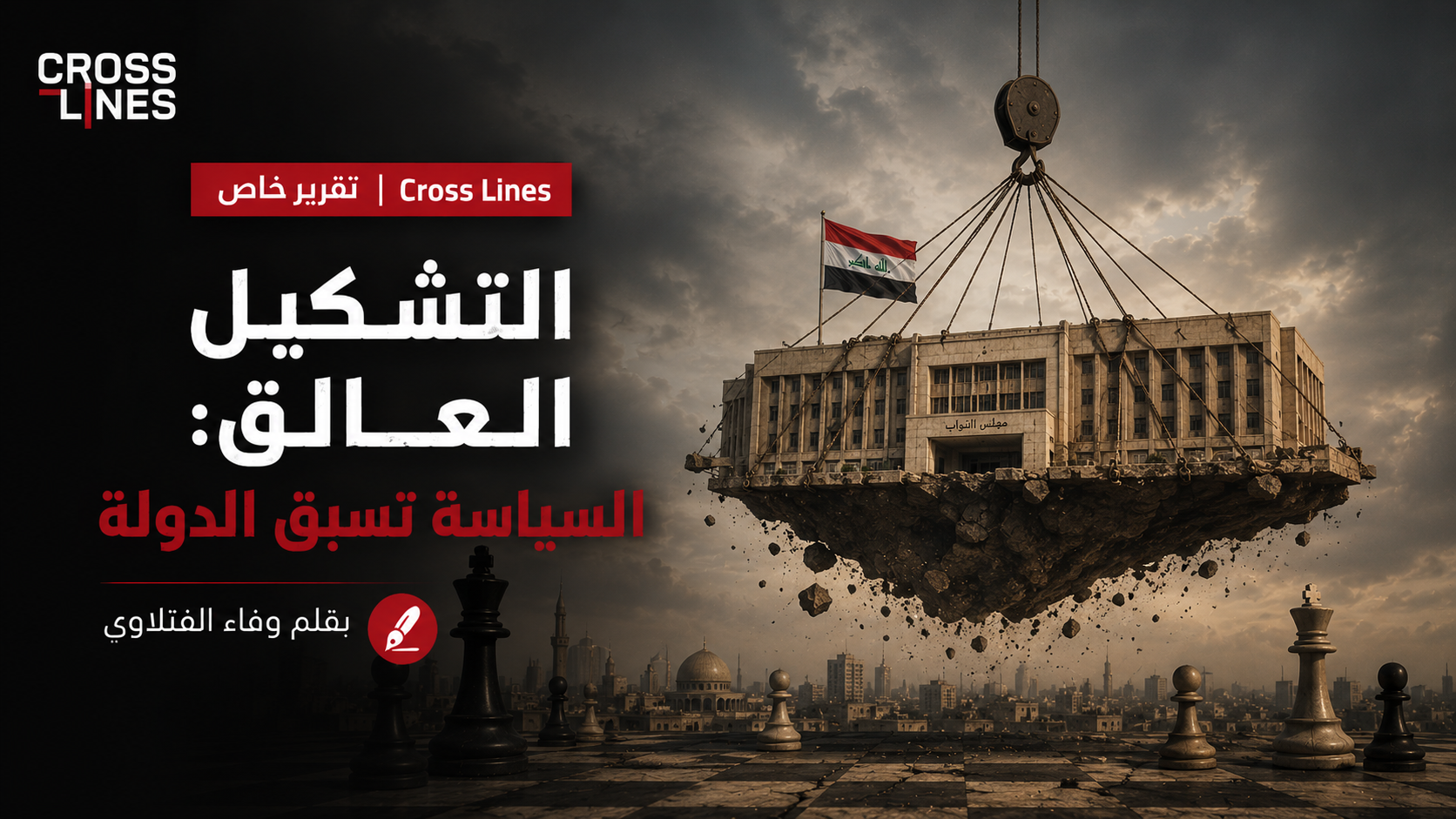
The stalled formation: politics overtakes the state

Wafaa Al-Fatlawi
Writer at CROSS LINES
**The Stalled Cabinet Formation: Politics Before the State** **Wafaa Al-Fatlawi** Since the prime minister was tasked with forming the government and the constitutional timelines were set, the process of completing the ministerial cabinet has remained stall...
**The Stalled Cabinet Formation: Politics Before the State**
**Wafaa Al-Fatlawi**
Since the prime minister was tasked with forming the government and the constitutional timelines were set, the process of completing the ministerial cabinet has remained stalled between incomplete political understandings and renewed disputes among the influential forces in the Iraqi political scene. The situation has become even more complicated after the Council of Representatives entered its legislative recess, which further slowed the path toward resolution.
This deadlock has not remained a passing political detail. Rather, it has affected the administration of several ministries that continue to operate under acting leadership, casting a shadow over the executive and service performance of the state. It has also opened the door to broader questions about the nature of the political balances that govern the government-formation process and the mechanisms through which ministerial portfolios are distributed.
One of the most prominent reasons behind this delay lies in the struggle over political quota-sharing among the key forces, particularly within the Coordination Framework. Each bloc seeks to secure its share within the ministerial cabinet in a way that guarantees political and administrative influence within the structures of the state. This struggle is not limited to the distribution of portfolios alone; it also extends to the nature of the ministries themselves. Competition intensifies whenever the portfolio is more sensitive or has a sovereign or security character, which complicates the process of reaching a final consensus and leads to reopening discussions each time a resolution appears close.
In addition, the crisis of political trust emerges as another factor that further complicates the scene. The absence of full agreement over candidates for sovereign and security ministries remains a central obstacle in the formation process. This reality reflects a deeper problem related to the concept of the “largest bloc” and the mechanisms of power-sharing within it, making every step toward resolution dependent on delicate and sensitive balances among the various parties.
Meanwhile, the Council of Representatives’ entry into legislative recess has contributed to freezing part of the political movement linked to completing the cabinet. This has added a new time-related factor to the series of existing complications. The absence of active parliamentary sessions effectively means the absence of a political pressure platform that could push toward accelerating understandings or resolving pending disputes, causing the cabinet-formation file to move at a slower pace than expected.
This delay has not only affected the political level but has also extended to government and service performance. Some ministries continue to be run by acting officials, which weakens the effectiveness of executive decision-making and limits the government’s ability to implement its program according to the planned timelines. Although acting administration is intended as a temporary solution, it practically turns into a long-term condition that affects institutional stability and weakens the dynamism of ministerial work.
The deeper impact becomes clearer in service and security ministries, where the absence of a fully empowered minister leads to slower decision-making and a decline in coordination among institutions. It also weakens the ability to launch long-term strategic projects. On the security side, continued administrative instability affects security policies and makes them closer to day-to-day management rather than part of a sustainable strategic vision.
In light of this complex scene, questions remain about the nature of the crisis: Is it an internal political division caused by conflicts of interest and struggles over influence, or are there indirect external factors contributing to the complexity of political agreements? Between these possibilities, the clearest truth remains that the domestic political arena is the main driver of this deadlock, even if the regional and international environment plays a role in defining the limits of what is possible and what is not in the course of political understandings.
Ultimately, the continuation of this reality means keeping the state trapped in a cycle of temporary administration, postponing political resolution, and leaving service and security files hostage to unstable balances. This weakens the new government’s ability to move from the stage of mere administration to the stage of full executive action.
**Wafaa Al-Fatlawi**
Since the prime minister was tasked with forming the government and the constitutional timelines were set, the process of completing the ministerial cabinet has remained stalled between incomplete political understandings and renewed disputes among the influential forces in the Iraqi political scene. The situation has become even more complicated after the Council of Representatives entered its legislative recess, which further slowed the path toward resolution.
This deadlock has not remained a passing political detail. Rather, it has affected the administration of several ministries that continue to operate under acting leadership, casting a shadow over the executive and service performance of the state. It has also opened the door to broader questions about the nature of the political balances that govern the government-formation process and the mechanisms through which ministerial portfolios are distributed.
One of the most prominent reasons behind this delay lies in the struggle over political quota-sharing among the key forces, particularly within the Coordination Framework. Each bloc seeks to secure its share within the ministerial cabinet in a way that guarantees political and administrative influence within the structures of the state. This struggle is not limited to the distribution of portfolios alone; it also extends to the nature of the ministries themselves. Competition intensifies whenever the portfolio is more sensitive or has a sovereign or security character, which complicates the process of reaching a final consensus and leads to reopening discussions each time a resolution appears close.
In addition, the crisis of political trust emerges as another factor that further complicates the scene. The absence of full agreement over candidates for sovereign and security ministries remains a central obstacle in the formation process. This reality reflects a deeper problem related to the concept of the “largest bloc” and the mechanisms of power-sharing within it, making every step toward resolution dependent on delicate and sensitive balances among the various parties.
Meanwhile, the Council of Representatives’ entry into legislative recess has contributed to freezing part of the political movement linked to completing the cabinet. This has added a new time-related factor to the series of existing complications. The absence of active parliamentary sessions effectively means the absence of a political pressure platform that could push toward accelerating understandings or resolving pending disputes, causing the cabinet-formation file to move at a slower pace than expected.
This delay has not only affected the political level but has also extended to government and service performance. Some ministries continue to be run by acting officials, which weakens the effectiveness of executive decision-making and limits the government’s ability to implement its program according to the planned timelines. Although acting administration is intended as a temporary solution, it practically turns into a long-term condition that affects institutional stability and weakens the dynamism of ministerial work.
The deeper impact becomes clearer in service and security ministries, where the absence of a fully empowered minister leads to slower decision-making and a decline in coordination among institutions. It also weakens the ability to launch long-term strategic projects. On the security side, continued administrative instability affects security policies and makes them closer to day-to-day management rather than part of a sustainable strategic vision.
In light of this complex scene, questions remain about the nature of the crisis: Is it an internal political division caused by conflicts of interest and struggles over influence, or are there indirect external factors contributing to the complexity of political agreements? Between these possibilities, the clearest truth remains that the domestic political arena is the main driver of this deadlock, even if the regional and international environment plays a role in defining the limits of what is possible and what is not in the course of political understandings.
Ultimately, the continuation of this reality means keeping the state trapped in a cycle of temporary administration, postponing political resolution, and leaving service and security files hostage to unstable balances. This weakens the new government’s ability to move from the stage of mere administration to the stage of full executive action.
🔗 Share Article
For Context
Related reads from the same topic or latest developments